Quick answer
A yellow gum line after teeth whitening is often a contrast effect, not new damage. Enamel is thinner near the gums, so the warmer dentin underneath shows through more clearly after the rest of the tooth lightens.
The band can also be an exposed root, plaque or tartar, or a filling that did not whiten. Do not add extra gel to that edge. Check the colour again after the teeth rehydrate, then ask a dentist if the band stays, feels rough, or comes with sensitivity or bleeding.
Why the gum-line area can stay yellow
The colour of a natural tooth is not uniform. Dentin gives a tooth much of its basic hue, while enamel changes how that hue looks. A dental review in the Journal of Applied Oral Science notes that enamel is thinner in the cervical third, beside the gum. That region tends to look darker than the middle of the tooth.
Whitening changes coloured compounds within enamel and dentin. It does not add an opaque white layer. Once the larger middle area becomes brighter, the naturally warmer neck can look more yellow by comparison.
That contrast is easiest to spot on front teeth. It can look stronger under a bathroom spotlight or a phone flash, which creates bright reflections on curved enamel. Compare the result in indirect daylight before deciding that the colour is uneven.
Four checks before you whiten again
1. Is the band smooth and similar across several teeth?
A smooth, gradual band on matching teeth often fits normal tooth anatomy. The colour usually blends from lighter in the middle to warmer near the gum, rather than ending at a sharp line.
Do not judge it straight after a whitening session. Dehydrated teeth look lighter. In one clinical study, 85% of teeth changed enough after 30 minutes of drying to exceed the accepted colour-difference threshold. After 24 hours of rehydration, 99.2% fell below that threshold.
Take one comparison photo after 24 hours. If you used a course of gel, judge the settled result after the course and follow-up period your dentist gave you.
2. Does the edge feel rough or look like a deposit?
Whitening does not remove tartar. Plaque forms along the gum line and can harden into tartar. The American Dental Association says hardened tartar makes teeth harder to clean.
Look for a yellow or brown ridge, bleeding during brushing, swollen gums, or persistent bad breath. Those signs deserve a dental check. Scrubbing harder can injure the gum without removing hardened tartar.
3. Do the teeth look longer than before?
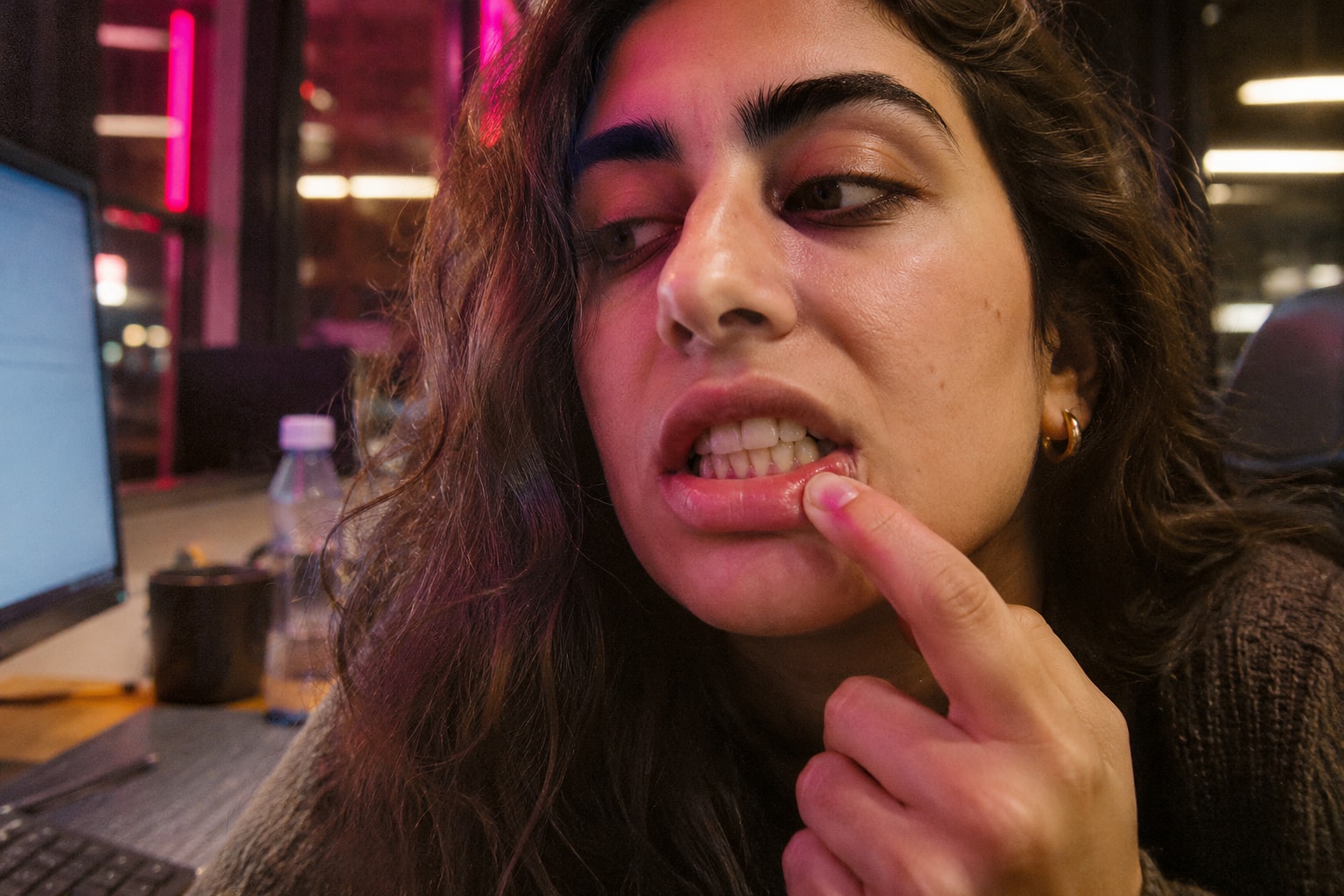
Gum recession can expose part of the root. A root does not have the same enamel covering as the crown, so it can look more yellow and may feel sensitive to cold.
Peroxide whitening is designed to change natural tooth colour, but an exposed root may not respond like enamel. Do not push a strip or tray farther onto the gum. Ask a dentist to check the recession and the root surface first.
4. Is the colour beside a filling, crown, veneer or implant?
The American Dental Association states that whitening changes natural teeth, not tooth-coloured restorations. A filling near the gum line may become easier to see after the surrounding enamel lightens.
More whitening will not change that material. A dentist can identify the restoration and discuss shade matching after your natural tooth colour has settled.
What to do now
Start with a pause, not a stronger product.
- Follow the stated schedule for your whitening product. Do not repeat a session early or paint extra peroxide along the gum edge.
- Brush twice daily with fluoride toothpaste and clean between your teeth. Use light pressure around the gum line.
- Check the area after 24 hours in indirect daylight. Use the same camera, distance, angle and exposure for any progress photo.
- If you use dentist-made trays, tell the practice about the uneven band. Leeds Teaching Hospitals advises using the prescribed amount and removing excess gel because it can irritate gums.
- Book a dental check if the band is rough, sharply localised, painful, sensitive, or paired with bleeding gums.
Avoid lemon juice, vinegar, charcoal powder and hard scraping. Acid and abrasion do not fix exposed dentin, tartar or a restoration. They can also make the gum-line area harder to assess.
When the colour needs a dentist
A dentist can separate four problems that look similar in a selfie: natural shade variation, surface deposits, exposed root and mismatched dental work. That distinction changes the fix.
A professional cleaning may remove plaque and tartar before any more whitening. A dentist may adjust a whitening plan when the darker area is healthy natural tooth. A visible restoration may need shade matching, while recession needs a gum and root assessment.
Get checked sooner if one tooth is changing colour, the gum is swollen, or the area hurts without whitening. The same applies to a hard deposit that will not brush away. These are not good targets for another bleaching session.
How to track the result without camera bias
Phone photos can exaggerate a yellow band. Flash brightens the curved centre of a tooth while the gum-line edge receives less direct light. Warm bathroom bulbs can add more yellow.
Use the rear camera in indirect daylight. Keep the lens at mouth height, turn off flash and beauty filters, and keep the same distance each time. Compare the same teeth at least 24 hours after a whitening session.
A photo can track contrast, but it cannot diagnose tartar, recession or decay. If the appearance and the physical signs disagree, trust the dental examination.
FAQ
Is a yellow gum line normal after teeth whitening?
It can be normal when the colour forms a smooth, similar band across several teeth. Thin enamel near the gum lets warmer dentin show through, and whitening can increase the contrast.
Will whitening strips whiten the yellow area near my gums?
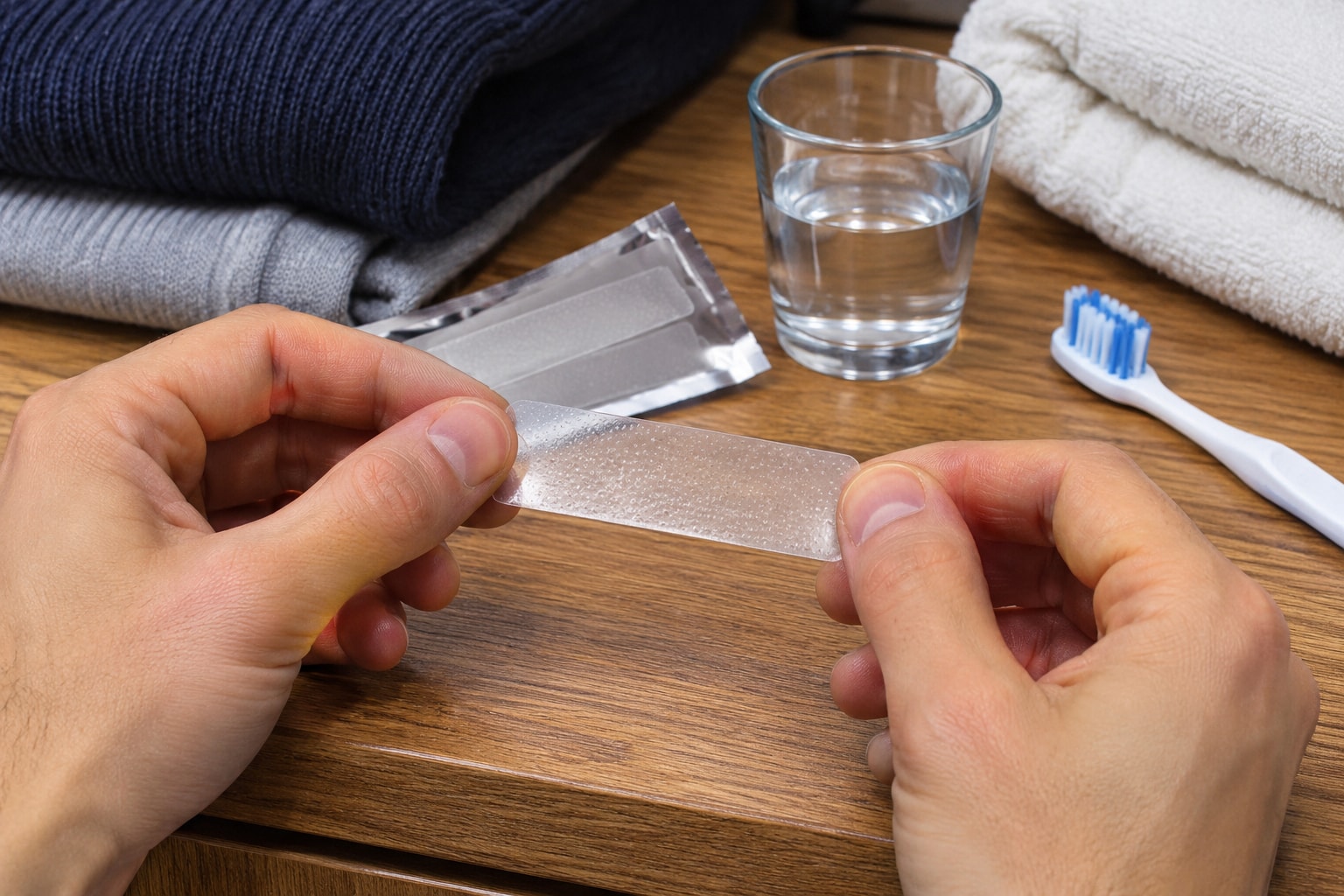
They may lighten healthy natural tooth, but they will not whiten tartar, an exposed root in the same way, or a filling or crown. Do not place strips onto gum tissue to chase the edge.
How long should I wait before judging the colour?
Wait at least 24 hours before judging a same-day patch because dehydration changes tooth colour. For the final result, follow your dentist's review timing; clinical whitening studies often assess stable colour after about two weeks.
When should I stop whitening and see a dentist?
Stop and ask a dentist if you have strong sensitivity, gum pain, a sharply defined change on one tooth, bleeding, recession, or a rough deposit. Extra peroxide will not solve those causes.