Quick answer
If your gums turn white after whitening strips, remove the strips, rinse with water, and pause whitening. The pale patch usually marks temporary irritation where whitening gel touched the gum. It doesn't prove your enamel is damaged.
Most mild reactions settle after contact stops, but get dental advice if pain is strong, the area swells or ulcers, or it worsens.
Why whitening strips can turn gums white
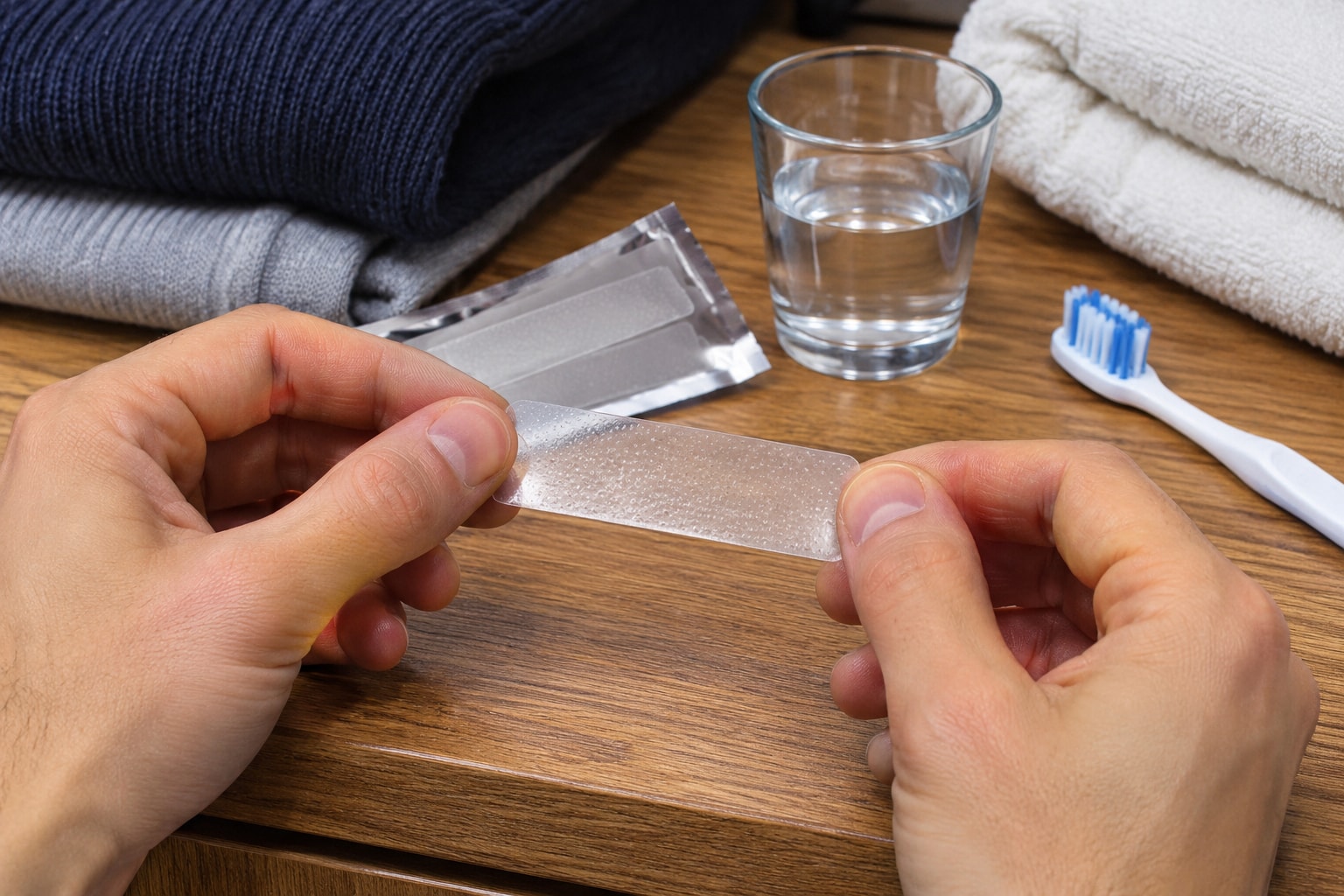
Most whitening strips use hydrogen peroxide or carbamide peroxide to break down coloured compounds in teeth. These ingredients can also irritate the softer tissue around them.
The American Dental Association lists gum inflammation and tooth sensitivity as the most common whitening side effects. Its review links gum irritation to direct contact with peroxide gel, often from poor placement or a leaking tray.
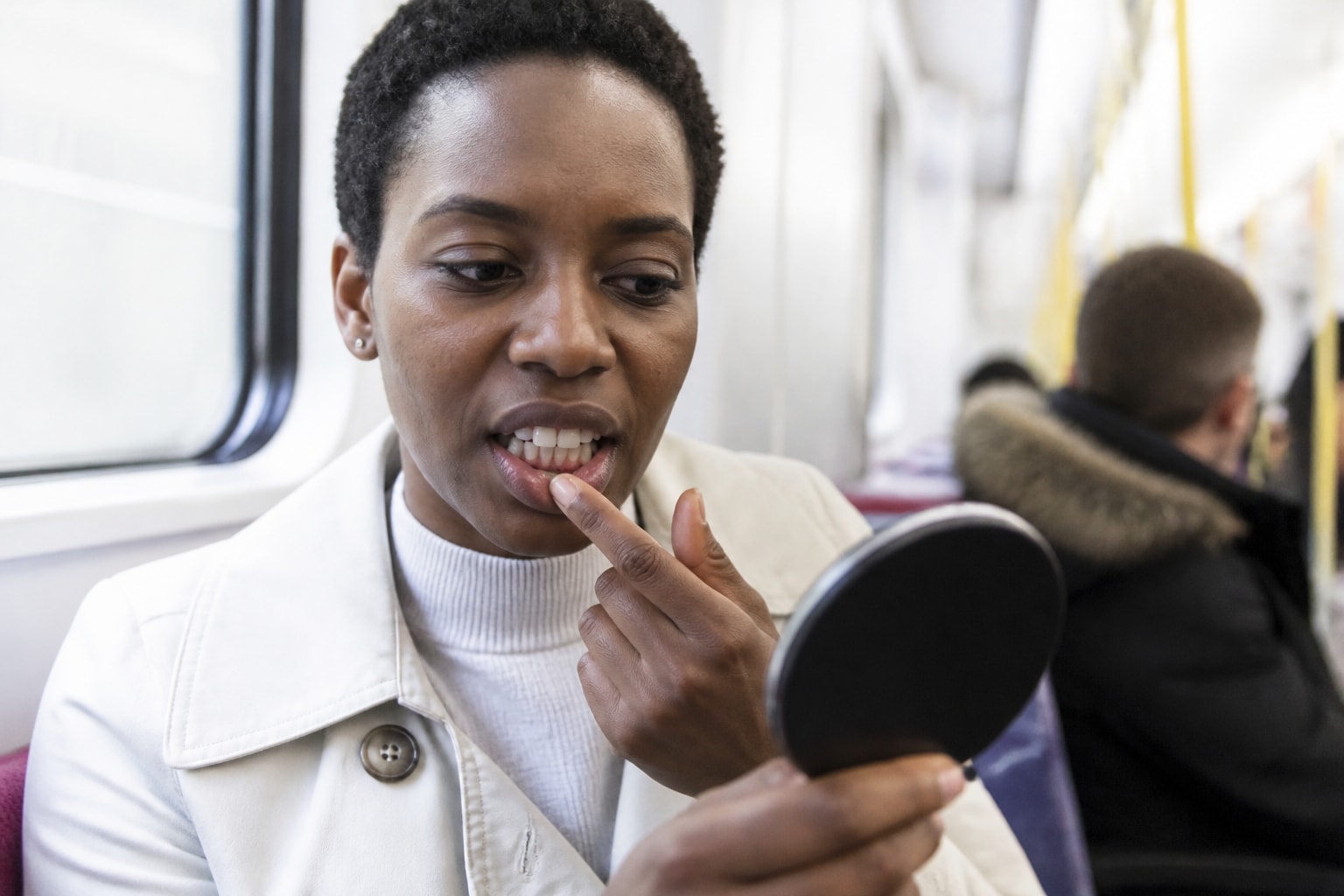
The white area is sometimes called blanching or a minor chemical burn. It often follows the edge or fold of the strip. That contact pattern is more useful than the shade itself.
A pale patch that appears during treatment differs from a white spot inside a tooth. One involves gum tissue; the other can reflect enamel features, dehydration, or an existing dental problem.
What to do right now
Take these steps in order:
- Remove the strips and spit out any gel.
- Rinse your mouth well with plain water.
- Stop whitening until the gum looks and feels normal.
- Brush gently with a soft toothbrush.
- Avoid putting peroxide, acids, alcohol, or whitening toothpaste on the sore area.
Don't try to neutralise the gel with lemon juice, baking soda, or another chemical, because more chemistry can deepen irritation. Water removes the remaining product without adding another variable.
Choose cool, soft food if chewing bothers the area. Hot, spicy, acidic, or crunchy food may sting irritated tissue. Don't peel loose surface tissue or scrub the white patch.
How to judge whether it is mild
A mild contact reaction is usually limited to the place touched by the strip. It may look pale, feel tender, or briefly burn, then start settling after you remove the product.
The NHS lists white gum patches and sore gums among short-term whitening side effects. A Cochrane review also found oral irritation was usually mild and temporary in home-whitening trials. Higher active-ingredient concentrations caused more adverse effects.
That evidence doesn't give an exact recovery time for every product. Formulas, peroxide strength, contact time, and gum health vary, so judge the direction of change rather than one promised deadline.
Improving colour and comfort are reassuring, while increasing pain, a growing lesion, or new swelling are not.
When to call a dentist
Contact a dentist promptly if you have:
- severe or worsening pain
- a blister, open ulcer, bleeding, or peeling that spreads
- swelling around the gum, lips, cheek, or face
- symptoms that persist or fail to improve after stopping the strips
- tooth pain focused in one tooth
- gums that were already bleeding, inflamed, or receding before whitening
Call emergency services for trouble breathing or severe swelling of the mouth, lips, throat, or neck. Those symptoms fall outside an ordinary local whitening reaction.
Don't keep testing the strip to see whether the problem returns. Re-exposure can irritate the same tissue again and delays a clear assessment.
Why the strip touched your gum
Standard strips cannot match every tooth and gum line. A strip may sit too high, bunch between teeth, slide during wear, or fold onto the front gum.
Saliva can also move gel beyond the intended area, while longer wear and repeated sessions increase total exposure. The ADA evidence summary identifies gum inflammation as a common adverse effect of whitening.
Existing gum inflammation makes the situation harder to read, so redness, bleeding, recession, decay, or cracked teeth need assessment before more whitening. The NHS recommends a dental check to confirm that teeth and gums are healthy first.
Can you use whitening strips again?
Wait until the area has fully returned to its usual colour and comfort, then read the instructions again before deciding. Don't restart early to stay on schedule.
If you resume, keep the strip on the tooth surfaces and away from the gum line. Use the labelled time and frequency without stacking sessions or extending wear for a faster result.
Stop the product if the same patch returns despite correct placement; a dentist can check your gums and suggest a better-fitting method. Repeated irritation is a reason to change the plan, not tolerate more pain.
Product strength matters too, because strips from unknown sellers may not show clear peroxide levels or complete ingredients. Buy from a traceable seller and avoid products with missing ingredient or concentration information.

How to prevent another white patch
Before the next course, check three things:
- Your gums should not be sore, swollen, or bleeding.
- The strip should cover teeth without resting on gum tissue.
- Your timer should match the label exactly.
More gel exposure doesn't guarantee a better shade, and the ADA review links misuse and higher exposure with more irritation. Controlled contact is the goal.
If a standard strip never fits your gum line, stop forcing it. Dentist-supervised whitening can include an oral examination and trays fitted to your teeth, which adds cost but reduces guesswork.
FAQ
How long do white gums last after whitening strips?
Mild whitening-related gum irritation is usually short-lived after removal, but studies don't support one exact deadline for every formula. Contact a dentist if the patch worsens, stays painful, or does not begin improving.
Are white gums after whitening strips permanent?
Most reported irritation is temporary, especially when exposure stops quickly. A white patch still deserves attention because severe pain, ulceration, swelling, or repeated exposure can mean a deeper chemical injury.
Can I put another strip on tomorrow?
Not if the gum is still white, sore, or tender. Wait until it feels normal, then follow the schedule; if the reaction returns, stop and ask a dentist.
Do white gums mean I am allergic to whitening strips?
Not necessarily, because a patch matching the strip edge points more strongly to direct contact irritation. Swelling beyond that area or breathing trouble needs urgent medical help rather than another home test.