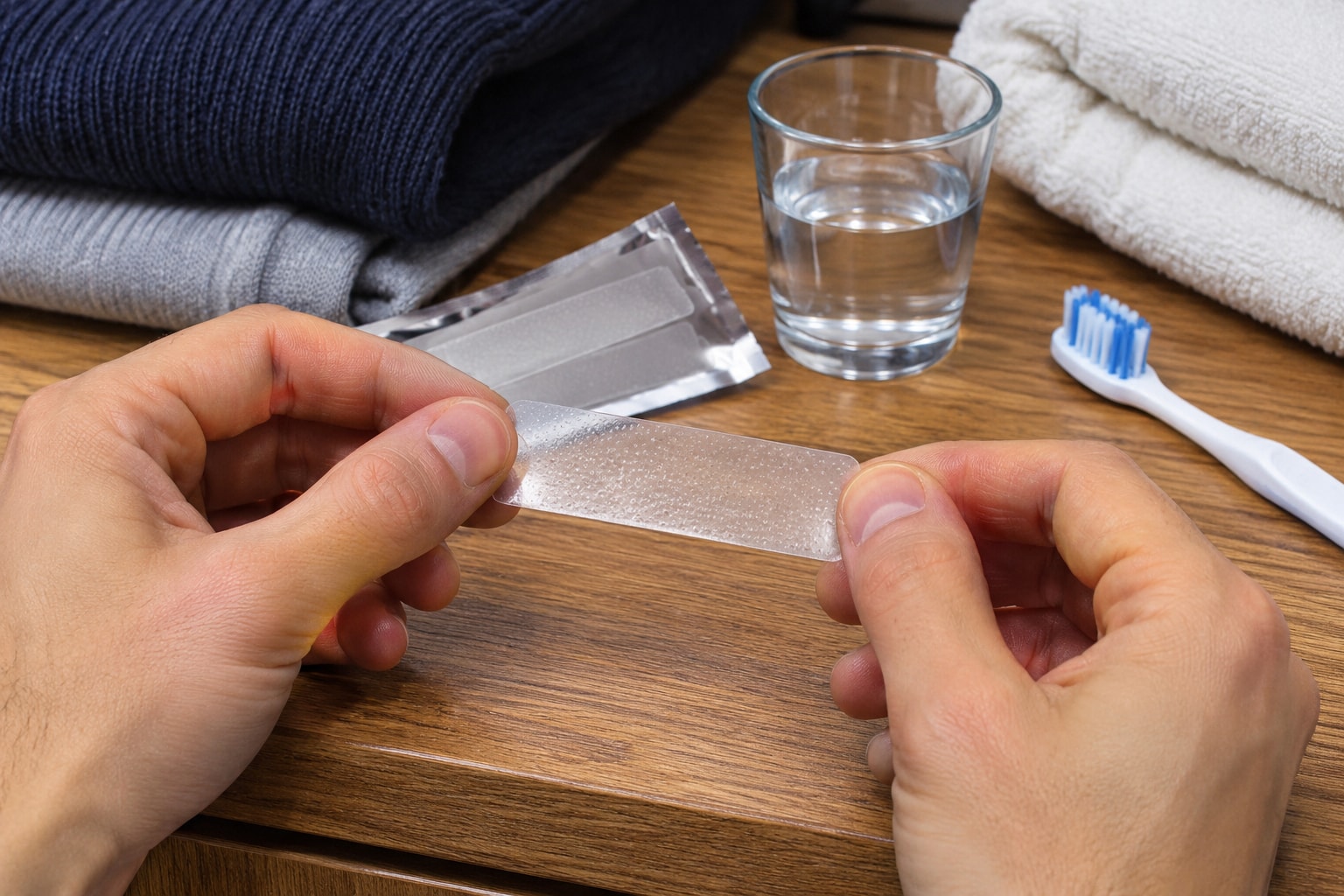
Quick answer
Teeth can look translucent after whitening because bleaching changes their colour and optical contrast, while thin enamel at the biting edges already passes more light. A 2026 clinical analysis detected technique-dependent changes in translucency metrics, but the authors said these may not equal visible or harmful enamel changes. Dehydration can also distort tooth shade for about a day, so don't judge the result straight away. Pause whitening and see a dentist if the change persists or comes with pain, sensitivity, chips or roughness.
Why do teeth look translucent after whitening?
A tooth isn't one solid block of white material. Enamel forms the light-transmitting outer layer, while the dentine below supplies much of the warmer colour. The biting edge of a front tooth has little or no dentine directly behind it. That edge can look blue, grey or glassy even when the tooth is healthy.
Whitening changes coloured compounds within natural teeth, but it doesn't add enamel or make every part equally white. Once the main body becomes brighter, a naturally translucent edge may stand out more by contrast.
The evidence on whether bleaching changes translucency itself is mixed. A 2010 laboratory study tested enamel from 24 extracted premolars after 14 days of carbamide peroxide. Its conventional measurements found lower translucency than in untreated controls.
A 2026 study reached a different result. Researchers reanalysed spectrophotometer images from 80 bleaching cases using three peroxide protocols. Their new mapping method detected increases in several translucency-related measures, sometimes lasting six months.
That sounds decisive, but it isn't because the method used a proprietary reflectance map. The authors couldn't show that its changes were visible to patients. They also found only weak links between increased whiteness and the translucency measures. Earlier studies using standard methods often found little or inconsistent change.
So a glassier edge doesn't prove that whitening stripped away enamel, nor does it rule out wear that was present beforehand.
Dehydration changes the first impression
Whitening sessions can temporarily alter tooth hydration, as can dental work that keeps teeth isolated from saliva. Hydration changes how light moves through enamel, so an immediate shade check can mislead you.
A clinical study followed 30 adults through 30 minutes of tooth dehydration and later rehydration. Every tested tooth showed a colour change large enough for instruments to classify as perceptible. After 24 hours, 90% of readings fell below the study's perceptibility threshold.
This doesn't mean every translucent edge will vanish overnight; it means the first mirror check is unreliable. A temporarily lighter tooth body can make the edge look darker or clearer, even if the edge itself changed little.
Wait before you decide the result is permanent.
How to tell a temporary effect from enamel wear
You can't confirm enamel loss from a selfie. Even the 2026 research used a dental spectrophotometer, controlled images and specialist software. Its authors still warned that their map values might not match what people see.
Use this practical check instead:
- Stop the whitening product for at least 24 hours.
- Drink normally and let saliva rehydrate your teeth.
- Compare them in the same room, at the same time, without flash or a beauty filter.
- Check an older photo taken before whitening, if you have one.
- Look for symptoms, not just colour: new sensitivity, pain, chips, cracks or a rough surface matter more.
Stable translucency limited to the tips of several front teeth may be normal anatomy. Cleveland Clinic notes that naturally thinner enamel at tooth edges transmits more light. Enamel wear can make that effect stronger.
Wear deserves a dental check when the change keeps progressing or comes with sensitivity. Acid reflux, frequent vomiting, grinding and aggressive brushing can all contribute, so mention them to your dentist. They can examine the surface and distinguish normal incisal translucency from erosion or another problem.
One newly grey or painful tooth needs prompt assessment. That pattern isn't the usual whole-smile effect of whitening.
What to do before your next whitening session
Pause first, because reapplying peroxide to chase an even shade can increase sensitivity or irritate your gums. The American Dental Association lists temporary tooth sensitivity and gum inflammation as the most common whitening side effects.
Keep your routine plain while you wait:
- Brush twice daily with a fluoride toothpaste and a soft-bristled brush.
- Don't scrub the clear-looking edges or switch to a harsh abrasive powder.
- Avoid lemon juice, acidic DIY mixtures and mail-order bleaching gels.
- Follow the product schedule exactly if a dentist says you can continue.
Fluoride helps protect enamel, but toothpaste can't make a naturally translucent edge opaque. If wear is present, treatment depends on its cause. Cleveland Clinic lists professional fluoride, bonding and veneers among possible options, not automatic next steps for everyone.
Dentist-supervised whitening is the safer route. The NHS advises having teeth and gums checked first and warns that products from unqualified providers may harm them. This matters more if you already have sensitivity, erosion, cavities, gum problems or visible restorations.
How to track the change without overreading photos
Take one comparison photo after the 24-hour pause. Use the same camera, distance, lighting and neutral background as your earlier image. Keep exposure and editing fixed.
Treat the photo as a record, not a diagnosis. Teeth are reflective and partly translucent, so small changes in angle or background can change the edge. If the effect appears only under one bathroom light or one camera mode, test it again before acting.
A useful record shows direction over time, but it can't measure enamel thickness or explain why the edge looks clear. A dentist can do that with an examination and your history.

FAQ
Is slight translucency at the edges of front teeth normal?
Yes. Front tooth edges often have thinner enamel and less dentine behind them, so some light can pass through. A new or worsening change still deserves attention, especially with sensitivity, chips or surface wear.
Does teeth whitening remove enamel?
Whitening uses peroxide to change coloured compounds within natural teeth; it isn't meant to grind enamel away. Research does show temporary sensitivity, gum irritation and mixed optical changes. Use a dentist-approved method and stop if symptoms become troublesome.
How long should I wait before judging the colour?
Wait at least 24 hours after the last whitening session. In one 30-person study, most dehydration-related colour change fell below the visible threshold after that period. Ask your dentist before resuming if the appearance remains concerning.
Can fluoride toothpaste reverse translucent teeth?
Fluoride toothpaste helps protect enamel from further damage, but it won't reliably hide a naturally clear edge or rebuild lost shape. Persistent translucency needs a cause-based dental assessment, not a stronger whitening product.