Quick answer
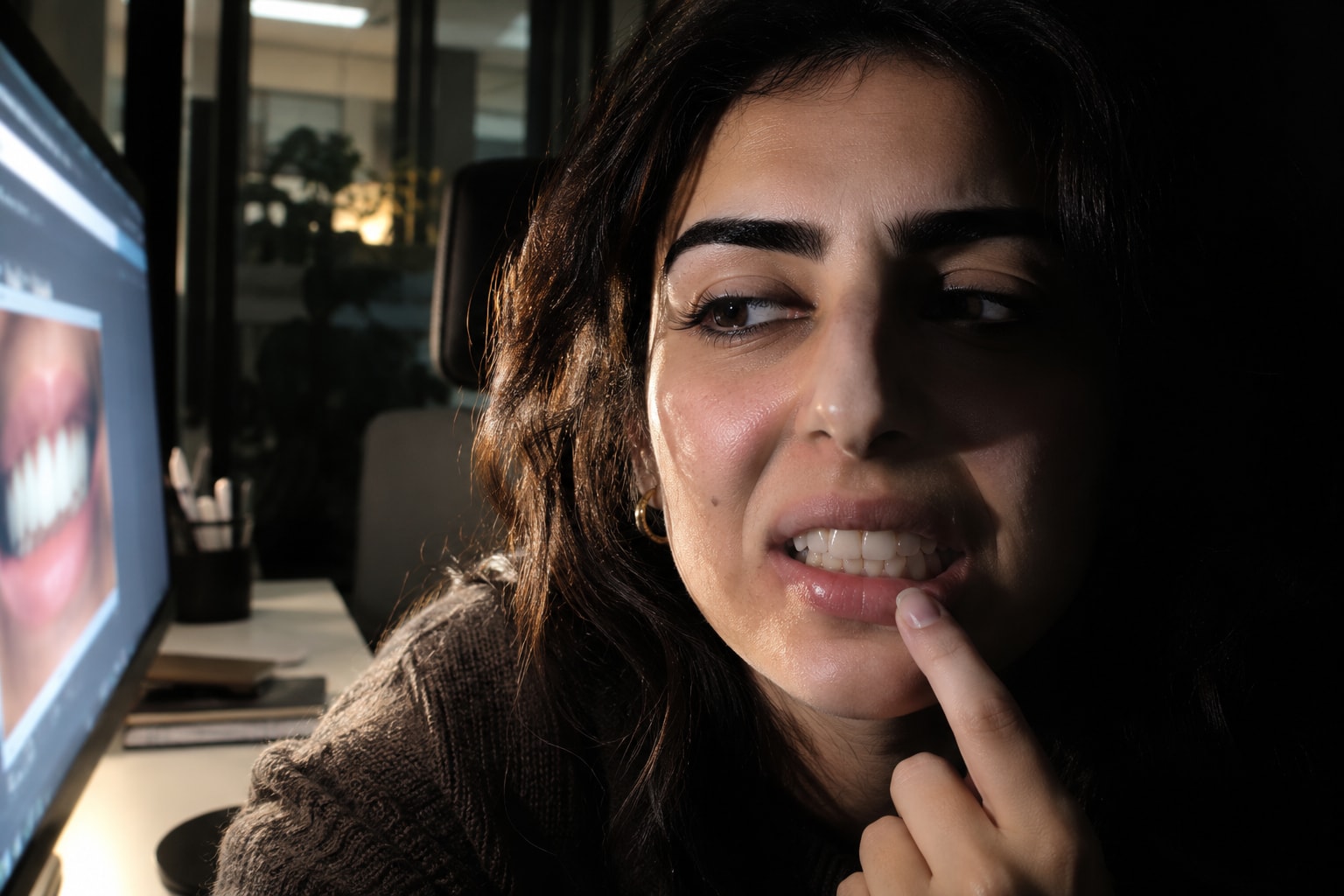
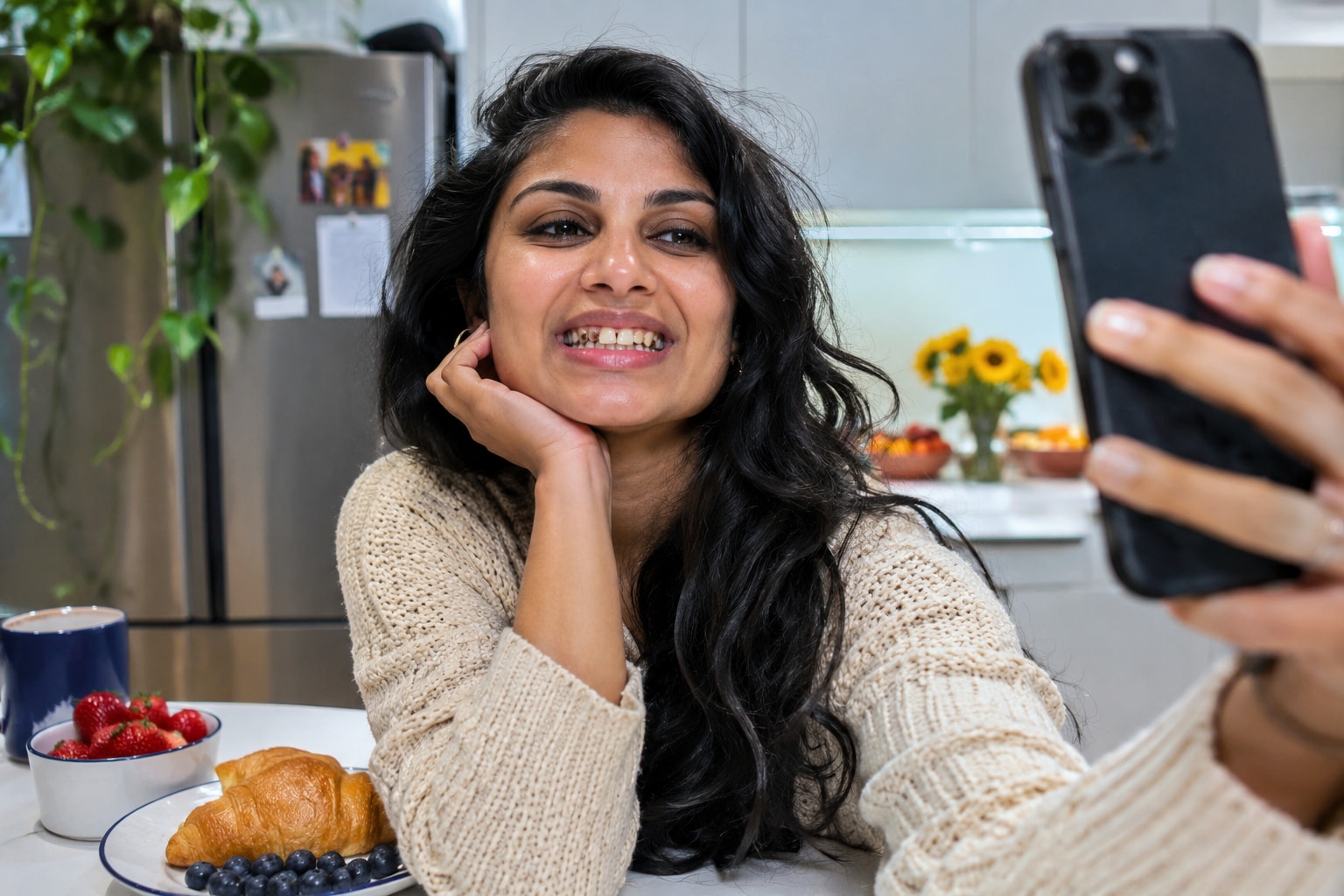
If you're asking, “Why do my teeth look crooked in selfies?”, the camera may be magnifying a small difference rather than creating one. Close distance, head rotation, a tilted phone, and an unfamiliar unmirrored view can all change how your smile reads. A repeatable photo test can separate those effects from tooth movement that needs a dentist or orthodontist.
Why one selfie is weak evidence
A phone photo turns a curved, moving smile into one flat frame shaped by camera position, your gaze, and the shutter moment.
Close distance matters most. A 2024 study photographed 12 people at several distances with phones and full-frame cameras. Compared with the reference setup, phone shots from 8 and 12 inches increased vertical midface measurements by 18% and 12%, respectively.
Those figures describe facial measurements, not tooth alignment, so they don't prove that each tooth shifted similarly on screen.
In another study of 30 dental casts, smartphone photos produced comparable front-tooth measurements, and all measured dimensions were comparable from 24 centimetres. That result matters because a phone isn't an automatic excuse for every uneven-looking smile.
The useful answer is mixed: a selfie can exaggerate a small difference, but it can also show real rotation, overlap, or spacing.
What makes teeth look more crooked in selfies
Short camera distance changes perspective
In a close selfie, parts nearer the camera appear larger than parts farther away. Your dental arch curves backward, so the front teeth and side teeth don't sit on one plane. A slight turn can make one front tooth look wider and the other look narrower.
Moving the phone farther away reduces that distance gap. Crop the final image instead of pushing the camera close to your mouth.
Head rotation moves the apparent midline
The dental midline between your upper front teeth may not match your facial centre, and head rotation makes comparison harder.
A 2019 orthodontic trial photographed people in nine standardised head positions, finding greater measurement errors as head rotation increased. A small turn can make a centred smile look shifted against the nose, lips, or chin.
Phone roll matters too, because biting edges can slope across the frame when the camera and your eyes aren't level. That apparent slope isn't proof that your teeth or jaw are tilted.
A still frame freezes a moving smile
Your lips, cheeks, and jaw move through a smile, and both sides don't have to reach the same point at once.
A clinical study of 380 adults found that posed and spontaneous smiles showed different amounts of teeth and gum. That doesn't blame every uneven selfie on lip movement, but one frozen expression still can't represent your full smile.
The unmirrored view feels unfamiliar
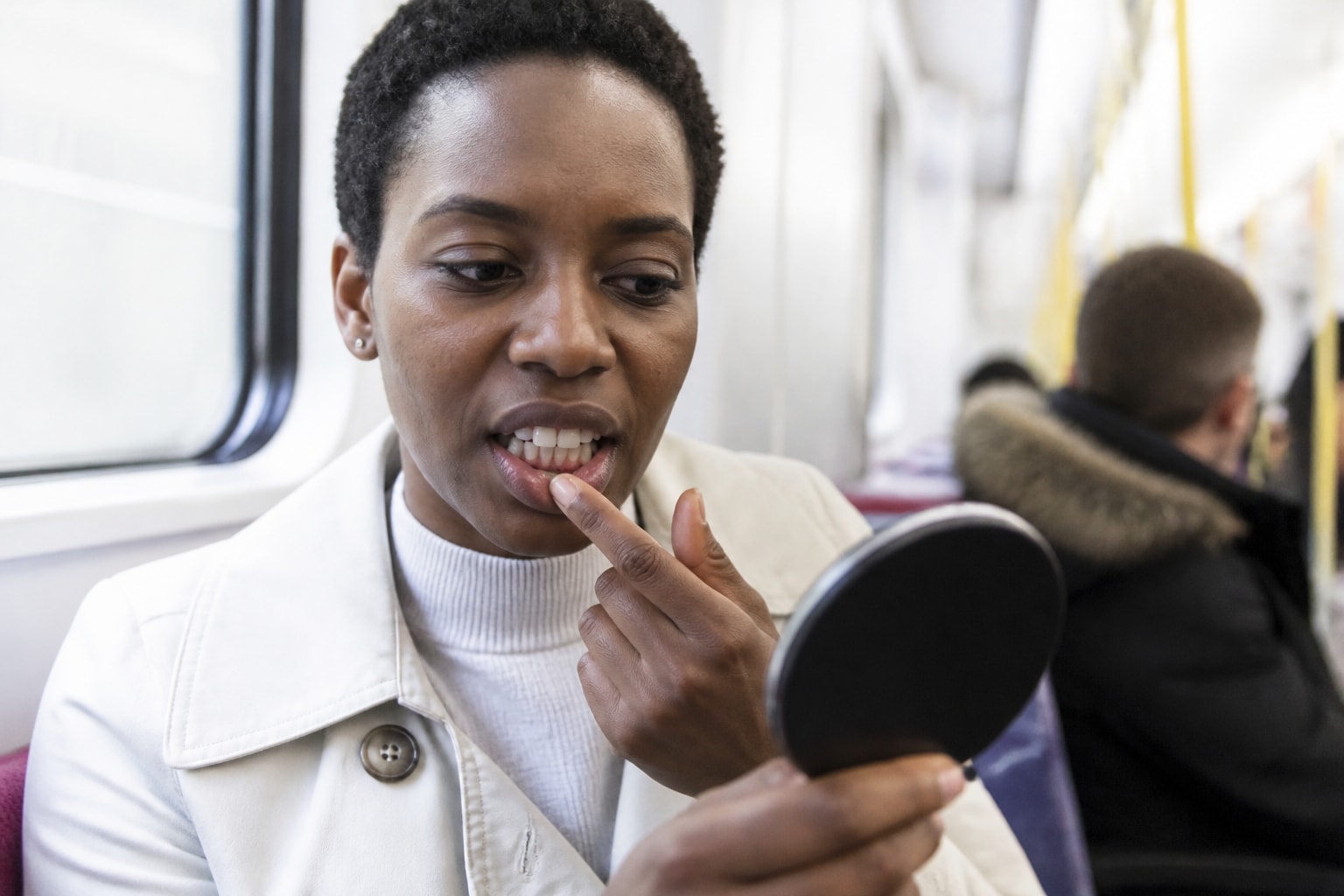
You usually inspect your teeth in a mirror. Many saved photos show the unmirrored view, so every small left-right difference appears on the opposite side.
Familiarity can affect judgment: in one study of 214 female plastic-surgery patients, 73% preferred their mirror-reversed photograph. That was a selected group, so the percentage doesn't apply to everyone, but familiar and accurate still aren't the same thing.
A fair photo test you can do at home
Use this test before judging your smile or paying for any appearance treatment:
- Clean the lens and switch off beauty filters, portrait effects, and face reshaping.
- Use the rear camera with a timer, or ask someone to take the photo.
- Place the phone about one metre away, near face height, then crop later.
- Face the camera straight on. Keep your eyes level and don't lift or tuck your chin.
- Use soft daylight from in front of you. Avoid direct flash and strong side light.
- Take three relaxed smiles, three wider smiles, and a short video while speaking and smiling.
- Repeat the setup once, rather than taking dozens of changing angles.
One metre isn't a clinical rule. It is a practical way to avoid the shortest selfie distances and keep your setup repeatable.
Compare the same type of smile across the set. Don't compare a tight posed smile with a laughing frame. Also view one image flipped and unflipped. If only the unfamiliar version bothers you, mirror reversal is probably affecting your judgment.
Keep the original files if you want to track change. If you upload face photos to an app, check its storage and deletion terms first. An appearance scan can organise repeatable images, but it cannot assess your bite or tooth roots.
Camera effect or real tooth movement?
A camera effect usually changes when you alter the distance, head angle, or phone. The “crooked” side may switch or become much less obvious in the straight-on set.
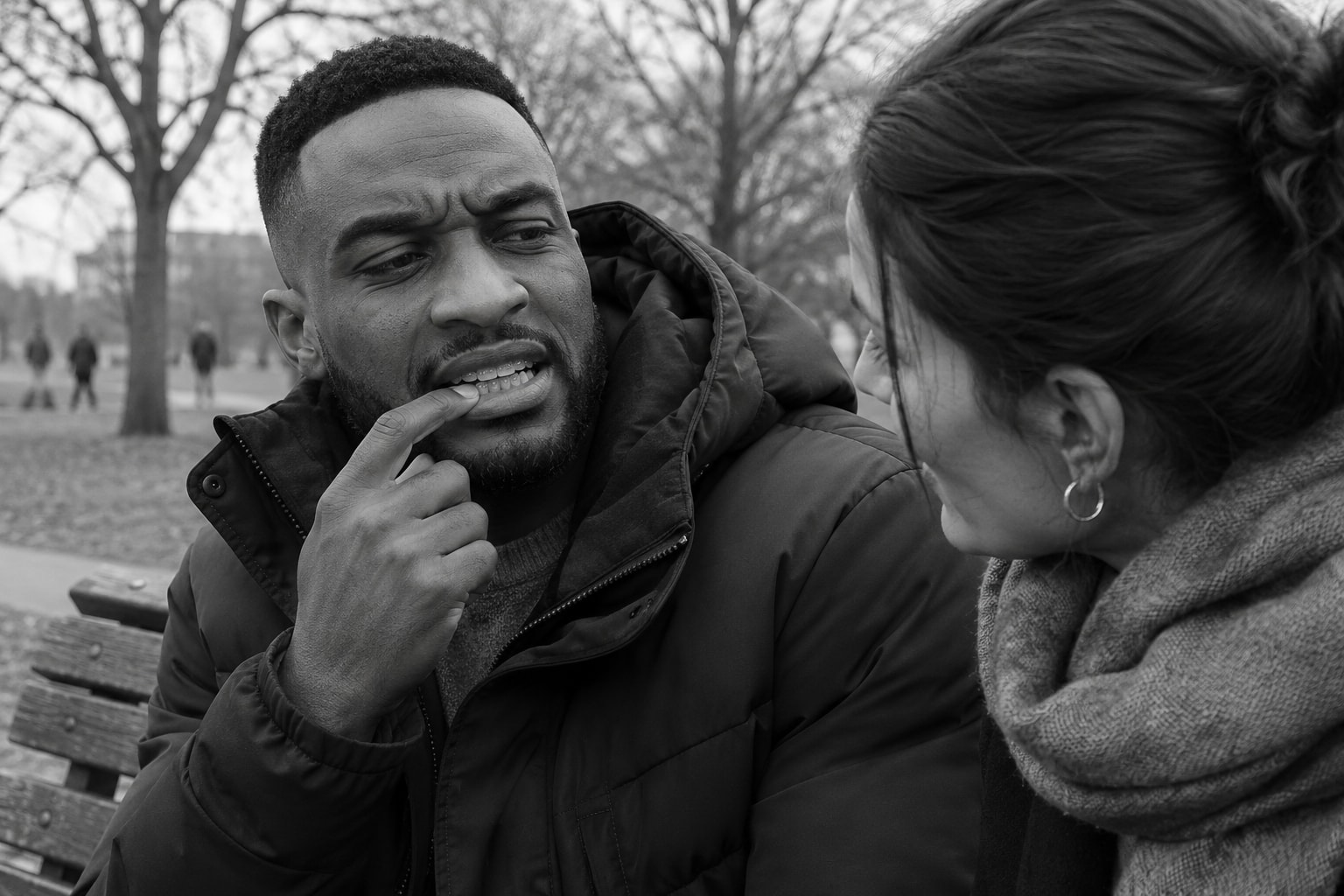
Real alignment tends to stay in the same place. The same tooth remains rotated, overlapped, or spaced across the mirror, standard photos, and video. You may also notice a changed bite or a retainer that no longer fits as prescribed.
Teeth can move after braces or aligners. The American Association of Orthodontists says retention matters because tooth movement continues after active treatment. Contact your orthodontist if your retainer is lost, stops fitting, or your teeth have visibly shifted. Don't try to correct a new change with an old appliance on your own.
A dentist or orthodontist can compare tooth positions, your bite, and earlier records. A selfie shows only surface appearance from one viewpoint. It cannot show roots, bone, or how your teeth meet under pressure.
Don't plan cosmetic treatment from a selfie
Cropping, flipping, or straightening a photo is a useful test, not a diagnosis. It can show that the image conditions caused part of the concern.
Don't choose bonding, veneers, filing, braces, or aligners from one close photo. Those options change different things and carry different costs and risks. Start with a dental exam if the difference remains in a controlled photo set or affects your bite.
The lowest-risk outcome may be no treatment. Small differences in tooth width, edge shape, and smile movement are common visible features, not failures that require correction.

FAQ
Do front cameras make teeth look more crooked?
They can at close range, especially when your head or phone is turned. Yet smartphone dental photos can preserve front-tooth measurements well under controlled conditions. Treat distance and angle as variables to test, not a reason to dismiss every visible difference.
Is the mirror or camera more accurate for teeth?
Neither is a complete reference. A mirror reverses left and right, while a photo flattens depth and freezes one expression. A dental exam, supported by standardised photos or scans, gives a better answer about alignment.
Why does one front tooth look larger in selfies?
That tooth may sit closer to the lens, face the camera more directly, or reflect more light. It may also be wider or rotated in real life. Move the camera back and compare several straight-on frames before drawing a conclusion.
Should I restart an old retainer if my teeth look crooked?
Follow the plan your orthodontist gave you if the retainer still fits normally. If it feels different, no longer seats fully, or follows a long break, contact the orthodontist before changing your wear schedule.