Quick answer
Why do teeth feel loose with clear aligners? A small increase in mobility can happen because orthodontic force temporarily changes the tissues supporting a moving tooth. That sensation isn't proof of damage or a sign that the tooth will fall out.
Contact your orthodontist if movement is visible, gets worse, or affects one worrying tooth. Call as well if it comes with sharp pain, swollen or bleeding gums, trauma, or a tray that no longer fits.
Why orthodontic movement can feel like looseness
A tooth isn't fused directly to your jaw. Its root sits in a socket, with the periodontal ligament between the root and bone. Clear aligners apply controlled force, and the tissues around the root adapt as the tooth changes position.
That process can temporarily change how firmly a tooth feels supported. Tanaka and colleagues measured incisor mobility in 83 orthodontic patients. Mobility increased by the end of active treatment, then fell after retention.
The study used conventional orthodontic treatment, not clear aligners. It also measured groups of patients rather than defining a safe amount of movement for one tooth. It supports a temporary mobility effect, but it can't prove that your loose-feeling tooth is harmless.
Cleveland Clinic says pressure and soreness often appear with each new aligner and usually ease within a few days. Soreness isn't the same as mobility. A tooth can feel tender when you bite without visibly moving in its socket.
A mild pattern versus a warning sign
A mild, short-lived sensation is less concerning when it starts near a tray change. It should settle rather than worsen and come without gum symptoms. Your aligner should still seat as your orthodontist expects.
This is not a home diagnostic test. Contact your orthodontist soon if you notice any of these changes:
- You can clearly see or feel one tooth moving more than its neighbours.
- The looseness increases across several days or tray changes.
- You have sharp pain, or pain lasts longer than a few days.
- The gum is red, swollen, bleeding, receding, or unusually tender.
- Your bite suddenly feels wrong beyond the planned tooth movement.
- The tray rocks, will not seat, or has cracked or warped.
- The tooth changed after a fall, impact, or other dental injury.
Cleveland Clinic advises calling an orthodontist for sharp pain, pain lasting more than a few days, bleeding or swollen gums, or a loose-fitting tray. Those signs don't identify the cause. They show that the treatment needs checking.
Gum disease changes the risk
Active tooth movement and existing periodontal disease are not the same problem. Periodontitis can weaken the bone and ligament that support a tooth. Clenching and dental trauma can also cause adult tooth mobility.
A 2025 expert consensus reviewed orthodontic care for people with periodontal disease. It warned that teeth with moderate to severe mobility may not tolerate the forces used to insert and remove clear aligners. The authors did not say that every slight loose feeling means gum disease.
Your threshold for calling should be lower if you have a history of periodontitis, bone loss, gum recession, or teeth that were mobile before treatment. Bleeding and swelling also deserve an exam. An aligner can't treat the condition underneath it.
What to do today
First, stop checking the tooth every few minutes. Pushing it with your finger or tongue does not give you a clinical mobility grade.
Then collect useful details for your orthodontist:
- Note the tooth, tray number, and date you started that tray.
- Record whether the feeling is stable, improving, or worsening.
- Mention pain, bleeding, swelling, a changed bite, recent trauma, or heavy clenching.
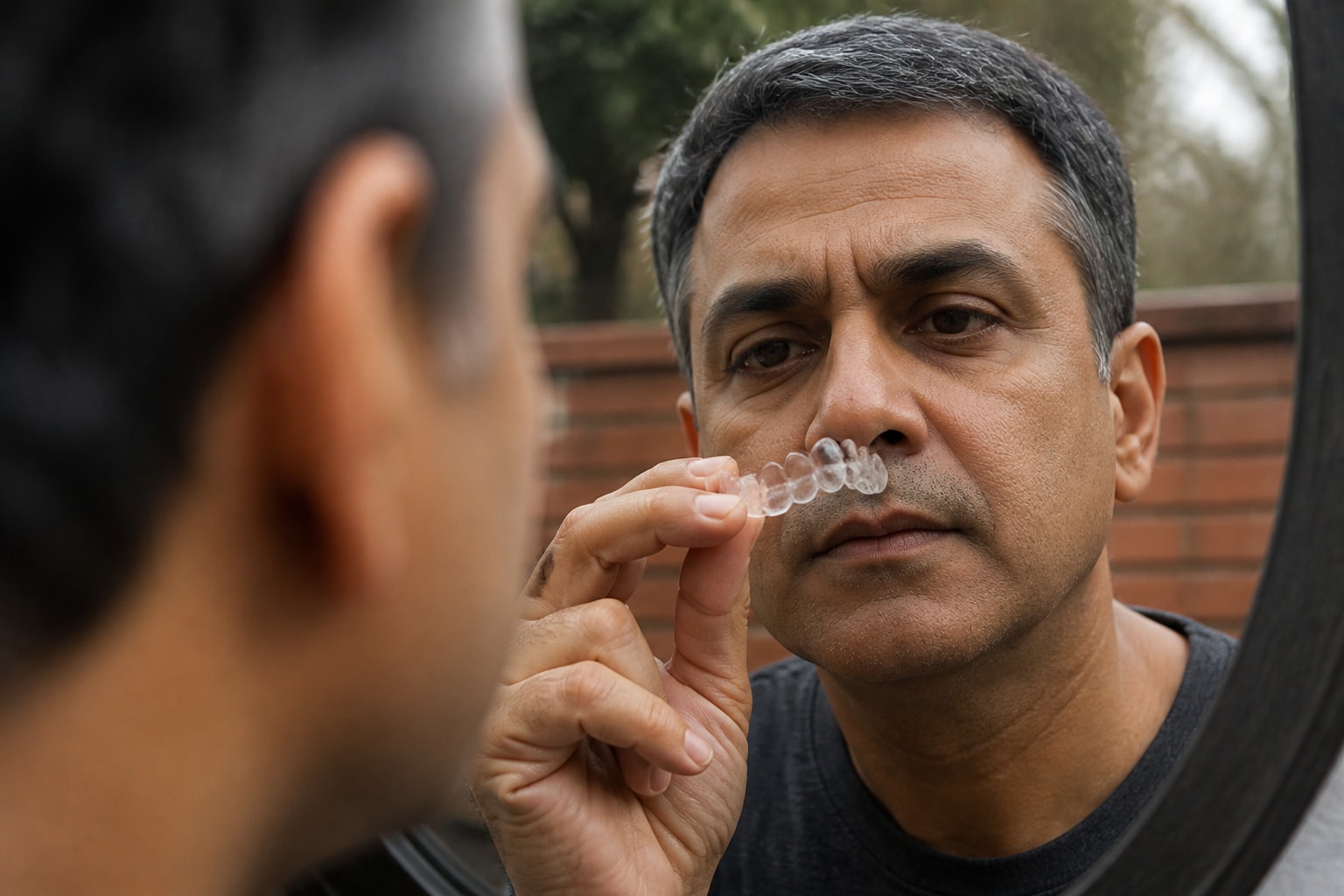
- Check whether the tray sits fully without forcing it.
- Take one clear close-up of the gum line and another with the tray seated.
A photo can document redness, swelling, recession, or a gap under the tray. It cannot show ligament health, bone support, root changes, or true mobility. Keep the images private and send them through your clinic's approved channel if asked.
Do not change your tray schedule, jump back to an old tray, or stop treatment based only on a forum answer. Ask the clinician managing your case. The American Association of Orthodontists says not to keep wearing an aligner that is sharp, painful, or badly distorted. It also says your orthodontist may advise a previous tray while a replacement is arranged.
Keep brushing and cleaning between your teeth unless your dental team gives different instructions. Plaque and inflamed gums make the picture harder to judge, not safer.
When it needs urgent care
Most aligner problems are not emergencies. A sports impact or fall is different.
Seek urgent care after major facial trauma or if a tooth is severely displaced or knocked out. Do the same for heavy bleeding, trouble breathing or swallowing, or severe pain with facial swelling or fever. The American Association of Orthodontists lists these as true dental or medical emergencies.
For visible but non-traumatic mobility, call your orthodontist or dentist promptly. Cleveland Clinic notes that adult loose teeth can have several causes and should be assessed early. An exam can separate planned movement from gum disease, trauma, grinding, or another dental problem.

FAQ
Can a loose-feeling tooth fall out during clear aligner treatment?
A mild change in mobility during planned orthodontic movement does not mean the tooth will fall out. A clearly wobbly adult tooth still needs assessment because treatment movement, gum disease, trauma, and grinding can feel similar without an exam.
Should I stop wearing my aligners if a tooth feels loose?
Don't make a treatment change on your own for a slight sensation. Contact your orthodontist first. If the tray is sharp, painful, badly distorted, or the tooth is visibly moving, call before forcing the next insertion.
How long should the loose feeling last?
There is no evidence-based number of days that makes tooth mobility safe. Pressure and soreness from a new tray often ease within a few days, but mobility is a different sign. Call if the feeling worsens, persists across tray changes, or comes with pain or gum symptoms.
Can a photo or face scan tell whether a tooth is loose?
No. A photo may show gum changes or poor tray seating, but it cannot measure mobility, bone support, or the periodontal ligament. Use images to document a change, then let a dentist or orthodontist examine it.