Quick answer
If your clear retainer keeps cracking, check how it fits and how you take it off. Pulling the tray off from one side can split the plastic, especially if the other side is still gripping your teeth. If it cracks as you put it in, the fit may have changed. Stop wearing the cracked tray, call your orthodontist, and use an intact backup if it still fits comfortably.
Where did the damage start?
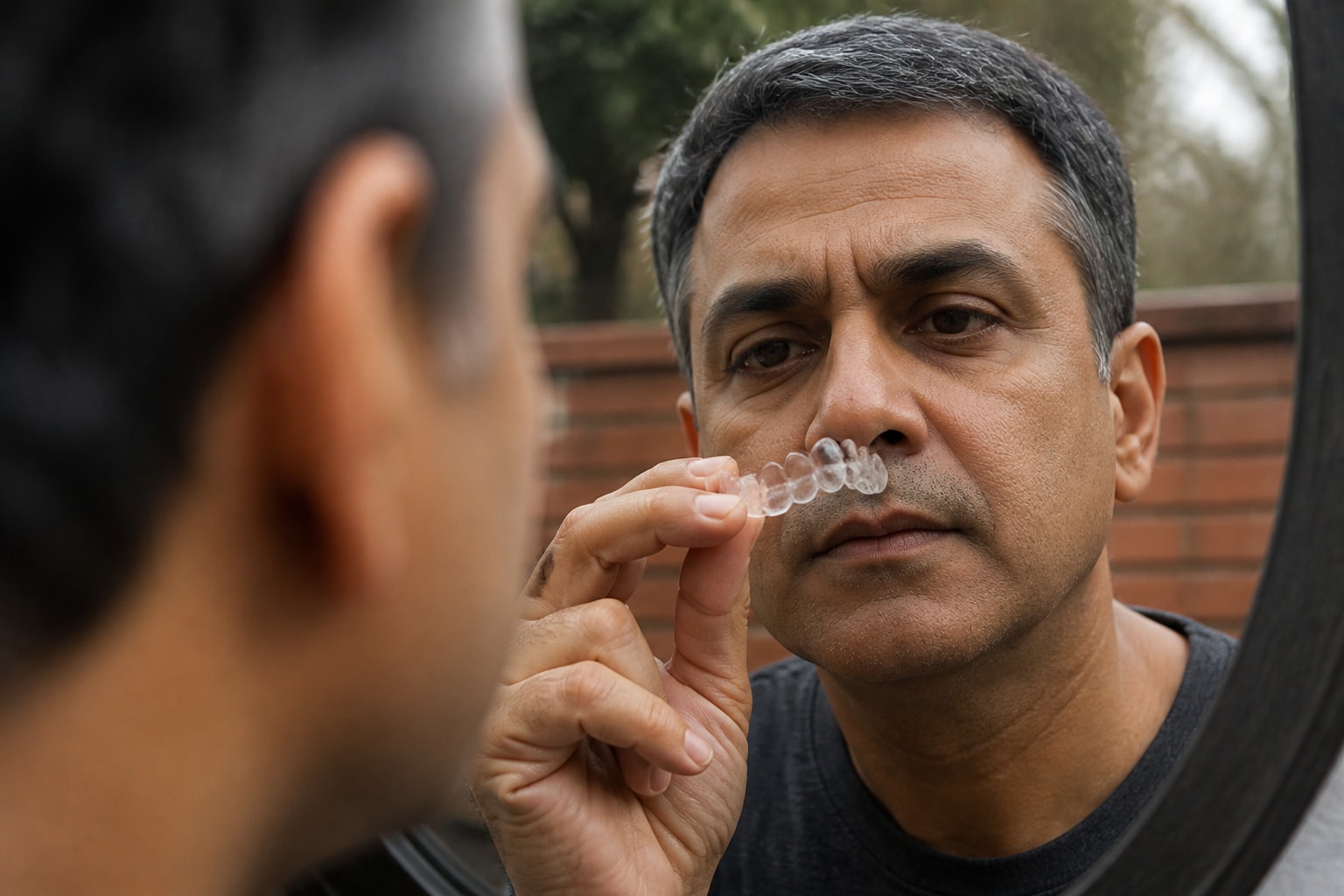
If you still have both broken retainers, lay them side by side and see whether the damage lines up. Look for a split running in from an edge or a thin spot worn through over a tooth. Then think about when you first noticed it.
- If it split during removal, tell your orthodontist where you usually grip it. Mention if one side comes free while the other stays caught on a tooth.
- If it wore thin over a back tooth, point out the exact spot. Ask your orthodontist to check how the teeth meet there when you close your mouth.
- If it started to fit differently, describe what changed. Mention a corner that kept popping up or a gap above a tooth, especially if you noticed it before the crack.
Małgorzata Bilińska and colleagues studied 93 people aged 12 to 25 who wore upper retainers at night. Each also had a fixed wire retainer. At the two-year checkup, 23 of the 78 returning patients had wear on the biting surface of their trays. Seven had a cracked tray.
The team recorded wear and fractures separately. They didn't establish what caused each break, so those numbers can't tell you whether you took yours off incorrectly.
How to take the next retainer off
Start at the back on both sides. Bupa Dental Care warns that pulling the whole retainer off from one side can crack it. Gently loosen one back edge, then the other, before easing the tray off your teeth. If the same tooth catches each time, ask your orthodontist to watch you remove the replacement before you leave.
When you put the replacement in, it should settle fully over your teeth with gentle finger pressure. If you have to bite hard to get the last corner down, stop and call the practice. Pressing harder can crack the plastic without telling you why the corner won't fit.
Heat can also change the fit. If the trouble started after a hot rinse or an afternoon in a hot car, tell the practice. Use cool or lukewarm water to clean your next tray, and leave any reshaping to your orthodontist.
When to ask about teeth grinding
If each tray wears through over the same molar, bring it to your dentist and mention any morning jaw soreness. Someone who sleeps beside you may also have heard you grind your teeth. The hole gives your dentist a place to look, but it can't tell you what your jaw does while you sleep.
The National Institute of Dental and Craniofacial Research describes how dentists check for grinding, also called bruxism. They look for worn or chipped teeth, ask when your symptoms occur, and feel the jaw muscles for tenderness. If your dentist recommends a night guard, ask how you'll also keep your teeth in position after braces.
What to ask before ordering another tray
When you call the practice, tell them where each tray broke and how long it lasted. For example, “Both upper trays split above my right front tooth. The first lasted a year, but the second split in its first week.”
Bring both trays if you still have them. Ask your orthodontist to check how the replacement fit around that tooth and where your teeth meet when you bite.
Thickness is worth discussing if both trays fit well and still split. In a yearlong trial, Yafen Zhu and colleagues compared clear retainers made from plastic 0.75 or 1 millimeter thick. Among the 72 people who finished the trial, the thinner retainers fractured more often. When the team counted all reasons for replacement, including loss, neither thickness clearly lasted longer.

FAQ
Can I wear my cracked retainer for one more night?
The American Association of Orthodontists advises taking a cracked retainer out, even if you can still get it on. A damaged tray can irritate your mouth or hold your teeth in the wrong position. If you don't have an intact backup, call the practice and ask what to wear while you wait.
Can I use an older backup if it feels tight?
Use a backup made to hold your teeth in their current position if it still slips fully into place. A little snugness can be normal. Leave it out and call your orthodontist if it hurts, stops short of a tooth, or takes force to put on.
Can a small split be repaired?
Your orthodontist can tell you whether a repair would still let the tray hold your teeth in position. Leave the split as it is and keep the tray in its case until they can examine it. If the tray has changed shape, you may need a replacement.
Does a crack mean my teeth have already shifted?
A crack alone can't tell you whether your teeth have moved. If the tray stopped fitting before it split, tell your orthodontist whether you missed some nights or exposed it to heat. They can check whether the plastic changed shape or whether your teeth have moved since the tray was made.