Quick answer
Floss shredding between the same two teeth can come from a tight contact, a rough tooth surface, or a filling edge. The floss itself and how you pull it through also matter, so don't keep forcing it through a snag. If fresh floss repeatedly catches there, arrange a dental check instead of trying to smooth the tooth yourself.
Why the strand keeps catching
The contact point is where neighbouring teeth touch, and floss must pass through it before you can clean their sides.
Three explanations are worth separating:
- A tight contact puts friction on the strand, especially with nylon floss made from multiple fibres, as Colgate explains.
- A rough edge can catch those fibres. Dentist Marvin Lean's patient guide lists small chips and uneven edges around fillings or crowns as possible causes.
- The strand may already be worn, making it harder to tell whether you're meeting a fresh snag.
A catch doesn't automatically mean a filling has failed or identify a cavity; those conclusions need an examination.
Tartar adds another possible rough surface. The American Dental Association describes tartar as hardened plaque that needs professional removal. Pulling harder won't remove it safely.
Make one gentle technique check
If the area is painless and nothing is stuck, check your technique during your next normal cleaning. Stop if the floss won't pass gently.
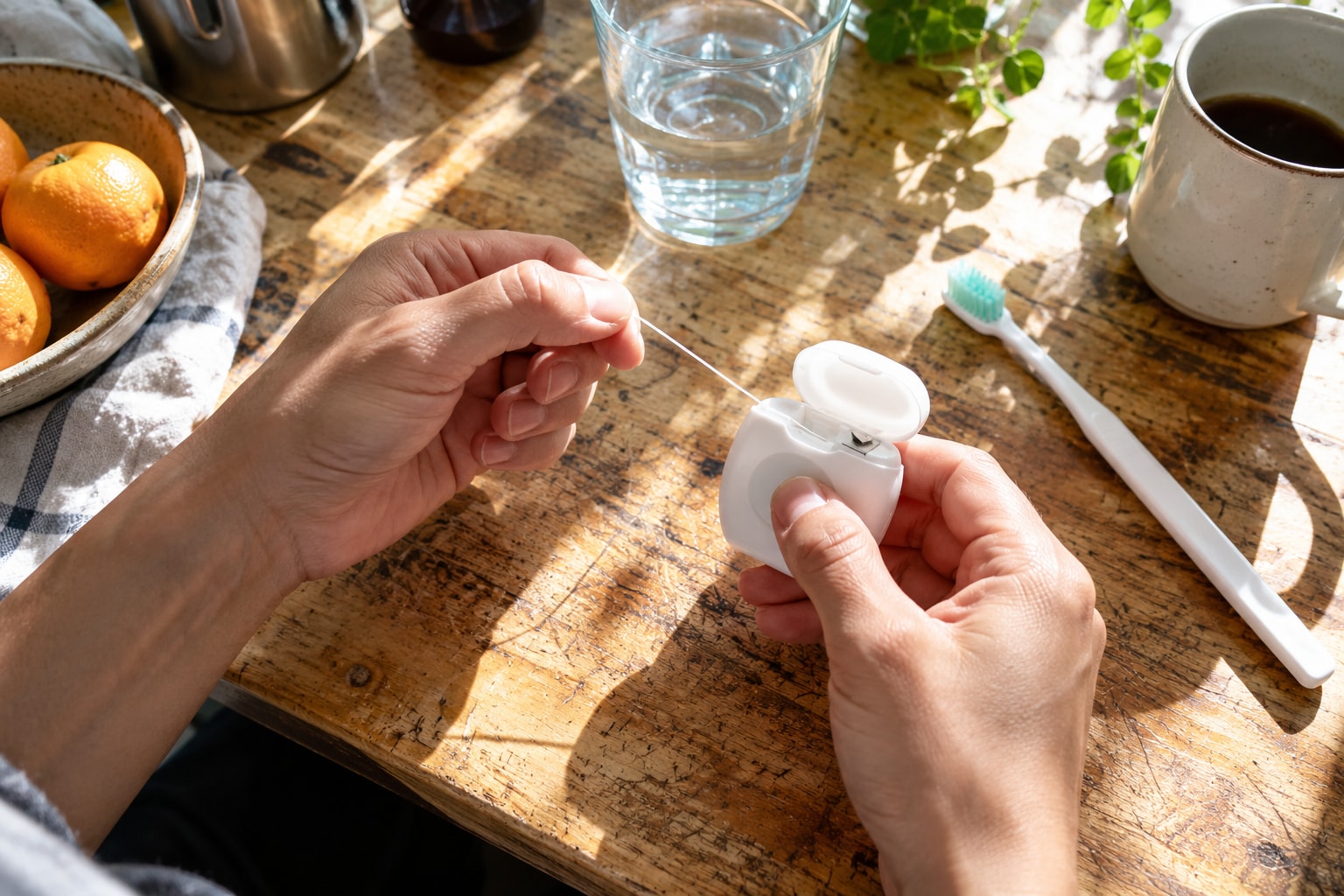
Use a fresh section and hold a short working length between your fingers for better control, as Colgate recommends.
Ease the strand through the contact with a gentle rubbing motion. Once through, curve it around one tooth and move it gently up and down. Then clean the facing side of the neighbouring tooth.
Don't snap it towards your gums, because excessive pressure can damage the tissue between teeth, according to the ADA.
If your usual floss frays, trying a smoother, coated option is reasonable. Ask your hygienist for a suggestion that suits that particular space.
A different floss passing smoothly doesn't prove that a tooth or filling is healthy.
What the research can actually tell you
Floss wear varies by product and person. In 2022, Adrian Stavrakis and colleagues tested four commercial flosses before and after use by ten volunteers.
They examined the strands with microscopes and measured how they stretched and broke. Used samples showed changes in their mechanical performance, with differences between products.
The volunteers used their own flossing methods, so the forces on each strand weren't standardised. The findings can't predict how every current product will behave in your mouth.
This small materials study wasn't designed to identify decay or establish how often recurring snags mean a dental problem.
A frayed strand alone cannot tell you what's happening between your teeth. The location and dental examination matter more than the appearance of the broken floss.
If floss gets stuck or leaves fibres behind
Stop pulling hard, and don't keep feeding more strands through the same snag.
The ADA advises gentle flossing for trapped objects and warns against sharp or pointed tools. That rules out digging with pins, needles or metal picks.
Contact your practice if a loose fragment won't come away gently, and tell them that floss remains trapped. Don't scrape beneath the gum or try to cut the fragment out.
If your tooth hurts, NHS guidance advises avoiding floss around it while awaiting dental care. Keep cleaning the comfortable areas of your mouth without repeatedly disturbing the painful spot.
What to tell your dentist
Book a check when the same contact keeps shredding fresh floss despite gentle technique. Mention it promptly if the problem began after a filling or crown.
Give the location, when it started, and whether the snag happens as the strand enters or comes back out.
For example: “Since the filling, floss catches coming out between my upper left back teeth.” Mention any pain or trapped fibres.
Your dentist can inspect the contact and any restoration there. Ask them to show you which cleaning tool fits before you leave.
Seek dental advice sooner if you have pain when biting, fever, a bad taste, or swelling of your cheek or jaw. NHS guidance also recommends a dental visit for toothache lasting more than two days.
Get emergency help if swelling affects your breathing, swallowing or speech, or spreads around your eye or neck.
FAQ
Does shredding floss always mean a cavity?
No, tight contacts, the floss material and rough dental work can also explain fraying. You can't identify the cause by inspecting the strand. Repeated catching deserves an examination, but it doesn't establish that you need a filling.
Why did floss start shredding after a filling?
The new restoration may have an edge or contact that catches the fibres. Ask the practice that placed it to check the area. Don't try to wear the snag down with repeated flossing or use abrasive strips yourself.
Which type of floss is less likely to shred?
Colgate notes that single-filament floss is less prone to fraying than nylon made from multiple strands. A smoother option may help with tight contacts, but no product repairs a rough tooth surface. Choose with your dentist or hygienist if the same spot keeps catching.
Can I use a water flosser instead?
A water flosser can help if string floss is difficult to use, according to the ADA. Ask whether it suits your teeth and dental work. It provides another cleaning option, but it doesn't remove the need to investigate a recurring snag.