Quick answer
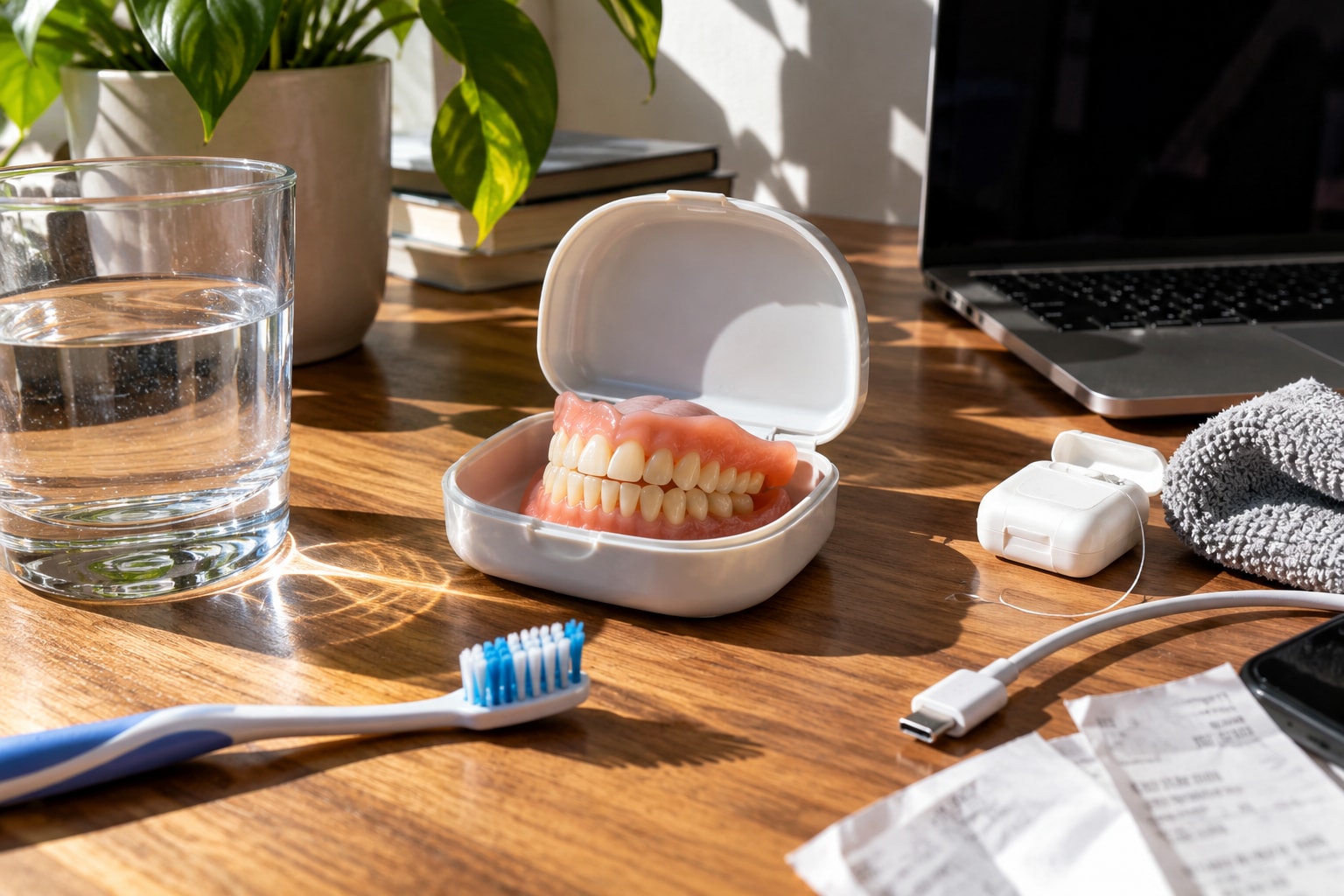
Why does my face look sunken with dentures? The appliance may provide too little lip support, or its bite height may leave your lower face looking short. Healing after extractions and gradual tissue shifts under the base can also affect fit. A dentist or prosthodontist should examine the seated denture, bite, tooth position, and base rather than judge one selfie.
What “sunken” can mean
People use “sunken” for several different effects. The lips may look flatter, the cheeks may seem less supported, or the distance from nose to chin may look shorter. A denture that shifts during speech is another reason to have the fit checked.
First separate two situations. If your face looks hollow only after removal, part of the difference comes from losing the denture's support. A new hollow look while it is fully seated raises a different question about fit, design, or bite.
Research can show which facial areas move, but it cannot diagnose your denture from appearance alone. A 2025 study scanned 102 adults over 65 with no natural teeth, both with and without their new complete dentures. It compared them with 30 adults over 65 who had natural teeth, all from one Slovenian population.
The complete dentures widened the mouth opening and the visible red part of the upper lip. They also lengthened the upper lip and made the facial profile appear farther forward. Even with dentures, the group without natural teeth had shorter, more retruded faces than the control group. A flatter profile was reported only among women.
These group averages came from older adults with complete dentures, scanned only one to three weeks after fitting. They do not automatically apply to younger people, partial dentures, or your individual fit.
Five checks before assuming the cause
1. Check when the change started
Your face can look different with a new denture because it restores support that was missing. You may also need several fitting visits while the soft tissues adapt.
Timing matters after recent extractions. The NHS says immediate dentures often need adjustment or replacement within the first year because the mouth changes shape while healing.
If an older denture now looks different, do not assume your face changed overnight. The denture may have worn down, and the gums and jawbone beneath it may have shifted too.
2. Look for movement, not just hollowness
Check whether the denture slips, clicks when you speak, pinches, or needs more adhesive than before: these signs point to fit, not looks.
The NHS advises seeing a dentist when dentures slip, click, hurt, or no longer fit properly. The American College of Prosthodontists also warns that tissue changes can reduce retention, stability, and support.
Do not try to compensate for poor fit with more adhesive. The college's guidance says excessive adhesive should not mask a poorly fitting denture.
3. Ask about bite height
Dentists call the lower-face height when opposing teeth meet the occlusal vertical dimension. If that height is too low, the lower third can look shortened.
Wear on the artificial teeth can affect how the upper and lower dentures meet. Shifts in the tissues under the base can also alter that relationship.
You can't settle this from a front-facing photo. A 2017 review found no single accurate method for setting bite height in complete dentures, so clinicians combine several checks.
4. Compare lip and cheek support
If seating the denture is comfortable, take one front photo and one profile photo. Keep the camera distance, head position, and lighting the same.
Look for a consistent pattern around the lips and lower face, not a shadow in one frame. The 3D study found its clearest denture-related effects around the mouth.
Bring the photos to your appointment. They can show what bothers you, but they cannot identify whether tooth position, base contour, bite height, or tissue loss is responsible.
5. Check the denture's age and condition
Dentures do not last forever: their teeth and base can wear, chip, or crack while the supporting tissues keep shifting.
There is no evidence-based rule that every denture must be replaced on one fixed schedule. Still, the American College of Prosthodontists recommends a replacement evaluation once a denture has been used for more than five years.
Cleveland Clinic gives an average lifespan of seven to ten years, but condition matters more than the calendar. Earlier assessment makes sense when support, comfort, speech, or chewing has changed.

What to ask your dentist to check
Use specific questions so the appointment doesn't stop at “it looks fine.” Ask:
- Has my occlusal vertical dimension changed?
- Are the front teeth and denture base giving enough lip support?
- Has the fit changed because my gums or jaw ridge changed?
- Would an adjustment, reline, rebase, or remake address the problem?
- Is this expected healing from recent extractions?
A reline alters the surface that rests on your gums. It may help when the denture no longer sits closely against them. If wear, tooth position, or bite is responsible, ask why a reline would be enough.
Whether you need a reline, rebase, or remake depends on the source of lost fit or support. That decision requires an examination of your mouth and the denture, not an online photo.
Have your dentist adjust a painful or poorly fitting denture instead of altering it yourself. Cleveland Clinic says getting the desired fit often takes several visits.
Track appearance without overreading photos
Use photos to document a pattern, not diagnose it, and keep the room, light, camera, distance, head position, and expression consistent.
Take one image with the denture fully seated and note whether it slipped during the shot. Avoid comparing a close selfie with an older portrait taken from farther away.
A photography study of 12 people found midface distortion at close selfie distances. It did not study dentures, but it shows why matching camera distance matters.
Use several comparable images instead of treating one fold or shadow as a structural difference. A consistent pattern gives your dentist a clearer starting point.
FAQ
Can ill-fitting dentures make my face look sunken?
They can reduce visible support if they no longer fit or if their teeth and base no longer hold the intended bite. Appearance alone can't confirm poor fit, so check for slipping, clicking, soreness, and changes in chewing or speech.
Will a denture reline restore facial fullness?
A reline may help when the denture base no longer sits closely against your gums. It will not solve every cause, so your dentist must first check the bite, wear, and tooth position.
Do dentures stop jawbone loss?
No, conventional dentures replace missing teeth, but the jawbone can keep shrinking after tooth loss. That is why a denture that once fitted well can loosen and provide less support over time.
How long after extractions should my face settle?
There is no single deadline because healing differs. The NHS notes that immediate dentures may need adjustment or replacement up to a year later as the mouth changes shape.