Quick answer
Why does oily hair look thinner? Sebum makes neighboring strands stick into small groups, so fewer separate hairs spread across the scalp. The wider gaps expose more skin, especially around your part or crown.
That change can be temporary and does not prove oil caused hair loss, but oil can make existing thinning easier to see. Compare clean, fully dry hair under fixed conditions before drawing a conclusion.
What oil changes on your scalp
Sebaceous glands release sebum onto your scalp, and that oil gradually travels along each hair shaft. A 2019 study measured this process in 123 Chinese men aged 18 to 35. The self-described greasy group showed about twice the regreasing rate of the nongreasy group.
That study measured oil movement, not hair loss, and included only young Chinese men. All authors worked for L'Oréal, so this was industry research.
A separate shampoo-frequency study described greasy hair as oily shine plus adhesion between strands. Once several strands move as one bundle, they cover less width, leaving more scalp visible between those bundles.
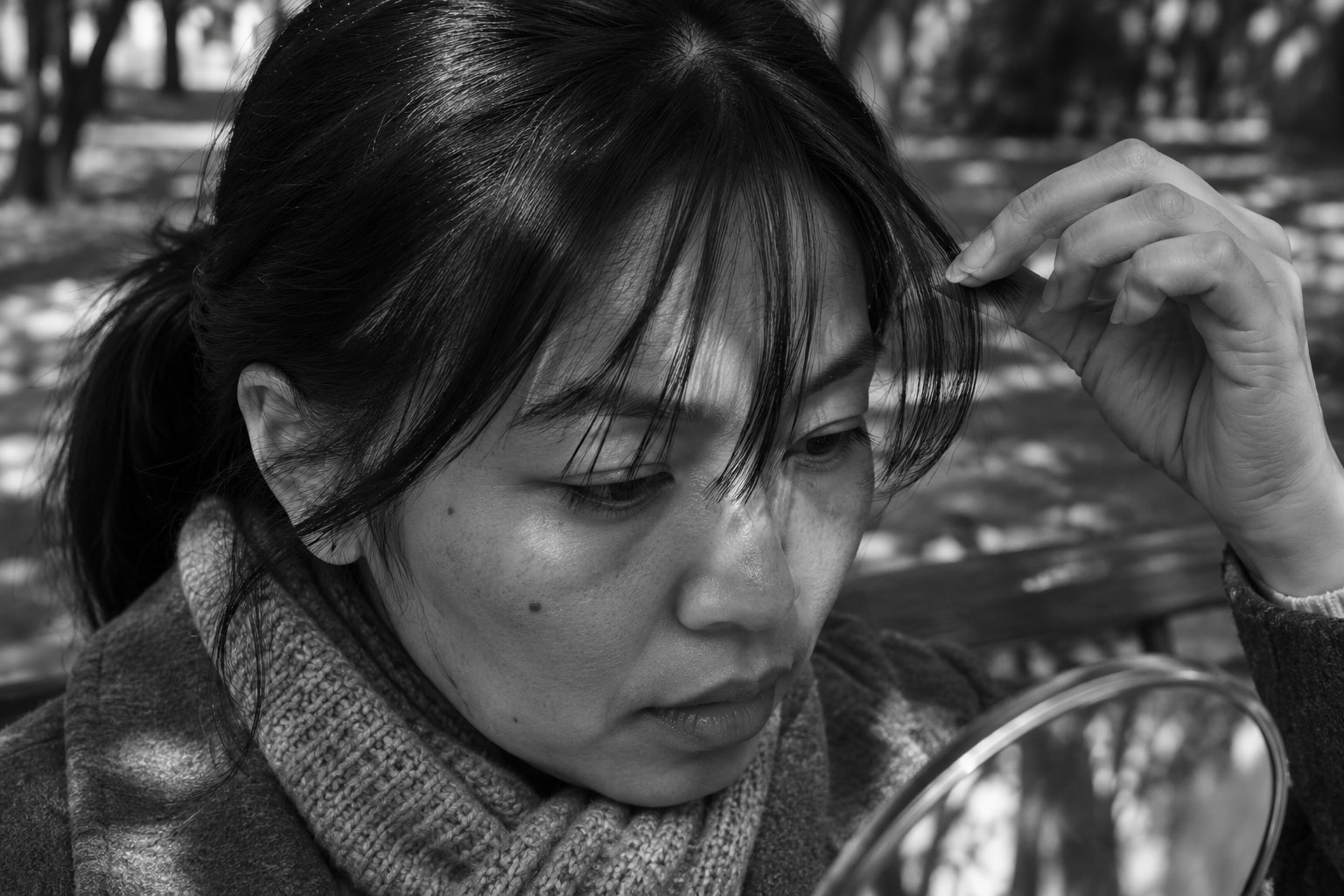
This effect can be stronger when your hair is fine or your starting density is lower. It can also reveal true thinning that clean, lifted hair partly hides. An oily photo cannot tell those possibilities apart.
Run a two-state test
Use two photos taken on the same day. This removes most of the guesswork without pretending a photo can diagnose hair loss.
- Take the first photo before washing, while your roots look oily.
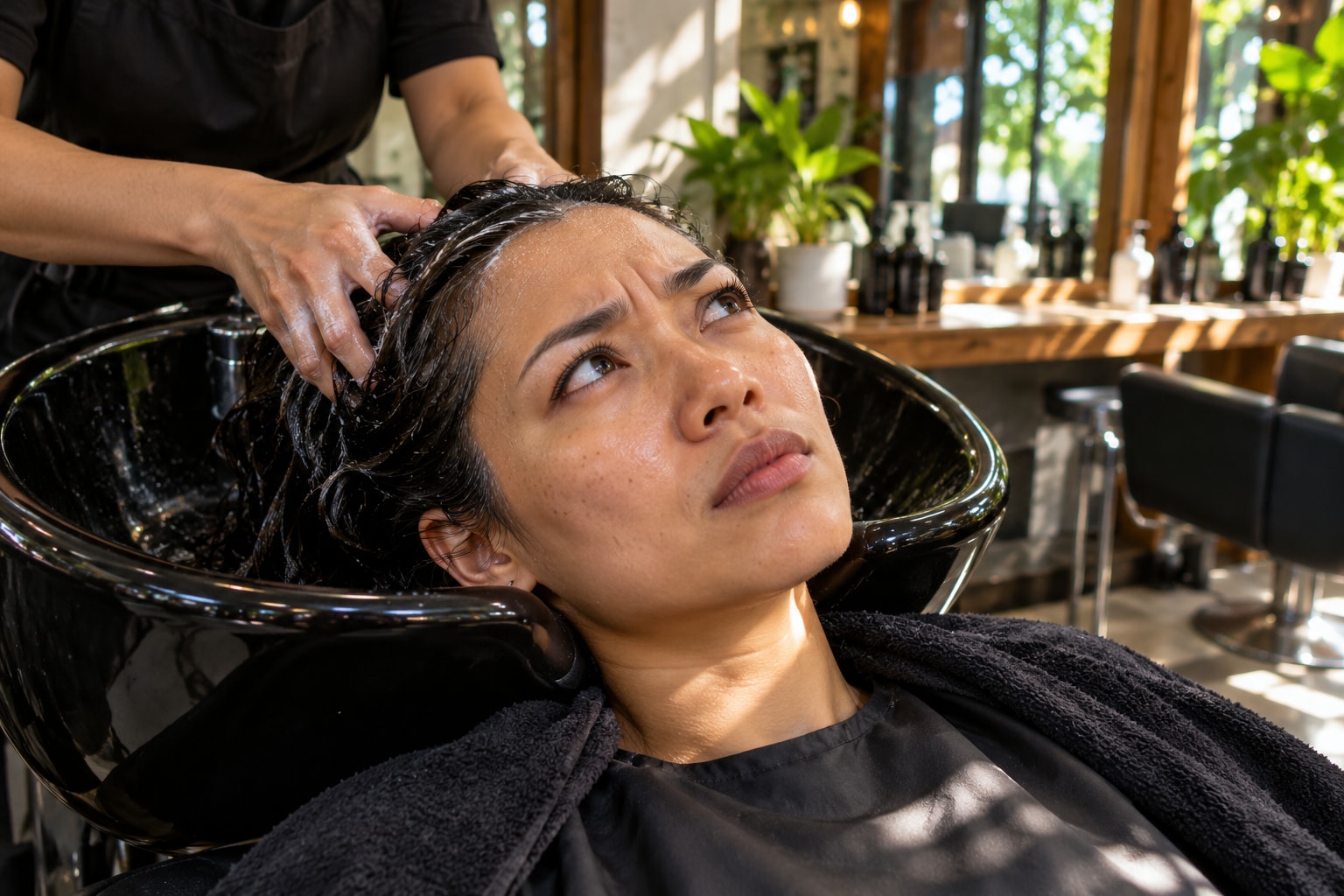
- Wash with your usual shampoo, focusing it on the scalp rather than the full length.
- Use conditioner where your hair type needs it. For fine or straight hair, the American Academy of Dermatology advises applying it to the ends.
- Let your hair dry fully. Do not add scalp oil, gel, wax, or heavy root products.
- Recreate the first part, camera distance, angle, zoom, lighting, and background.
Clinical photography guidance puts consistency first when tracking hair over time. Direct light can create scalp glare, so use soft, even light for both pictures and avoid mismatched settings.
If the visible gaps shrink after washing and drying, clumping explains at least part of the difference. It does not rule out underlying thinning. For trend tracking, repeat the clean, dry photo under the same setup at regular intervals.
Clumping or real hair loss?
Changes caused mainly by oil tend to follow the wash cycle. Your part looks wider as roots become greasy, then returns near its usual width after washing. The appearance may also change quickly after adding an oily or heavy styling product.
Real hair loss creates a trend that remains under comparable conditions. The American Academy of Dermatology lists a widening part, a receding hairline, a growing bald spot, and a thinner ponytail as common signs. Those changes usually develop gradually.
Both can happen together. Sebum may expose reduced density that was less obvious when clean hair had more separation and lift. That is why the clean, dry baseline matters more than your worst mirror check.
Arrange a medical assessment if comparable photos show continued loss. Do the same for a sudden bald patch, heavy shedding, intense itching, burning, tenderness, scale, sores, or pus. A dermatologist can inspect your scalp and hair pattern instead of guessing from one image.
Make oily roots look fuller safely
Wash according to how oily your scalp gets, not a schedule copied from someone with different hair. The American Academy of Dermatology says straight hair with an oily scalp may need daily shampooing. Dry, thick, curly, or textured hair often needs a different schedule.
A 2021 study adds useful context, with limits. Procter & Gamble funded the work, and two authors were company employees. It studied Asian participants without specific scalp disease and found better hair and scalp ratings with more frequent washing. In its controlled arm, daily washing caused no measured hair damage compared with weekly washing.
That result does not make daily shampoo right for every hair type. It does challenge the claim that washing oily hair daily automatically causes hair loss. Choose a shampoo made for your hair type, clean the scalp, and rinse it well.
Dry shampoo can make roots look fuller because it absorbs oil, but it does not clean your scalp. Dermatologists at the American Academy of Dermatology advise regular shampoo and water after one or two dry-shampoo uses.
Use a small amount only where roots are greasy, then brush or comb it out as directed. Stop if your scalp becomes itchy, sore, or irritated. Adding more can leave hair stiff, dull, or visibly powdery.
Keep rich conditioners, oils, and heavy creams away from the roots during your comparison test. This temporary step stops added product from recreating the clumping you are trying to measure.
Do not start hair-loss drugs or supplements because of one greasy-hair photo. Persistent change needs a diagnosis first, since treatment depends on the cause.

FAQ
Does oily hair mean I am balding?
No. Oil commonly makes strands adhere and exposes more scalp between them. Suspect a real change when clean, dry photos show a widening part, receding hairline, growing patch, or lower density over time.
Can washing oily hair every day cause hair loss?
Daily washing did not cause measured damage in one controlled study of Asian participants without scalp disease. Your best frequency still depends on oiliness, hair texture, products, and scalp comfort. Use gentle technique and adjust if dryness or irritation develops.
Should I judge hair density when it is wet or dry?
Judge trends using clean, fully dry hair. Keep the part, lighting, camera, distance, and background the same each time. Wet or oily strands group together and can make the scalp look more exposed.
Can dry shampoo hide visible scalp from oily hair?
It can absorb oil and make hair look fuller for a short time. It cannot diagnose thinning or replace washing. Use a small amount, follow the label, and wash with regular shampoo after one or two uses.