Quick answer
Does hair mousse cause hair loss? Normal use isn't known to cause pattern baldness or kill healthy follicles. Mousse can still dry or stiffen hair, so rough brushing may snap the shaft. A formula can also irritate your scalp, which needs a different response from ordinary breakage.
If your part is widening or your hairline keeps receding, don't blame the newest product by default. Stop the mousse if it burns, itches or causes a rash. Track the pattern, then ask a dermatologist if thinning continues.
Mousse usually isn't the cause of follicle hair loss
Hair mousse is a styling foam. It coats the hair shaft and helps strands hold shape or volume. It doesn't target the hormones or immune processes behind common forms of alopecia.
The direct evidence on mousse is limited. A 2002 review concluded that cosmetic hair products don't cause hair loss in normal use. It wasn't a clinical trial of mousse, and its author worked for Procter & Gamble. That makes the conclusion useful, but not final proof that every formula suits every scalp.
Dermatology guidance points to a more practical risk. Long-hold products make hair rigid. Combing or brushing after the product sets can break strands, especially when hair is already bleached, heat-damaged or fragile.
Breakage can make hair look thinner. It isn't the same process as a follicle stopping hair growth.
Three ways mousse can still cause trouble
Stiff hair plus friction can cause breakage
Mousse forms a film that holds strands in position. Some formulas also contain volatile alcohols. Poison Control notes that alcohol-containing mousses can have a drying effect, which may leave hair easier to damage during styling.
The bigger mistake is often mechanical. You apply strong-hold mousse, let the hair turn crisp, then drag a brush through it. The American Academy of Dermatology warns that combing hair after a long-lasting hold product can cause breakage.
A formula can irritate your scalp
Mousse can touch the scalp even when you aim for the roots. Fragrance, preservatives or another ingredient may trigger irritant or allergic contact dermatitis. Signs include itching, burning, redness, scaling or swelling. Redness can be harder to see on darker skin, so pay attention to heat, soreness and texture changes too.
An allergy can start after years of using cosmetics without trouble. Stop the product if a rash appears. Don't keep testing it on an inflamed scalp.
Styling can reveal shedding that already started
Seeing hairs on your hands after scrunching doesn't prove mousse caused them. Wetting, handling and styling can collect hairs that were ready to shed. The American Academy of Dermatology says losing 50 to 100 hairs a day can be normal.
Excess shedding can start months after illness, major stress, surgery, rapid weight loss or childbirth. That delay makes the product you used today an easy but unreliable suspect. A receding hairline, widening part or growing bald spot points more toward hair loss than routine shedding.
Breakage or shedding: check the pattern
Look at several wash days, not one dramatic shower. Wash frequency changes how many loose hairs appear at once.
- Breakage leaves shorter pieces of mixed lengths. You may also see rough ends, new frizz or a thin-looking area where hair gets the most brushing and heat.
- Shedding usually involves full-length strands coming from across the scalp. The main change is more loose hair than your normal baseline.
- Pattern hair loss tends to change a stable area over time. Common signs include a widening part, a thinner ponytail, a receding hairline or a bald spot that slowly grows.
- Scalp inflammation adds symptoms. Itch, burning, scaling, sores or swelling make a product reaction or scalp condition more plausible.
Don't judge density from one bathroom photo. Wet strands clump, overhead light exposes more scalp, and a different part can create a false change. Compare dry, unstyled hair under the same light, distance and camera.
Run a simple two-week mousse reset
A reset won't diagnose hair loss. It can show whether mousse is worsening dryness, breakage or scalp symptoms.
- Take baseline photos of your hairline, part and crown. Use dry hair, the same part and soft front-facing light.
- Stop only the mousse for two weeks. Keep your shampoo, wash schedule, heat use and hairstyle as steady as practical.
- Note itch, burning, flakes and short broken hairs after each wash. Don't chase an exact daily hair count; wash timing changes the pile.
- If irritation settles, replace the product with a fragrance-free or lighter-hold option. Don't reuse a product that caused swelling, a strong rash or eye symptoms.
If nothing changes, mousse becomes a less likely explanation. Keep the photos and look back over the previous three months for illness, dieting, medication changes or major stress. Don't stop a prescribed medicine without speaking to the clinician who prescribed it.
Use mousse with less breakage
You don't need to give up volume if your scalp is calm and your hair isn't snapping.
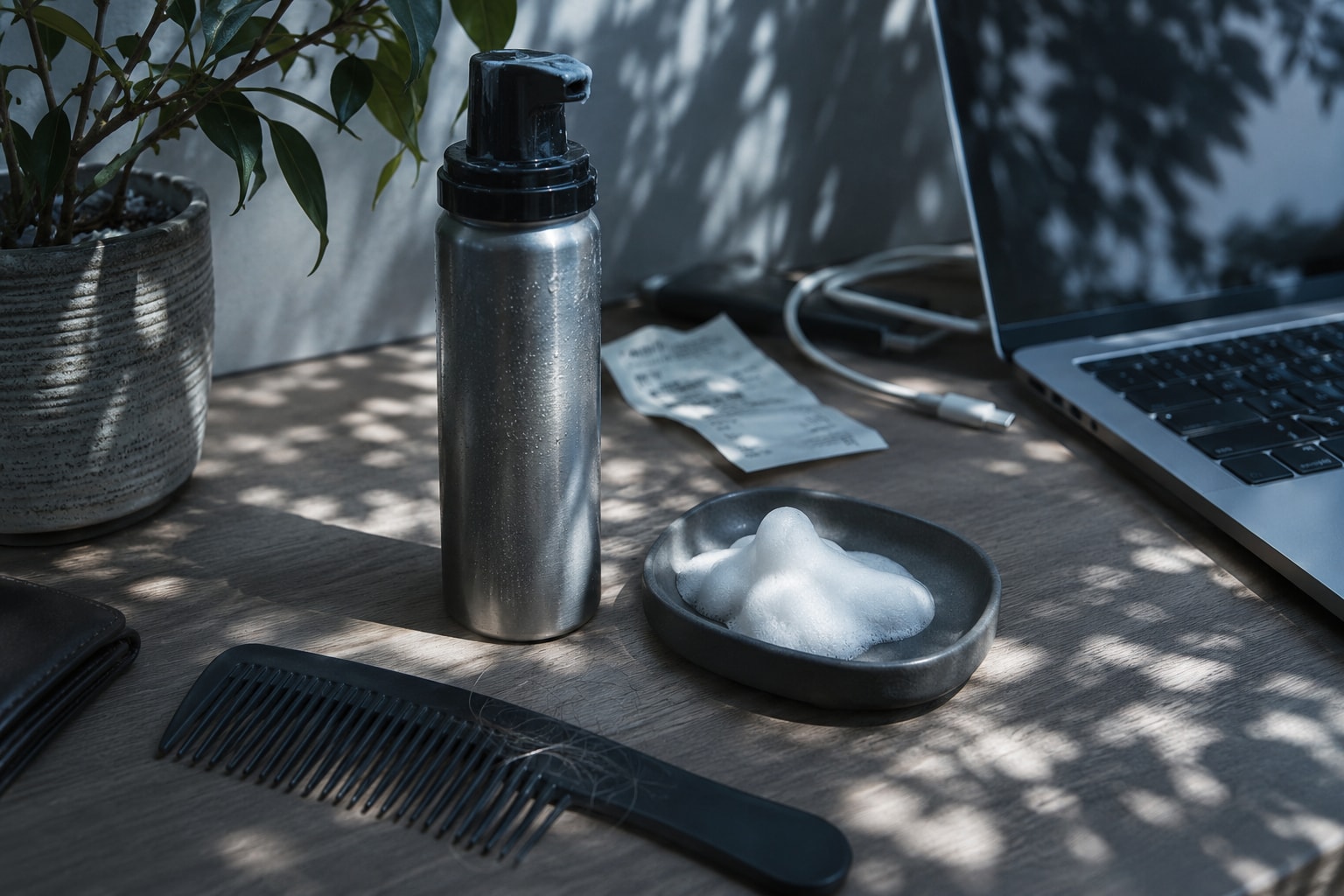
- Start with a small amount on damp hair. Add more only where the shape falls flat.
- Shape the hair before the mousse dries. Once it sets, avoid forcing a fine comb or dense brush through stiff strands.
- Choose flexible hold if strong hold leaves your hair crunchy. The hold level matters more than a long list of ingredients you may not need to avoid.
- Condition the lengths after washing. Conditioner reduces friction and helps protect fragile strands from breakage.
- Keep hot tools on a lower setting and use them less often. Heat and rigid hold together give damaged hair less room to bend.
- Apply away from the eyes. If product gets into an eye, rinse with room-temperature water for 15 minutes.
When to get your scalp checked
Book a dermatologist or GP if you see a widening part, a growing bald patch or a steadily receding hairline. Get help sooner for clumps of hair, intense burning, marked tenderness, pus, sores or a scaly bald patch.
Swelling of the face or eyelids after mousse needs prompt medical advice. Trouble breathing or throat swelling is an emergency.
FAQ
Can I use hair mousse every day?
Daily use isn't automatically harmful, but your hair's response matters more than the calendar. Cut back if you get persistent dryness, snapping, buildup or scalp irritation. A flexible-hold mousse and gentle removal are safer than brushing through a stiff set each day.
Is alcohol in hair mousse bad for hair?
Some volatile alcohols can make hair feel drier and more prone to damage during styling. That doesn't mean every alcohol-containing mousse causes hair loss. Judge the finished result: stiffness, roughness and breakage matter more than spotting one ingredient name.
Why do I lose more hair when I apply mousse?
Your hands may gather hairs that had already detached during the normal shedding cycle. If most strands are full length, watch the trend across several weeks. If you see many short pieces, friction and breakage are more likely.
Will stopping mousse make my hair grow back?
Stopping mousse can prevent more breakage or calm a product reaction. It won't reverse genetic pattern hair loss or another medical cause. If visible thinning continues after the product is gone, get the cause checked instead of rotating through more styling products.