Quick answer
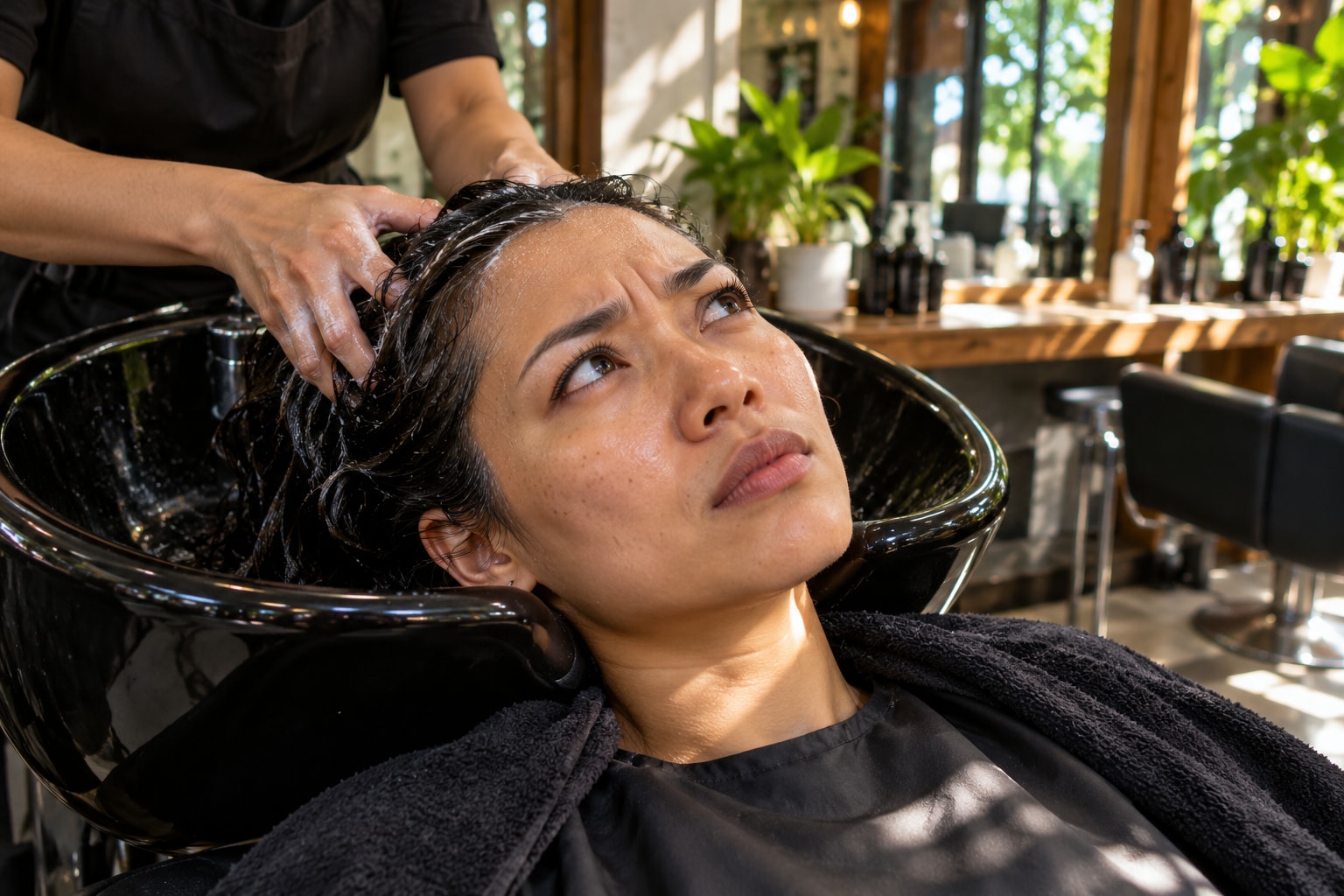
Shampoo not lathering on the first wash often happens because scalp oil suppresses bubbles. After you rinse some oil away, the same shampoo can foam more on a second application. That doesn't mean the first wash failed, or that everyone needs two washes to get clean hair. Wet your scalp thoroughly, distribute the shampoo gently, and judge the result by cleanliness and comfort rather than foam.
Why the second wash makes more bubbles
Your scalp produces sebum, an oil that dermatologist Zoe Draelos identifies as a reason shampoo can struggle to foam. Her review of hair cleansing explains how sebum inhibits bubble formation during washing. That helps explain why shampoo can seem almost flat initially, then produce much more foam when you repeat it.
The shampoo hasn't become stronger. The conditions have changed.
Cleansing ingredients called surfactants help oil and dirt rinse away with water, while bubbles contain trapped air. These processes involve the same product, but bubble volume isn't a measure of how much dirt remains.
Dermatologists Paschal D'Souza and Sanjay Rathi make this distinction in their review of shampoos and conditioners. They explain that foam helps distribute shampoo, but it doesn't establish how well the product cleans.
These are explanations of shampoo chemistry, not trials showing that everyone gets healthier hair from washing twice.
Low foam doesn't tell you to keep washing
Before adding another handful of shampoo, consider what you're washing and how the product normally behaves.
Three checks help keep that decision simple:
- Did you wet the scalp as well as the hair? DermNet recommends wetting both before applying shampoo.
- Is this the same shampoo you normally use? Different blends of cleansers and foaming ingredients can produce different amounts of lather.
- Are you dealing with an oily scalp, or just fewer bubbles than expected? DermNet says oily scalps may need a second round.
If the same bottle foams more immediately after rinsing, that pattern fits the oil explanation. It doesn't establish a scalp problem or tell you exactly how much oil you produce.
Make the first application count
Before changing shampoos, check that the cleanser actually reaches your scalp. The American Academy of Dermatology recommends applying shampoo there, rather than working it through the full hair length.
For your next wash:
- Wet your hair and scalp with warm or cool water.
- Put shampoo into your palm, following the product's directions.
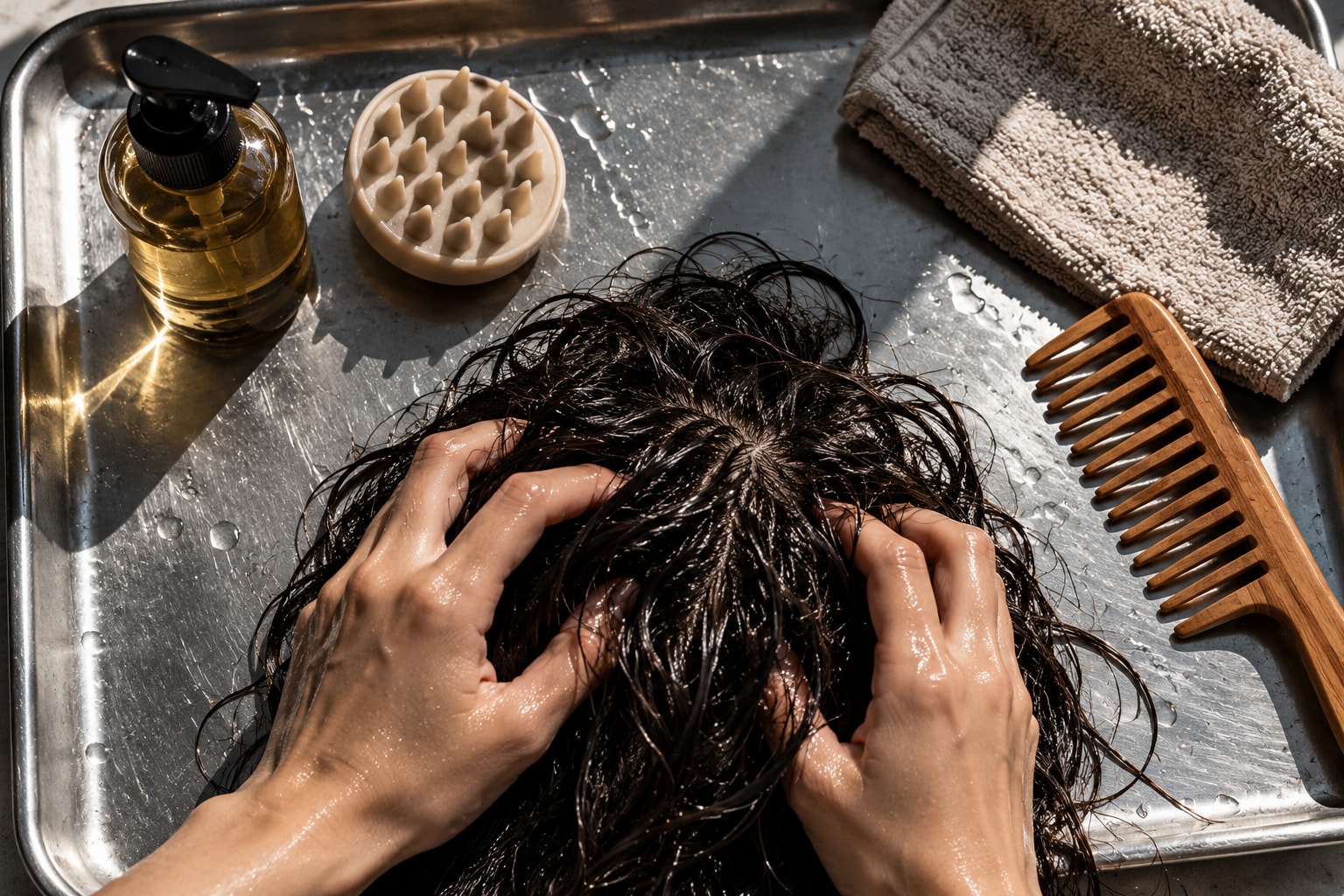
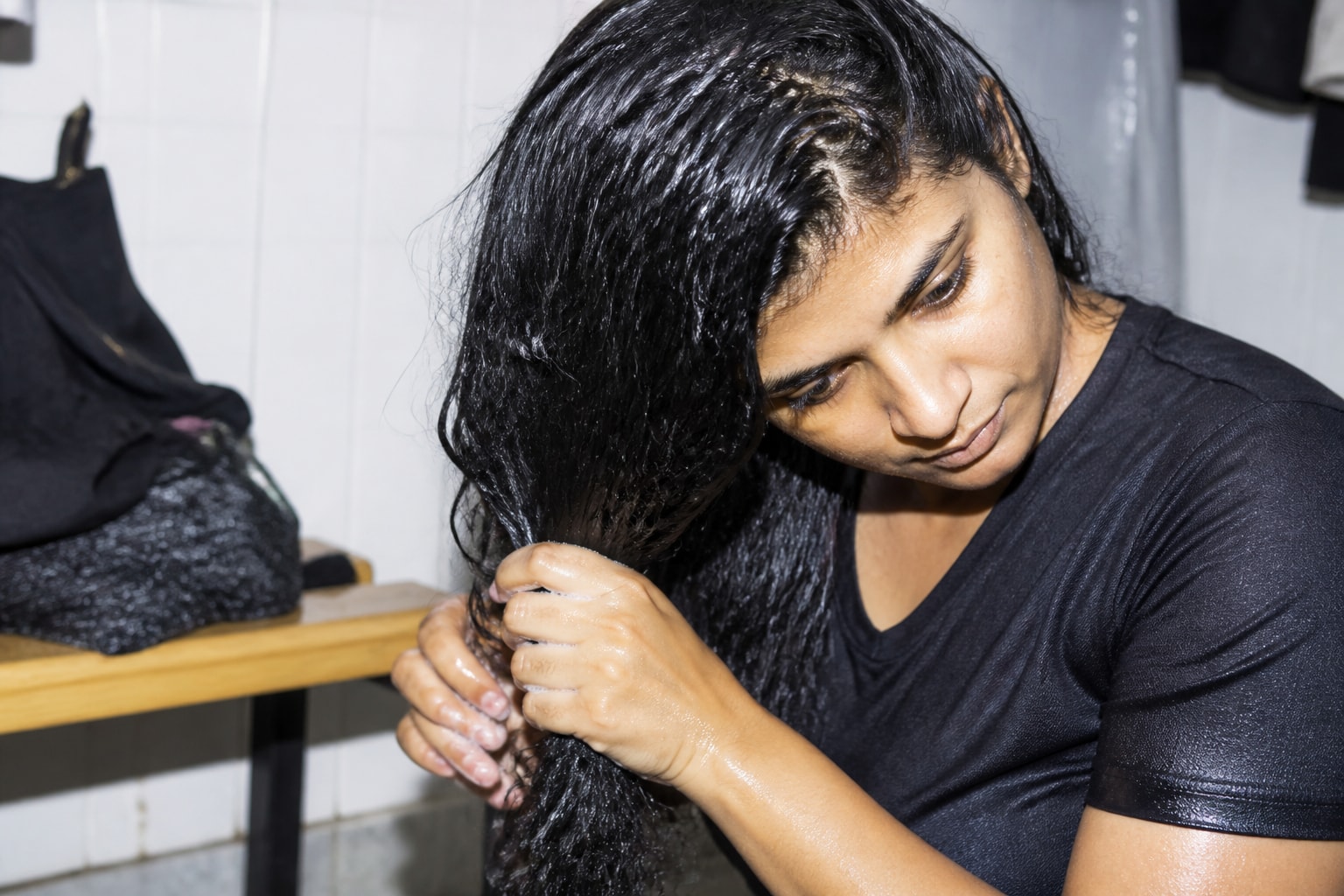
- Spread it across the scalp and massage gently. DermNet suggests about 30 seconds for ordinary shampoo.
- Rinse thoroughly before deciding whether another application is needed.
Don't turn a low-foam wash into a longer, harder scrub. Concentrating on your scalp lets you remove excess oil without repeatedly washing the lengths.
The AAD recommends conditioner after washing, applied mainly to the ends of fine or straight hair. Dry or curly hair can need it throughout the length to help with manageability and tangling.
When to stop, and when to repeat
DermNet says a second application may be needed for oily scalps, rather than prescribing two washes for everyone.
If one application gives you a comfortable scalp and hair that feels clean, low foam alone doesn't justify another. That's a practical reading of the guidance, rather than a clinical test for cleanliness.
If you do repeat, rinse between applications and use the product as directed, without adding rounds to reach a particular lather size.
D'Souza and Rathi explain that excessive cleansing can leave hair rough, dry and prone to tangling. Their review describes good shampoo formulation as a balance between cleaning and leaving hair manageable.
This also explains why a soft finish isn't automatic evidence that shampoo failed. Some formulas contain conditioning ingredients intended to remain on the hair after rinsing.
Medicated shampoo needs its own instructions
For dandruff shampoo, follow the bottle or your clinician's directions instead of adjusting treatment around the amount of foam.
The AAD notes that some dandruff shampoos need five to ten minutes on the scalp before rinsing. Instructions vary, so the ordinary shampoo massage time above doesn't replace the contact time on your bottle.
Keep to those instructions whether you see a thick lather or barely any bubbles during the application.
If the label is unclear about repeating an application, ask a pharmacist before adding another treatment round.
When the issue needs more than another wash
The NHS advises seeing a GP for a red or swollen scalp, marked itching, or dandruff that persists after four weeks of treatment. Don't try to solve those symptoms by shampooing repeatedly in one shower.
FAQ

Does the first wash remove oil and the second clean?
The first wash already cleans: removing oil and dirt is what shampoo does, even when it barely foams. A second application may remove more residue, but the two washes don't have separate jobs. More bubbles don't prove that cleaning only started on the second round.
Should I always shampoo twice?
No. A second application may help an oily scalp, but it isn't needed just to produce more bubbles. If one wash leaves your scalp comfortable and your hair clean, you don't need to repeat it.
Should I use more shampoo when there are no suds?
Check wetting and distribution first, then follow the amount stated on your product rather than guessing from the foam. Adding more solely to create bubbles can lead to unnecessary cleansing, without giving you a better result.
Does low foam mean my dandruff shampoo isn't working?
No. Follow its application and contact-time instructions rather than using foam to judge whether the treatment is working. The NHS recommends seeing a GP if dandruff persists after four weeks of treatment, or sooner for inflammation or marked itching.