Quick answer
If sunscreen turns hair extensions orange, avobenzone reacting with iron is one documented explanation. The sunscreen ingredient can form coloured compounds when it meets iron in shower or pool water. Keep using sun protection, but check the formula and keep it off your extensions. Ask your extension stylist to assess existing stains before you try bleach or repeated colour treatments.
Why blonde extensions can turn orange or pink
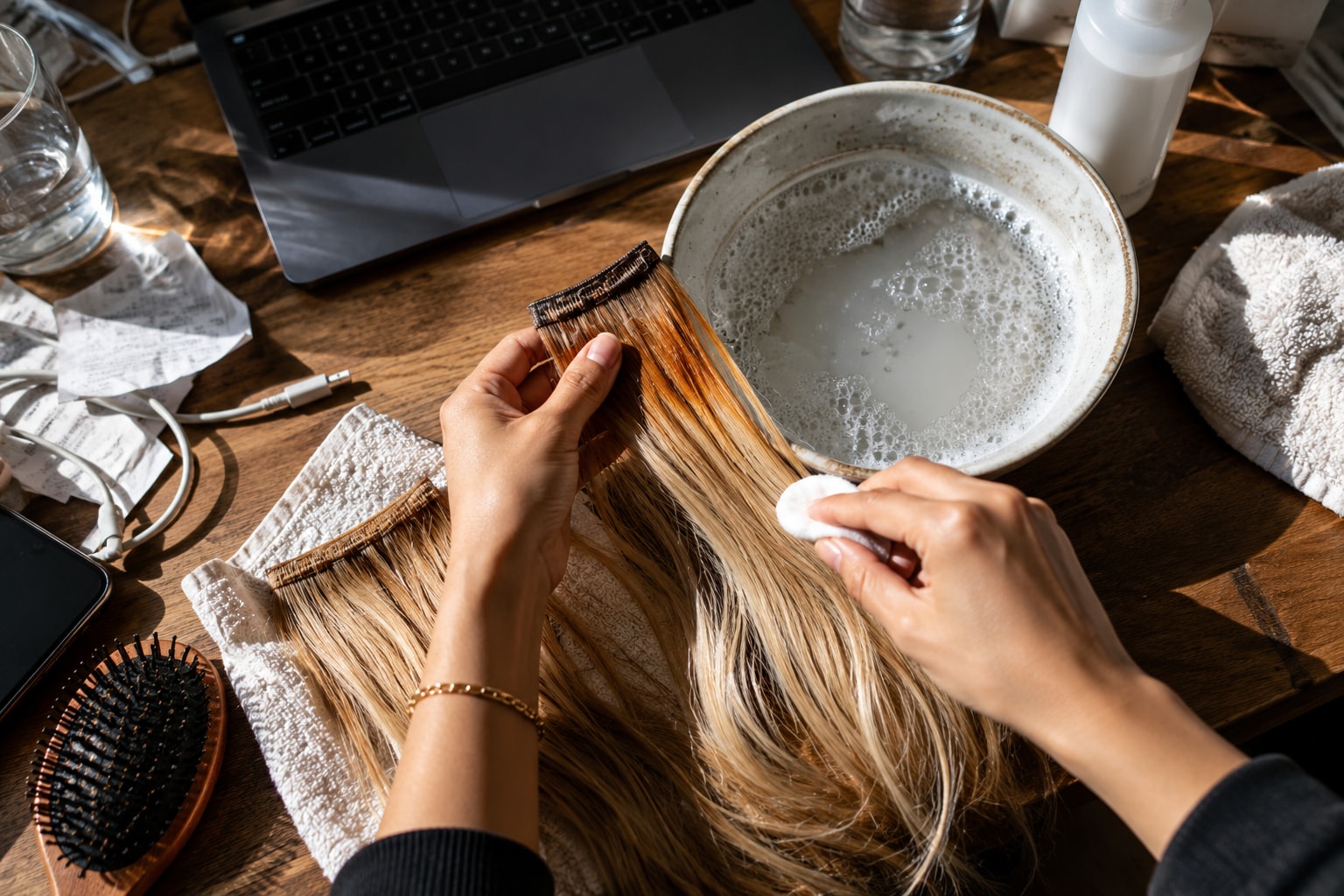
C&EN's chemistry graphic explains that avobenzone can form complexes with iron, leaving light extensions or dyed hair looking orange or pink.
BELLAMI separates pink or red staining from ordinary brassiness in its extension care guidance. It lists heat, sun exposure and mineral buildup among other reasons for warm tones.
Think back to whether the change followed a new sunscreen, a swim or a holiday shower. Give your stylist that history instead of choosing a correction from the colour alone.
C&EN's graphic isn't a trial comparing extension brands or testing stain removers. It provides no rate of staining and no guaranteed recovery time, so treat precise online promises with caution.
Check two ingredient names on the bottle
The FDA's technical appendix confirms that avobenzone and butyl methoxydibenzoylmethane name the same sunscreen ingredient. Check for either name on the bottle you're using, including any face product labelled with SPF.
A mineral-only sunscreen offers a practical way to avoid avobenzone: its filters are zinc oxide, titanium dioxide or both. The American Academy of Dermatology explains that hybrid sunscreens combine mineral and chemical filters. Seeing zinc oxide on the front isn't enough to identify the whole formula.
Choose broad-spectrum coverage, SPF 30 or higher, and water resistance when you switch formulas. Don't use less sunscreen to keep your hair blonde.
Avoiding avobenzone removes one ingredient involved in this reaction. It doesn't tell you whether the whole formula suits your extensions or their attachments.
Prevent transfer without leaving skin unprotected
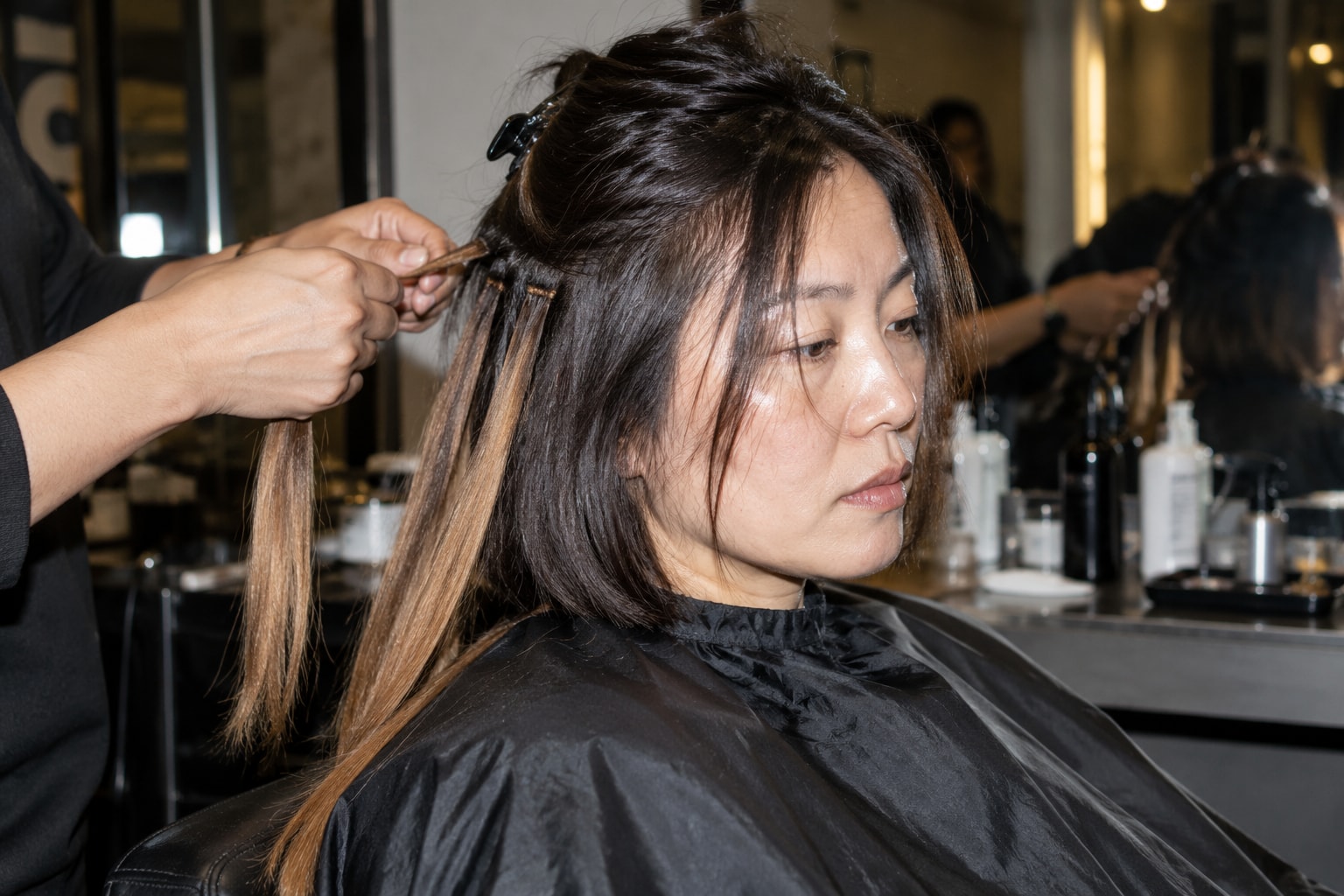
Keep your lengths away from freshly applied lotion, and take extra care around tape attachments. Great Lengths warns that sunscreen near the hairline can loosen tapes, so colour isn't the only reason to avoid contact.
A practical routine is:
- Secure your hair away from your face, shoulders and back before applying sunscreen.
- Cover exposed skin as directed, including areas your loose hair might otherwise brush against.
- Wash product from your palms before handling the extensions.
- Let the sunscreen dry before allowing hair to touch your skin.
- Repeat these precautions when you reapply.
These steps apply Great Lengths' advice on clean hands and BELLAMI's advice on letting sunscreen dry before hair contact. Drying is a precaution, not a guarantee against transfer.
After washing your hands, restore sunscreen to their exposed backs while keeping your palms clear for handling your hair.
The American Academy of Dermatology recommends reapplying sunscreen every two hours outdoors and after towelling off. Follow the water-resistance directions after swimming or sweating, and use shade and protective clothing alongside sunscreen.
Before a holiday, check whether your manufacturer permits swimming with your extensions. Great Lengths gives swimming precautions, while BELLAMI advises against swimming with its extensions. Follow the guidance for your own set.
What to do when the colour has already changed
Before adding corrective products, photograph the affected lengths and your sunscreen's ingredient label for your stylist. You can crop out your face; the useful information is the hair and the product.
Send the extension brand, shade and attachment method, plus when you first noticed the change. Include anything you've already tried, and ask whether your normal wash is appropriate while you wait.
BELLAMI lists sunscreen-stain treatment as a professional service, starting with chelating shampoo and assessment for further treatment. Colour correction comes afterward, if needed.
A colour change alone doesn't tell you which treatment to buy.
Ask three questions before agreeing to correction:
- Is the suspected problem sunscreen staining, mineral buildup or faded colour?
- Does the extension manufacturer permit the proposed treatment?
- Will you test a small strand before treating the full set?
BELLAMI recommends a strand test for chemical changes and advises against bleaching, lifting or lightening its already-processed extensions. Its warranty also excludes chemical alterations.
Check your own brand's terms before experimenting, since another manufacturer's instructions don't automatically apply to your set.
Avoid copying laundry stain-removal recipes onto your hair. Evidence that avobenzone can stain fabric doesn't establish that a fabric treatment suits extensions or skin. A specialist assessment is more useful than another untested mixture.
FAQ
Which sunscreen ingredient turns extensions orange?
Avobenzone is the ingredient in C&EN's explanation of orange or pink staining from contact with iron. Check for its alternative name, butyl methoxydibenzoylmethane, too, though its presence doesn't mean staining is inevitable.
Will purple shampoo fix sunscreen-stained extensions?
Don't rely on it as a guaranteed fix or leave it on longer to force a result. BELLAMI puts treatment for deposits before any colour correction. Ask your stylist whether toning is appropriate for your set.
Can sunscreen affect tape-in extensions even without staining?
Yes, Great Lengths warns that sunscreen and other lotions can interfere with tapes and loosen them. Keep lotion away from attachment points, and ask your stylist about any tapes that start slipping.
Do orange extensions always need replacing?
A stain doesn't automatically mean you need a new set, and full colour recovery isn't guaranteed. Ask your stylist to test a small section before deciding whether correction or replacement makes more sense.