Quick answer
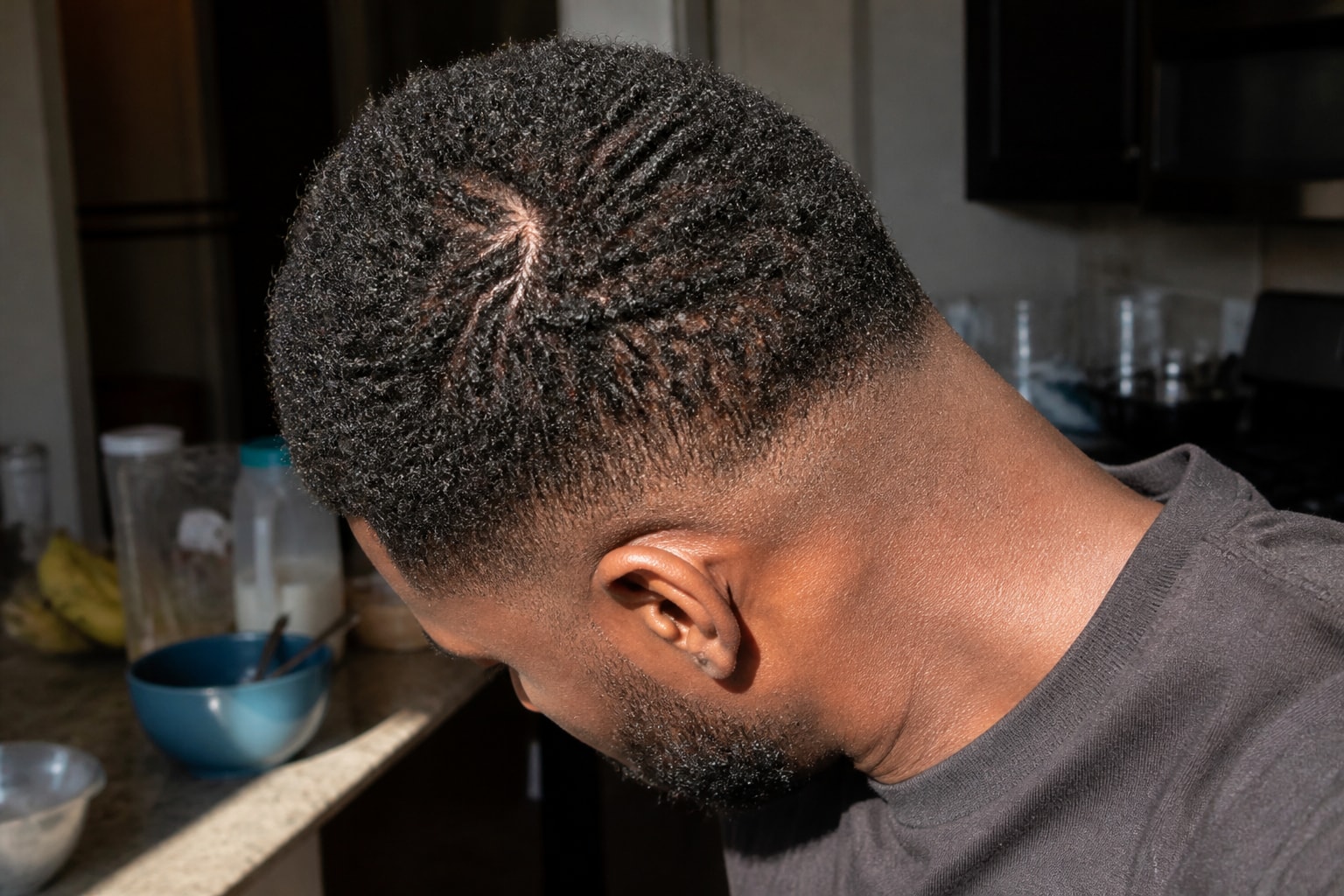
Why does my hair part in the back? The usual cause is a natural crown whorl, where hair grows away from its center in several directions.
If that line has stayed much the same, it is more consistent with your growth pattern than new hair loss. You can often make it less visible by dampening the roots and drying them in a better direction. A new or widening part deserves more attention, especially with shedding, itching, pain, scale, or lower density elsewhere.
Why the split forms at your crown
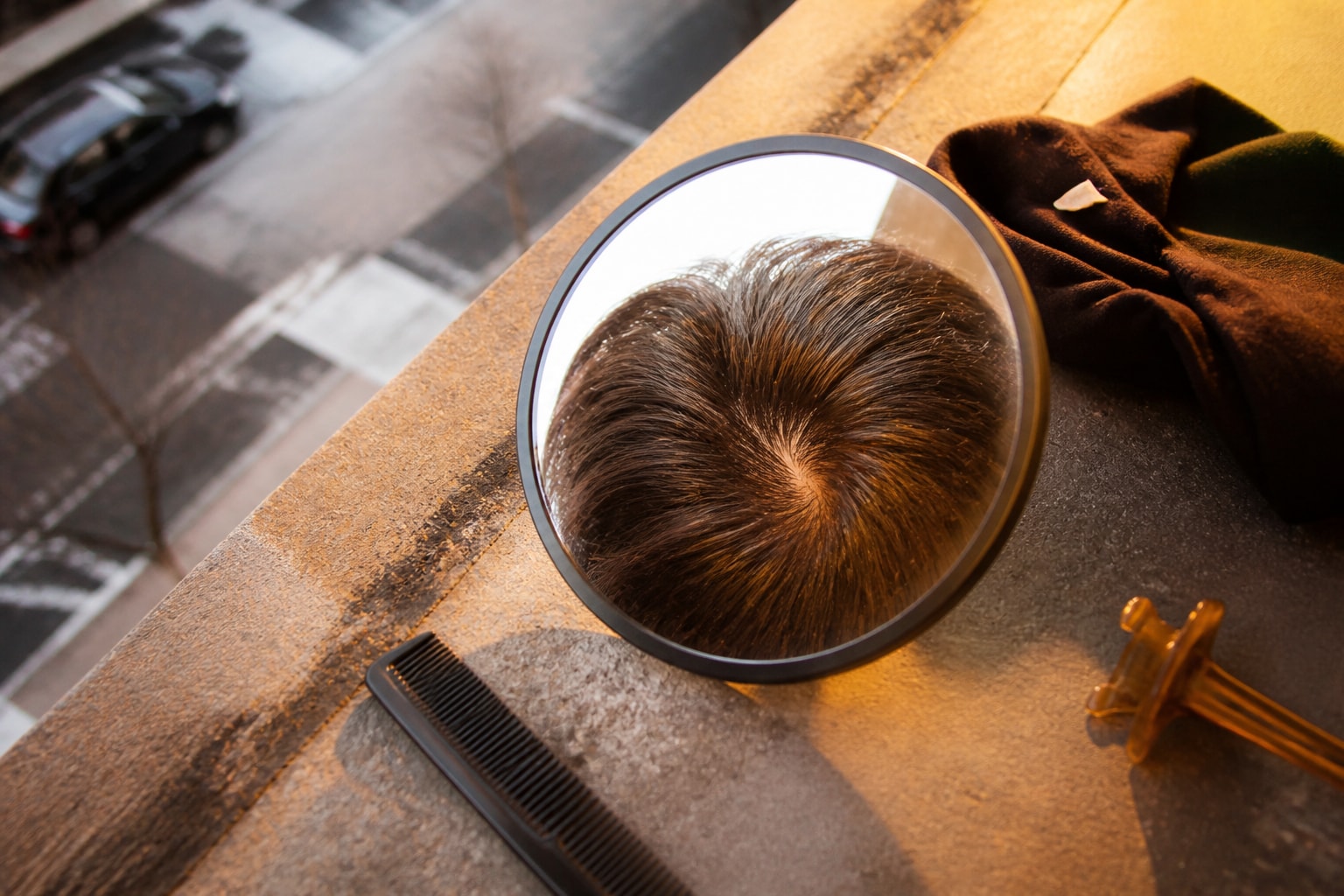
Your crown is not a flat field of hairs pointing the same way; it usually contains a whorl with a circular or spreading pattern.
The Ziering study reviewed photographs from 534 people, identified five natural patterns, and described the whorl as part of normal hair flow. That flow can send neighboring sections in opposite directions, making their meeting point look like a short part at the back.
Visible scalp at the center does not prove that follicles are missing because the strands may simply point away from that spot. Length, your cut, and how the roots dried can change how much coverage you see.
Hair also holds temporary shapes because water disrupts weak hydrogen bonds in keratin. Wet hair becomes easier to reshape and can then dry along its natural flow, reopening the crown split.
The effect is temporary because dampening the hair again can reset those bonds. It does not change the direction of the follicle under your skin.
Check whether it is styling or a real change
Do not judge your crown from one mirror check or one bright photo. Camera height, direct light, hair position, and moisture can all change the amount of scalp on show.
A 2024 guide written by hair-loss clinicians recommends consistent views and conditions so comparisons reflect change, not one dramatic day.
Take two baseline photos with dry hair, using the same room, light, camera, distance, and head angle. Keep your hair clean and arrange it the same way. One photo should show the whole crown, while the other can show the split more closely.
Repeat the photos under the same conditions later, without comparing wet hair with dry hair or flash with daylight.
Look for direction and change:
- A stable spiral or line that closes when you move nearby hair supports a natural whorl.
- A line that grows wider across repeat photos may reflect reduced density.
- More shedding, a thinner ponytail, or thinning beyond the whorl makes a styling explanation less complete.
- Burning, tenderness, strong itching, redness, scale, or sores points away from a simple cosmetic issue.
These checks cannot diagnose hair loss, but they can show whether styling is a fair first test or whether you need a dermatologist.
Try a gentle root reset
This test takes a few minutes and does not need high heat.
- Lightly dampen the roots around the split. You do not need to soak the lengths.
- Use your fingers or a wide-tooth comb to move hair across the line.
- With a dryer on low heat, direct the roots across the whorl from two different sides.
- Place the hair in its final direction and let it cool or finish air-drying.
- Check the result in the same light you used for your baseline photo.
If the line becomes smaller, you have shown that root position affects its appearance, not that your density is normal. If the line does not move, the whorl may be strong, the cut may expose it, or density may be lower.
Be gentle while the hair is damp because the American Academy of Dermatology says wet hair breaks more easily for many hair types. It also advises limiting blow-drying and using low or medium heat for hot tools.
Give your barber or stylist the right problem
Show the split before your hair is washed because water and salon styling can hide how your crown behaves on an ordinary day.
Use this script: “My crown separates here when it dries. Please check the whorl before cutting. I want a low-maintenance shape that either follows it or gives this line more coverage.”
Ask to see two options: one that follows the natural direction and another that leaves enough movable hair to cross the line. The right choice depends on your whorl, density, texture, and preferred length.
Bring a photo of how the back looks at home, which gives the stylist better evidence than a description from memory.
Avoid fixes that create a second problem
Do not attack the split with repeated hard brushing, daily high heat, or a tight style that pulls the crown. These methods may hide the line briefly while increasing breakage or tension.
The American Academy of Dermatology warns that excessive heat damages hair and prolonged pulling can cause breakage or eventual hair loss.
Heavy product is not a test for healthy density. It can hold strands across the line, but that only changes coverage. Judge any change after washing and under your standard photo conditions.
Do not start a hair-loss drug because one photo looked bad, since a natural whorl and pattern hair loss can occupy the same area. A dermatologist can examine the scalp and separate those possibilities.
When to see a dermatologist
Book an assessment if the part is new, keeps widening, or comes with a clear drop in density. The same applies if you notice a growing bald spot, unusual shedding, or a thinner ponytail.
The American Academy of Dermatology lists gradual thinning, a widening part, and a slowly growing bald spot among common hair-loss signs. It also flags sudden clumps, burning, tenderness, scale, or sores.
Take your repeat photos to the appointment because they may show progression more clearly than memory. A clinician can then examine the crown rather than guessing from one image.
Track it without checking every day
Use a fixed photo routine, then leave the area alone because daily inspection adds noise from changing hair position, moisture, and light.
Keep the images private if you prefer. Use a dedicated back and top photo, with no face in the frame if identity is not needed.
The useful result is a comparable record showing a stable pattern or real trend, not the least flattering frame.
FAQ
Is a back hair part the same as a bald spot?
No. A whorl can expose scalp as hairs flow away from its center, while a bald spot involves reduced hair coverage. A stable pattern supports a whorl, while widening or falling density needs a clinical check.
Can you permanently train a crown cowlick?
Styling can redirect the visible shaft, but there is no good evidence that brushing changes follicle direction. Water and drying can set a temporary shape, so expect to repeat the reset after washing or compression.
Why did the part appear after a haircut?
A haircut changes which strands reach across the whorl, so it may reveal a growth pattern that longer hair covered. This is a likely visual explanation, not proof that density is unchanged.
Does a widening back part mean hair loss?
It can be a sign, but one photo cannot answer it, so compare dry, consistently arranged hair under matched lighting. See a dermatologist if the line keeps widening or comes with shedding, symptoms, or broader thinning.