Quick answer
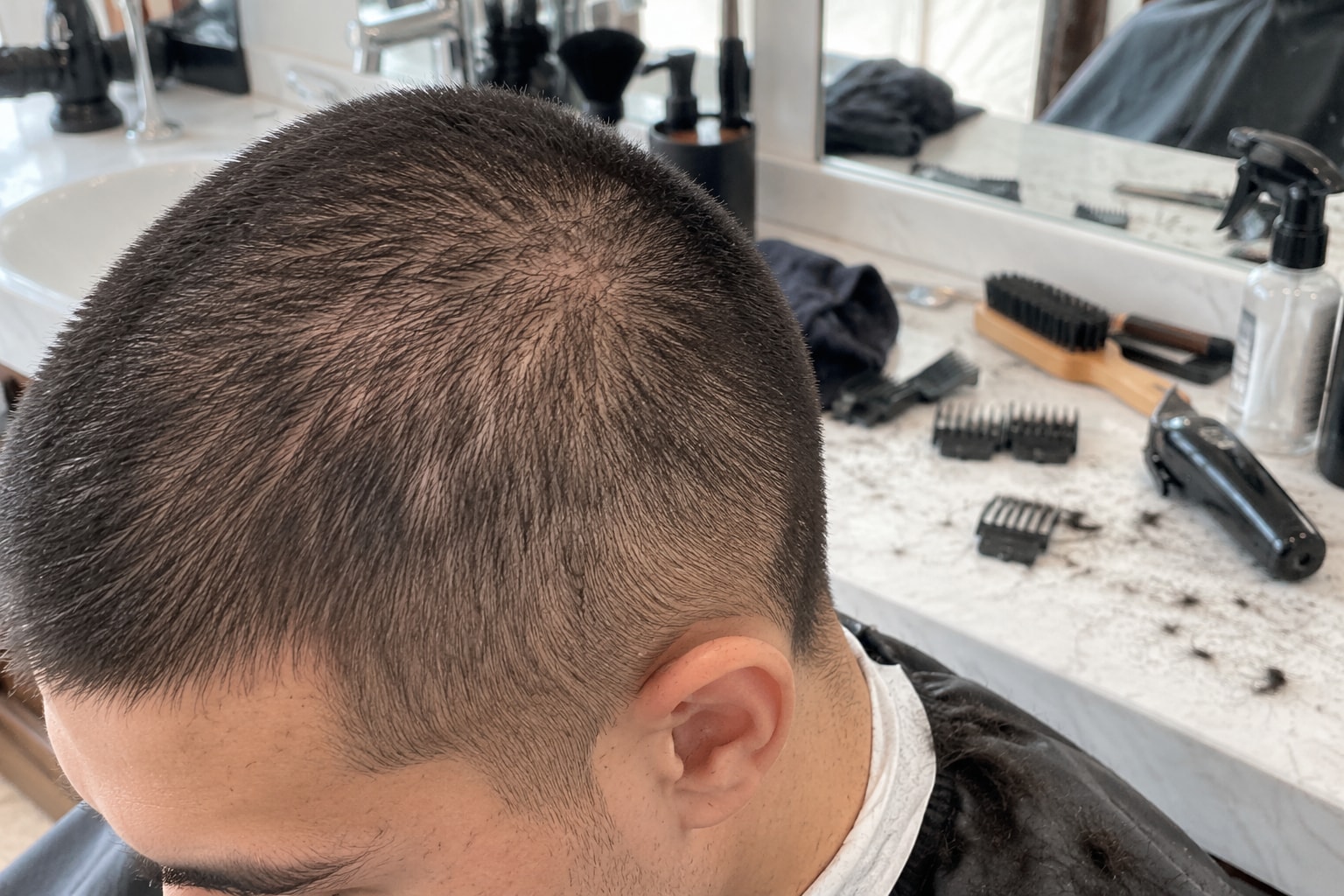
If your buzz cut looks patchy, check for uneven lengths before choosing a shorter clipper guard. Missed hairs, a poorly fitted attachment, or too much pressure can leave an uneven finish. A section cut too short needs time to grow, while a new bare patch needs medical assessment.
Check what the patch actually contains
Look for longer hairs, shorter stubble, or skin with few visible hairs before making another pass. Those observations lead to different next steps, so don't treat every lighter area as hair loss.
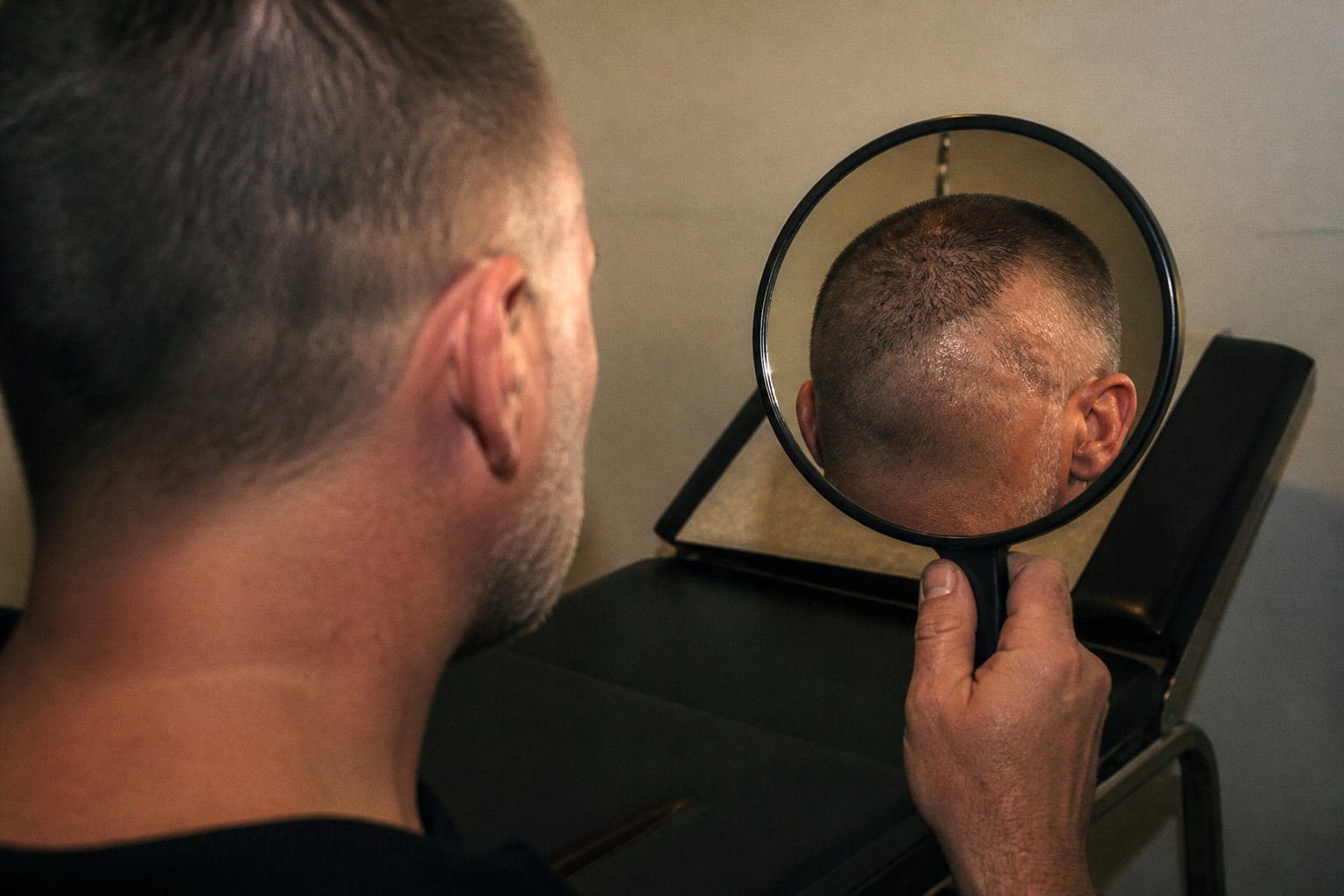
Wahl's Home Hair Cutting Guide recommends using good light and a mirror to check your head from several angles. Ask someone to check the back if you can't see it clearly.
A useful stopping rule: if you can't identify longer hairs to remove, put the clippers down. This is a practical precaution, not a test for diagnosing hair loss.
Five checks before you cut again
1. Your hair wasn't fully dry
Wet strands can lie against the skin and escape the cutting head, according to Philips' uneven-trimming guide. Let your hair dry completely before deciding whether the cut needs another pass.
Wahl also recommends dry hair in its clipper instructions. If you've just washed it, don't judge the finish while some sections are still damp. Recheck once it's dry, using the same mirror and lighting.
2. The guard or length setting moved
Switch the clipper off and check that the attachment fits correctly. Philips lists poor attachment fit and excessive pressure among the causes of uneven clipping. Pressing harder can change an adjustable setting or create uneven pressure.
Check the taper lever too, since Wahl explains that it changes how close the blades cut. Keeping the same guard attached doesn't guarantee the same setting if you've moved the lever.
Note the guard and lever position before starting again, and don't change both while working out what went wrong.
3. You missed hairs growing in another direction
Your hair doesn't all point the same way, so Philips recommends changing the direction of your passes to catch missed strands.
For visibly longer hairs, keep the intended guard and length setting unchanged while working gently against their growth direction. Wahl's instructions also recommend a steady pace and cutting against growth.
If the lengths already look even, don't keep cutting just because the colour still looks uneven.
4. One section is already too short
A shorter guard can't restore hair you've removed. Your choices are to leave the short section alone or shorten surrounding hair to reduce the difference.
Before sacrificing length everywhere else, ask a barber whether a small blend would be enough. You don't have to turn one accidental strip into a much shorter haircut.
If you switched guard sizes during the cut, the line between sections may need blending. Wahl identifies guard changes as a source of visible cut lines. Its guide uses a rocking motion to blend transitions, but getting that right takes practice.
Leave an uncertain repair to a barber.
5. The patch has signs that need a clinician
Book a medical assessment for a new bare patch, an enlarging gap, or unexplained loss that continues between haircuts. The American Academy of Dermatology lists both gradual thinning and sudden bald patches as possible signs of hair loss.
The AAD notes that gradual loss can go unnoticed for months or years before you see it. Finding a patch after a haircut doesn't prove the clippers caused it.
Seek prompt care if the area also hurts, burns, scales, or develops sores or pus. These symptoms can occur with scalp conditions that need treatment.
A painless patch still deserves attention. The US National Institute of Arthritis and Musculoskeletal and Skin Diseases describes alopecia areata as often causing round or oval patches. The bare skin may have no rash or redness.
Comfortable skin doesn't rule out alopecia areata, but the shape of a patch alone can't establish the cause.
Check your equipment before the next attempt
Follow your clipper's cleaning and maintenance instructions before using it again. Wahl's supplied guide calls for brushing hair from the blades and using its specified clipper oil. That model's instructions prohibit cleaning the blades with water, so don't assume every clipper is washable.
If the machine still cuts unevenly after troubleshooting, contact its manufacturer about servicing before using it again.
What to ask your barber
Ask for an assessment before agreeing to lose more length. You can say: "Please check whether these areas are longer, shorter, or simply have less coverage before taking the whole cut shorter."
Tell them which guard you used, whether you changed the lever, and where the problem first appeared. Bring the attachment or a photo of its length marking if you're unsure.
For your own record, note the final setting and keep one private photo as a reference for the next haircut.
FAQ
Can I fix a patchy buzz cut without going shorter?
Sometimes. Missed long hairs may be trimmed with the original guard, once you've checked the attachment and cutting direction. An area already cut too short can't be filled in by clipping. Ask a barber whether limited blending is possible before shortening everything.
Will shaving it all off make the patch grow back thicker?
No. Mayo Clinic explains that shaving doesn't change hair thickness or growth rate. The blunt ends can feel coarser as they emerge, which can create the impression of thicker hair. Choose a closer cut only if you want that style, not as a way to improve regrowth.
Does a patchy buzz cut mean I'm going bald?
Uneven cutting is one explanation, but it doesn't exclude a separate hair-loss condition. Get a new bare patch or continuing loss assessed, even if it doesn't itch. Avoid choosing a treatment based only on how the haircut looks in a photo.