Quick answer
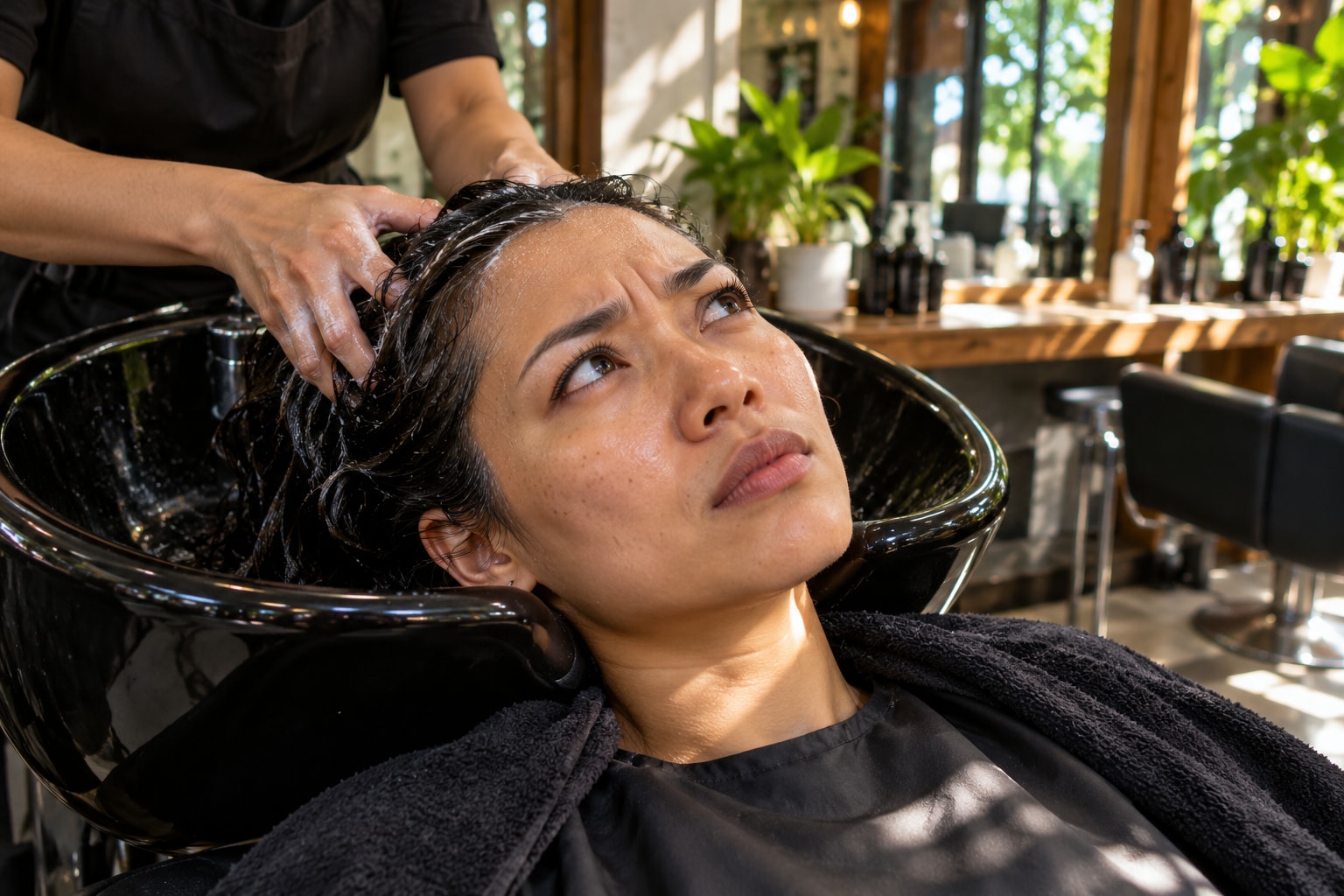
Why does hair dye look darker at first? Fresh colour can be at its deepest before shampoo has removed loosely held pigment, especially with temporary and semi-permanent products. Permanent colour may fade slightly, so wait until hair is dry and compare it after two or three normal washes. If your scalp burns or swells, rinse it and seek medical advice rather than waiting.
First check whether the colour only looks darker
Judge the result only when your hair is fully dry. Wet strands clump together and are not a fair match for a dry reference photo.
Use bright, indirect daylight for your first check. Warm bathroom bulbs, direct sun, phone exposure, and beauty filters can all change how deep a shade appears.
Keep the comparison controlled. Use the same camera, distance, part, styling, and window position each time. Take one photo after the colour service and another after your second normal wash.
This separates a viewing problem from a colour problem. It also stops you reacting to one bad mirror or phone image.
Why fresh hair dye can look deeper
Hair dye is not one chemistry. A 2023 review of hair and scalp damage separates dyes into oxidative and non-oxidative types.
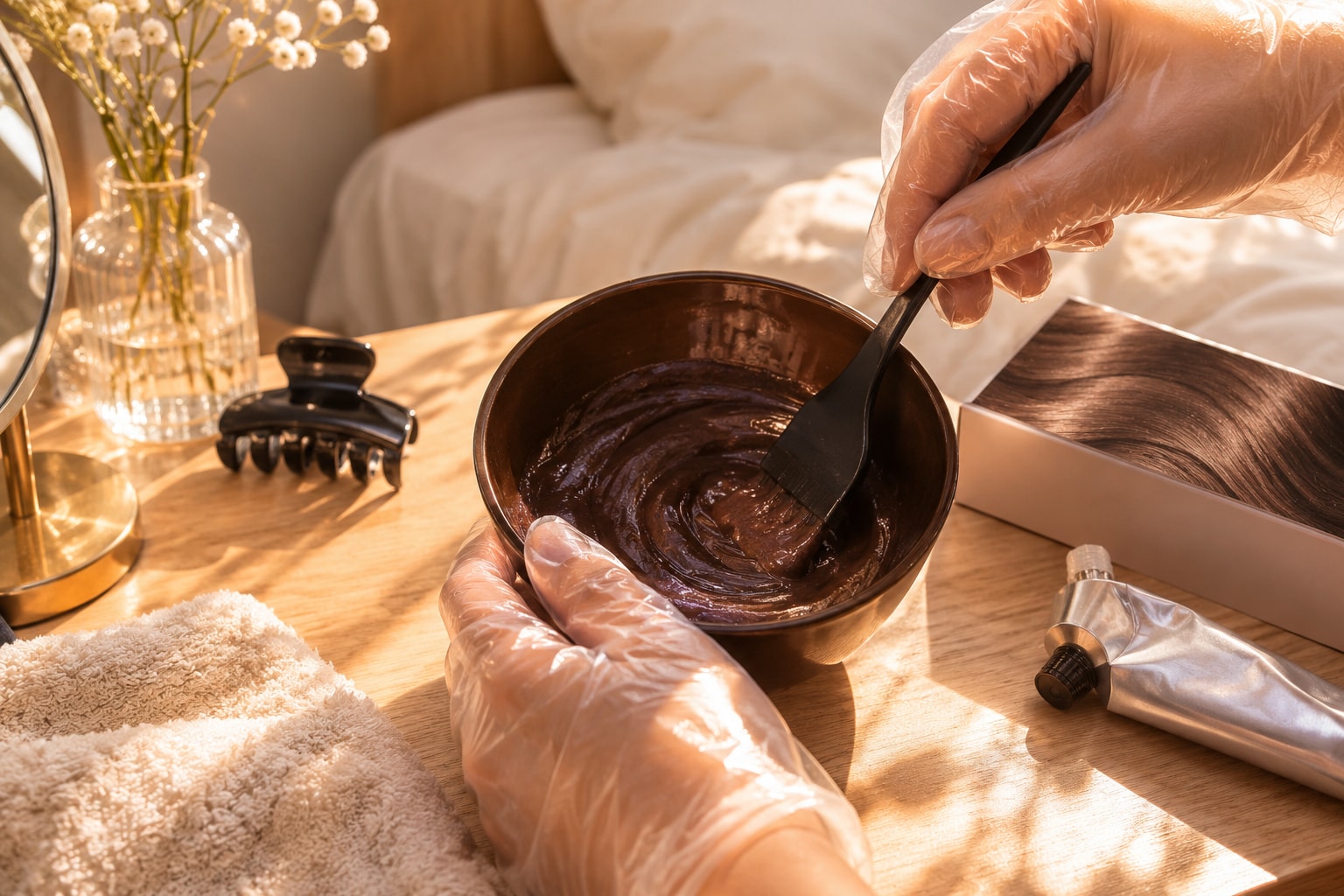
Temporary dyes mostly deposit colour at the hair surface and can leave quickly with shampoo. Semi-permanent dyes penetrate further but still wash out over time. Permanent dyes use an alkaline product and an oxidising developer to form larger coloured molecules within the hair.
That difference matters. A temporary or semi-permanent shade has more chance of softening during early washes. Permanent colour can lose some intensity, but it is made to resist shampooing.
Fresh colour may also be uneven rather than simply dark. Bleaching and repeated dyeing can damage the cuticle and change hair porosity. Previously processed lengths can then behave differently from newer growth.
This often shows up as darker ends, dark bands, or a result that fades unevenly. Porosity cannot predict the final shade by itself, so a water-float test will not diagnose the problem.
Repeated colour overlap can deepen the result too. If permanent dye is pulled through already coloured lengths during every root touch-up, those areas receive more pigment exposure.
A dark result can therefore be temporary, uneven, or genuinely the wrong depth. Do not assume every near-black result will become medium brown after a week.
How much fading is realistic?
A small change after a few washes is plausible. A shift of several shade levels is not something to count on.
Temporary and semi-permanent products usually change fastest because their colour is less firmly retained. Permanent colour may look a little softer after early washes, but much of its colour sits within the hair.
Your starting point matters as well. Virgin roots, grey hairs, bleached sections, and previously dyed ends can produce different results from the same formula.
Check the product label before predicting the outcome. Words such as temporary, semi-permanent, and permanent describe different dye systems, not just marketing strength.
Give the result two or three ordinary washes if all three points apply:
- The colour is even.
- Your scalp feels normal.
- Your hair is not breaking or turning gummy.
Contact the salon or product maker sooner if the colour is patchy, nearly black, or far outside the promised shade. Save the box, shade number, developer, processing time, and before photo.

What to do during the first few days
Start with the least damaging option: pause.
Wash on your normal schedule with your usual shampoo, unless the label says otherwise. Condition the lengths and avoid piling more chemical treatment onto freshly processed hair.
Do not mix bleach, peroxide, colour remover, or another dye in an attempt to improvise a correction. The US Food and Drug Administration tells consumers never to mix different hair dye products.
A lighter box dye will not reliably lift darker artificial colour. Colourists interviewed by Allure warn that adding another dye can create more damage without removing the first result.
Internet fixes using dish soap, baking soda, crushed tablets, or repeated harsh shampooing are unpredictable. They may dry the hair and irritate the scalp while leaving permanent colour largely in place.
If a salon did the service, send clear photos before trying anything at home. Ask whether the formula was permanent, semi-permanent, or a toner, and describe your recent colour history.
That information changes the correction plan. It is more useful than saying only that the hair looks too dark.
When correction needs a professional
Book a colourist when the result has black bands, much darker ends, obvious patches, or several previous dye layers. The same applies if your hair was recently bleached, relaxed, or permed.
A professional can inspect elasticity, review the formula, and test one hidden strand before treating the whole head. That is slower than a home remedy, but it reduces the chance of breakage or another uneven layer.
Do not wait for fading if your scalp is reacting. Burning, itching, rash, blistering, or facial swelling can signal irritation or allergy.
Rinse as directed and stop using the product. The NHS advises medical help for symptoms that do not settle, while severe swelling or breathing trouble needs urgent care.
A passed patch test does not guarantee that a reaction cannot occur. The FDA still advises following the package test before every use.
How to reduce the chance next time
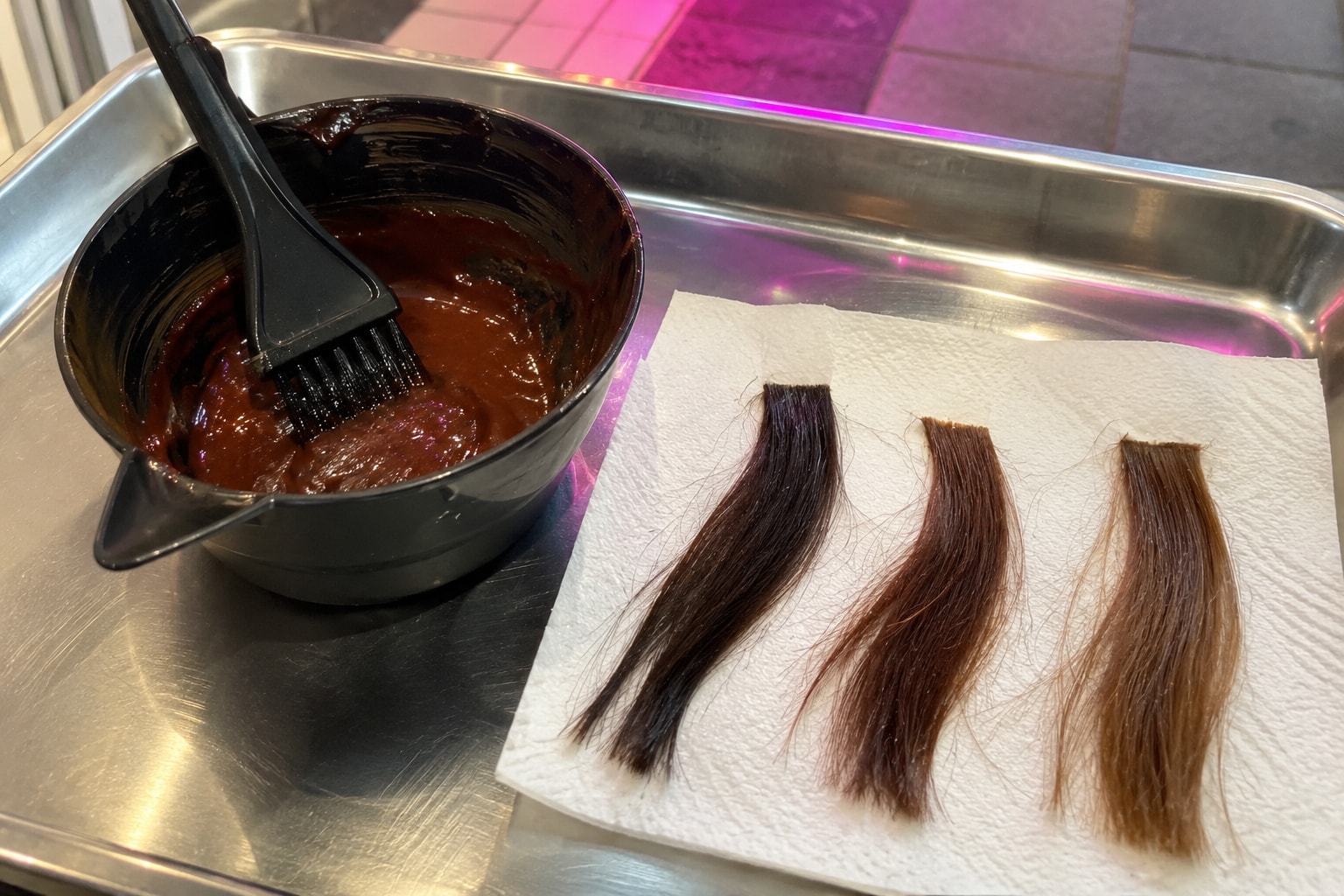
Run both checks before full application. A skin patch test screens for a possible reaction, while a strand test shows colour on your actual starting hair.
Follow the stated mixing ratio and processing time. Leaving dye on longer does not give you a more precise result.
For root maintenance, avoid coating the full length unless the instructions or your colourist call for it. Tell a new colourist about old permanent dye, bleach, henna, relaxers, and colour removers.
Keep a simple record of the brand, shade, developer, timing, and result. Photograph it fully dry in the same indirect daylight.
This gives you a useful baseline for the next appointment. It is more reliable than comparing two photos taken under different lights.
FAQ
Will dark hair dye fade after the first wash?
It may soften after the first few washes, especially if it is temporary or semi-permanent. Permanent dye can fade too, but it may stay close to its first dry shade.
Can I wash newly dyed hair several times in one day?
That is not a good default. Repeated washing may dry the hair and scalp, while permanent colour may barely change. Ask the salon or product maker before trying to speed up fading.
Can a lighter box dye fix hair that came out too dark?
No. A lighter dye does not reliably remove darker artificial pigment. Adding it can leave the hair drier, warmer, or more uneven, so use a professional strand-tested correction.
Why are my ends darker than my roots after dyeing?
Previously coloured or damaged ends may take and hold colour differently from newer roots. Repeated overlap can deepen them further. Do not reprocess brittle ends without a colourist checking them.