Quick answer
To apply sunscreen to a thinning scalp, start with dry hair and expose every visible part, temple, hairline and crown. Put broad-spectrum, water-resistant SPF 30 or higher directly on the skin, then rub it into an even film. For long periods outside, a wide-brimmed or UPF 50+ hat is simpler and won't make your roots greasy.
Sunscreen cannot protect skin it doesn't reach. Hair blocks some ultraviolet radiation, but that cover becomes unreliable around a widening part or sparse crown.
Why thinning hair changes sun protection
Your scalp is skin, so exposed areas can burn and collect sun damage. The NHS specifically advises applying sunscreen to the head when hair is thinning or absent. It also says a wide-brimmed hat gives better protection.
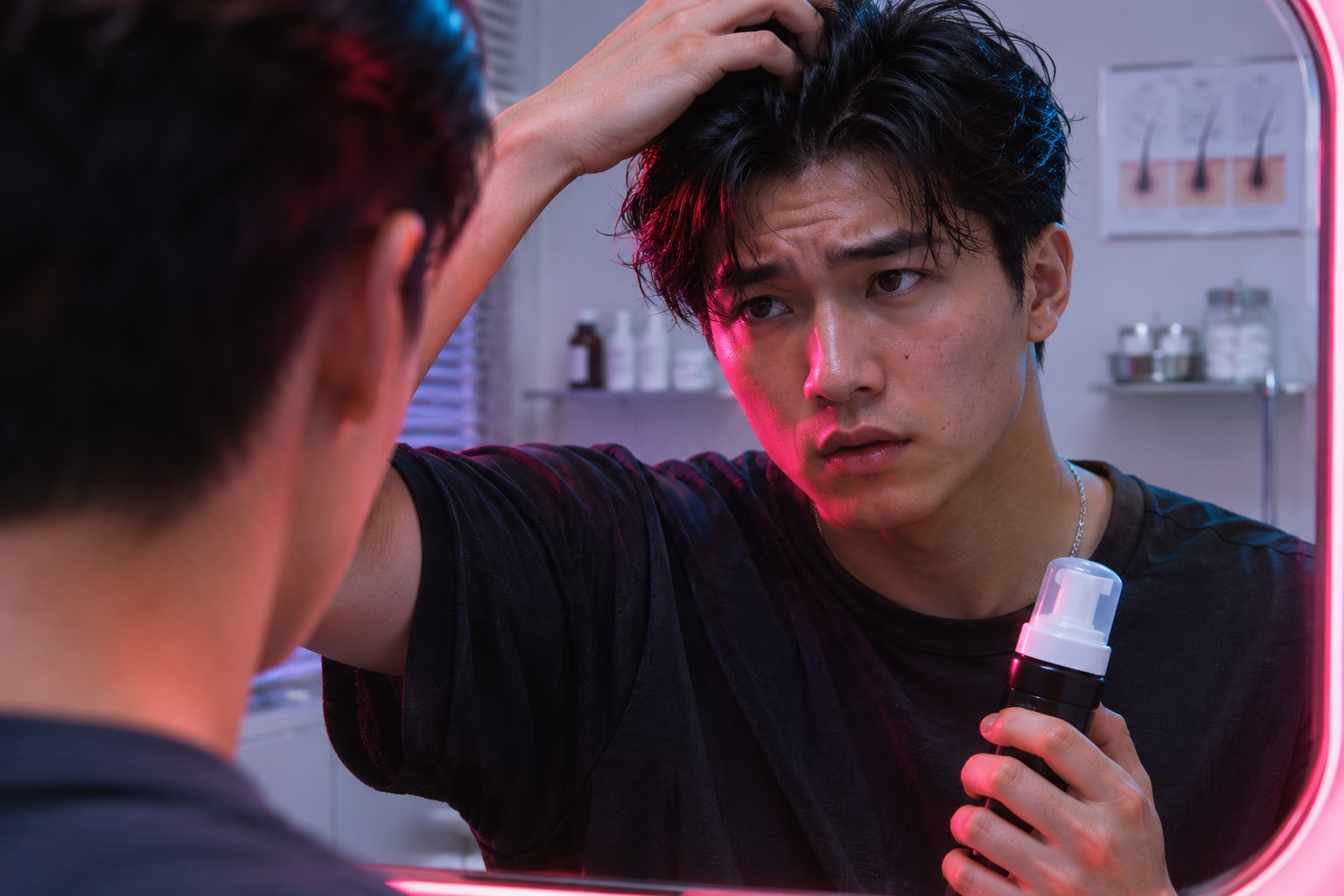
The centre part isn't the only exposed area. Check your crown, temples, frontal hairline and the skin above your ears. Diffuse thinning can create many small gaps rather than one obvious bald patch.
The British Association of Dermatologists calls the scalp a common site of sun damage in balding men. It recommends a wide-brimmed hat because it also shades the ears, cheeks and neck. A baseball cap covers the crown but leaves those nearby areas open.
Choose a format you can apply properly
Texture matters because the product must reach skin through hair. The American Academy of Dermatology says gels suit hairy areas such as the scalp. A light fluid or gel is often easier to place along several narrow parts than a thick cream.
Use the exposed area to guide the format:
- A gel or fluid works well along a widening part and between thin sections.
- A lotion is easier to spread over a broad, mostly bare area.
- A stick gives control at the hairline, temples and small patches.
- A spray can reach the crown, but judging the dose is harder.
For a sunscreen stick, the American Academy of Dermatology advises four passes back and forth over each area. Rub it in afterwards so the film is even.
With a spray, hold the nozzle close and spray until the skin glistens. Then rub it in. Don't spray in wind, breathe in the mist or use an aerosol near heat, smoking or an open flame. At the front hairline, spray into your hands first and press it onto the skin.
How to apply sunscreen to a thinning scalp
A comb, two mirrors and a sunscreen you can tolerate are enough.
- Start with dry hair. The Skin Cancer Foundation advises applying scalp sunscreen after the hair is dry.
- Make your usual part, then inspect the hairline, temples and crown. Use a hand mirror or ask someone to check the back.
- Open another part beside each visible thin area. Place sunscreen on the scalp, not across the hair above it.
- Rub or press the product into a continuous layer. Don't leave separate dots or a light mist.
- Repeat until every exposed strip and patch is covered. Remember the tops of your ears.
- Apply it about 15 minutes before going outside. Give it time to settle before putting on a hat.
There isn't one practical teaspoon rule for every thinning scalp. The exposed area varies too much. Follow the product label and use enough to cover the visible skin evenly.
Reapply at least every two hours while outdoors. Reapply sooner after swimming, heavy sweating or towel drying. Water-resistant doesn't mean all-day protection.
How to avoid greasy-looking roots
Using less sunscreen is the wrong fix. A thin, patchy film can leave gaps while still making nearby hair look oily.
Change the format instead. Try a gel or light fluid for multiple parts, or a stick for small exposed zones. Put the product on the scalp with a fingertip or narrow applicator rather than pouring it over the hair.
Once the sunscreen is on, avoid brushing or rubbing across the protected skin. If the finish still bothers you, use a hat for longer outdoor periods rather than cutting the amount.
A product sold as “UV protection for hair” isn't automatically sunscreen for skin. Check for a stated SPF, broad-spectrum protection and directions for use on the scalp. If those are missing, treat it as hair care rather than scalp protection.
Mistakes that leave the scalp exposed
The most common mistake is coating the hair. Shiny strands can make the application look thorough while the skin beneath remains bare.
A quick spray cloud is another weak method. Spray sunscreen needs a visible, even application followed by rubbing. Wind also carries much of the product away.
One swipe of a stick is unlikely to match the recommended application. Use four back-and-forth passes, then rub the layer in.
Don't rely on sunscreen alone for a long day outside. Shade and a wide-brimmed hat reduce exposure without depending on perfect application. Sunscreen covers the skin that remains exposed.
If your scalp is already sunburned
Move out of the sun. The NHS advises cooling the skin with a cool shower, bath or damp towel. You can then use an unperfumed moisturiser or after-sun product. Don't put ice directly on the burn, and don't pop blisters.
Get medical advice if the skin is badly swollen or blistered, or if you feel unwell. Once the burn settles, adjust the next outing. Cover the scalp, apply sunscreen before exposure and set a reapplication reminder.
Check exposed scalp skin from time to time. A spot that is new, changing or unusual needs a clinician's assessment.
FAQ
Can I use normal face sunscreen on my scalp?
Yes. The Skin Cancer Foundation says a face sunscreen can also be used on the scalp. Choose broad-spectrum, water-resistant SPF 30 or higher. Try a gel or light fluid if creams make your hair greasy.
Do I need scalp sunscreen if I still have hair?
Use it on any scalp skin that remains exposed, especially along a part, sparse crown, temples or hairline. Hair gives partial shade, but it doesn't provide reliable cover where density is low.
Is a hat better than scalp sunscreen?
A wide-brimmed or UPF-rated hat is the more dependable option because it doesn't rely on perfect application. Sunscreen remains useful around exposed areas and when a hat isn't practical.
How often should I reapply sunscreen to a thinning scalp?
Reapply every two hours outdoors, and immediately after swimming or heavy sweating. Reapply after towel drying or anything else that rubs the product away.