Quick answer
Why do my bangs separate into pieces? Usually, nearby strands stick together while the roots point in different directions. Oil, skincare, heavy conditioner, or styling residue can clump strands, while a cowlick, mixed texture, or over-thinned cut opens gaps. Wash only the fringe and reshape it damp: an immediate fixed split suggests root direction or cut; a later split points to oil or product.
What the separated pieces actually mean
Your fringe contains thousands of separate fibres, but it looks solid when they overlap and fall in a similar direction. Separation becomes visible when some strands cling together while the space beside them opens.
That pattern doesn't automatically mean hair loss. A 2018 study tracked sebum moving from the scalp along hair shafts over time. The review Hair Cosmetics: An Overview reports that fine, straight hair transports sebum readily and can become limp or clumped.
The shape of your haircut decides how obvious those groups look, since a dense, blunt fringe has more overlapping hair. Wispy or heavily texturised bangs have less backup when a section moves aside.
The four likely causes
1. The roots grow in different directions
A cowlick near the front hairline can send one section left and another right. Drying it there sets the split early, and smoothing only the ends won't reset the roots.
Real Simple's hairstylists identify cowlicks and a fringe cut with too little weight as common causes. Their practical fix starts while the hair is damp, before the root direction has set.
2. Oil joins strands into clumps
Sebum can travel from your scalp onto straight or fine hair, while your forehead adds another contact point. Sweat, moisturiser, sunscreen, and frequent touching can speed up the clumping.
Don't skip sunscreen to save your fringe; apply it first, let it set as directed, then style away from wet product. If transfer keeps happening, a lighter sunscreen texture may suit that area better.
3. Hair products add too much weight
Conditioner, hair oil, smoothing cream, wax, and strong hairspray can make a fine fringe split. More product often enlarges the pieces, while yesterday's residue can change how today's product spreads.
The dermatology review Hair Cosmetics: An Overview explains how oils, waxes, silicones, and polymers coat the hair surface. Those coatings can reduce friction and improve combing. On a short fringe, too much coating can also leave the roots flat or grouped.
4. The cut fights your texture
Thinning shears, razor cutting, or a shallow fringe section can remove useful weight. Mixed waves can send neighbouring pieces in different directions, but that doesn't mean your hair is unhealthy.
Length matters because short centre pieces may spring up or expose a cowlick. Cutting that gap even shorter at home often makes it harder to cover.
Run this clean-fringe test
Change one variable at a time, or you won't know whether washing, drying, or product solved the problem.
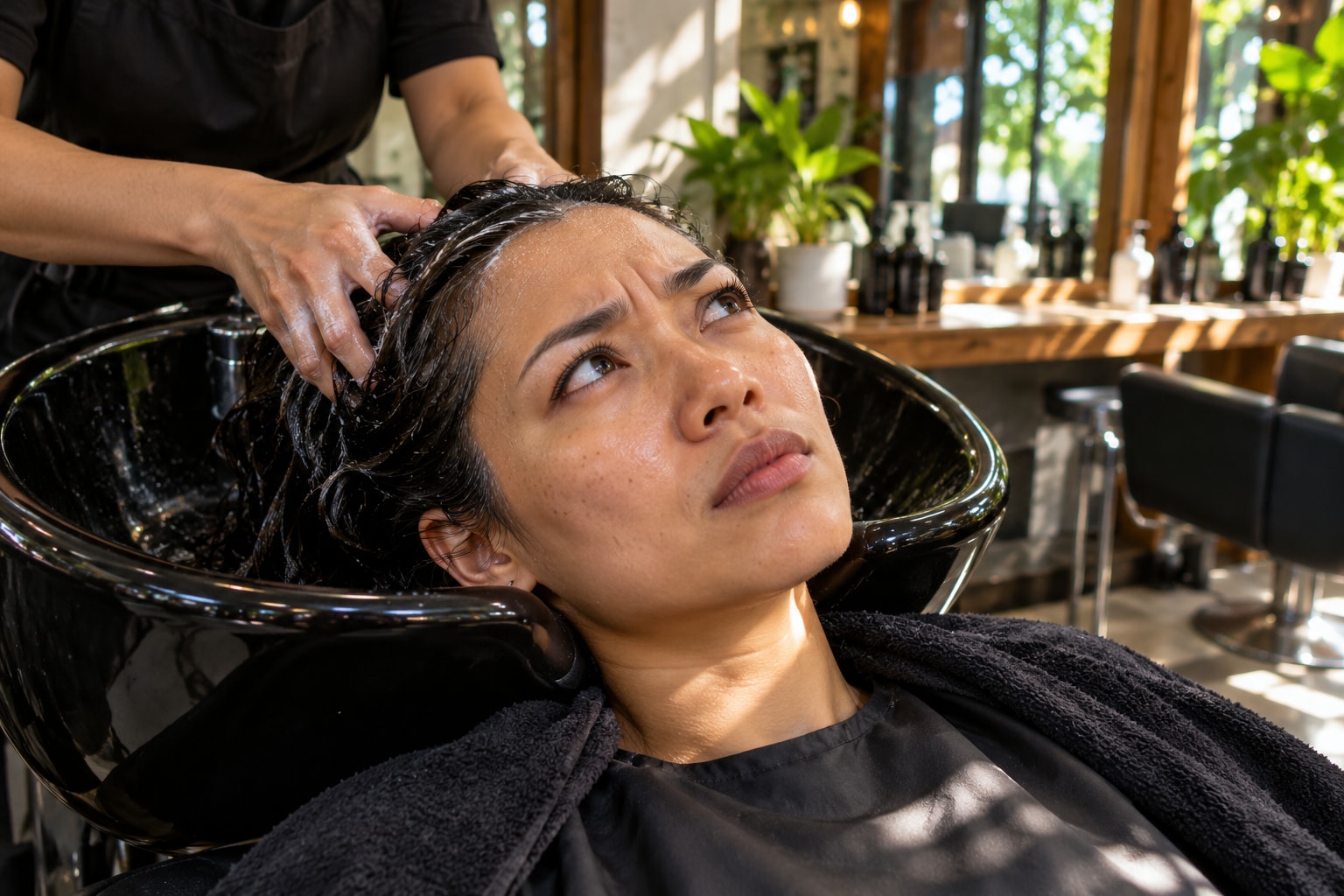
- Wash only your bangs with your normal shampoo. Rinse well.
- If the ends need conditioner, use a small amount below the roots. Rinse again.
- Blot with a towel. Don't rub or twist the hair.
- Leave mousse, oil, dry shampoo, and hairspray out for this test.
- While the roots are damp, brush the fringe left, then right, then straight down.
- Use low or medium heat, keep the dryer moving, and hold it about 15 centimetres away.
- Take one photo after styling and another four hours later in the same light.
A laboratory study tested hair tresses after 30 drying cycles. Damage rose with temperature, while a moving dryer at 15 centimetres caused less surface damage than closer, hotter drying.
Read the result by timing. A fixed gap during drying points to growth direction or cut shape. Clean bangs that separate only after skincare or lunch point more toward oil transfer. Separation that starts after one styling product makes that product or dose the first thing to change.
Judge the test in a mirror and in matched photos, using the same light and camera position both times.
Match the fix to the cause
For a cowlick or fixed split
Re-wet the roots, not just the ends. Move a flat brush across the growth direction while drying, then finish downward. This changes the day's set; it doesn't permanently alter the follicle's direction.
At your next cut, show the stylist where the dry fringe separates. Ask whether the centre needs more weight, more length, or less texturising. Bring a photo taken before you restyle it.

For oil that returns by midday
Keep your hands off the fringe and finish facial skincare before hair styling. Use dry shampoo only as its label directs, with the spray kept away from your eyes and face. Start with less than you think you need.
If your bangs stay clean on a bare forehead but split over moisturiser or sunscreen, test texture rather than removing skin care. A faster-setting product may reduce transfer without sacrificing protection.
For product clumping
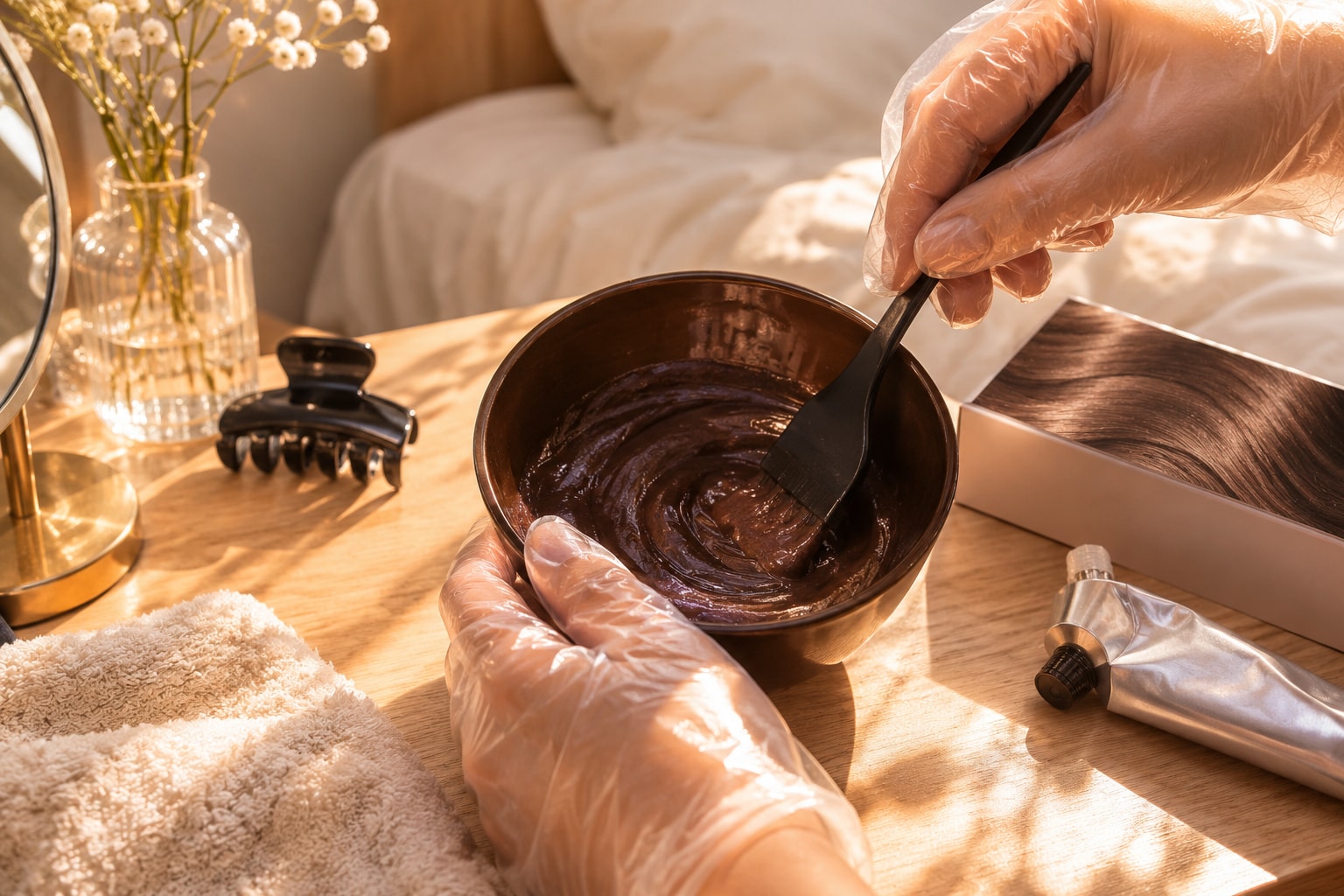
Reset with shampoo, then add back one product at a time, starting with lightweight mousse on damp hair. Keep oils and rich creams off the root area.
Don't brush through a rigid hold product after it dries. The American Academy of Dermatology warns that combing hair after long-lasting hold products can cause breakage. Re-wet the fringe before reshaping it.
For a cut problem
Wait before trimming the centre yourself, and ask a stylist to assess the fringe with its natural wave visible. A small change in weight can work better than making the whole fringe shorter.
Avoid turning a styling issue into damage
High heat may force the fringe flat for a few hours, but repeated heat can roughen the hair surface. The American Academy of Dermatology recommends low or medium settings and less frequent heat styling.
Use the least heat and hold needed, and don't keep pressing a flat iron over the same short pieces. Don't scrape through set hairspray with a fine comb.
Separated bangs also deserve a closer look when the change is new and persistent. Check for a widening hairline, many broken hairs, a smooth bare patch, heavy shedding, scale, pain, or strong itching. The American Academy of Dermatology lists sudden patches, widening areas, burning, tenderness, and scaly bald spots among signs that need medical assessment.
FAQ
Why do my bangs separate in the middle?
A centre split usually follows a cowlick, an old part, insufficient cut weight, or oil at the roots. Re-wet the root area and dry it left to right before directing it down. If the same line returns immediately, ask a stylist to adjust the cut around the growth pattern.
Can I train a cowlick out of my bangs?
You can reset how the hair lies for the day, but styling doesn't change the follicle's growth direction. Work while the roots are damp, use controlled airflow, and repeat after sleep or washing; a suitable cut reduces the daily effort.
Should I use dry shampoo every day on bangs?
Use it only as the label directs and only when oil is the cause. Daily layers can leave residue and make separation worse, so washing the fringe may beat adding powder to yesterday's product.
Do separated bangs mean my hair is thinning?
Not by themselves. Oil, a cowlick, lighting, and cut weight can expose small gaps without any density change. Track the same dry, clean area in matched photos. See a dermatologist if the gap widens or comes with shedding, breakage, itching, pain, scale, or a bare patch.