Quick answer
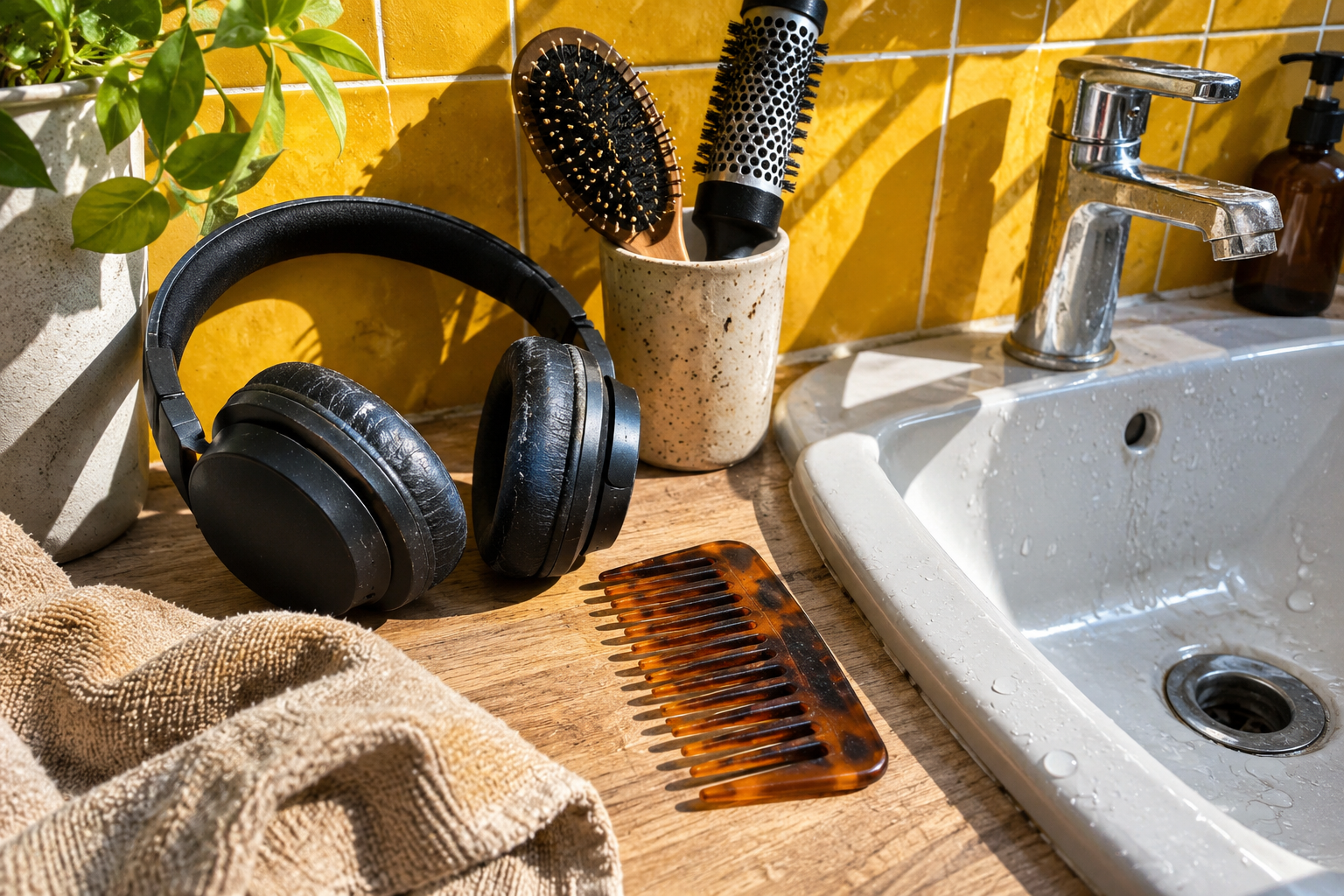
To fix headphone hair without washing your whole head, lightly dampen the flattened section. Lift it away from the scalp, then let it dry in the shape you want. If water is unavailable, changing the part and lifting the roots can hide the line, but that fix is less reliable.
Why the dent holds its shape
A headphone band presses a strip of hair against your scalp, and time, pressure, sweat, and styling product can make it stay flat.
Hair changes shape when it gets wet and dries because water weakens hydrogen bonds inside the strand, according to an Interface Focus article. The bonds form again as hair dries, so the strand can keep its new position.
Dry finger-combing often fails because you are moving hair that has already set around the band. A small amount of water lets you reset the affected area without starting a full wash.
A five-minute reset without a full wash
1. Check whether the line is in your hair
Move the hair across the groove with your fingers; if the line moves or disappears, you are dealing with flattened hair. If the hair moves but an indentation remains in your scalp, skip to the warning section below.
2. Dampen the roots, not the whole hairstyle
Wet your fingertips or use a fine mist bottle, then apply water to the flattened roots and two centimetres above them. The section should feel slightly damp, not soaked.
For straight or wavy hair, lift the section opposite the dent before returning it to its usual side. This adds movement at the root instead of pressing the same line down again.
For curly or coily hair, avoid dragging a fine comb through the dry dent. Mist the section, separate it gently with your fingers, and reshape the curl pattern. The American Academy of Dermatology advises handling wet hair carefully and notes that tightly curled hair is often best combed while damp.
3. Dry the lifted section in place
Air-drying works if you can hold the roots up until they set, but a moving dryer on low heat is faster. Hold it about 15 centimetres away while your fingers lift the flattened section.
One laboratory study tested hair tresses at several dryer temperatures and found more surface damage as heat increased. The lowest tested dryer temperature, used from 15 centimetres away with continuous motion, caused less damage than closer, hotter settings.
You only need to dry a narrow strip, so stop once it is dry. More heat will not create more volume.
4. Blend the edges
The reset section can look raised beside compressed hair, so blend the boundary with your fingers or a wide-tooth comb. Work from the surrounding hair toward the former groove.
If your hairstyle already contains a firm gel or hairspray, soften the area before combing. Dermatologists warn that combing through long-hold products can increase breakage. Do not pull harder just because the section feels stiff.
What to do when you have no water
A dry fix changes what the line looks like rather than fully resetting the strands, and works best on short or loosely wavy hair.
- Move your part by a few millimetres so fuller hair crosses the groove.
- Massage the roots with your fingertips, then lift them against their normal direction.
- Use cool airflow while holding the section up. Cool air will not reset hair like water, but it can separate compressed strands.
- If the dent sits near the crown, style around it instead of flattening the raised sides to match.
Avoid piling on wax, pomade, or dry shampoo. More product may disguise the line briefly, but it can also bind the flattened strands together. Test the mechanical fix first.
How to prevent headphone hair next time
The best fix is reducing steady pressure on one narrow strip. There is no proven wear-time limit, because headsets and hair types differ.
- Extend the headband until the ear cups stay sealed without squeezing your head.
- Shift the band slightly forward or backward during long sessions.
- Choose a lighter headset with a wide pad or suspension-style band when you replace yours.
- Keep hair dry before putting the band on. Damp hair can dry around the pressure line.
- Put long hair in a loose, low style that does not pull at the roots.
- Remove the headset if the band causes pain, tingling, or a headache.
Earbuds and clip-on headphones remove the band, so they prevent this styling mark but are not automatically safer for hearing. The US National Institute on Deafness and Other Communication Disorders says risk depends on volume and exposure time.
When it is more than flattened hair
Routine headphone hair is a shape problem, not proof of hair loss, although repeated friction can damage hair in unusual cases. A published friction alopecia report describes breakage from frequent rubbing and cites a case linked to a tight headphone band.
Check the contact strip in good light if the same area keeps looking thin. Broken hairs, redness, scaling, tenderness, or a widening patch deserve a break from the headset. A dermatologist can tell friction damage from pattern hair loss, alopecia areata, or a scalp condition.
A scalp groove that stays after the hair is moved or washed is a different problem. Stop blaming the hairstyle if it is painful, swollen, numb, changing, or still visible after the pressure is gone. Ask a clinician to examine it.
FAQ
Can headphone hair become permanent?
The styling dent should reset when the hair is rewetted and dried in another position. A line that remains after washing may be a natural part, compressed scalp skin, or another issue rather than hair holding a shape.
Do headphones cause hair loss along the band?
Normal use has not been shown to cause common pattern hair loss, but rare reports link tight friction with breakage and friction alopecia. Pain, redness, or a thinning strip is a reason to change the fit.
Can I fix headphone hair with only a comb?
Sometimes, especially when the dent is shallow and your hair has little product. If the line springs back, dampen the roots first. Water makes a temporary shape reset more dependable, while forceful dry combing adds friction.
Will a hat under the headphones prevent the dent?
A soft layer may spread pressure, but a tight hat can create its own flat area and more heat. A looser headset or band-free audio option is usually simpler.