Quick answer
Why does conditioner make hair flat? Conditioner leaves lubricating material on each strand to reduce friction, static and tangles. Fine or short hair can lose lift when the dose is too high, the product reaches the roots or several conditioning products are layered together.
This is usually a styling effect. It does not mean the conditioner has damaged your follicles or caused sudden hair loss.
What conditioner changes on your hair
Conditioner is meant to leave something behind. Its positively charged ingredients attach to the hair surface, which usually carries a negative charge. Oils, silicones and other emollients can also coat and smooth the strand.
That thin deposit makes hair easier to comb. It can improve shine and reduce frizz because adjacent strands slide past each other more easily.
The same effect can reduce volume. Smoother strands may settle closer together instead of holding an airy shape. Small groups can also merge into larger sections, making your part or scalp look more visible under direct light.
A 2025 laboratory study compared four common conditioning surfactants. Their molecular structures changed how strongly they attached to hair. This matters because two conditioners can behave differently even when their labels contain similar ingredients.
“Buildup” is not always the right diagnosis. A well-rinsed conditioner still leaves a useful deposit. Flatness starts when that deposit is heavier than your hair needs.
Four reasons conditioner can reduce volume
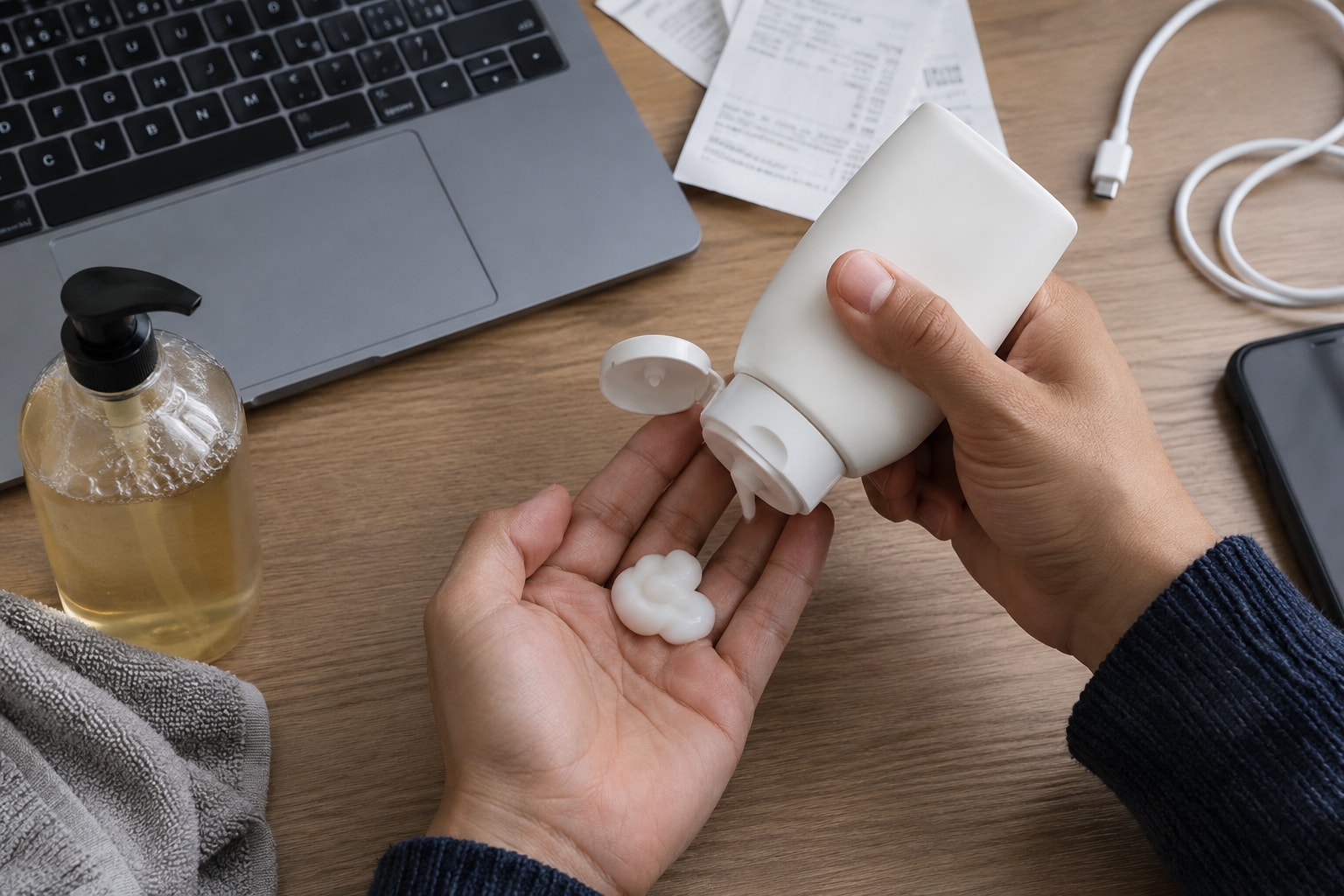
You used more than your hair could carry
Fine strands need less product than coarse or heavily damaged strands. The same amount that softens thick hair may pull fine hair into flat sections.
Hair length matters too. A dose that works on shoulder-length hair can overwhelm a short cut because there is less hair to distribute it across.
Start with the smallest amount that lets you detangle comfortably. Add more only to sections that still feel rough.
You applied it too close to the scalp
The American Academy of Dermatology advises people with fine or straight hair to apply conditioner to the ends. The roots already receive oil from the scalp and usually have less weathering than the ends.
Conditioner at the roots can remove the friction that helps hair stand away from the scalp. It may also combine with scalp oil and styling residue.
Short hair makes root avoidance harder. In that case, use less product and choose a lighter formula instead of trying to coat every strand.
You stacked several smoothing products
Rinse-off conditioner may be only one layer. Leave-in conditioner, heat protectant, curl cream, hair oil and smoothing serum can all add more material.
Each product may work well alone. Together, they can make hair soft but motionless.
Test rinse-off conditioner without the extra layers before replacing it. Otherwise, you may blame the wrong product.
The formula deposits more than your hair needs
Conditioners use different mixtures of surfactants, fatty alcohols, oils, polymers and silicones. The full formula controls how much deposits and how the hair feels.
A “silicone-free” label does not guarantee more volume. Oils, butters and conditioning polymers can also make fine hair sit flatter. A formula containing silicone can still feel light when its dose and delivery system suit your hair.
Ingredient spotting is a weak shortcut. Test the finished product on your actual hair.
Use this two-wash test
Compare two consecutive wash days instead of changing your whole routine at once.
- Keep the same shampoo, water temperature, drying method and hairstyle.
- On wash A, use your normal conditioner amount and placement.
- Photograph your dry hair from the front, side and top in indirect daylight.
- On wash B, use about half your usual amount. Keep it off the roots and apply it only where detangling is needed.
- Skip leave-in conditioner, oil and smoothing cream for both washes.
- Compare the photos only after your hair is fully dry.
If wash B has more root lift, dose or placement is the likely issue. Repeat the comparison once before treating the result as settled.
If nothing changes, conditioner may not be the main cause. Drying direction, scalp oil, haircut shape and styling products can all change volume.
This test cannot measure hair density. It simply isolates one routine variable.
Restore volume without making hair rough
Reducing conditioner is usually better than removing it at once. Conditioner lowers combing friction, and dermatologists recommend it for reducing breakage and split ends.
Make these changes in order:
- Use a smaller dose.
- Move the product farther from the roots.
- Remove extra leave-ins and oils for one wash.
- Rinse the product according to its label.
- Try a lighter conditioner only if those changes fail.
Do not dilute a rinse-off conditioner in a spray bottle and use it as a leave-in. The American Academy of Dermatology warns that the two product types have different chemistry. A rinse-off formula is not designed to remain on your hair and scalp.
Drying also affects the result. Blot wet hair with a towel or T-shirt instead of rubbing it. If you blow-dry, use low or medium heat and direct the roots away from their usual flat position.
Dry or curly hair may need conditioner through more of its length. Move the application boundary gradually rather than copying an ends-only routine made for straight, oily hair.
Compare your hair under fixed conditions
Hair can appear fuller in one photo and sparse in another without any density change. Overhead light exposes the scalp between strands. Dampness, oil and conditioner can increase separation into visible sections.
Use the same room, camera distance, part and head position for progress photos. Compare dry hair at a similar time after washing.
Do not use a beauty filter or portrait blur. Both can erase flyaways and change the outline of your hair.
Flat hair is not the same as thinning hair
Fine hair describes the width of individual strands. Thinning describes a reduction in the number or coverage of hairs. You can have either condition without the other.
A dermatology review found no evidence that ordinary cosmetic hair products cause follicle hair loss when used as intended. Conditioner can still change how much scalp you see by altering how strands group together.
Check for a pattern that remains after you simplify the routine. A widening part, persistent shedding or a new patch deserves an assessment from a dermatologist. Stop using a product if it causes burning, swelling, marked itching or a rash.
FAQ
Should fine hair skip conditioner?
Usually not. Fine hair still benefits from lower friction and easier detangling. Use a small amount on the ends, then adjust based on softness, tangles and volume.
Can silicone-free conditioner still make hair flat?
Yes. Oils, fatty alcohols and conditioning polymers can also deposit on hair. The amount, placement and full formula matter more than one silicone-free claim.
Can leave-in conditioner make hair flat?
It can, especially on fine or straight hair. Apply the smallest useful amount from the middle of the strands to the ends, and keep it off the scalp.
Can conditioner cause hair loss?
Normal conditioner use is not known to cause follicle hair loss. It may reveal more scalp by flattening or grouping strands, while conditioning can reduce breakage during combing. Persistent shedding needs a separate medical assessment.