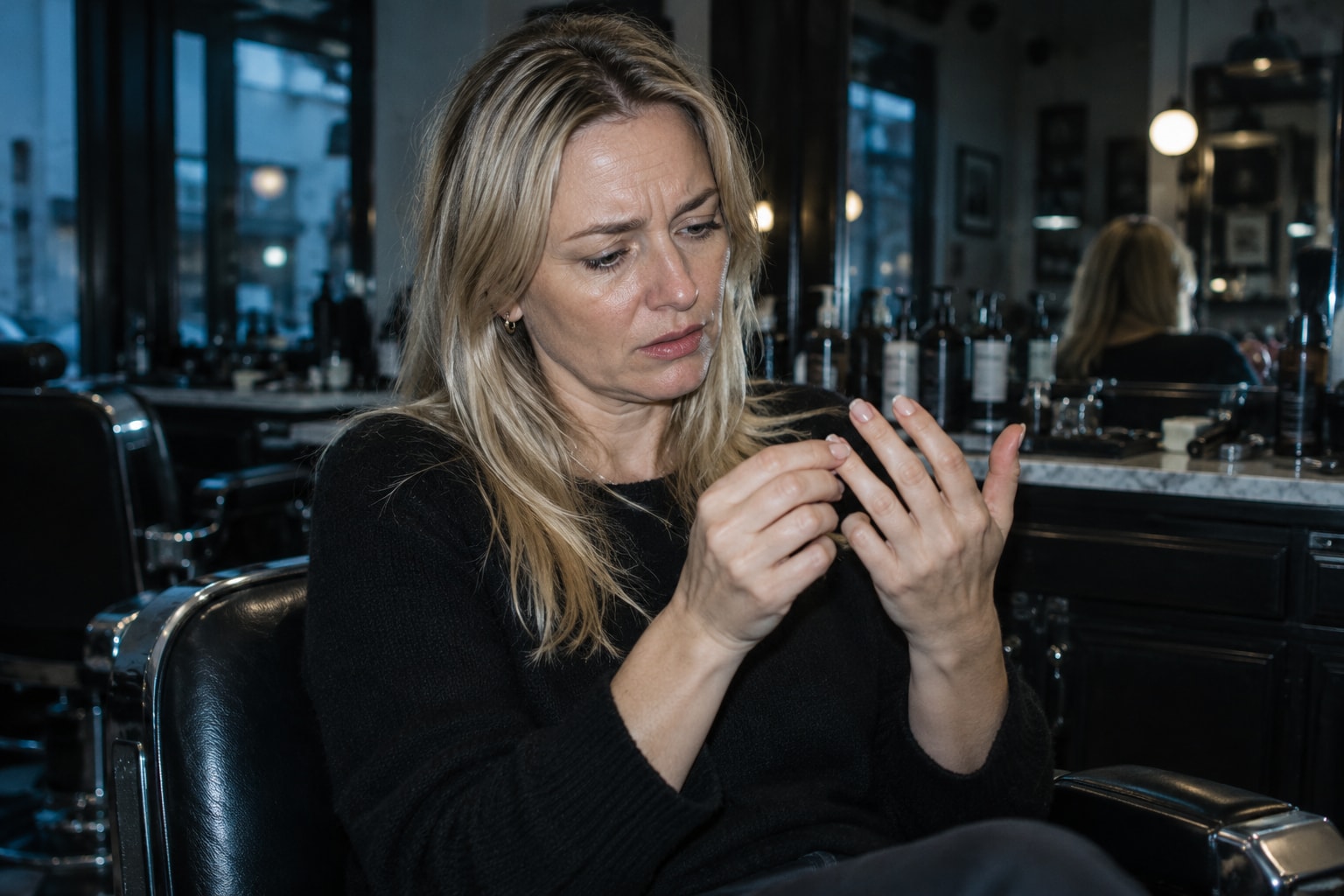
Quick answer
If your nail tips turn transparent after washing, a temporary change in moisture is a plausible explanation. The nail plate is naturally partly see-through, so clarity alone doesn't prove damage or a vitamin deficiency. Check whether the appearance returns to normal after drying. Get persistent new changes assessed, especially with pain, peeling or lifting.
What you're seeing at the tip
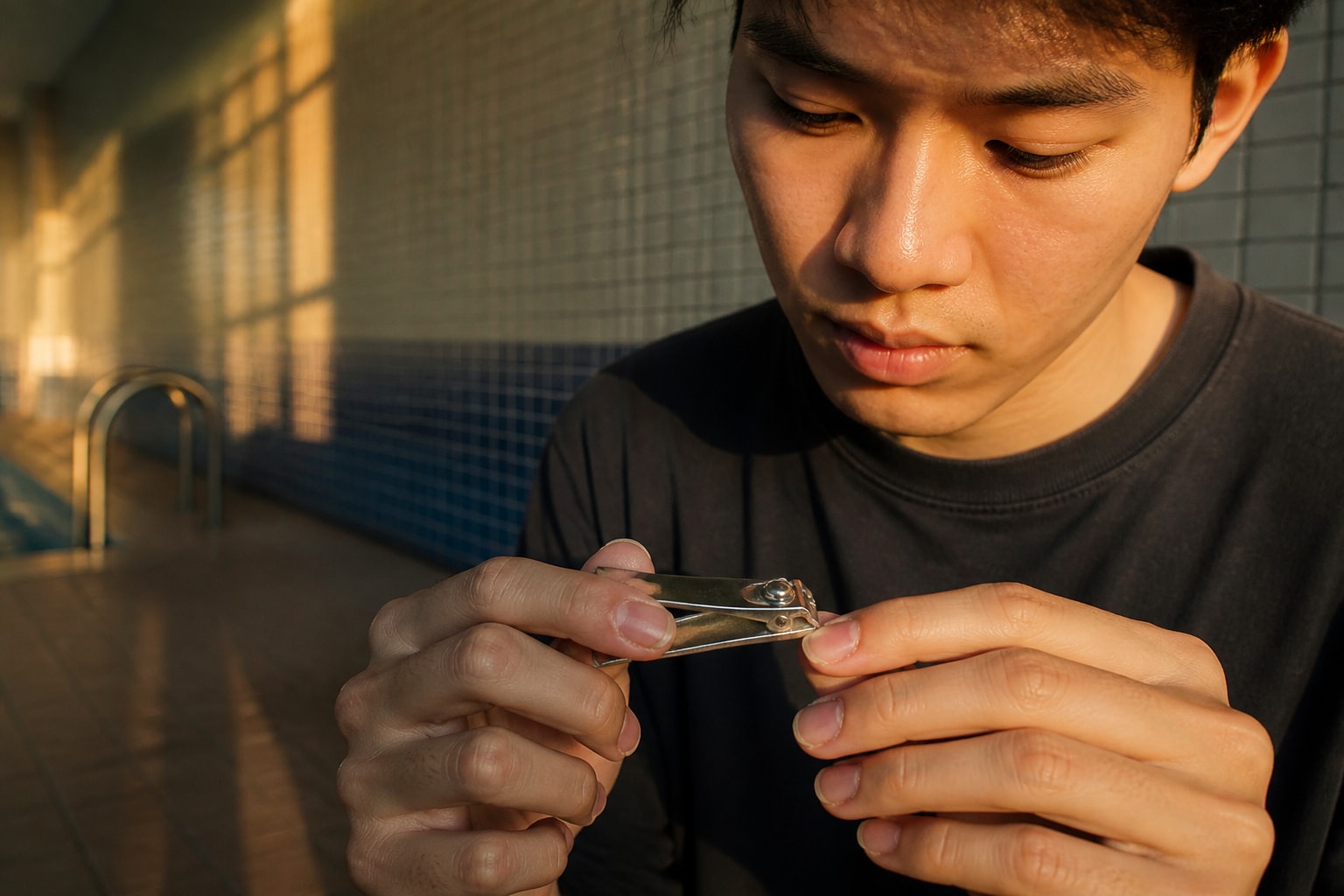
The free edge is the part of your natural nail beyond the fingertip, often called the white of the nail.
DermNet describes the nail plate as a partly transparent structure made from keratin, with no usual pigment of its own. That means some transparency is part of normal nail anatomy.
Check whether the change affects only the free edge or whether the nail has started separating from the skin underneath. A growing white area beneath the attached part needs a different assessment.
Don't judge your nails against someone else's bright white tips. Whiteness isn't a health target.
Why water can change the appearance
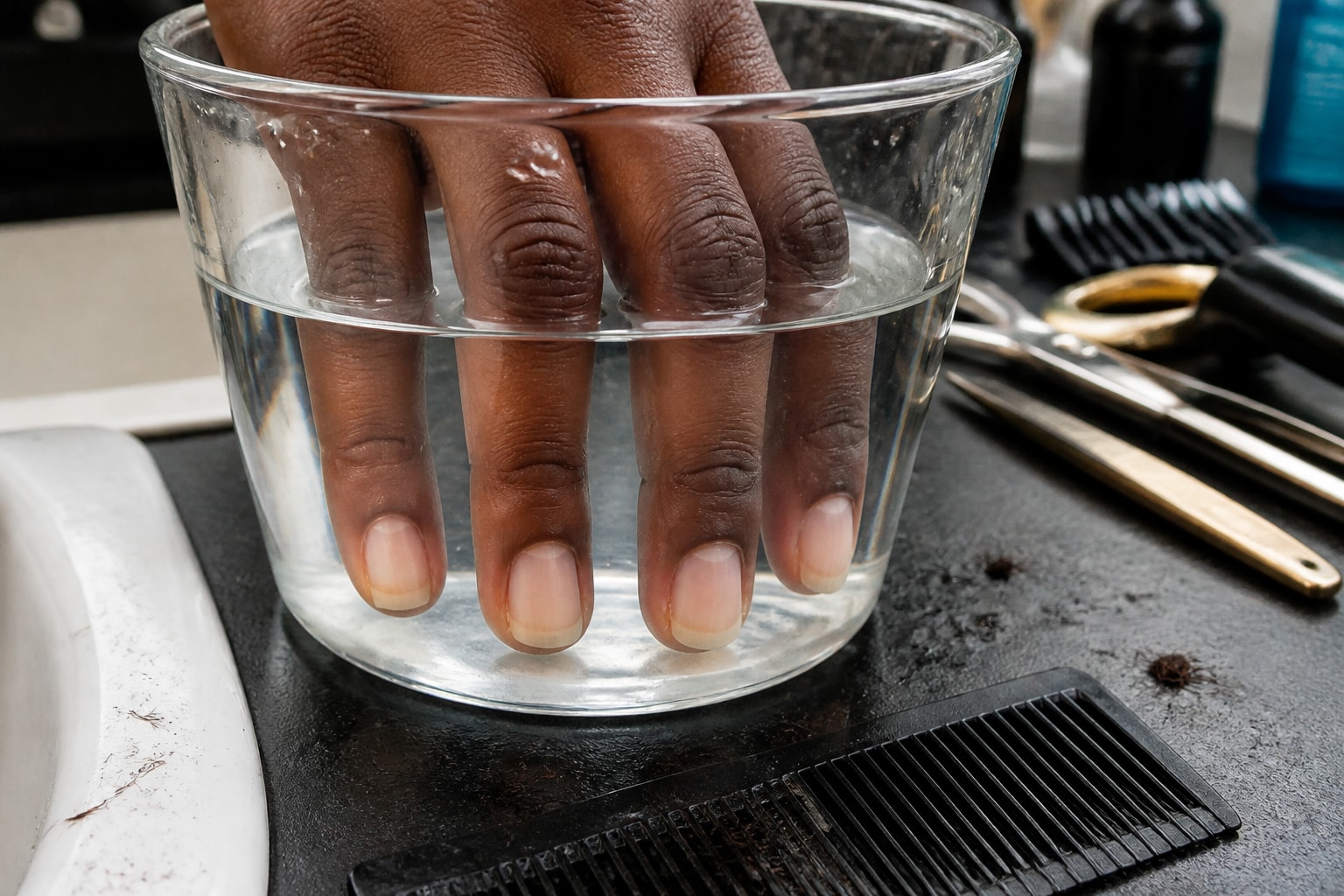
Water can change how light interacts with a nail. In a 2002 laboratory study, Benjamin Schulz and colleagues measured changes in nail optics during wetting and drying.
Their model described water held between keratin structures and water bound more tightly within them, with each process happening at different speeds.
This makes moisture a reasonable explanation for tips that look clearer after a shower, then return to their usual appearance. It's an inference from the optical research. The study didn't assess whether see-through tips could identify a nail disorder.
The laboratory timings don't tell you how long your own nail tips should take to turn white again.
Check the pattern before changing your routine
Compare your nails during an ordinary day, without deliberate soaking or repeated checks to force a change.
- Look at the free edges before your usual shower or handwashing.
- Notice their appearance afterward, then check again later when they're dry.
- Keep the light, viewing angle and background the same for each comparison.
- Note any splitting, tenderness, swelling or area that seems to be lifting.
- Record recent manicures and cleaning tasks if the change is new.
A brief note or private photo can help you show the pattern at an appointment.
This comparison helps you describe what happens, but it cannot diagnose a problem or measure water in your nails.
Describe any symptoms alongside the change in color. Tell the clinician if your tips briefly look clear after washing, or if a nail has started lifting and hurting.
Clear doesn't automatically mean weak
Transparency alone isn't a useful test of nail strength. Notice whether your nails split or break during normal use; don't bend them deliberately to test them.
In a 2007 study of 102 participants, Dana Kazlow Stern and colleagues compared clippings from brittle and normal nails. Water content didn't differ significantly between groups, but the clippings lost water before testing, limiting conclusions about intact nails.
The study didn't examine transparency, so it cannot tell you whether clear tips are weak or well hydrated.
Care for the nail without chasing its color
If the tips are comfortable and otherwise unchanged, focus on avoiding damage during everyday tasks instead of making them opaque.
The American Academy of Dermatology's nail-care advice includes gloves for washing dishes and cleaning, plus moisturizer after handwashing. Prolonged water exposure can weaken nails and contribute to splitting, peeling or breaks.
Keep washing your hands normally, but reduce unnecessary soaking and protect your hands during long wet tasks.
These care steps aim to reduce damage from wet work. They don't promise to turn a clear tip white, and color isn't their success measure.
When to get a change checked
Book a medical assessment for a persistent unexplained change, pain, swelling, repeated splitting or separation from the nail bed. Mention whether one nail or several are affected.
The AAD's guide to nail changes advises examination when a nail lifts. Lifting often creates a white area beneath the nail. Avoid digging underneath to investigate, since sharp tools can cause injury.
A new or changing dark streak also needs assessment, regardless of how clear the free edge looks.
FAQ
Why are my nail tips clear after a shower?
Water changes the nail's optical properties, which offers a plausible explanation for temporary clarity that reverses as the nail dries. Don't assume the appearance proves either damage or perfect hydration.
Are transparent nail tips unhealthy?
Not necessarily. The nail plate is naturally partly transparent, and clarity alone cannot establish or rule out a health problem. New pain, splitting, swelling or lifting matters more than matching someone else's nail color.
Do transparent nails mean I need biotin?
Clear tips alone aren't a reason to start biotin. The NIH's biotin fact sheet says evidence for nail benefits is limited. High-dose supplements can also interfere with some laboratory tests. If your nails change persistently, ask a clinician to assess the cause before buying supplements.