Quick answer
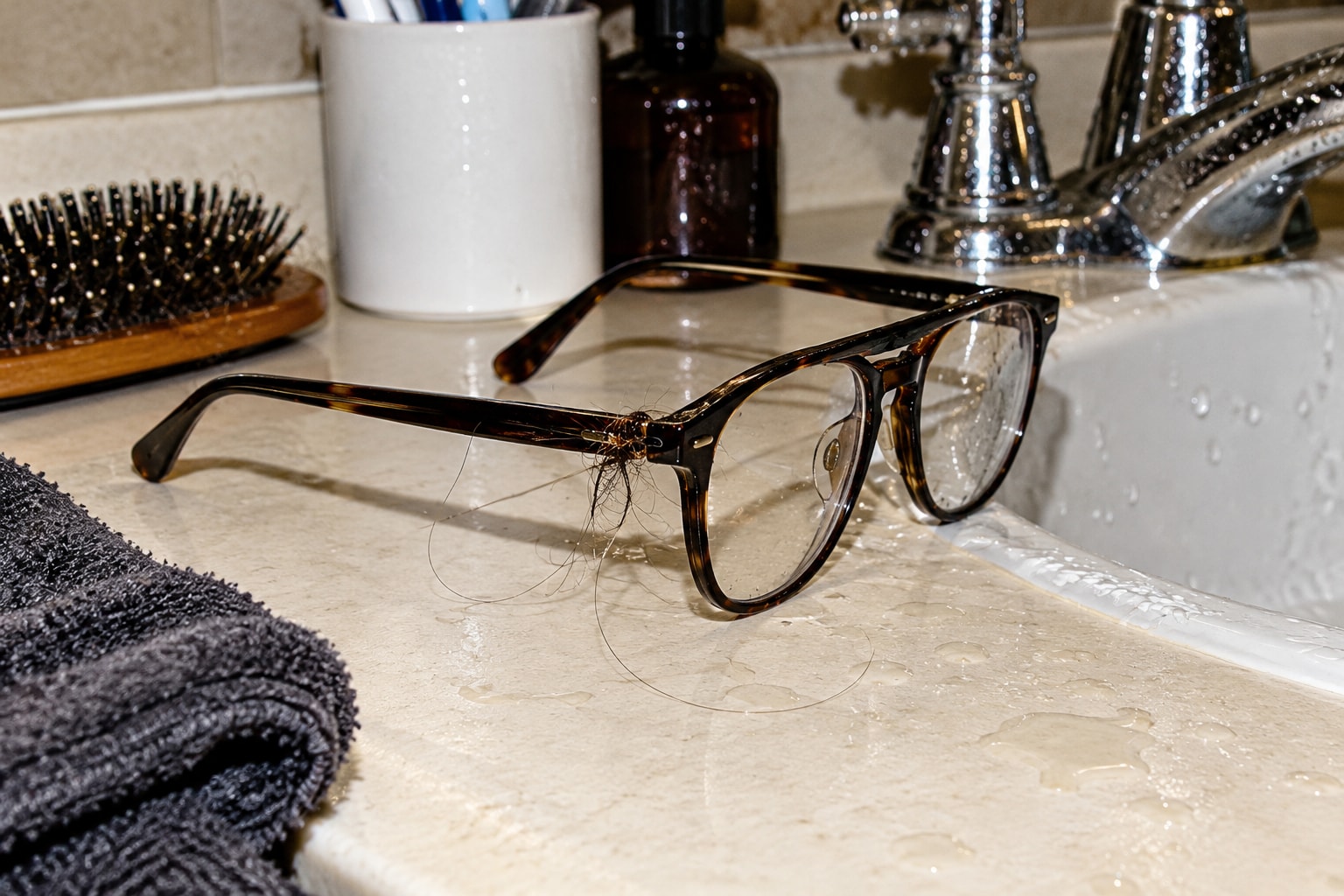
Hairspray residue on glasses can leave a cloudy film when spray settles on the lenses. Start with lukewarm water and a little mild, lotion-free dish soap, provided your eyewear care instructions allow it. Rinse well, then dry gently with a clean microfibre cloth. If marks remain, ask an optician to check for stuck residue or lens damage before trying stronger cleaners.
Why your lenses look cloudy after styling
Fine mist from hairspray can reach your lenses, according to the lens-care advice from Arthur Hayes Opticians. Skin oils, makeup and moisturiser can also leave marks, so timing alone doesn't prove hairspray caused every smudge.
Anti-reflective and protective coatings can make lenses easier to clean, but they don't prevent every deposit.
There are two problems to separate: something sitting on the lens, and damage to its surface. HOYA warns that hairspray can damage lenses and coatings, but that doesn't tell you whether your particular pair is damaged.
Don't assume the worst. Start by cleaning them gently, then judge what remains.
How to remove the residue safely
Check the instructions supplied with your glasses, and ask the dispensing optician about any cleaning restrictions you don't understand.
HOYA recommends lukewarm water, a drop of mild liquid soap and a clean microfibre cloth for routine lens care. Warby Parker gives a similar method, specifying lotion-free dishwashing liquid.
- Wash and dry your hands to avoid transferring oil and dirt back onto the glasses.
- Rinse the lenses and frame under lukewarm running water to remove loose grit before wiping.
- Gently spread a small drop of suitable soap over both sides of each lens, using clean fingers. Include the frame and nose pads.
- Rinse the lenses and frame thoroughly to remove the soap before you move on to drying.
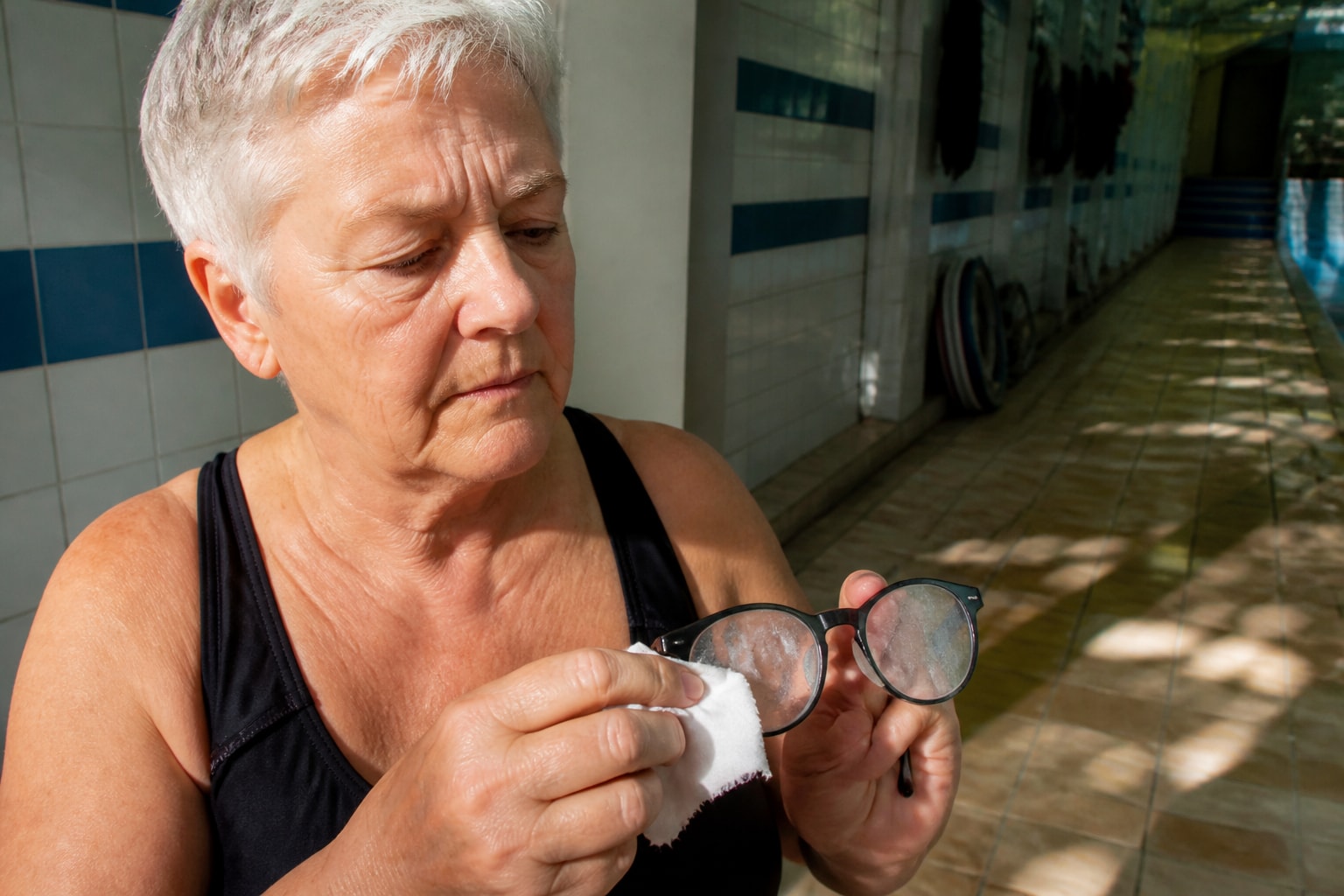
- Dry gently with a clean microfibre cloth, then inspect the lenses under a light.
Keep the pressure light. Don't scratch at individual spots with your fingernail or keep rubbing one patch until it feels smooth.
If your care instructions specify a lens cleaner, use that product as directed. Choose one approved for your coatings, rather than substituting a household glass cleaner.
The advice comes from lens makers and opticians, without tests comparing removal methods across hairspray brands. No method here guarantees a one-wash fix.
Check what changed after cleaning
A patch that clears during cleaning supports removable residue as the explanation, but a persistent mark needs a closer look.
Warby Parker warns that a dirty microfibre cloth can spread trapped dirt back across the surface. HOYA also warns that fabric-softener residue on a cloth can leave a misty film.
If you've used a dirty or softened cloth, switch to a clean one and follow the approved cleaning method again. Otherwise, stop cleaning and get the remaining spots checked.
Specsavers says an optician can use specialist lens cleaner to distinguish something stuck on the surface from a scratch. That makes a professional check more useful than guessing from how a stubborn patch looks.
When you visit, explain when the marks appeared and which cleaning methods you've already tried. Bring the hairspray bottle, or a photo of its label, plus the cleaner you used. Ask whether the remaining mark is residue, a scratch or a coating problem.
Avoid turning a deposit into damage
Specsavers warns against polishing lenses with toothpaste or baking soda because these methods can damage their surfaces and treatments. A stubborn mark isn't a reason to scrub harder.
ZEISS explains that dirt caught in a shirt sleeve or tissue can create tiny scratches as you rub. Those scratches cannot be cleaned away.
ZEISS also warns that high temperatures can damage lenses and coatings, so avoid hot water. Keep your glasses away from the hairdryer while styling, and don't use it to dry freshly washed lenses.
Choose a cleaner intended for your glasses, since a product for removing hairspray from bathroom mirrors isn't automatically suitable.
Stop the next round of overspray
HOYA recommends keeping eyewear away from hairspray and storing it in a hard case when you're not wearing it.
A practical way to follow that advice is to close the case before you start spraying.
If you need your glasses to arrange your hair, finish that part first. Then remove them for the spray step, provided you can do so safely.
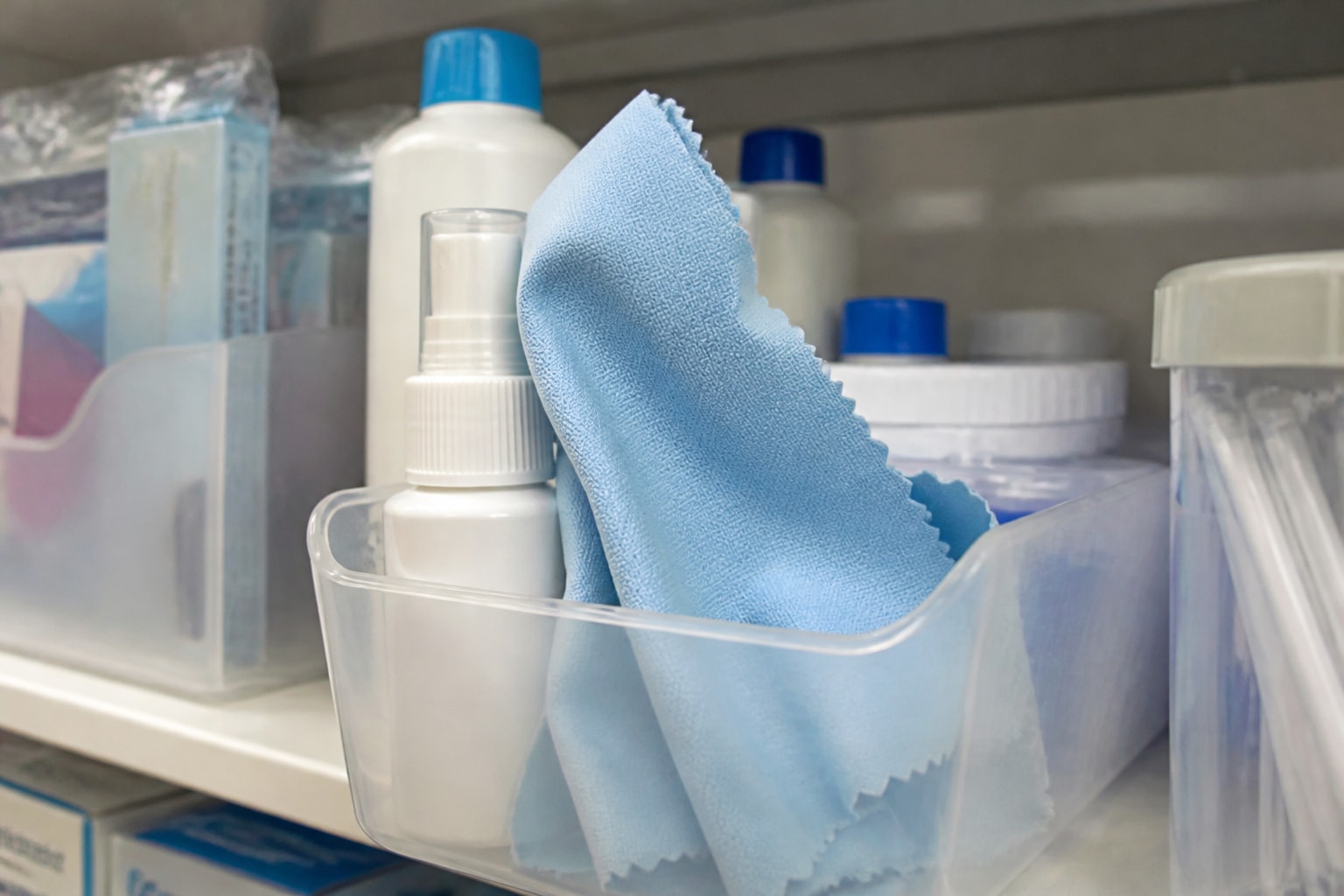
Keep your cleaning cloth somewhere clean and away from styling products, then wash it according to its care instructions. Skip the fabric softener.
FAQ
Can I use rubbing alcohol to remove hairspray?
Don't improvise with bottled rubbing alcohol. Warby Parker warns that alcohol used as a household cleaner can damage lens coatings. That doesn't mean every alcohol-containing lens product is unsuitable: ZEISS describes purpose-made alcohol lens wipes for coated lenses. Ask your optician which finished product is compatible with your pair, and follow its label.
Will nail polish remover get the spots off?
Don't use nail polish remover: Warby Parker lists acetone among cleaners that can damage lens coatings. Whether a solvent dissolves hairspray is only half the question; it also needs to be suitable for the eyewear. Take stubborn spots to an optician instead.
Does persistent cloudiness mean I need new lenses?
Not necessarily. Specsavers recommends checking whether material is stuck on the lens before treating a mark as damage. Its guidance also states that a scratch causes permanent surface damage and cannot be repaired. Have the lenses inspected before buying replacements or trying another cleaning hack.