Quick answer
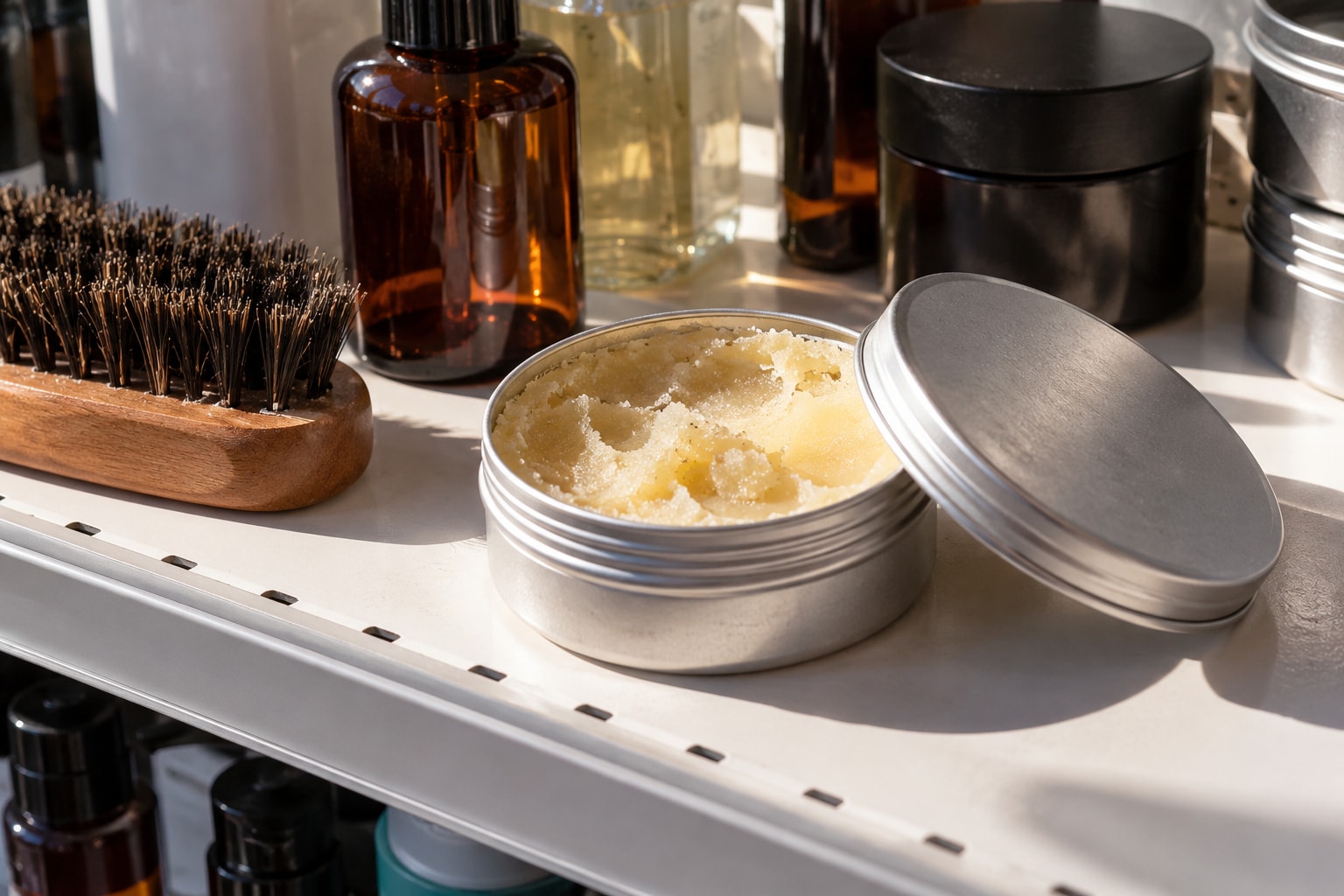
If your beard balm feels gritty, larger fat crystals may have formed as the product cooled. Shea butter formulas can develop this texture after temperature changes, even when the balm started smooth. Check the product before trying to fix it: graininess alone doesn't confirm spoilage or prove that a tin is safe.
Why a smooth balm develops grains
The gritty bits can come from fats already in your balm, so they don't necessarily mean dirt entered the container.
AAK, a cosmetic ingredient supplier, explains that shea butter crystals can melt and form again as temperatures change. Larger crystals create the sandy feel, and they can develop during shipping, storage or use.
AAK also explains that slower crystallization can allow fewer, larger crystals to develop.
In a 2025 laboratory study, Johan Pettersson and colleagues mixed the firmer fraction of shea butter, called shea stearin, with two different liquids.
The blend containing rapeseed oil formed smaller, densely packed crystal clusters. The blend containing octyldodecanol, a cosmetic ingredient, formed fewer, larger clusters.
These were test mixtures, not finished beard balms, and all three authors worked for AAK. The results explain why two shea-containing products can behave differently; they don't establish the safety of your particular tin.
Check the tin before your beard
To establish where the grains appear, examine a small scoop before applying it, using a clean, dry tool.
If you can see grains in the container, you're dealing with a product texture issue. If the balm looks smooth until it meets other products, don't assume crystals explain the clumps.
Keep these checks simple:
- Read the ingredients: shea butter gives you a plausible explanation, though its presence doesn't confirm the cause.
- Recall whether the tin arrived warm, sat in sunlight or moved between hot and cool places.
- Compare the smell, color and consistency with how the product looked when you first opened it.
- Check the label and follow its storage directions, including any stated expiry or use-after-opening guidance.
The FDA explains that heat, sunlight and air can change cosmetic products over time. It also notes that moisture and repeated finger contact can introduce or encourage microorganisms.
A normal smell doesn't prove safety, and appearance alone can't tell you what's inside an unknown grain.
If the balm has changed color or smell, the FDA advises throwing it away. If it causes a rash, redness or burning, stop using it and contact a healthcare professional.
What to do with a grainy tin
For a recently purchased balm, contact the maker before changing the product. Ask whether this texture is expected for that formula and whether they recommend replacing it.
Send a close-up of the balm, the batch number, purchase date and what you know about its storage. A picture of your face isn't needed for a product texture complaint.
You can ask three direct questions:
- Is this an expected crystallization issue for this formula?
- Is there a product-specific way to restore the texture?
- Can you replace the tin if the grains make it difficult to apply?
This is a reasonable quality complaint even if the maker confirms harmless crystallization. A balm you can't spread comfortably isn't doing the job you bought it for.
If the company confirms normal graininess, follow its application advice. Don't grind stubborn particles against your skin or keep rubbing until the balm disappears.

Should you melt it to make it smooth?
Reheating and controlled cooling can change the crystal structure, which explains the advice you'll find on beard forums. Some manufacturers also provide a reheating method.
Beard Octane gives melting and cooling instructions for its own grainy balms, with a warning against microwaving the container.
That guidance belongs to that product; it isn't a tested recipe for every balm sold in a similar tin.
Ask your manufacturer before trying a home reheating method; without its guidance, replacement is the simpler choice. The laboratory study above tested crystal structure and firmness, not the safety of home-reheated cosmetics.
Making the balm smooth again doesn't prove it's safe.
Don't add water to loosen the grains. The FDA warns that adding water can introduce microorganisms and dilute a cosmetic's preservatives. Avoid improvising with extra ingredients when you're trying to assess an unexplained change.
How to reduce repeat problems
Follow the storage instructions, protect the container from temperature extremes and keep it closed between uses.
Wash and dry your hands before taking product from the tin. Keep the container and any scoop clean, and prevent shower water from getting inside.
Write the opening date on the base, as the FDA recommends, to help track the product's age.
If the same balm repeatedly becomes gritty despite correct storage, ask about a different formula or a replacement. The crystallization research shows that the complete mixture affects texture, so removing one ingredient isn't a guaranteed fix.
FAQ

Does grainy beard balm mean it has expired?
No. Fat crystals can change texture without showing that a product has expired. Shelf life also depends on the formula, use and storage, according to the FDA. Check the label and contact the maker about unexpected changes.
Can beard butter develop the same gritty texture?
Yes, when it contains fats that crystallize this way. Beard Octane identifies shea and mango butters as ingredients associated with graininess. The product name alone won't tell you how a particular formula behaves.
Is gritty balm a sign of cheap ingredients?
Graininess alone doesn't establish ingredient quality. The AAK explanation and Pettersson study show that processing, temperature history and the surrounding liquids affect crystal formation. A higher price doesn't answer those formulation questions.
Will putting the tin in the fridge fix it?
Don't assume refrigeration alone will restore a smooth texture. Beard Octane's instructions combine melting with controlled cooling, rather than simply chilling an unchanged tin. Ask your own manufacturer for guidance before trying its method on another product.