Quick answer
Why does my beard trimmer pull hair? The usual causes are low power, trapped debris, dry blades, worn edges, or poor technique.
Stop when it tugs, then clean and charge the trimmer. Oil it only as its manual directs before testing it on clean, dry, combed hair. If it still pulls, replace the blade or have it sharpened instead of pressing harder.
What the official guidance supports
The useful evidence here comes from device makers, not trials comparing every beard trimmer. Wahl says to oil a pulling blade first. If pulling continues, the company advises replacing the blade or having it sharpened.
A BaByliss beard-trimmer manual adds three checks: enough charge, blades free from debris, and clean, dry, tangle-free hair. Philips reports the same battery effect for a bikini trimmer, not a beard model, so use that point only to justify a full-charge test.
These instructions are model-specific, so your own manual takes priority for oiling, rinsing, corded use, and cutting direction.
Run these six checks in order
1. Clear the blade and guard
Switch the trimmer off and disconnect its charger. Remove the guard and detachable blade only as the manual shows.
Brush out packed hair from the teeth, the space under the blade, and the guard slots. BaByliss advises using the supplied brush and warns against cleaning the blade with a sharp object.
Rinse only the parts that your manual labels washable, then dry them fully before reassembly. A wet/dry badge on one model does not make every trimmer safe to rinse.
Check that the blade sits flat and the guard clicks firmly into place. Stop using a head with bent, chipped, or loose teeth.
2. Test it at full charge
Wahl says a charge is due when a trimmer slows or struggles to hold speed. Philips lists low battery as a cause of pulling on its smaller precision trimmer.
Charge the tool with its correct charger and test a small area, using mains power only if its instructions allow corded operation.
If it works after charging but soon starts tugging again, the battery or drive may need service. That is a tool fault, not a reason to push harder.
3. Oil it only when the manual says to
Hair and dried residue increase resistance between moving blades. For models that require oil, Wahl and BaByliss direct you to use one or two drops of clipper oil.
Follow your manual's exact method, which may tell you to run the oiled blade briefly and wipe away excess after switching it off.
Do not substitute cooking oil, skin oil, or a random workshop lubricant. BaByliss specifies its clipper oil because it is made for high-speed blades and will not slow them.
Self-sharpening does not settle the maintenance question. Wahl's self-sharpening trimmer still calls for oil, so check the instructions for your exact model.
4. Prepare the beard for the tool
For the BaByliss model reviewed here, the maker says to trim clean, dry hair that has been combed free of tangles. That differs from manual razor advice, which often starts with wet, softened hair.
Comb the beard in its natural direction before trimming. If it is long, begin with a longer guard and reduce the length in stages, giving the head less hair per pass.
Do not apply a generic wet-versus-dry rule to every device. A trimmer sold for wet use may have different instructions, so follow its manual.
5. Fix the angle, direction, and pressure
Let the motor cut at its own pace. The BaByliss manual says not to force the head through hair. It also recommends small passes with the trimmer held near 90 degrees to the face.
Cutting direction is not universal. That BaByliss guide recommends moving against hair growth, while a Wahl stubble-trimmer guide follows the beard's lay for an even length. Use the method written for your head and guard.
Start on a small, less visible patch, and lift the tool away if tugging begins instead of repeating the pass with more pressure.
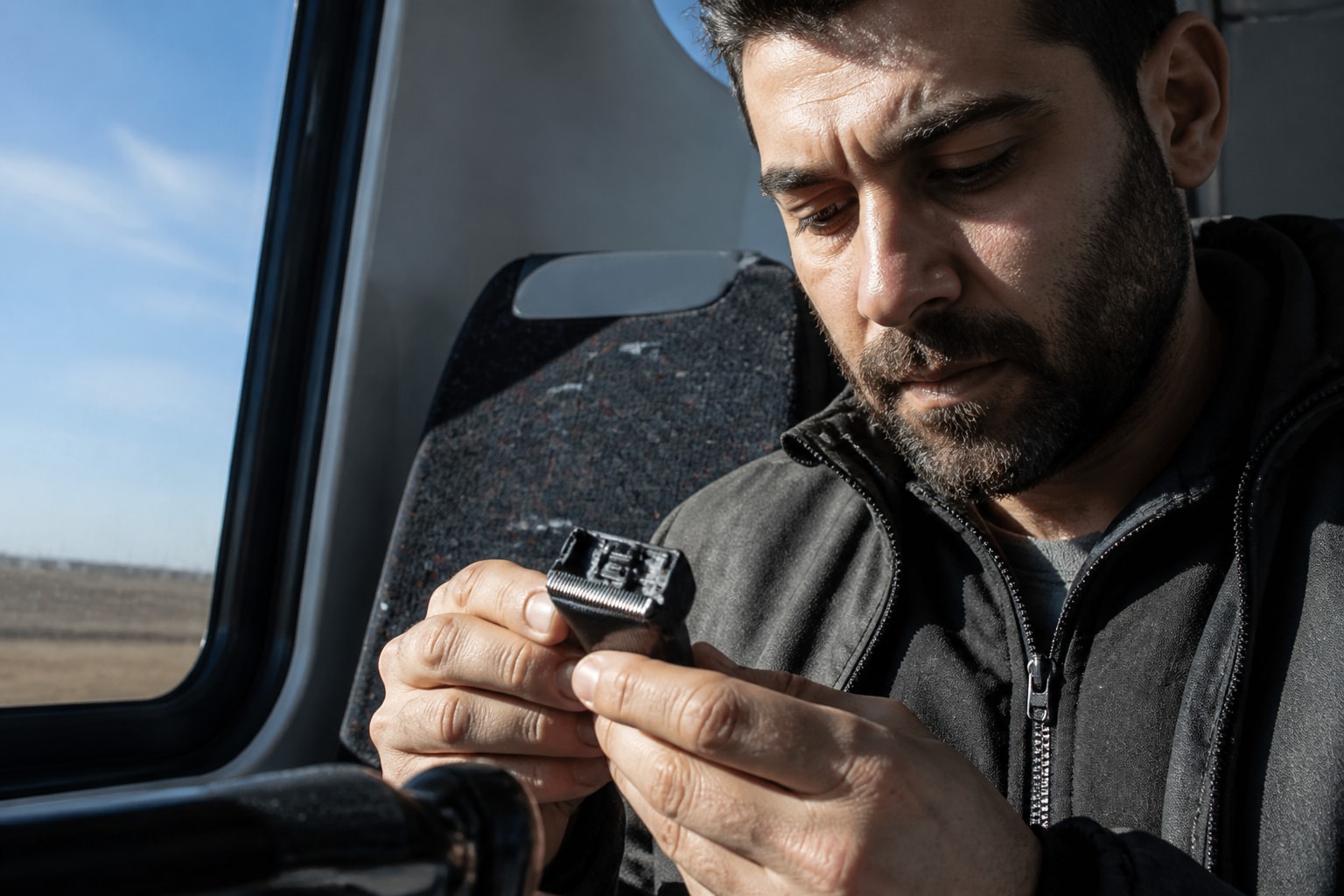
6. Replace or service the blade
Test the trimmer after cleaning, charging, and correct oiling. If it still pulls, suspect wear, damage, or a fault elsewhere in the head.
Wahl's support guidance is direct: replace the blade or have it sharpened if oil does not stop the pulling. Use an approved replacement head or a qualified sharpening service. Do not bend or grind precision teeth at home.
Replace the whole trimmer only when the blade is unavailable, the drive stays weak after charging, or authorised repair costs more than a suitable replacement.
A quick way to isolate the fault
Make one change at a time and test on the same small area, so several changes do not hide which one worked.
- Pulls with every guard and with the bare head: suspect the blade, lubrication, charge, or drive.
- Pulls only with one guard: clean it, inspect its slots, and confirm that it locks in place.
- Pulls mainly through long or dense sections: use a longer setting first and take smaller passes.
- Pulls only after several minutes: check charge, blade heat, and trapped hair before continuing.
This is a troubleshooting shortcut, not a lab test. If the tool is damaged, unusually hot, or making a new mechanical noise, stop and use the maker's repair route.
If your skin is already sore
If your skin is red, burning, or tender after the tugging, stop trimming that area until it settles.
Cleveland Clinic's razor-burn guidance recommends a cool washcloth and a plain moisturiser for irritated skin. It also advises avoiding further shaving while the area heals. The evidence covers razor irritation, not a direct trial of trimmer pulling, but the low-risk care is applicable.
See a clinician if the rash does not clear within a few days, and seek help sooner if symptoms are severe or worsening.
FAQ
Can a low battery make a beard trimmer pull hair?
Yes. Philips lists low battery as a reason an electric trimmer may pull, and Wahl links slowing under load with the need to charge. Test the trimmer fully charged before buying a new blade.
Should I oil self-sharpening trimmer blades?
Only when the manual says to. Wahl's self-sharpening stubble trimmer still calls for regular oiling, but maintenance rules vary by model. Use the named clipper oil and the stated amount.
Should my beard be wet or dry before trimming?
Check the manual. The BaByliss beard trimmer cited here calls for clean, dry, combed hair. Wet-use models may differ, and their water rating does not apply to another device.
Do I need a new trimmer if it keeps pulling?
Not always. Wahl advises replacing or professionally sharpening the blade after oiling fails. Replace the full tool when the drive or battery is failing, repair is impractical, or a replacement head is unavailable.