Quick answer
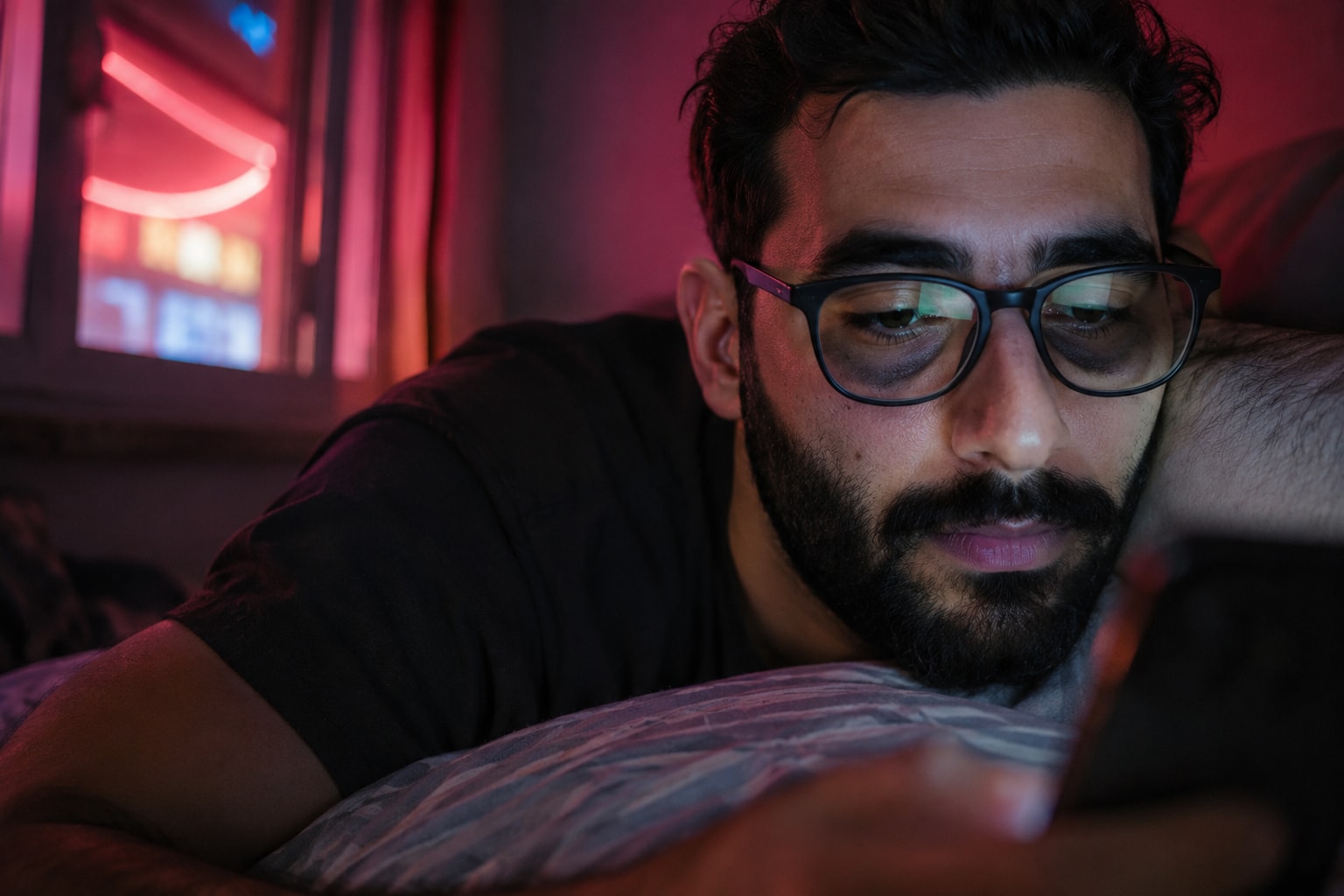
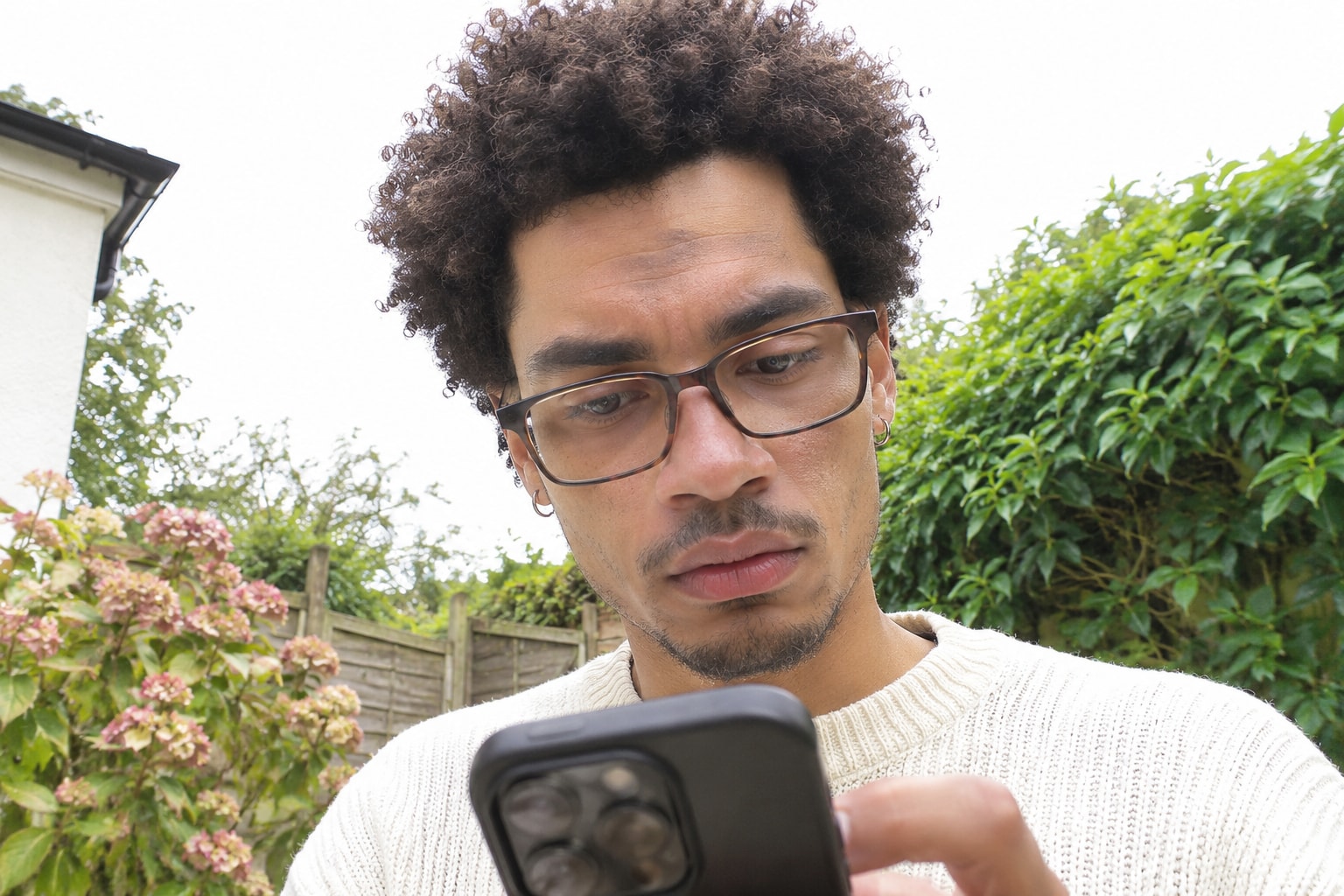
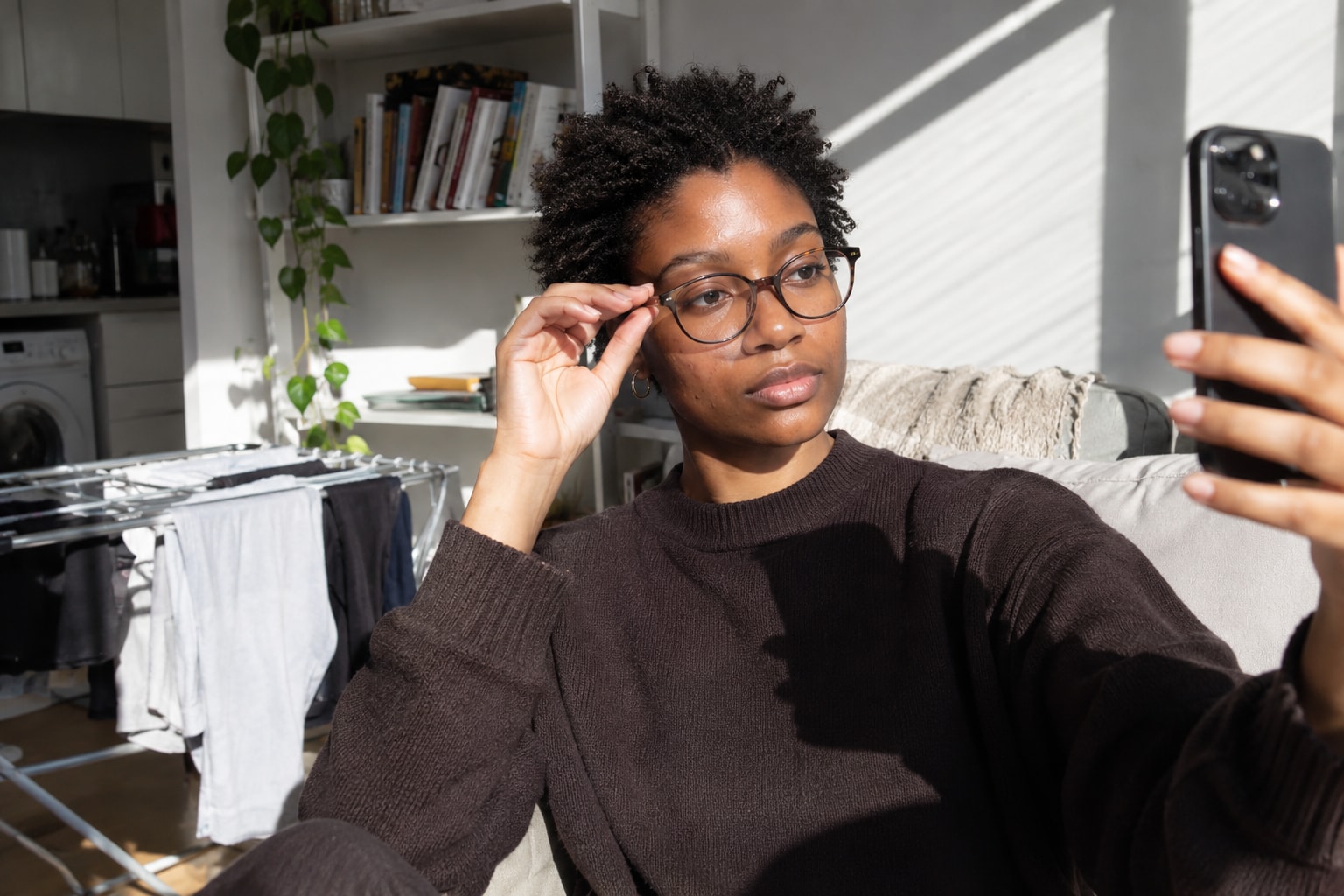
The answer to “why do my glasses look crooked in photos?” is usually frame fit, camera setup, or both. A close selfie can distort facial proportions, while a small head tilt can make a level frame look sloped. Test with a straight, distant rear-camera photo before asking an optician to adjust anything.
A photo cannot diagnose the fit
Derakhshan and colleagues photographed 12 people at several distances for a 2024 study. At eight inches, smartphone images stretched the midface vertically by 18% against their distant reference photos. At 12 inches, the difference was 12%, though the study measured facial landmarks rather than spectacle tilt.
Still, it shows why an arm’s-length selfie is a poor frame-fit test. Camera roll, a slight head turn, and uneven light can add another false cue.
The four likely causes
The frame is actually tilted
Daily handling can spread one temple, shift a nose pad, or move a hinge out of alignment. The frame may then sit higher on one side each time you wear it.
The Association of British Dispensing Opticians says a frame should sit level and comfortably on your face. It doesn't need to look perfectly even on a table because frames are adjusted around the person wearing them.
Your head or camera is tilted
A small head tilt makes the frame’s top line slope across a rectangular image. A rotated phone does the same, even when your head and glasses are level.
Cropping can hide the room references that reveal rotation, so compare the frame with a doorframe or camera grid.
Your facial landmarks are not level
Healthy faces are not perfect mirror images, and optical fitting guidance notes that pupils often sit at different distances from the nose.
Your ears, eyebrows, pupils, and nose bridge need not sit at identical heights. A level frame can cross one eyebrow differently from the other, but that doesn't mean the glasses are fitted badly.
The lenses shift what the photo shows
Prescription lenses bend light, so the cheek or temple can appear displaced at the frame edge, especially with a stronger prescription.
ABDO notes that plus lenses magnify and minus lenses minify, so unequal powers can make the two sides look different. Don't use the apparent cheek line through the lenses as your ruler.
Optical alignment matters more because a 2024 Community Eye Health article says each lens’s optical centre should align with its pupil. A poorly adjusted frame can change that alignment, even when the prescription was made correctly.
Run this five-minute photo test
Use one controlled set before judging the frame because you're testing repetition, not trying to produce a flattering portrait.
- Clean the lenses and put the glasses on normally; don't push one side up for the test.
- Place the phone at eye height on a stable surface, then keep a vertical room edge in view with the camera grid.
- Use the rear camera from at least 60 centimetres away, or one metre if you can crop the image later.
- Face the camera without leaning or lifting one shoulder, and look straight ahead with a relaxed expression.
- Take three photos, removing and replacing the glasses with both hands between each shot.
Now compare the pattern: if the same side stays high in every shot and in the mirror, the frame likely needs a fit check. If the slope changes, your pose or camera position is the likelier cause.
If the frame looks level against the room but uneven against your eyebrows, facial asymmetry explains more than frame damage. If only close selfies look crooked, repeat from farther away before drawing a conclusion.
Don't measure a one-pixel difference because a tiny change in pose or crop can move an edge between shots. You need a repeatable pattern, not perfect symmetry.
What an optician checks
A qualified optician checks the frame on your face, not from one photo. The College of Optometrists tells practitioners to verify the frame’s plane, height, position, comfort, and function.
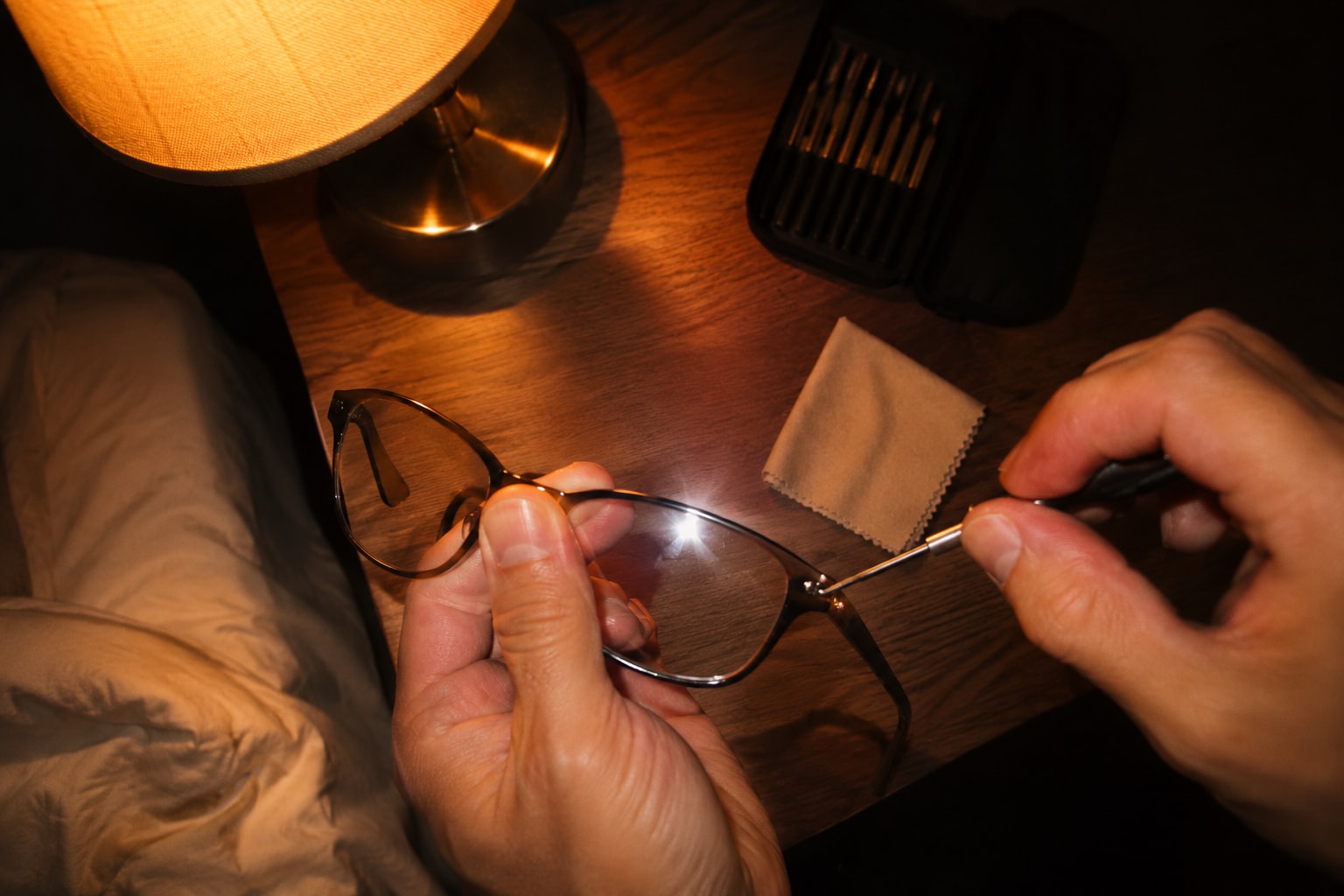
The check may include the bridge, nose pads, temple angles, hinges, pupil position, and lens centres. A small professional adjustment can level a frame around ears or a nose bridge that differ slightly.
Book a fit check if the tilt repeats in controlled photos or has appeared after a knock. Go sooner if the glasses slip, press one side, blur your vision, or cause new eye strain. Strong prescriptions, bifocals, and progressive lenses leave less room for poor positioning.
Don't force the frame based on one selfie because bending the wrong part can damage it or move a lens from its intended position. An optician can tell whether the issue is cosmetic, optical, or both.
A sudden facial change is different: call 999 if new one-sided facial drooping appears with arm weakness or speech trouble. The NHS lists these as stroke signs, not a glasses-fitting problem.
Do not align glasses to one eyebrow
Eyebrows are tempting reference lines because they sit above the frame, but they're naturally uneven and move with expression.
Ask for the glasses to sit level, securely, and comfortably while keeping the lenses correctly positioned. Forcing the frame to copy one brow can make the fit worse elsewhere.
Track changes with the same camera distance, height, light, and neutral pose, so you can see whether an adjustment worked. Random selfies cannot make a fair before-and-after comparison.
FAQ
Why do my glasses look straight in the mirror but crooked in a photo?
The photo may include a small head tilt, camera rotation, or close-range distortion, so repeat it at eye height from about one metre away. If the tilt disappears, the first photo was the problem.
Should glasses line up with your eyebrows?
They should look balanced, but the rims don't need to follow both eyebrows exactly. Brows can differ in height and shape, so fit, comfort, pupil position, and a level frame are better checks.
Can crooked glasses affect vision?
They can if the tilt moves your pupils away from the intended lens centres. Blur, distortion, eye strain, or needing to tilt the frame require a fit check because a photo can't show optical alignment.
Can I straighten crooked glasses myself?
Don't force them because frame materials and hinge designs respond differently, and an incorrect bend can cause damage. Take them to an optician, who can adjust the frame while checking its position on your face.