Quick answer
Why does beard oil make my beard look darker? A clear oil usually changes how light reflects from the hair, not the pigment inside it.
A thin film can reduce pale, scattered reflection while increasing surface shine. That makes the same beard look deeper in color until oil wears off or washes out. There is no direct trial on beard color, so this explanation comes from scalp-hair optics and general wetting research.
The color change is usually optical
Hair gets its base color from melanin in the cortex, beneath the outer cuticle. Oil can't tell follicles to make more melanin, and a plain clear oil contains no dye. The darker look is a surface effect.
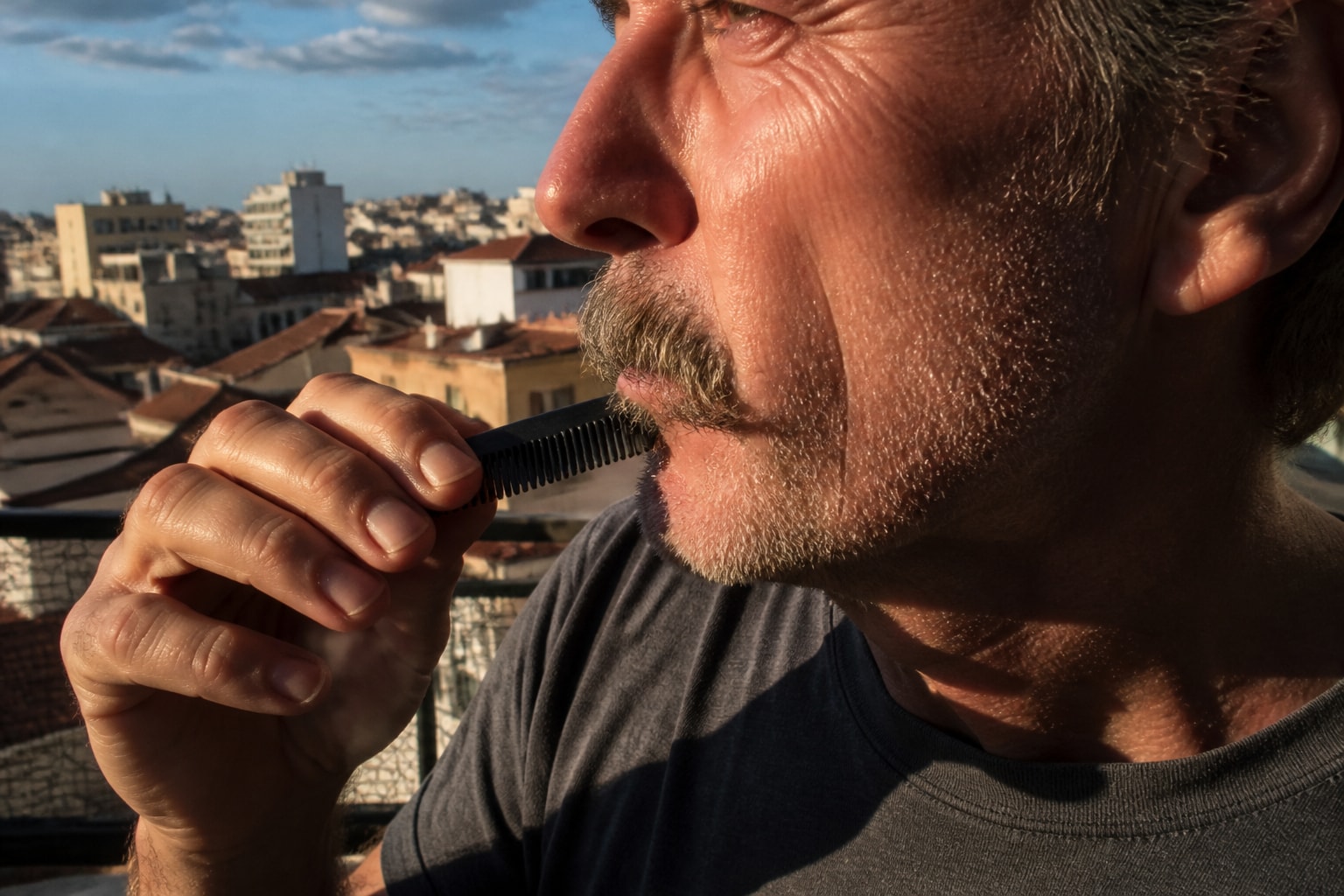
Human hair doesn't reflect light like a flat painted object. Each curved fiber scatters some light, absorbs some and produces a bright surface reflection. The balance changes with hair color, condition, lighting and viewing angle.
A laboratory study measured several cosmetic oils on scalp hair. Castor oil and silicone oils raised measured luster by changing the contrast between bright reflection and diffuse reflection. Another optics study found that hair's apparent gloss depends on incoming light's direction and polarization.
Beard hair was not tested in those papers. Still, beard and scalp hair share the same main shaft layers. Applying a clear film to either changes the air-to-hair boundary. The exact size of the effect will differ by product, beard color, strand shape and amount used.
General optics research also explains why many dark materials look darker when wet. A liquid film can let less diffuse light return to your eye and increase absorption below the surface. Oil is not water, and a beard is not the material used in that experiment. The mechanism is a useful comparison, not direct proof.
Why the result can look stronger in photos
Lighting can reverse the effect. Soft front light may make an oiled beard look even and dark. A small, hard light can create white highlights beside deep shadows. Both images can come from the same beard within minutes.
Phone exposure adds noise to the comparison. A bright forehead, white shirt or dark wall can make the camera adjust the whole frame. Don't judge a grooming product from two photos taken in different rooms.
Gray, blond and sparse beards may show larger visual swings because more light reaches the skin or scatters from pale fibers. This is a reasonable optical inference, not a result from a beard-oil trial.
Run a controlled half-beard test
You can separate a real color change from a camera effect in one session.
- Wash out old product and let your beard dry fully.
- Stand in indirect daylight, facing the same window. Avoid mixed ceiling light.
- Use the rear camera at 1×. Keep distance, angle, background and exposure fixed.
- Take one photo with no oil.
- Apply your normal oil to only one half of the beard. Comb both halves the same way.
- Wait until the surface no longer looks freshly wet, then take a second photo.
- Blot the oiled half once with a clean tissue and take a third photo.
Compare the two sides, not two separate days. If only the oiled half becomes darker, the film caused the appearance change. If both halves shift, the camera or light changed.
Repeat after your next normal wash. A plain oil effect should largely disappear when the film is gone. Color that remains after washing needs another explanation, such as dye, residue, sun exposure or natural pigment variation. Some of these causes change slowly, so a single photo can't identify them.
How to reduce the dark or greasy look
Use less product first. If oil pools on your fingers or makes strands stick into shiny groups, you have more than your appearance goal needs.
Spread the oil across both palms before touching the beard. Work from the underside, then use what remains on the outer surface. A comb can move a concentrated patch through more hair.
Blotting excess is safer than washing again with a harsh cleanser. Repeated stripping can irritate the skin beneath your beard. If your beard stays shiny, try a clear, lighter-feeling formula or use oil less often. Product feel doesn't prove quality, but it helps you control the finish.
For progress photos or a face scan, pick one rule and keep it. Either photograph a clean, dry beard every time or use the same product amount and wait period. Consistency matters more than choosing the more flattering version.
What beard oil cannot do
A darker finish does not mean new follicles appeared. It also doesn't show that individual hairs became permanently thicker. Oil can alter surface shine and how neighboring hairs sit, which changes apparent density.
Plain beard oil won't restore pigment to gray hair. It may increase contrast for a few hours, especially under certain light. That is cosmetic camouflage, not reversal of graying.
A tinted beard oil or coloring balm is different. It can deposit color because pigment is part of the formula. Check the label before assuming every change comes from reflection.
Stop if the skin reacts
Darkening alone is usually harmless. Burning, itching, redness, scaling or swelling is not part of the optical effect.
A dermatology paper specifically documented contact allergens in beard care products. DermNet also notes that aromatic plant oils can cause delayed allergic contact dermatitis. Symptoms may appear hours or days after use, even if the first application felt fine.
Stop the new product and wash it off if a reaction starts. Seek medical help for marked swelling, blistering, spreading rash or symptoms that don't settle. A dermatologist can use formal patch testing when the trigger is unclear.
Fragrance-free is a sensible starting point if your skin reacts easily. “Natural” doesn't mean non-irritating, and adding undiluted aromatic oils can raise risk.
FAQ
Does beard oil permanently darken facial hair?
A clear, untinted beard oil should not permanently change hair pigment. The darker look usually fades as the surface film transfers, disperses or washes away.
Why does my beard look darker when wet too?
Water also changes the boundary between air and the hair surface. Research on wet materials shows this can reduce returned diffuse light, making an absorbing surface look darker.
Does a darker beard mean the oil is working?
No. Darkness measures an optical finish, not skin health, hair growth or product quality. Judge the oil by comfort, manageable texture and lack of irritation.
Should I use beard oil before progress photos?
Only if you can repeat the same amount, timing and lighting each time. A clean, fully dry beard is usually easier to standardize.