Quick answer
A mustache curling into your mouth is usually a length and growth-angle problem, not a health problem. You can trim the hairs crossing your lip or comb longer hairs outward with a small amount of wax. Both approaches work, but they create different styles.
Don’t expect brushing to change how the follicles grow. Styling controls the visible hair for a while. It doesn’t permanently redirect it.
Why mustache hair curls into your mouth
Facial hair isn’t uniform. A 2016 review found wide variation in beard hair thickness, stiffness, shape and exit angle. These features can differ across the same face.
That explains why the center may hang straight while the corners turn inward. One side may also curl more than the other.
Hair shape and curvature have a strong genetic component. As each hair gets longer, its existing curve becomes easier to see. The lip then catches hairs that previously sat above it.
This isn’t a reliable sign of low testosterone, poor health or a nutrient shortage. Supplements won’t change the direction of a healthy follicle.
Choose your preferred finish before trimming
There is no medically correct mustache length. The useful choice is between a clear lip line and a longer, swept style.
A clear lip line
Trim the lower edge so no hair rests inside your mouth. This is the simplest option for eating, drinking and daily upkeep.
You may lose some fullness, especially in the center. The result should still follow your natural lip curve rather than forming a rigid horizontal line.
A longer swept style
Keep enough length to move the hairs toward each side. A comb and styling product then hold them away from your mouth.
This preserves a fuller appearance. It also needs more daily care and may involve an awkward growing stage.
Choose one route before you cut. Trying to maintain length while repeatedly trimming random hairs often creates a thin, uneven center.
A safe five-step fix
1. Wash and dry the mustache
The American Academy of Dermatology recommends washing facial hair daily with a gentle cleanser. This removes oil, food and styling residue without relying on harsh soap.
Pat the hair dry. Wait until it has fully settled before deciding what needs trimming. You’re trying to judge the mustache as you normally wear it.
2. Comb it into its natural position
Use a clean, fine-tooth mustache comb. Start at the center and comb the hairs down and slightly outward.
Don’t force them flat with your fingers. Let them spring back so you can see which hairs enter your mouth on their own.
Now separate a true length problem from a styling problem. A few long tips need trimming. A whole section that curves inward may respond better to outward styling.
3. Trim only the problem hairs
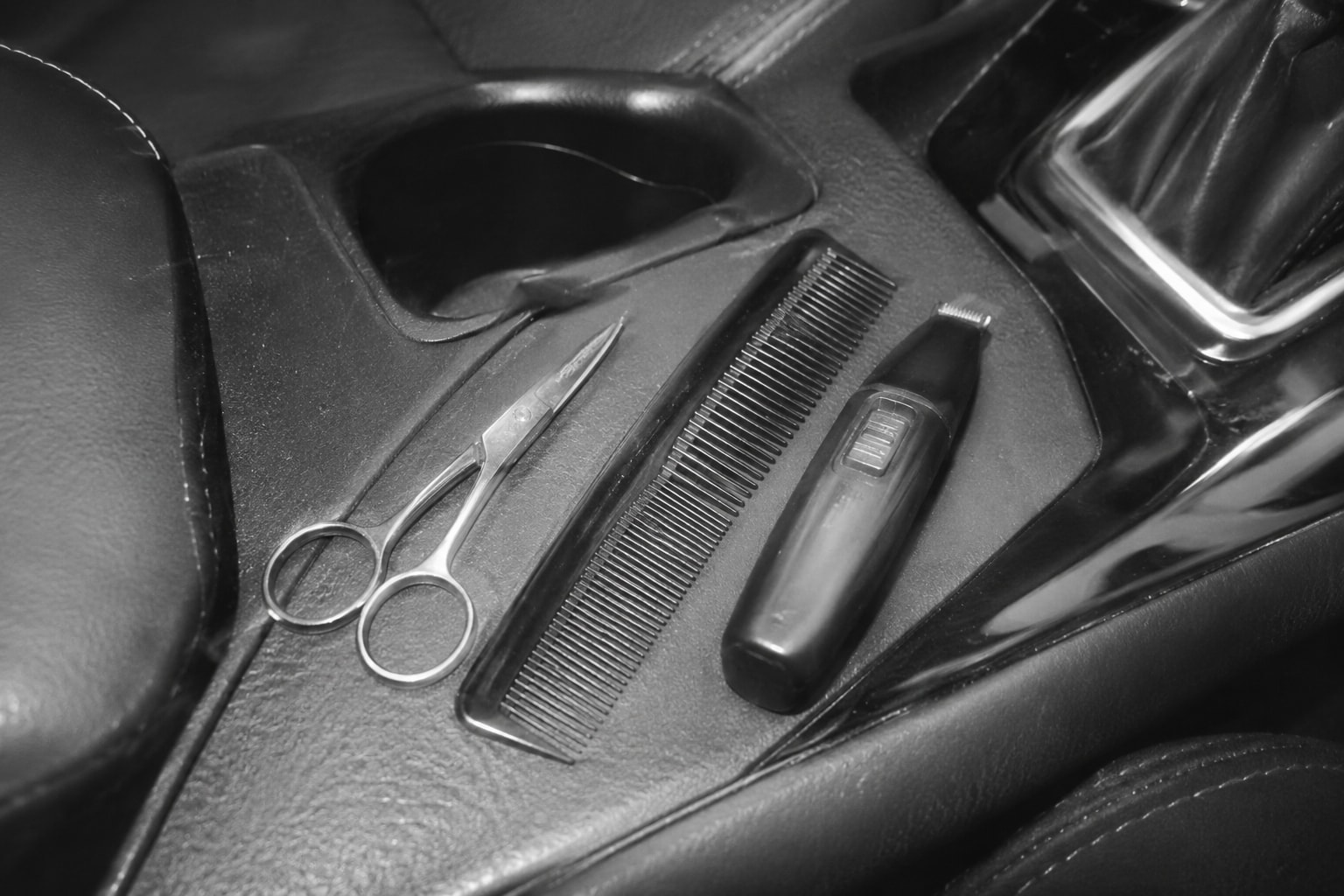
Use small grooming scissors with rounded tips or a guarded detail trimmer. Work in bright, even light with your mouth relaxed.
Remove the tips that cross the upper lip. Start in the center and make small cuts rather than one long cut.
At each corner, trim inward-turning hairs one at a time. Avoid cutting deeply into the main body of the mustache. That can leave a visible notch once the hair moves.
Stop early and comb again. You can remove another millimeter, but you can’t replace one.
A guarded electric trimmer may suit skin that develops razor bumps. Dermatology guidance also advises cutting with the hair’s growth direction and avoiding heavy pressure.
4. Style longer hairs outward
If you want to keep the length, place a tiny amount of mustache wax or balm between clean fingertips. Soften it, then apply it from the center toward each side.
Comb the hairs outward and leave the product to set. Start with less than you think you need. Too much can create clumps, visible residue and a stiff finish.
The hold is temporary. Water, heat, eating and touching can loosen it during the day. Reapply only when needed.
Stop using a product if the skin burns, itches or develops a rash. A fragrance-free product is a sensible starting point for sensitive skin.
5. Review the result after normal use
Check the mustache after a meal and a drink. That test matters more than how it looks immediately after styling.
If the same few hairs return, spot-trim them. Don’t shorten the whole mustache to solve a problem caused by three strands.
Wash combs and trimmer guards regularly. DermNet notes that contaminated shaving equipment can help spread bacteria linked with folliculitis.
What not to do
Don’t pluck every hair that turns inward. Repeated plucking can irritate the follicle, and it may leave small gaps.
Don’t keep cutting while the hair is wet or coated with product. You can’t see its usual resting position clearly.
Don’t shave against the grain to create a sharper lower edge. Close, repeated passes raise the risk of irritation and ingrown hairs, especially with coarse or curly facial hair.
Skip claims that a supplement, hormone product or facial exercise will correct the curl. The problem is the exposed hair’s shape and direction. It isn’t something a growth booster can aim toward the cheek.
There are no clinical trials comparing mustache wax, lip-line trimming and outward combing. The evidence covers facial-hair structure, skin care and shaving irritation. Your final shape remains a grooming choice.
When the skin needs attention
Hair entering your mouth is harmless by itself. Red, tender or pus-filled bumps are a different issue.
DermNet describes folliculitis barbae as inflammation around follicles in shaved facial areas. Curved hairs can also re-enter the skin and cause razor bumps.
Pause close trimming if bumps appear. Clean your tools and avoid picking the area. See a doctor or dermatologist if the bumps spread, keep returning or begin to scar.
A sudden smooth bald patch also deserves professional assessment. The same applies to marked scaling, broken hairs or rapid loss that isn’t explained by trimming.
How to judge the shape fairly
Check the result in a mirror before using a close selfie. Individual hairs and their shadows can become more noticeable in a small, high-contrast image.
For progress photos, keep the distance, light and expression consistent. Take one front view and one view from each side. Weekly photos are enough for a grooming change.
Don’t chase perfect left-right symmetry. Hair angle and density commonly differ between sides. The practical goal is keeping both sides out of your mouth while preserving a balanced outline.
FAQ
Can you train a mustache to grow sideways?
You can repeatedly comb and hold the exposed hairs sideways, which may make daily styling easier. This doesn’t change the follicle’s underlying direction. New growth will still follow its natural angle and curve.
Should a mustache cover the upper lip?
It can, but it doesn’t need to. A mustache may overlap the outer lip while staying clear of the mouth. Trim the center higher if comfort and easy eating matter more than maximum fullness.
Is mustache wax safe to use every day?
Daily use is generally a grooming choice if your skin tolerates the product. Use a small amount, wash it out regularly and stop if you develop burning, itching or a rash. Sensitive skin may do better with a fragrance-free formula.
Why does only one side curl into my mouth?
The hairs on each side can differ in exit angle, thickness and curvature. Trim or style each side according to how it sits rather than removing equal amounts. Seek advice if the change is sudden or comes with a bald patch, scaling or inflamed skin.