Quick answer
Why do eyebrow hairs stick straight out? Usually, the follicle points outward or the hair is too short to lie down. Brow hair naturally changes direction across the arch, so a few projecting hairs don't mean damage or disease.
Start with clean brushing, a small amount of brow gel, and conservative trimming. Get medical advice if the change is sudden and comes with gaps, shedding, redness, scale, or pain.
Why some brow hairs point away from your face
An eyebrow isn't a row of hairs growing in one direction. A surgical review of eyebrow anatomy describes several normal patterns. Hairs near the nose often point upward. The middle section angles outward or crosses with nearby hairs. The tail usually runs outward and may slope down.
Each hair follows the angle of its follicle as it leaves the skin. That angle can differ within the same brow and between your two brows. Brushing can move the exposed shaft for a while, but it cannot rotate the follicle under your skin.
Length also changes how a hair sits. A longer shaft has more room to bend and join nearby hairs. If you cut it too short, the remaining stub may project forward and look stiffer.
Eyebrow hairs also sit at different stages of their growth cycle. The NCBI's InformedHealth review puts the brow growth phase at about 100 to 150 days. That short cycle helps explain why neighboring hairs can have different lengths without anything being wrong.
Work out which problem you have
Check your brows when they are clean, dry, and free from gel or skin care residue. Use soft light from the front. A bright ceiling light can cast tiny shadows beneath projecting hairs and make them look more raised.
Brush each brow in its natural direction with a clean spoolie. Move the inner section slightly up and out. Guide the middle and tail toward the temple.
Then look at what happens:
- If the hair lies down, you mainly have a styling issue.
- If it springs back from the same root, its follicle angle or natural curve is probably driving the shape.
- If several hairs look short after a recent trim, wait before cutting again.
- If the area has a true gap, broken skin, scale, or active shedding, treat it as a skin or hair issue.
Don't judge density from one close selfie. Phone sharpening, side light, brow pencil, and gel can change the gaps you see. Compare your brows in the same light before deciding that hair has disappeared.
Safe fixes, from least to most involved
1. Brush before adding product
Use a clean, dry spoolie after your moisturizer and sunscreen have settled. Brush with the local growth pattern, not straight upward across the whole brow. This often fixes one or two hairs without removing them.
Wash reusable tools and let them dry. The US Food and Drug Administration warns that dirty eye-area cosmetics and applicators can spread bacteria or fungi. Don't share a spoolie with someone else.
2. Use a brow product with light hold
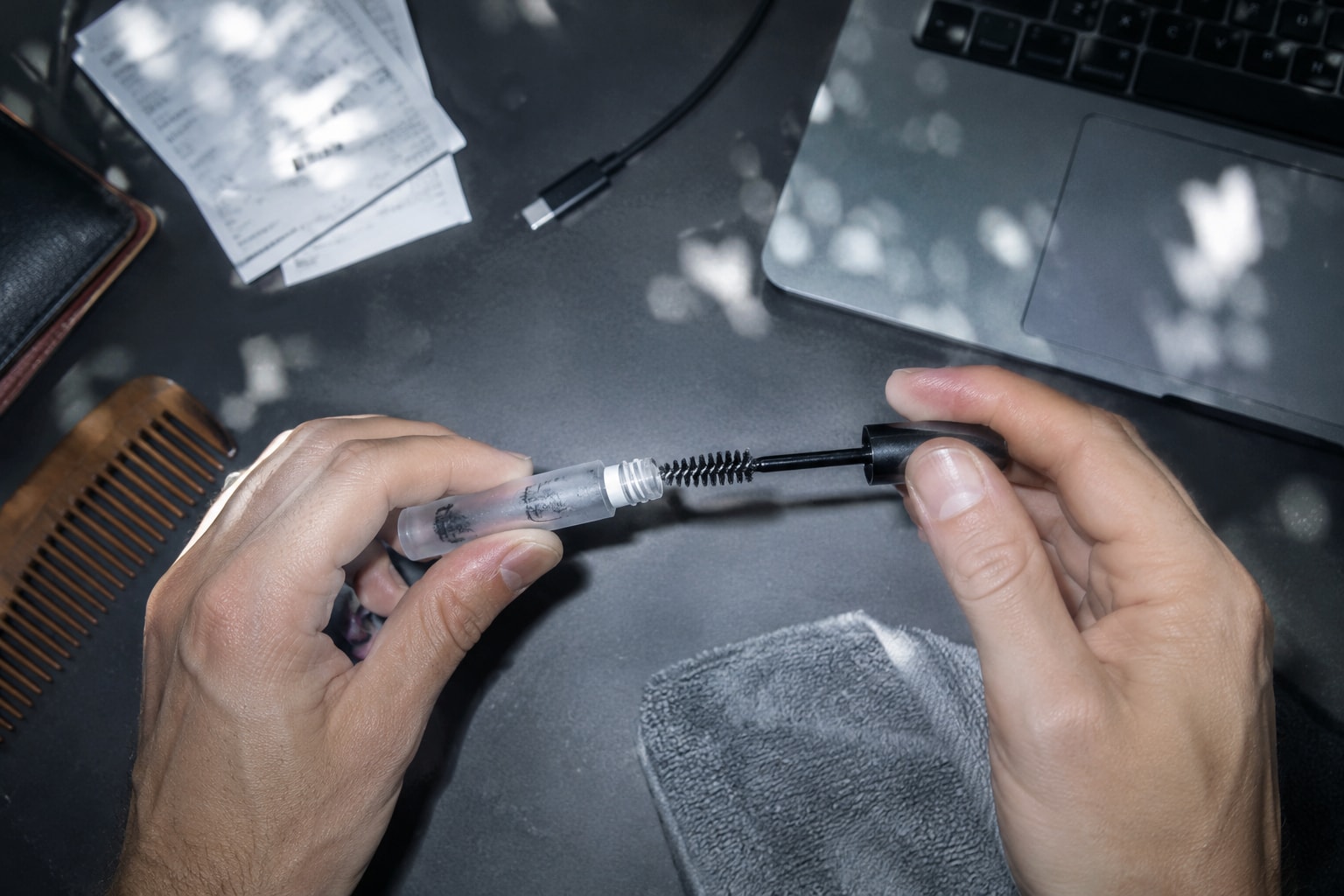
Choose a clear brow gel or wax labeled for the eye area. Wipe excess product from the brush, then coat the projecting hair and guide it sideways. More product can leave a hard clump rather than a flatter brow.
Skip improvised hairspray, craft adhesive, or ordinary bar soap near your eyes. The FDA advises using only cosmetics intended for that area. Stop if a product causes burning, swelling, persistent redness, or eye irritation.
3. Trim only the tip that breaks the outline
Brush the brow into place and let it settle before reaching for scissors. If one long tip still crosses the outline, remove only that tip with clean brow scissors. Check the result after every cut.
Don't cut every hair to one short line. Brow hairs grow at different angles, so equal length doesn't produce an even surface. A short, blunt hair can stick out more than it did before.
If you cannot see the tip clearly, ask a brow professional or barber to trim it. Scissors close to the eye leave little room for error.
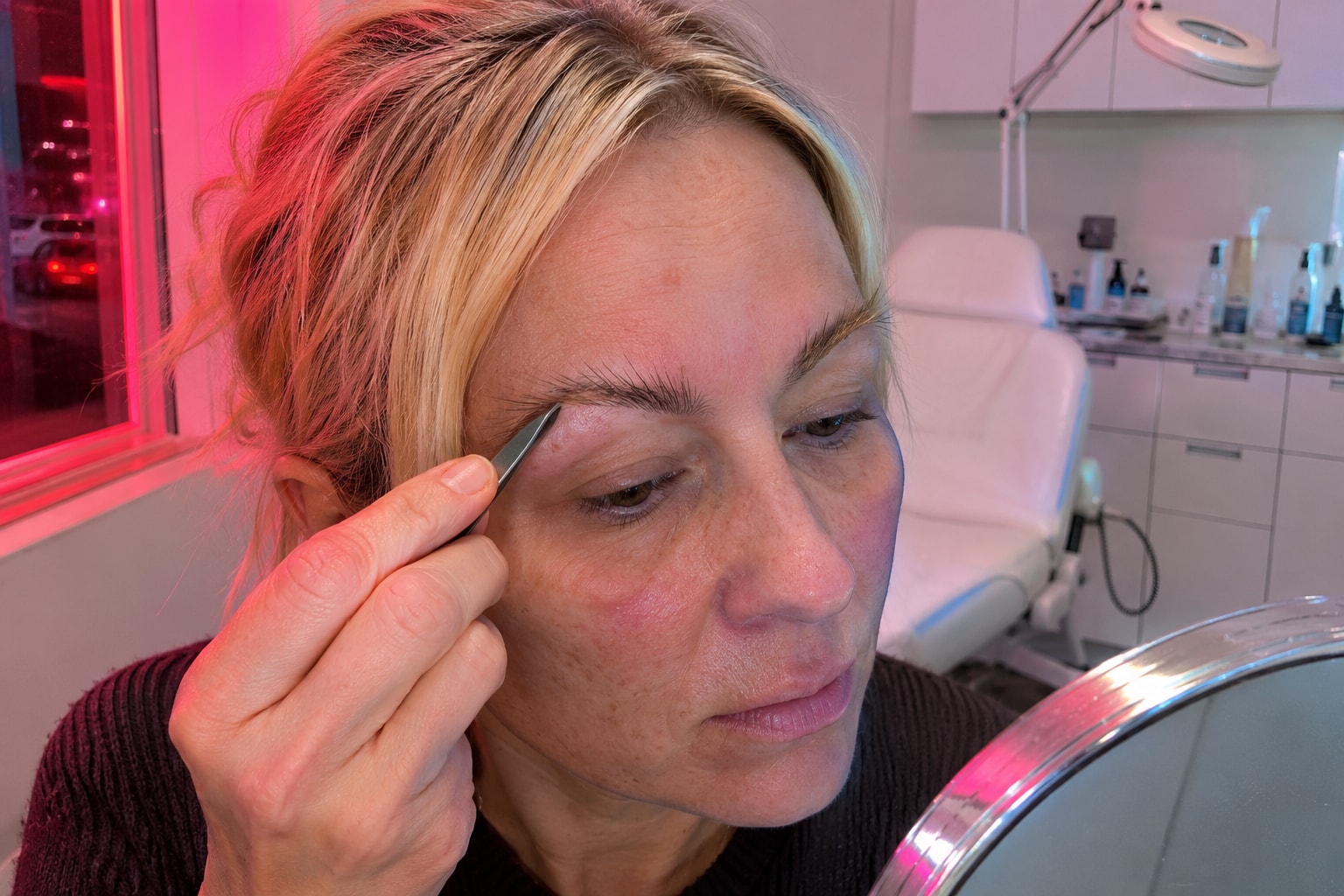
4. Pluck only when removal is the actual goal
Plucking removes a hair. It does not teach the next hair to grow in a new direction. Removing several projecting hairs can trade a small texture issue for a visible gap.
Reserve tweezing for an isolated hair outside the shape you want. Don't keep pulling hairs from a thin area. If you are unsure, leave the hair and use temporary hold instead.
5. Treat brow lamination as a chemical service
Brow lamination can make hairs sit in a chosen direction for a limited time. It changes the hair shaft with chemicals rather than changing follicle growth.
A 2025 review of thioglycolates used in lamination found reasons for caution. These chemicals can irritate skin and may change hair structure and color. The evidence base is still small.
Use a trained professional if you choose this service. Avoid it on inflamed, broken, or recently irritated skin. Get medical help for an eye reaction, marked swelling, or ongoing pain.
When a new change needs more than grooming
A hair that has always pointed outward is usually an anatomy issue. A sudden change across several hairs deserves a closer look, especially when the brow is also thinning.
Cleveland Clinic uses the term madarosis for eyebrow or eyelash loss. Possible causes include contact dermatitis, eczema, psoriasis, thyroid disease, infections, and autoimmune conditions. Cosmetics can also cause reactions around the brow.
Alopecia areata often causes smooth, round or oval areas of sudden hair loss. The American Academy of Dermatology notes that it can affect eyebrows and may involve itching, tingling, or nail changes.
See a GP, dermatologist, or eye care professional if you notice rapid loss, smooth bald patches, persistent scale, pain, or skin discoloration. Seek urgent care for a vision change or severe eye symptoms. Don't start minoxidil, hormones, or prescription treatments on your brow without clinical advice.

FAQ
Can you train eyebrow hairs to grow flat?
You can style the visible shaft, but brushing cannot change the follicle's angle under your skin. Gel, wax, and careful drying may improve how the hair sits that day. The effect is temporary.
Why does only one eyebrow have hairs that stick out?
Your two brows do not need matching follicle angles, curves, or hair lengths. First compare them without product in even light. A stable difference is usually normal, while a new difference with hair loss needs assessment.
Will trimming make a projecting eyebrow hair grow back thicker?
No. Trimming cuts the shaft above the skin and does not alter the follicle. The blunt cut end may feel stiffer and look more obvious until the hair grows longer.
Is brow gel safe to use every day?
It is usually a low-risk option when the label allows eye-area use and your skin tolerates it. Keep the applicator clean, don't share it, and stop if irritation develops.