Quick answer
If your eyebrow pencil turns orange, check its undertone in consistent light before changing your skincare. A warm brown may be a poor match for cooler brow hairs, even when the darkness seems right. If the colour changes during wear, compare the pencil alone with your usual makeup layers. An orange result alone doesn't prove oxidation.
First, check when the orange appears
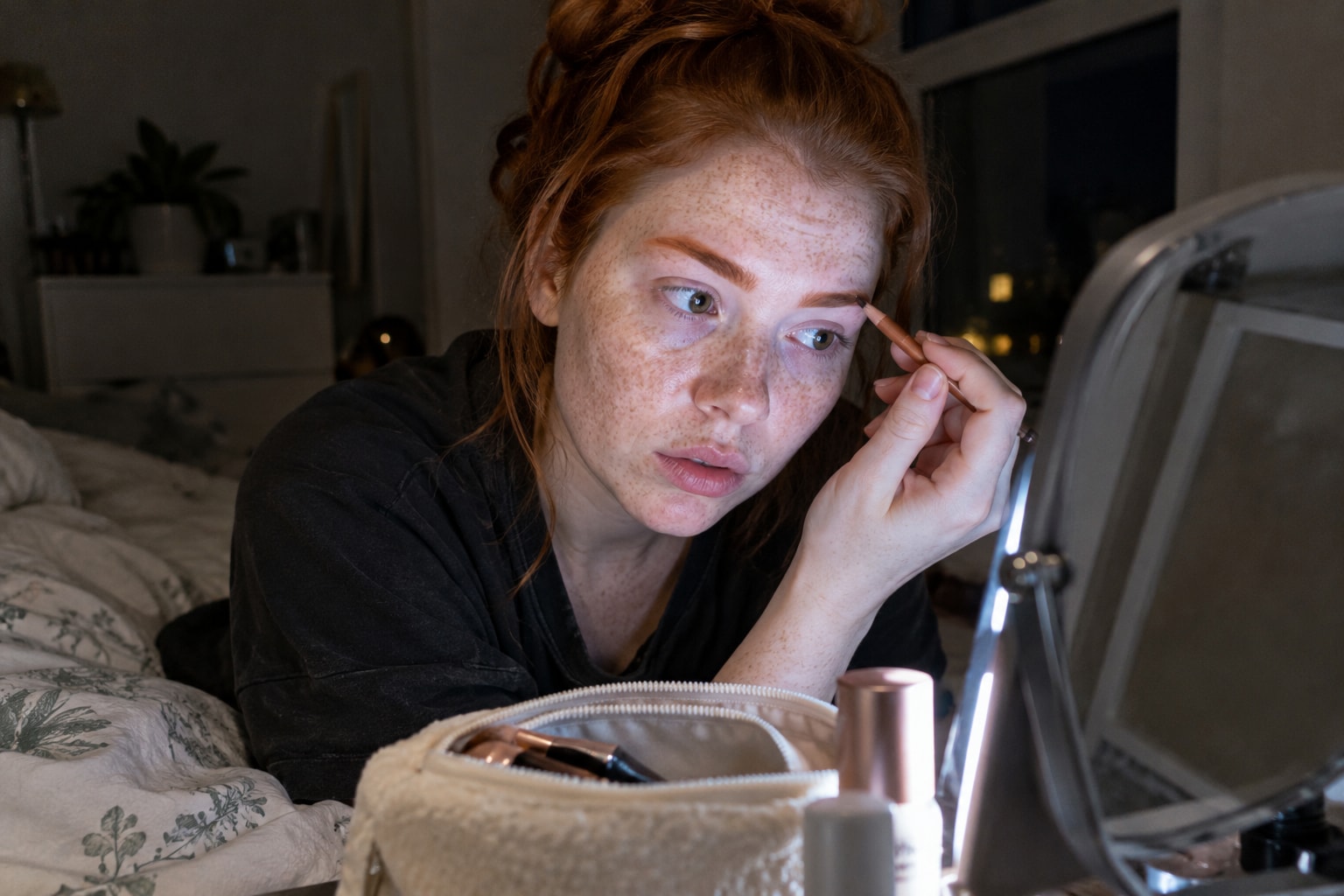
Start by checking your brows immediately after application, then again when you usually notice the unwanted orange colour.
- Orange straight away: compare the pencil's warmth with your natural brow hairs.
- Orange under another lamp: return to the original light before deciding the product changed.
- Orange later under the same lamp: test wear and layering before buying another shade.
These are troubleshooting clues, not proof of a particular chemical reaction. Keep the first check small: you don't need to replace your skincare routine or buy several new pencils.
Match warmth separately from darkness
Brown describes a family of shades that can look more red, golden or grey beside your natural brow hairs.
Benefit lists both a neutral medium brown, shade 3.5, and a warm medium brown, shade 3.75. Those labels illustrate why choosing “medium brown” alone may not solve your mismatch.
L'Oréal's brow guidance pairs cool ash tones with cool brow colours. It suggests a neutral shade close to your natural brows when you're unsure. This is manufacturer styling advice, not a trial proving one undertone suits everyone.
For your next comparison, try a less-warm shade at roughly the same depth. Look for descriptions such as neutral brown, cool brown or grey-brown. Judge the applied colour beside your brow hairs rather than relying on the shade name.
Don't jump straight to black.
Benefit also labels a deep brown and a black-brown as warm, so going darker won't necessarily fix unwanted warmth.
Rule out lighting before blaming the formula
Check your brows near a window in indirect daylight, with nearby lamps switched off. Then compare them under the indoor light where you usually notice orange. This is a practical way to check whether the appearance changes with the light.
Colour research supports controlling illumination, though it doesn't diagnose your pencil.
In a 2020 experiment, Altynay Kadyrova and colleagues found better skin-colour matching under simulated daylight than fluorescent light. The study involved matching colour cards to skin, so its results don't directly establish how brow pencils will look.
Melgosa and colleagues used measurements from 87 women's faces and five red lipsticks to calculate colour differences under 18 light sources. Some white LEDs changed the calculated colour contrasts substantially. That study also didn't test brow pencils or oxidation during wear.
The practical inference is limited: a change of light can change the comparison you're making.
Photos add another variable because Apple's Photographic Styles can adjust colour and warmth in the pictures you take. If you keep comparison pictures, use the same camera settings without colour effects, and check the mirror too.
You can keep a written note instead of taking pictures, so there's no need to upload face photos.
If it changes later, simplify one wear test
This practical comparison can help you decide what to try next, but it isn't a validated test for oxidation.
Try the pencil with fewer layers
On a day at home, start with clean brows and apply the pencil according to its label. Leave out optional foundation, concealer, tinted brow gel and setting spray around the test area. Keep any skincare or sun protection you need.
L'Oréal recommends light strokes blended with a brow brush to avoid a heavy block of colour. Applying more of a mismatched shade isn't a useful first fix.
Check the result immediately and at the time the unwanted colour usually appears. Use the same lamp, mirror and position for both checks. Daylight changes over time, so a morning window check and an evening bathroom check aren't a controlled comparison.
Note whether the colour looks warmer, simply lighter, or patchier. Those descriptions are more useful than writing “oxidised” before you know what happened.
Compare with your usual makeup
On another day, repeat with your usual makeup layers, keeping the pencil, amount and check times as similar as practical.
If orange appears only with the layered routine, test those layers separately before you blame a particular ingredient.
If the pencil changes in both conditions, try a different formula before buying several versions of the same shade. Ask the manufacturer about that product and batch, including when the change appears and what you apply underneath.
An early and late check on each day are enough; you don't need to monitor your brows throughout the day.
Make a safe correction
For a fresh application, follow the removal directions and use a product intended for the eye area. Don't scrub irritated skin or keep adding colour to cover discomfort.
The FDA advises using clean tools and avoiding shared eye cosmetics. If you try a shop tester, ask for a hygienic sample with a single-use applicator.
Don't improvise with craft pigments or a lip product to cancel the orange. The FDA notes that colours allowed elsewhere in cosmetics aren't necessarily approved for the eye area.
If the pencil causes irritation, stop using it. Seek medical advice if irritation persists, and avoid applying makeup to inflamed skin while it heals.
FAQ
Why does even a taupe eyebrow pencil look orange?
Treat “taupe” as a starting point, not a guaranteed match. Compare the actual colour with your brow hairs in consistent light. If it still looks too warm, test a cooler or more neutral option at a similar depth.
Should I buy a darker eyebrow pencil?
Only if the current shade is also too light for the result you want. A deeper brown can still have a warm undertone. Compare warmth first, then choose how dark you want the brow to look.
Is my vitamin C serum making the pencil oxidise?
That isn't established for your product combination. A colour change can't identify which ingredient caused it or confirm oxidation. Compare the pencil with and without optional makeup layers first, and ask the manufacturer about compatibility before changing a skincare product you otherwise tolerate.