Quick answer
A white patch in beard hair is called poliosis when the hairs themselves lack their usual pigment. Possible explanations include ordinary greying, vitiligo and pale regrowth after hair loss. Check whether hairs are missing and whether the skin underneath has changed colour. Arrange a GP or dermatologist appointment for a new or growing patch before trying a treatment.
Check the hairs and the skin separately
Use a mirror in daylight and gently part your beard to inspect the skin without pulling out any hairs.
Make three separate notes:
- Hair colour: Are full-length strands white, or are short, pale hairs growing through?
- Hair coverage: Is the area still covered, or did a bare spot appear before the white hairs?
- Skin colour: Does the skin match the surrounding area, or is there a pale or white patch underneath?
Bring those observations to your appointment so you can describe the change without assuming every pale area means the same thing.
What the pattern can mean
A cluster of white hairs has a name
DermNet uses the term poliosis for a cluster of white hairs that lack the pigment melanin. The term describes a visible sign; it doesn't identify a disease.
Poliosis can affect beard hair while the skin below it retains its usual colour, so inspect both before describing the change.
White skin beneath the beard needs checking
Vitiligo causes patches of skin to lose pigment and can also affect hair growing in that area. According to the NHS, it often affects the face, neck and hands.
Tell your clinician if you've noticed similar skin changes elsewhere. They may examine the area with a Wood's lamp, which helps show pigment changes more clearly.
Don't assume that colour loss means an infection. Vitiligo isn't contagious. If it's diagnosed, ask about sun protection for the affected skin, which burns more easily.
Pale hairs can grow after a bald patch
The American Academy of Dermatology says alopecia areata often starts with round or oval hair loss on the scalp or beard. Beard involvement is sometimes called alopecia barbae.
Hair that returns can initially look white or blond and feel finer, which the AAD describes as usually temporary.
The sequence matters here. Tell your clinician if hair disappeared first, then short white hairs appeared in the same place. A colour change without known hair loss doesn't prove alopecia areata.
Ordinary greying remains a possibility
Hair also loses pigment as part of ordinary greying, and the AAD notes that family history influences when this starts.
Your family history is useful context, but it can't identify the cause of a new patch.
Avoid diagnosing a vitamin deficiency from its shape or colour. The AAD recommends treating an underlying deficiency when one exists; white hair alone doesn't establish one.
What to bring to an appointment
Write a short timeline covering when you first noticed the patch, any earlier hair loss, and what has changed since.
Also note any skin injury, new medicines or products used on the area before you noticed the colour change. DermNet lists medication effects and previous injury among possible associations with poliosis, but don't stop prescribed medication without discussing it with your prescriber.
For a private record, photograph the patch before applying dye, then use the same lighting and beard length for later comparisons. Keep the pictures private and share them directly with your clinician if they would help explain the change.
A useful appointment description is: "This area changed colour three weeks ago. The hairs stayed in place, and the skin looks unchanged."
Change those details to match what happened, and mention any discomfort or other skin changes instead of describing everything as premature greying.
Can you safely change how it looks?
You can leave the patch alone while you arrange an assessment; there's no need to remove it.
Trimming or shaving is a cosmetic choice, but neither resets pigment production. Mayo Clinic explains that shaving doesn't change hair colour or growth rate. New stubble has a blunt end, which can make it look or feel different.
Avoid plucking the white hairs: the AAD warns this can cause thinning, and ordinary grey hairs grow back grey.
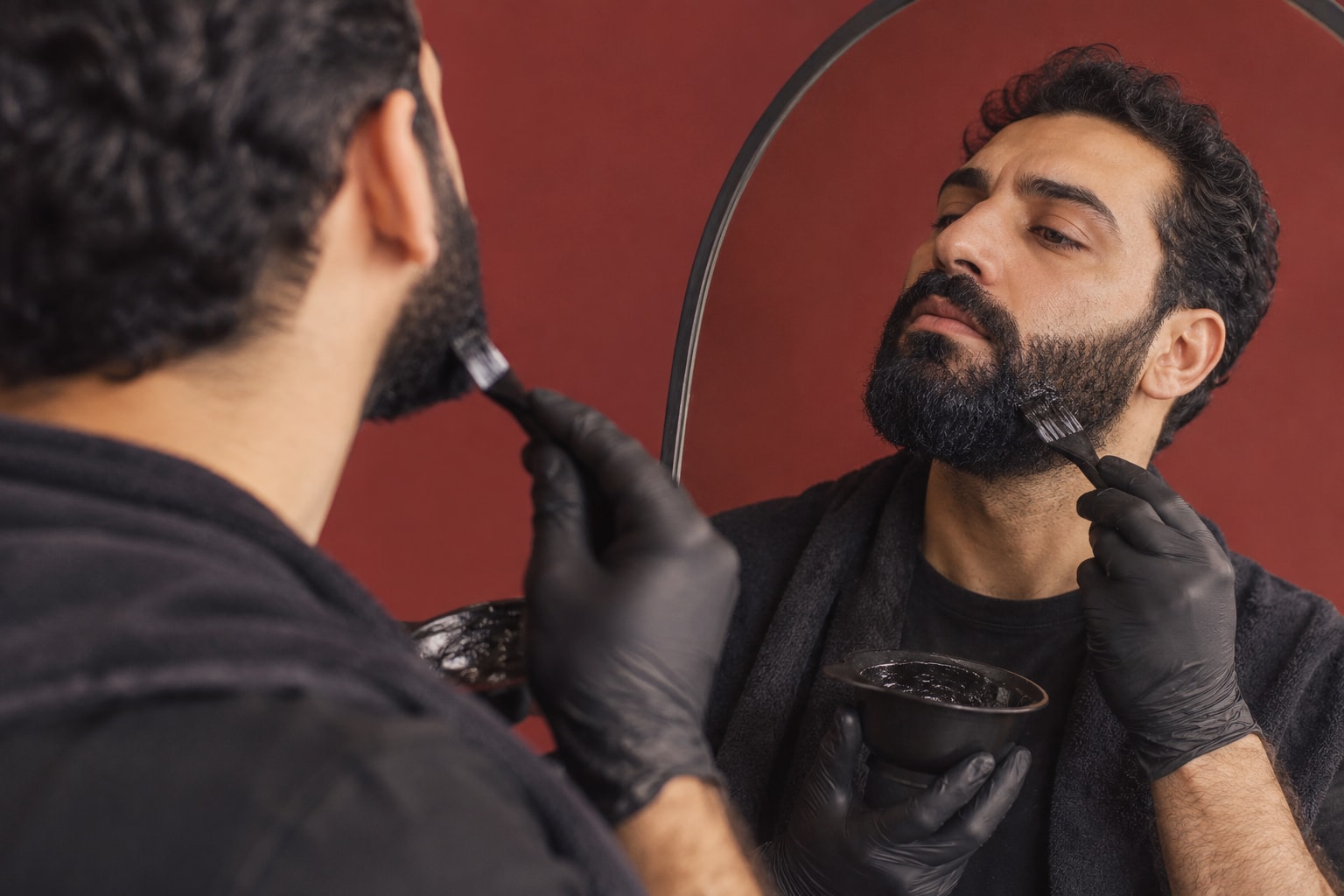
Dye can cover colour differences without treating their cause, so if you choose it, use a product whose directions permit beard use.
Follow the package's allergy-test instructions before every application. The FDA warns that reactions can occur even after previous trouble-free use, and a negative skin test doesn't guarantee safety.
Don't apply dye to irritated or damaged skin, and ask a clinician before trying another colourant if you've reacted before. Avoid mixing products or extending the stated processing time to force better coverage.
FAQ
Does a white beard patch always mean vitiligo?
No, poliosis can occur with several conditions, and the underlying skin may look unchanged. A clinician needs to assess the hair and skin together.
Will shaving make it grow back dark?
No, shaving changes the exposed hair tip without changing its colour. If dark hairs return after a shave, the timing alone doesn't show that shaving restored their pigment.
Can the white hairs regain their colour?
Sometimes, including certain cases of alopecia areata and medication-related poliosis, according to DermNet. Other patches remain stable, so there's no reliable recovery deadline.
Is a white patch the same as a bald patch?
No, a white patch contains hairs that lack their usual pigment, while a bald patch involves missing hair. Both changes can occur in the same area, particularly during regrowth.