Quick answer
False eyelashes lifting at the inner corner can result from poor band fit, awkward placement or glue applied before it's ready. Measure the band before gluing, keep it along your natural upper lash line, and follow your adhesive's setting time. If the corner pokes, stings or makes your eye water, remove the strip instead of adding more glue.
This advice covers temporary strip lashes with a band. Salon extensions, underlash clusters and magnetic lashes have different application and removal instructions.
Check the band before buying stronger glue
Check the strip against your lash line before trying to secure it, as Ardell's application instructions recommend.
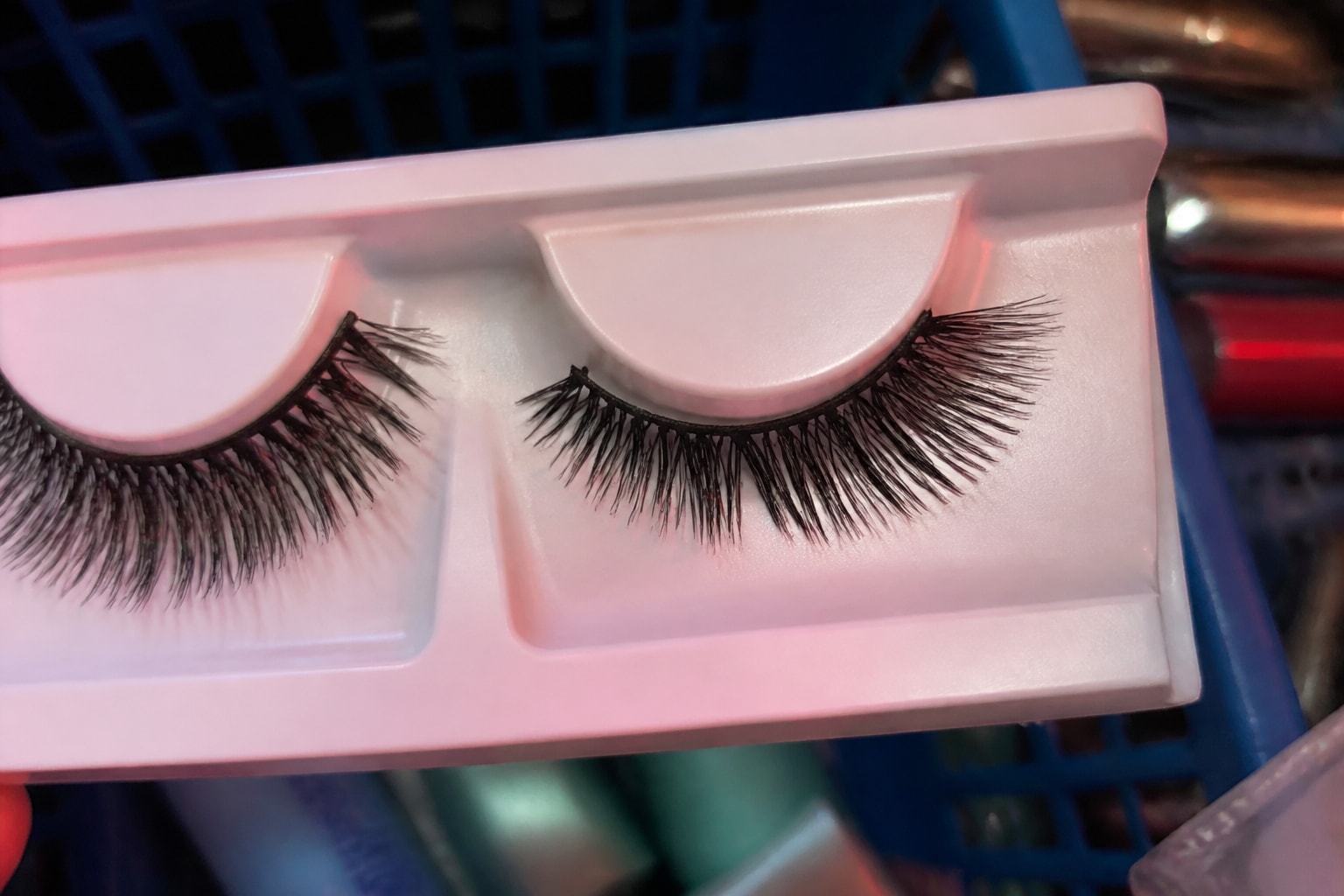
Hold the unglued strip against your upper lash line and check both ends, repeating the fit check for each eye. If trimming is needed, remove the strip from your face before using scissors.
Follow the lash maker's guidance on trimming, and leave a strip alone if it's already the right length.
Keep the band along the natural lash line without extending it into the moist inner corner. If the inner end pokes when you blink, take it off and check the fit again.
Eylure recommends gently curving the band around a makeup-brush handle before application to help prevent lifted corners. Use a clean handle and keep the strip away from your eye while shaping it.
If full strips keep bothering that spot, consider a shorter style. Eylure describes three-quarter lashes as an option that leaves the inner corner free of the band.
Check the fit before applying any adhesive, even with a shorter style.
Reset the base and follow the glue's instructions
Start with clean hands and clean tools, as the FDA recommends when applying eye cosmetics.
Gently remove old mascara and adhesive from the application area; Eylure identifies a clean base as part of helping lashes stay attached. Let the area dry before trying again.
You don't need to scrub your eyelids or strip them with harsh cleansers. DermNet lists soaps, detergents and rubbing among triggers for eyelid irritation.
Choose adhesive labelled for temporary strip lashes, and use the directions on the exact product you own. Ardell's DUO Brush-On Striplash Adhesive, Clear instructs you to apply a thin line along the band, then wait 30 seconds.
Treat that as a product example rather than a universal waiting time for every adhesive.
Check that the coating reaches the inner end of the band, keeping it thin rather than adding a blob. Place the strip along the lash line and gently secure the ends as directed.
For your next attempt, change the problem you identified first. If you change the strip, glue and preparation together, you won't know which adjustment helped.
If the corner lifts while you're out
Before attempting a repair, move somewhere still, with a mirror and clean hands. The FDA warns against applying or removing eye cosmetics in a moving vehicle.
If the loose corner scratches or your eye starts watering, take the strip off. For repeated lifting, we recommend removing and checking the strip rather than repeatedly touching up that spot.
Use the remover specified for your lash and adhesive. Eylure's guide describes softening the bond with an eye-makeup cleanser before gently easing the strip off from the outer edge.
Don't pull against resistance. Keep remover out of the eye, and follow its label.
If you're reusing the pair, follow its cleaning instructions and let it dry before storage. Replace a damaged band instead of forcing it into shape.
When to stop troubleshooting
Burning, itching, flaky skin or swollen lids can signal a reaction. DermNet identifies false-lash adhesives as a possible cause of eyelid contact dermatitis.
An allergy can appear after previous trouble-free use and may develop a day or more after contact. Initial comfort doesn't rule it out.
Stop using the suspected product, and don't reapply it to test whether the reaction returns. The FDA advises avoiding eye cosmetics until inflamed skin has healed and seeing a doctor if irritation persists.
If adhesive gets into your eye, follow the package's first-aid advice and seek medical help. NHS guidance recommends rinsing an affected eye with plenty of clean, non-hot water for at least 20 minutes.
Don't rub it. Severe eye pain, changes in vision or inability to keep the eye open need emergency assessment.

FAQ
Should I trim the inner or outer end of false lashes?
Follow the instructions for that lash style, trimming only the excess with the strip away from your face. If the instructions don't specify an end, ask the manufacturer before cutting. A pre-sized shorter strip is another option.
Why does the corner lift after it initially sticks?
Recheck the fit and preparation instead of assuming the glue is too weak. Eylure advises shaping the band and removing old residue to help lashes stay attached. If lifting comes with watering or discomfort, remove the strip and stop the application attempt.
Will more glue keep the inner corner down?
Check whether the coating missed the inner end, and reassess fit before deciding you need more adhesive. Start with the thin coating and setting time on your adhesive's label. Repeated lifting is a reason to reassess the strip, rather than keep adding glue.
Can I keep wearing the lashes if the corner stings?
No. The FDA advises stopping any eye cosmetic that causes irritation. Remove the strip using the appropriate remover and avoid reapplying while the area is irritated. Seek medical advice if symptoms persist, and emergency care for severe pain or changes in vision.