Quick answer
Why do my eyelashes point down? In most cases, your upper lashes have a low natural lift angle or little upward curve. A British Journal of Dermatology comparison found lower lift and curl angles in its Asian female group than in its Caucasian female group. That finding describes group averages, not a rule about anyone's lashes.
A clean manual curler is a low-risk cosmetic option, but rubbing or painful lashes need an eye exam instead.
What sets your natural lash direction
A lash can look downward because it emerges at a low angle, its shaft stays straight, or the eyelid hides part of its base. Those features blend in a mirror, and this guide assumes you mean upper lashes. Lower lashes normally angle down and away from the eye.
The 2006 comparison photographed and measured upper eyelashes. Using the authors' labels, the Asian participants had straighter alignment and lower lift and curl angles than the Caucasian participants. The paper did not find a difference in lash length or growth rate.
The limit matters because the researchers compared only two groups of women. Their averages cannot define your lashes, and the study did not test curling methods.
If both eyes have always looked similar and no lash touches the eye, direction is usually cosmetic and does not mean your lashes are unhealthy.
Check whether the lashes point down or inward
Remove mascara and false lashes, then lower your gaze slightly in a bright mirror so you can see the upper lash base. Don't pull the eyelid or press on your eye.
The main question is where each hair points, since a lash can slope downward while still growing safely away from the eye.
| What you notice | What it may mean | Sensible next step |
|---|---|---|
| Both upper lash lines slope down but stay away from the eyes | Usually natural lash direction | Leave them alone or curl them gently |
| One or more lashes turn toward or touch an eye | Possible trichiasis | Arrange an eye exam |
| The direction changed after injury or eyelid inflammation | A new eye or lid problem may be involved | Arrange an eye exam, sooner if painful |
The American Association for Pediatric Ophthalmology and Strabismus defines trichiasis as lashes growing toward the eye, where they may rub the cornea or conjunctiva. Pain, tearing, redness, light sensitivity, or a gritty feeling can follow.
A close photo or AI face scan cannot confirm that contact or diagnose trichiasis. Your symptoms and an eye examination matter more.
Safe ways to lift downward-pointing lashes
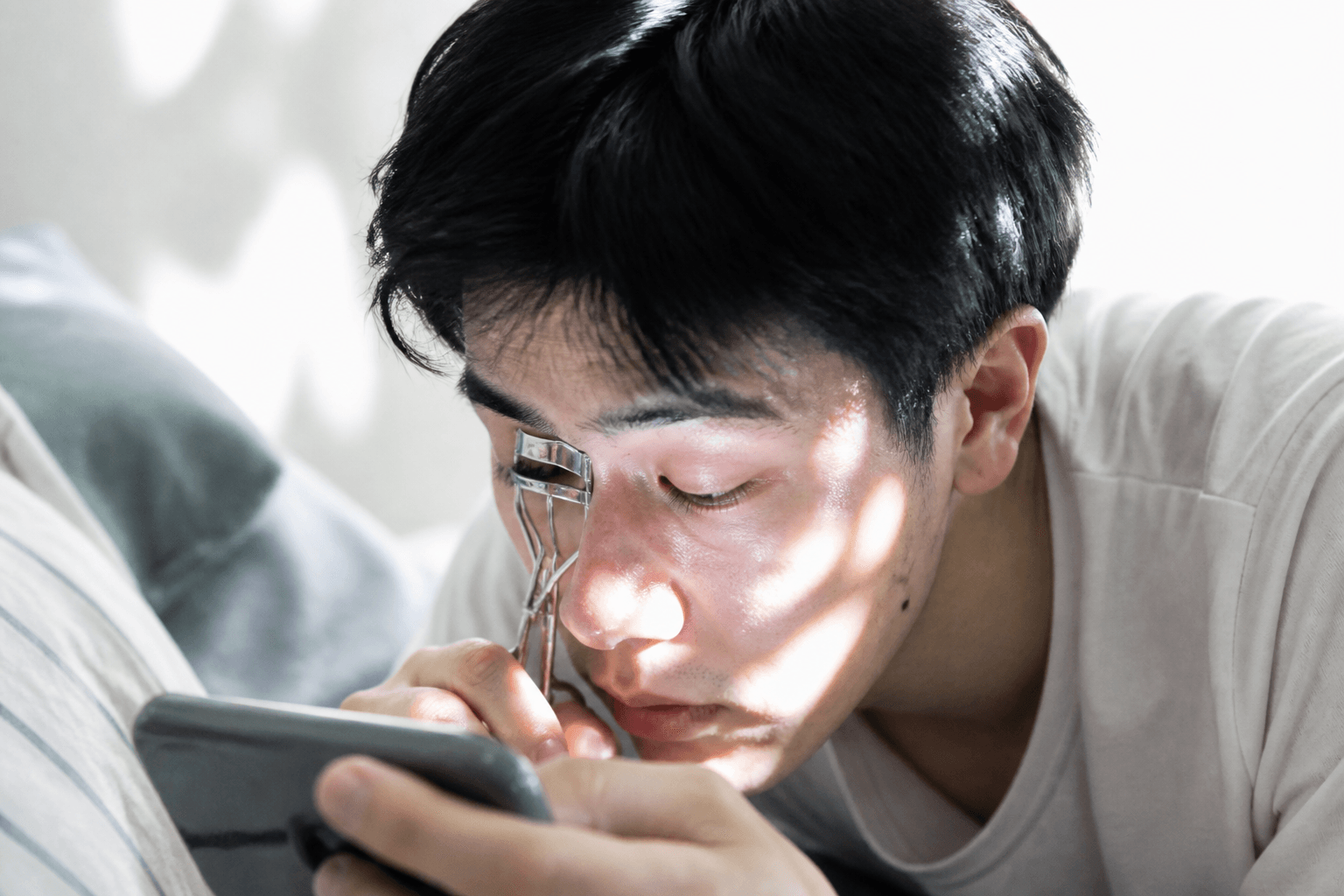
Start with a manual curler
A Cleveland Clinic ophthalmologist recommends a manual curler over a chemical lift; medical guidance focuses on avoiding injury, not one perfect technique. The goal is a temporary bend without pulling hair or pinching skin.
- Wash and dry your hands, then check that the curler is clean and its soft pad is intact.
- Use it on clean, dry lashes and position it without catching your eyelid.
- Make one brief, gentle squeeze, then release the curler fully before moving it away.
- Stop if it pinches, catches, or pulls; add mascara only after curling, if you want it.
The US Food and Drug Administration advises keeping eye-area instruments clean and warns that careless applicator use can scratch the eye.
Use mascara as styling, not treatment
Mascara can make the curl easier to see, but it does not change how the follicle grows. Choose a product labeled for the eye area, and stop if your lids or eyes become irritated.
Keep the tube and applicator clean, don't share them, and replace mascara within the manufacturer's recommended window. The FDA also says not to dilute a dry tube with water or saliva because that can introduce bacteria.
Treat a lash lift as a chemical service
A lash lift works like a small perm by changing bonds within the shaft so each treated hair holds a curl. It does not make lashes thicker or alter the follicle's direction, and the effect fades as new lashes grow.
That convenience carries risk, including allergic reactions, eyelid inflammation, infection, and damage from repeated overprocessing. Cleveland Clinic also says long-term safety data are limited.
Do not use a DIY lash-lift kit; if you still want the service, choose a qualified, trained professional who follows proper hygiene. Ask for a patch test first, while knowing that a patch test cannot rule out every reaction. Delay the service if your eye or eyelid is sore, red, or inflamed.
What not to use to force a curl
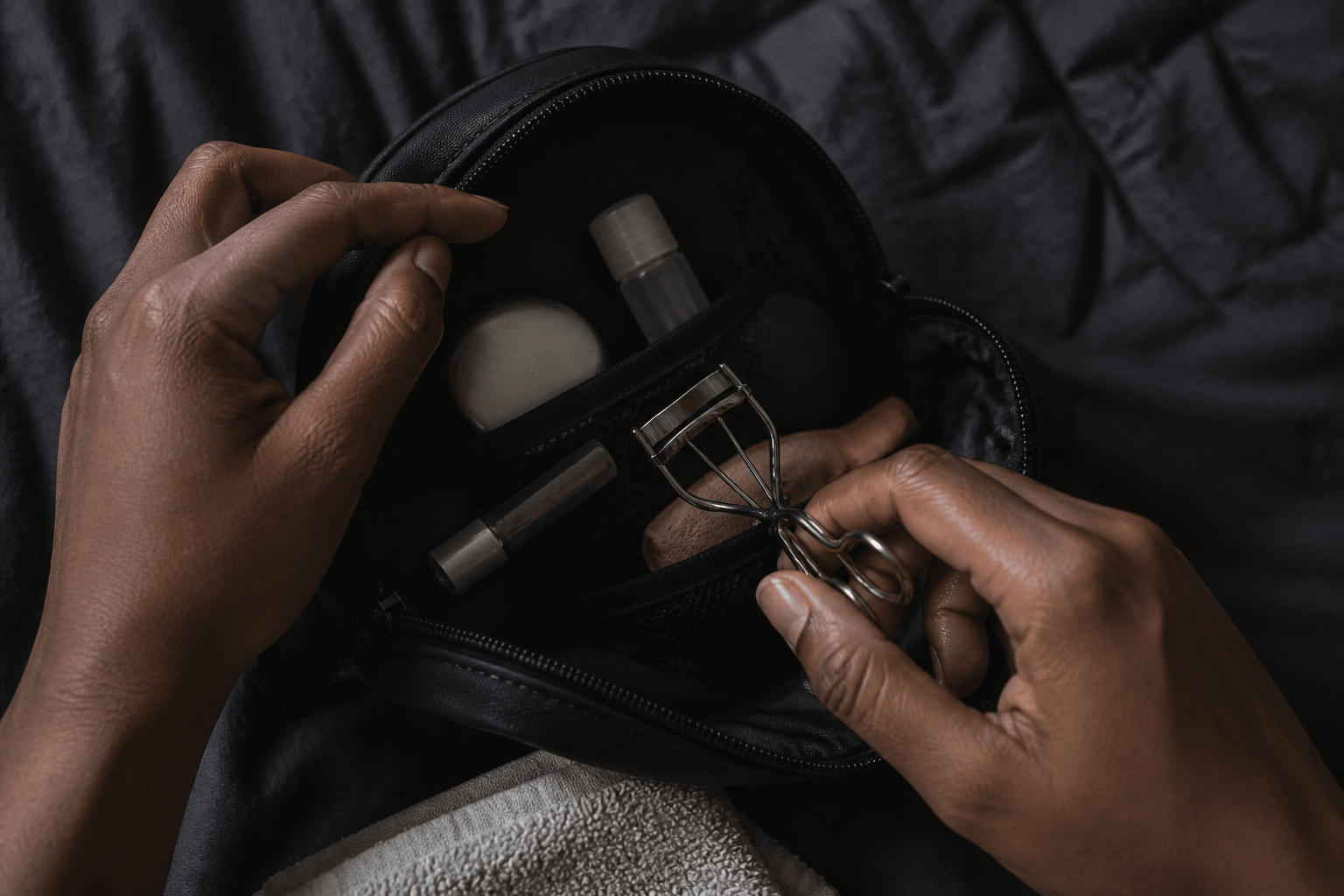
Don't heat a metal curler with a hairdryer, lighter, or boiling water. The American Academy of Ophthalmology warns that excess heat can damage lashes, eyelid skin, or the eye and cause dryness or irritation.
Skip hard pulling, heated spoons, and repeated clamping because they add force or heat without changing the follicle. Oils and non-prescription lash serums also have no good evidence for permanently changing lash direction.
Don't repeatedly pluck a scratching lash because AAPOS notes that a misdirected hair often grows back after removal and may feel stiffer. An eye professional can check why it turned inward and choose the right treatment.
What result is realistic
A manual curler and mascara style the visible hair for a limited time. A professional lash lift changes treated hairs for longer, but new lashes follow their natural direction. None of these options permanently changes eyelid anatomy.
Judge the result in the same mirror and lighting while keeping your eyes relaxed. Don't keep zooming in to hunt for tiny differences.
If your natural direction is comfortable, you do not need to correct it because curl is a styling choice.
FAQ
Is it normal for upper eyelashes to grow straight down?
Yes, straight or low-angle upper lashes can be a normal anatomical feature. The key safety check is whether they point away from the eye and cause no pain, redness, tearing, or light sensitivity.
Can you train eyelashes to grow upward?
There is no good evidence that repeated curling trains a lash follicle. A curler bends the visible shaft for a while, and a lift chemically reshapes treated hair. New lashes still grow at their natural angle.
Is a lash lift safe for downward eyelashes?
A lash lift can create a longer-lasting curl, but it can also cause allergy, inflammation, infection, or overprocessing. Cleveland Clinic advises against doing it at home. If you proceed, use a trained professional and ask for a patch test.
What should I do if one eyelash keeps scratching my eye?
Book an exam with an optometrist or ophthalmologist and avoid repeated plucking because the lash may be misdirected. Seek prompt care for pain, light sensitivity, marked redness, or any change in vision.