Quick answer
White dots on hair strands can be weak fracture points, loose residue, firmly attached lice eggs or fungal nodules. The dot's position and behavior tell you more than its color.
If a strand bends, frays or snaps at the dot, hair-shaft breakage is the best fit. A speck that flicks away is more likely scale or product. An oval fixed near the scalp needs a lice check. Don't start lice or antifungal treatment from a photo alone.
Check one strand before buying a treatment
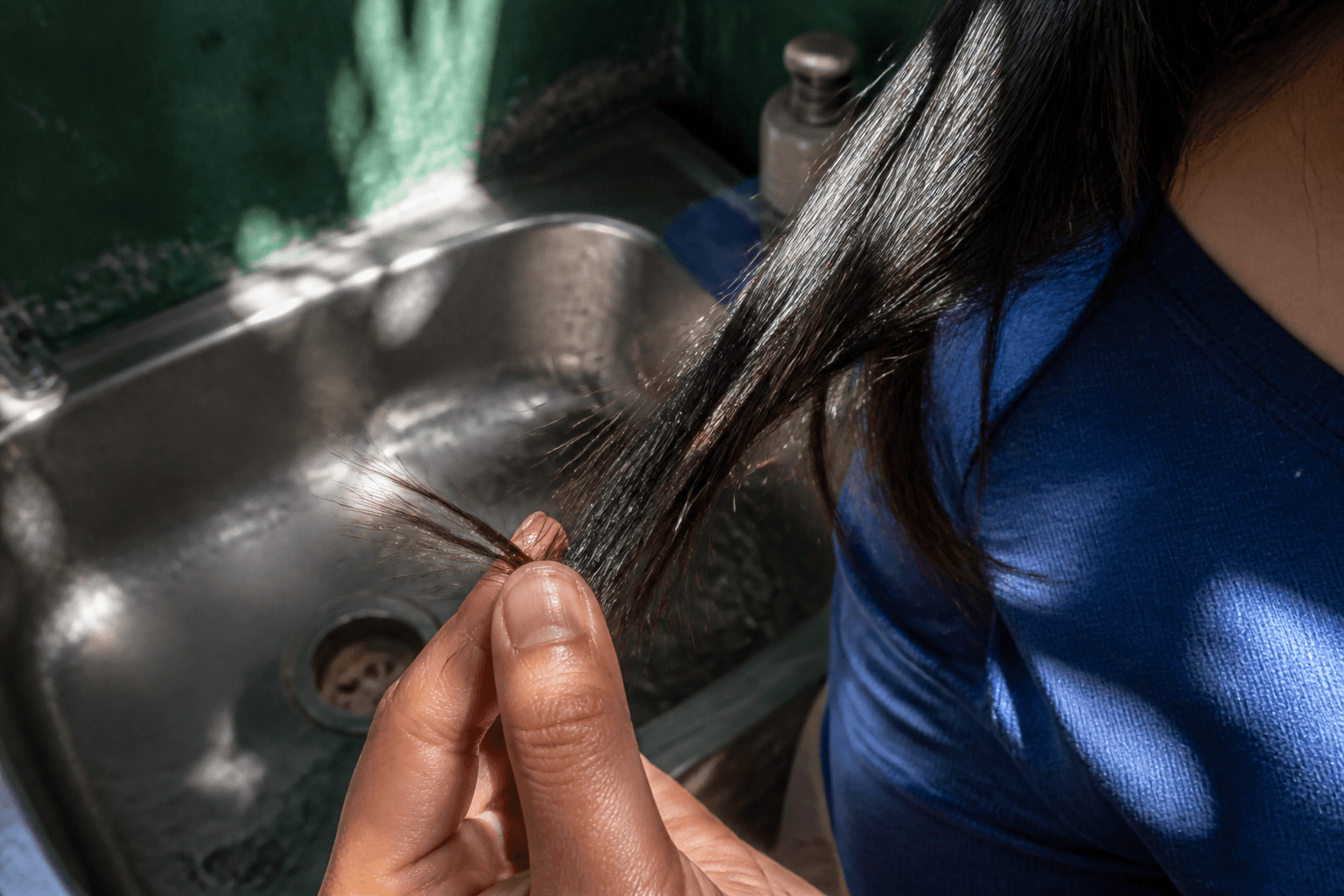
Look at clean, dry hair in neutral daylight, then hold one affected strand over a dark towel. Check several more from different areas.
- A fixed dot where the strand bends or breaks points toward a damaged hair shaft.
- A flake that slides or flicks off fits loose scale, dirt or product residue.
- A tiny oval cemented close to the scalp could be a nit.
- A soft bead or sleeve wrapped around the shaft could be white piedra.
- A smooth white bulb on one end of a shed hair is a club root, not a dot within the strand.
Location matters because head-lice eggs are usually attached within about 6 millimeters, or one-quarter inch, of the scalp. The CDC advises checking behind the ears and near the back of the neck. White piedra can form pale nodules along scalp, facial or body hair.
A close-up photo shows color and position, but not whether a speck slides, surrounds the strand or marks a weak point. Check the hair itself before deciding what it is.
When the dot is a weak point in the hair
Dermatologists call this pattern trichorrhexis nodosa: part of the shaft fractures, and fibers spread at the damaged spot. Under ordinary light, that rough node may look gray or white.
Acquired trichorrhexis nodosa usually follows repeated physical, heat or chemical stress. Common triggers include rough brushing, frequent flat ironing, bleaching, coloring, perming and relaxing. Tight styles can add more breakage by keeping tension on fragile strands.
The pattern gives useful clues because the dot may sit near a split end, or the hair may fold there. Short broken pieces, uneven ends and new flyaways support breakage. A full-length shed hair with a rounded club at one end points to shedding instead.
A damaged shaft won't fuse back into untouched hair, though conditioner can reduce friction and make the surface feel smoother. A trim can remove affected ends, but it won't stop new nodes if the source of damage continues.
Reduce new breakage without rebuilding your routine
Start by pausing whichever process most likely caused the change, such as home bleaching, relaxing or perming. If you use hot tools, choose low or medium heat, use them less often and flat-iron only dry hair.
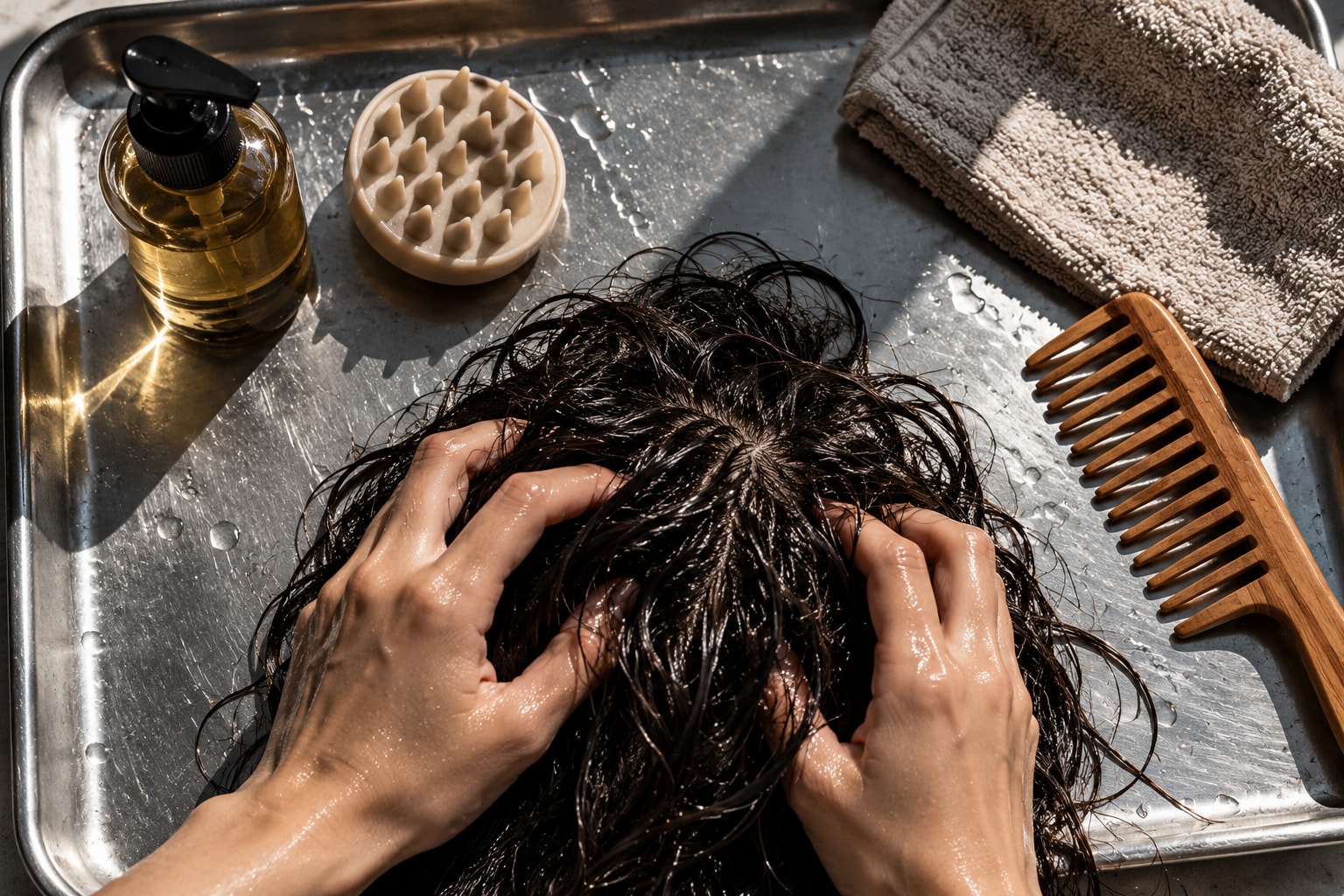
Make washing gentler too:
- Massage shampoo into your scalp instead of rubbing it through the lengths.
- Let the rinse carry shampoo through the rest of your hair.
- Use conditioner after washing.
- Wrap or blot wet hair rather than rubbing it with a towel.
- Detangle slowly with a wide-tooth comb and stop pulling through knots.
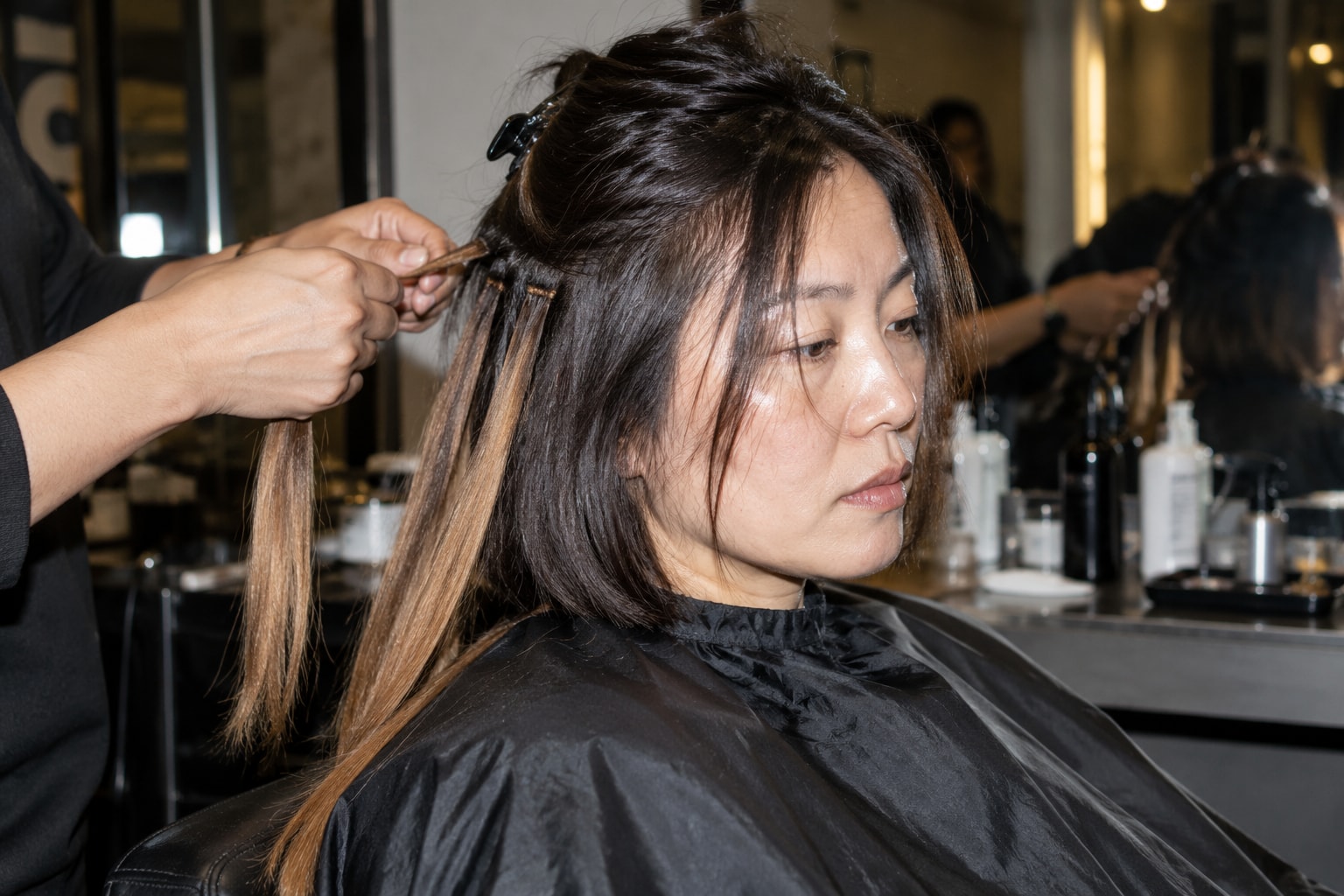
- Loosen ponytails, braids, extensions or other styles that keep the hair under tension.
You don't need to inspect every strand, and a stylist can trim affected ends. Photograph the same small section every two to four weeks in similar light. This shows whether new breakage is slowing without turning daily hair checks into a habit.
Could the white dots be head lice?
Nits are oval lice eggs cemented to the hair, so they don't flick away like dandruff, dry-shampoo particles or dirt. Viable nits usually sit close to the scalp.
Look behind both ears and along the nape, although the clearest evidence is a crawling louse. If you find no live lice and only distant shells, the CDC says the infestation is probably old.
Don't use lice treatment just because you see white specks, since it won't fix breakage or product residue. Ask a pharmacist or clinician to confirm the finding if you can't tell.
White piedra looks like beads around the shaft
White piedra is a fungal infection that causes white, cream or light-brown nodules wrapped around the hair shaft. The nodules tend to feel soft or gritty and can detach more easily than lice eggs.
It can affect scalp hair, but it also appears on beards, mustaches, underarm hair and pubic hair. Many cases cause no pain or itch, but that lack of irritation doesn't prove the nodules are harmless residue.
A dermatologist can examine the hair and test a nodule when needed. Skip DIY antifungal mixtures and dandruff treatments until you know what you are treating. Several harmless particles can resemble white piedra in a photo.
When to see a dermatologist
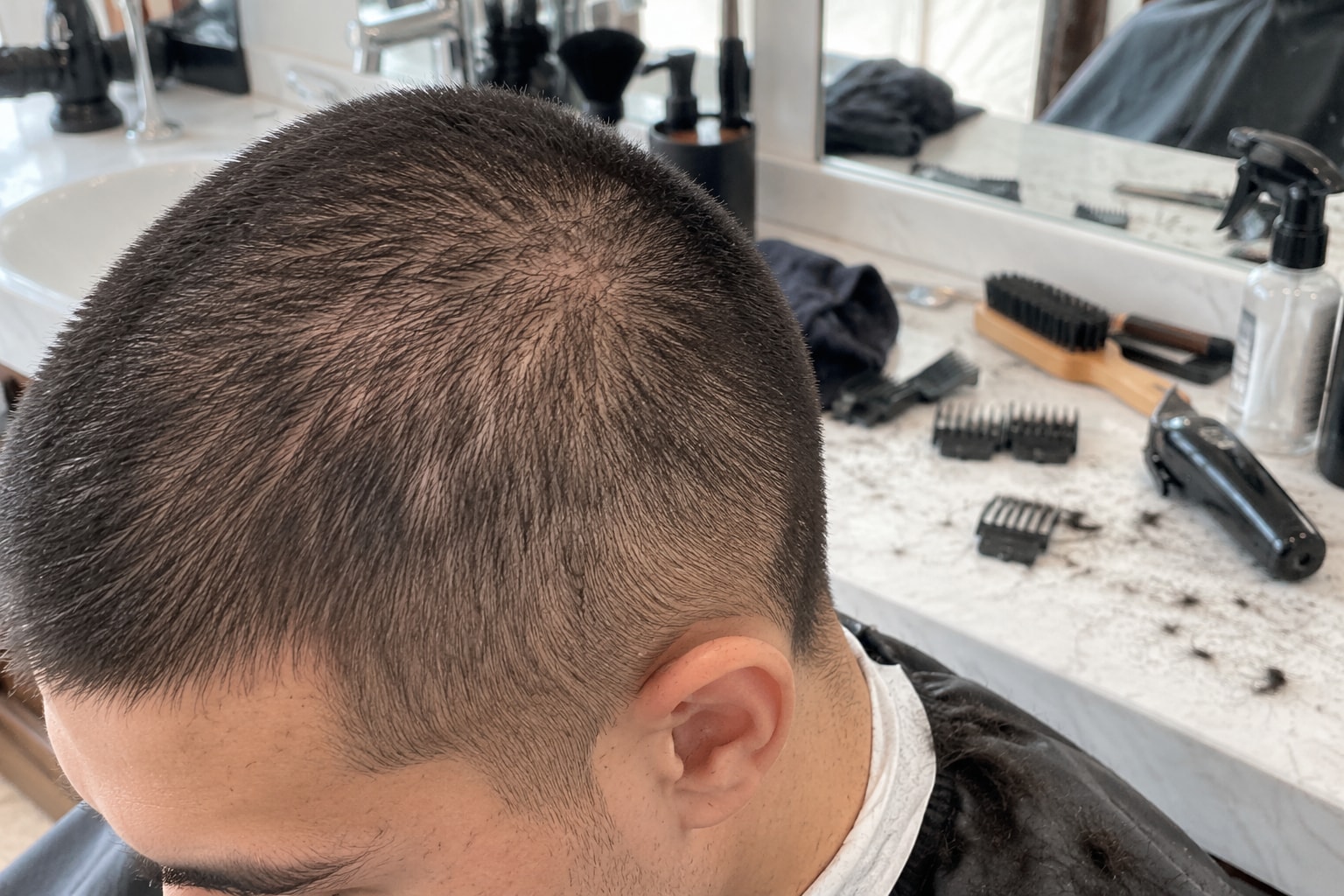
Book an appointment if breakage keeps spreading after you reduce heat and chemical processing, or if you notice thinning. Get checked sooner if the scalp is painful, red, crusted or losing hair in patches.
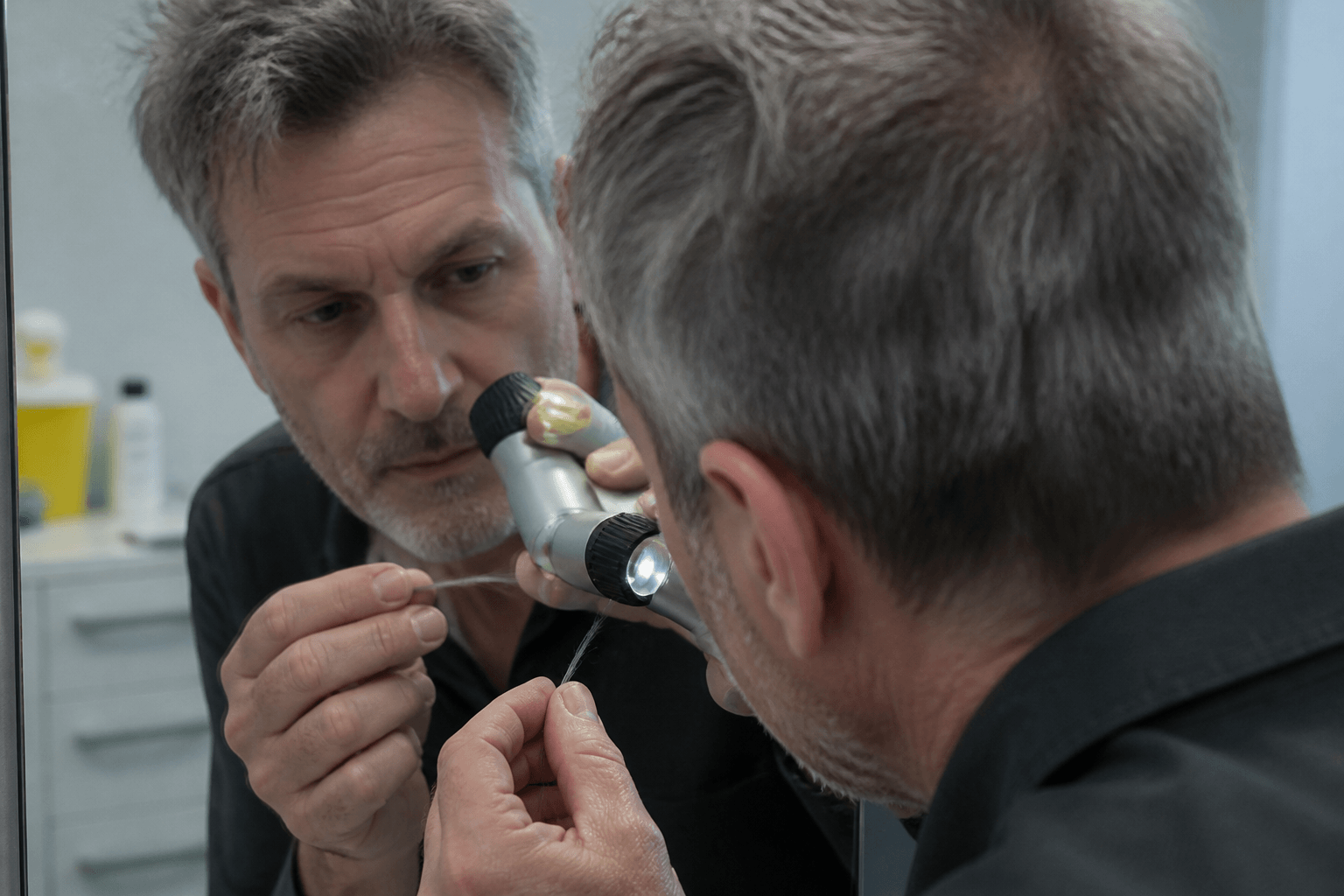
An examination also makes sense when dots affect new growth near the scalp, brows or lashes, or have been present since childhood. Routine damage can cause fragile hair, but inherited shaft conditions and other health problems can do the same. A dermatologist can use magnification or microscopy to separate these patterns.
Seek help if you suspect lice or white piedra but can't identify the particles. The right diagnosis prevents weeks spent treating the wrong problem.
FAQ
Are white dots on hair strands always split ends?
No. A white weak point can be a partial shaft fracture, especially when the hair bends or snaps there. Loose scale, styling residue, nits and white piedra can also look pale. Test whether the speck moves and note its distance from the scalp.
Does a white bulb mean the whole follicle came out?
No. A smooth bulb at the root end of a shed hair is usually a keratin club formed during the resting phase. The follicle remains in the skin, though sudden heavy shedding or visible thinning still deserves a medical review.
Can a hair mask remove breakage dots?
A mask or conditioner may smooth the surface and reduce friction, but it can't reverse a fracture inside the shaft. Reducing the trigger and trimming damaged ends are more useful than repeatedly coating the same weak point.
How can I tell dandruff from nits?
Loose dandruff usually flicks or pulls away, while nits are oval and firmly cemented to hair. They usually sit close to the scalp, often behind the ears or near the nape. If the finding is unclear, confirm it before using lice treatment.