Quick answer
Why does vitamin C serum turn skin orange? Most often, L-ascorbic acid has oxidized in the bottle or on your skin. The yellow-brown color usually sits on the surface, so it is not a real tan or permanent pigment change. Wash it off, check the liquid against its original color, and replace it if the formula has clearly darkened.
Why vitamin C can leave an orange tint
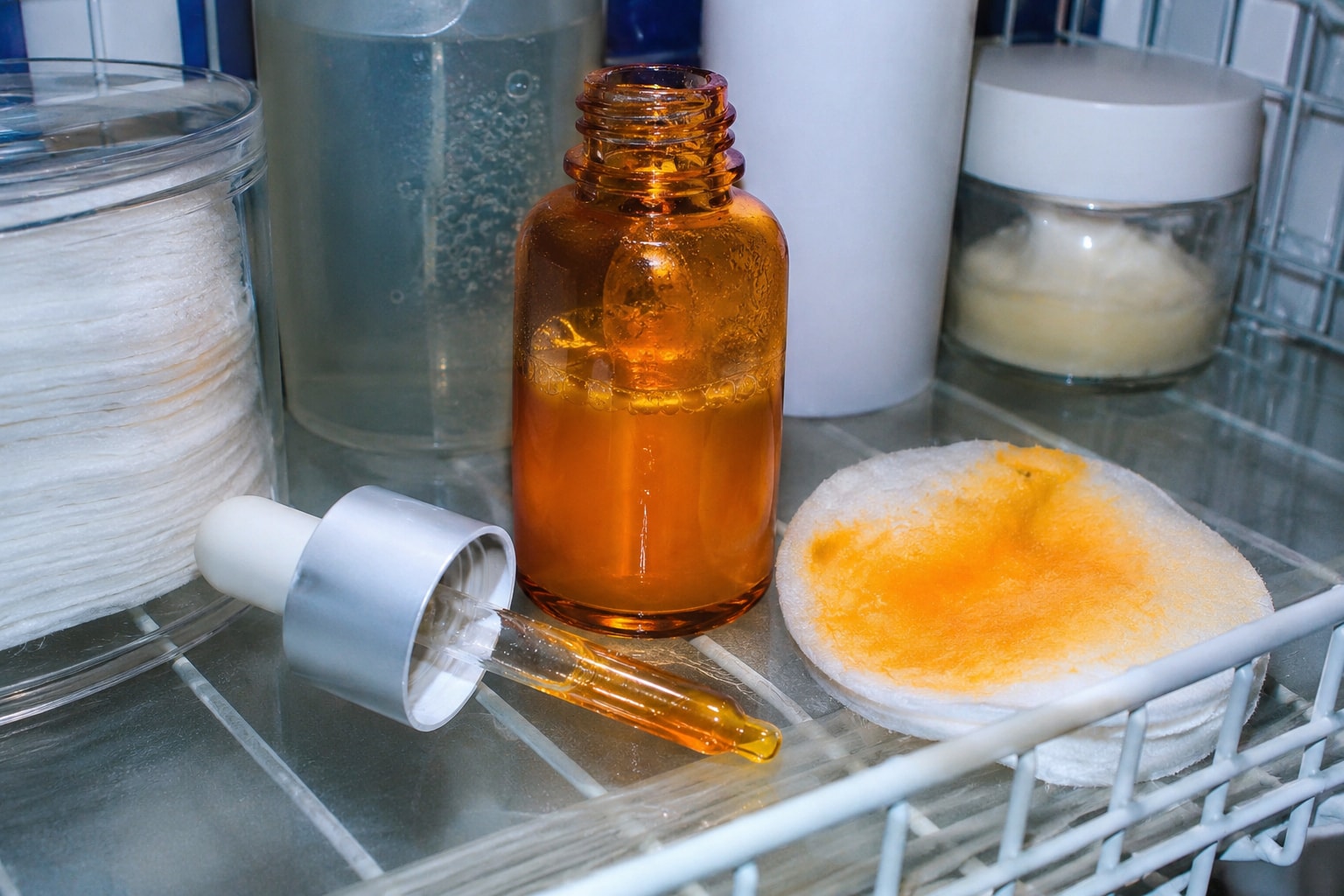
Pure L-ascorbic acid is effective but unstable, and air, light, heat, and water can change it into dehydroascorbic acid and later breakdown products. A dermatology review describes fresh ascorbic acid serum as almost colorless. As oxidation advances, the liquid can shift through yellow, amber, orange, and brown.
That change can happen after application too, as dermatologist Zoe Diana Draelos explains that vitamin C may oxidize while sitting on skin overnight. The result can be an orange film the next morning, even when the bottle looked less colored.
Clinical evidence supports a simpler explanation: colored material can remain on the surface. In a 2021 report, 15 children developed yellow-brown patches after using wipes with unusually high ascorbic acid and oxidation products. Soap and water removed the color, although a faint halo lasted a few days in some cases. Wipes are not serums, but the report shows that topical ascorbic acid can cause harmless external staining.
First check the bottle, not your skin tone
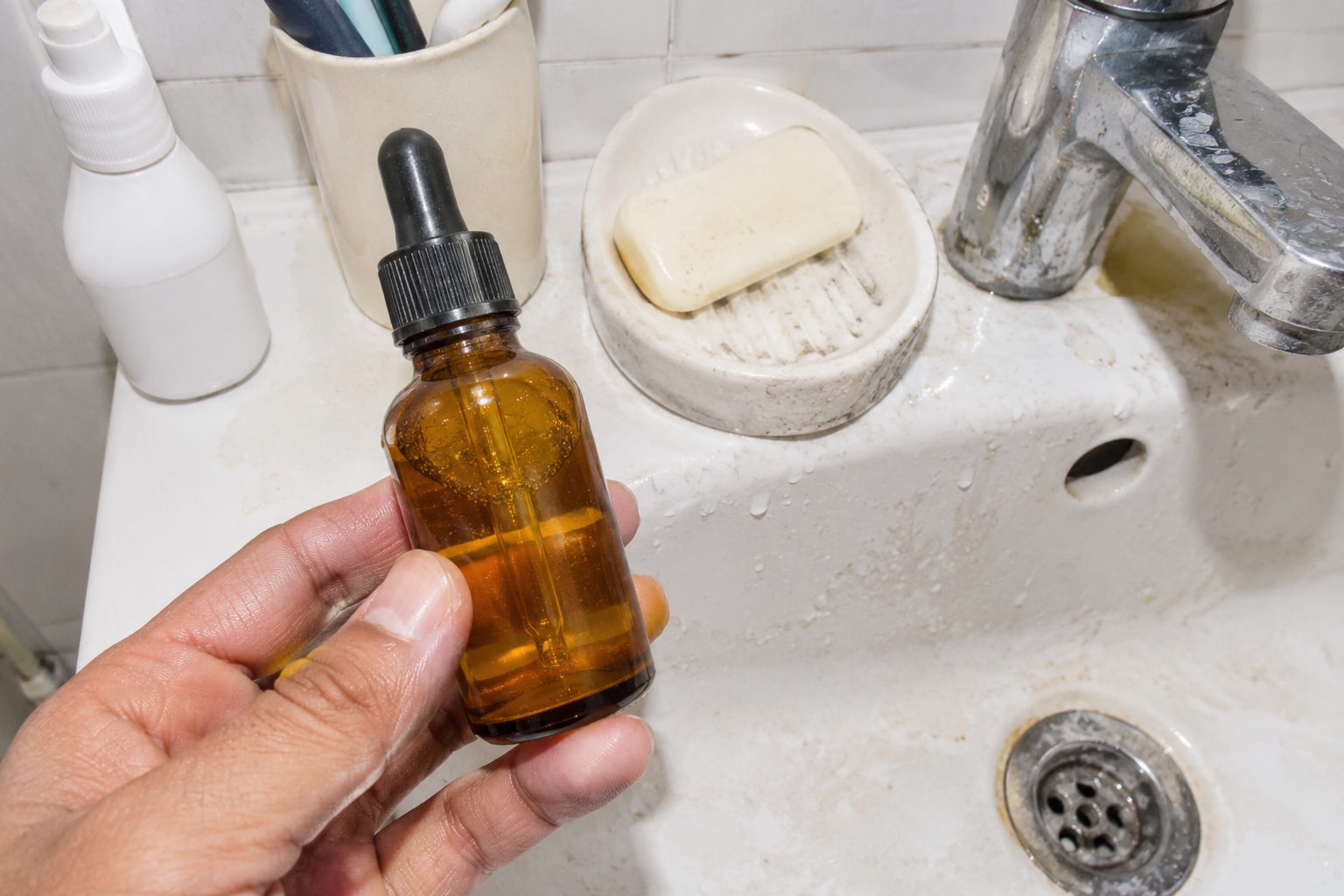
Judge change from the product's starting color. A formula that was pale gold when opened is different from a clear serum that turned dark amber after six weeks. Some formulas are sold pale yellow or light brown, so compare the current liquid with its own fresh baseline.
Check the liquid in indirect daylight against a white surface because warm bathroom bulbs and a phone's automatic white balance can exaggerate orange tones. Look at the neck of the bottle too, where dried residue often shows a color change first.
Read the ingredient list, since the oxidation problem is most relevant when it lists ascorbic acid or L-ascorbic acid. Vitamin C derivatives have different stability profiles, so the clear-serum rule does not apply equally to every product.
Color alone cannot measure the remaining dose, but a clear shift from the original color shows that the formula has changed. The US Food and Drug Administration advises throwing away cosmetics with a marked change in color or smell. Follow the maker's directions if they give a tighter use-after-opening limit.
A simple test before you change your routine
Start with clean, dry skin and neutral daylight. Apply the label-directed amount to a small area near the jaw, then leave the rest of your routine unchanged. Do not mix the serum into moisturizer or sunscreen during this test.
Check the area after the serum dries. If the orange tone appears only where you applied it, wipe one small part with a damp white cloth. Colored transfer or quick fading points to product residue, not new melanin in your skin.
Then wash the area with a gentle cleanser and lukewarm water, without scrubbing or adding an acid peel. If the color lifts without redness, pain, or itching, simple surface staining is the likely cause.
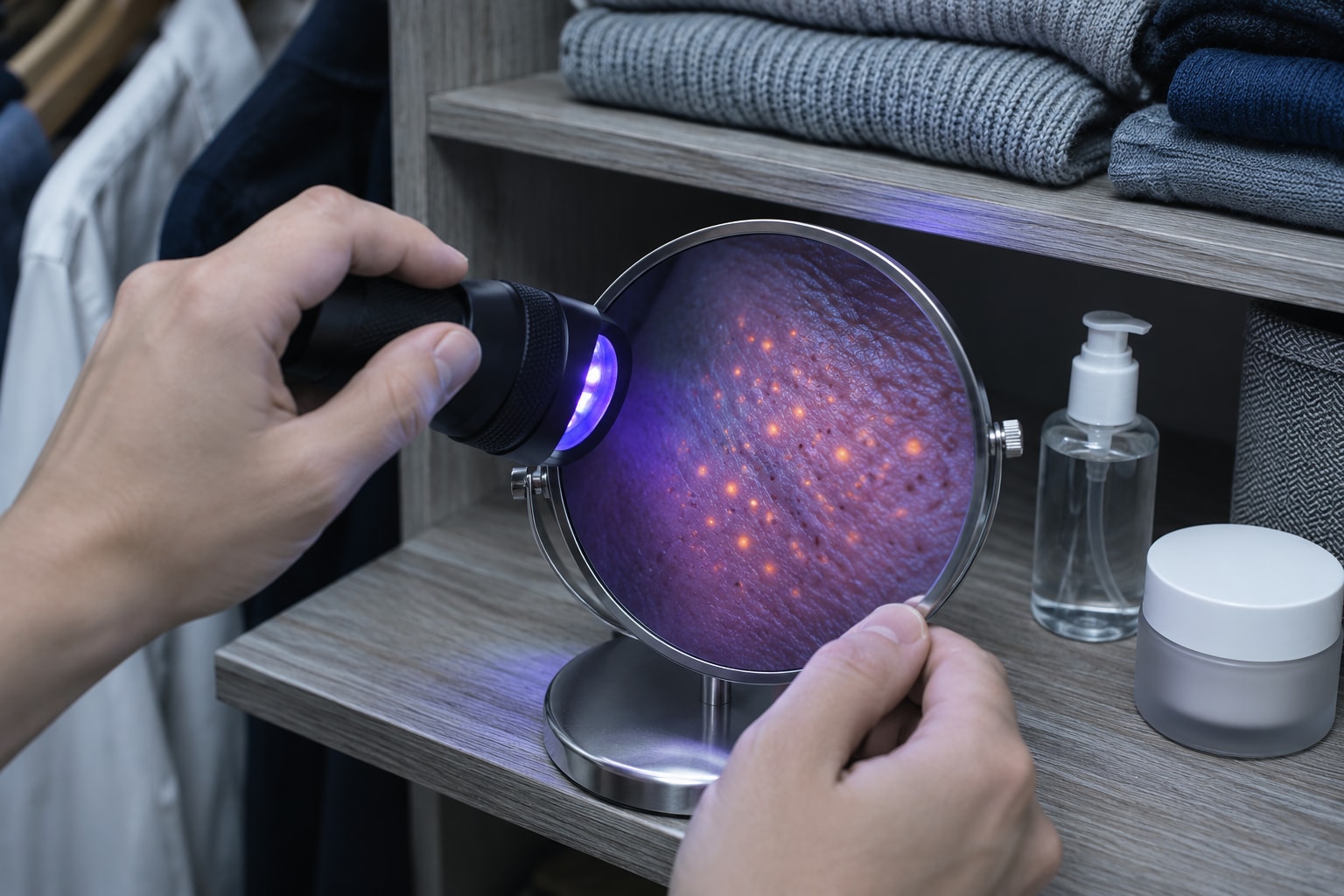
A photo can help, but control the setup. Use the same window, camera, distance, and exposure before and after washing. A warm lamp or changing phone processing can create an orange cast across the whole face.
What to do with the serum
Replace a serum that has changed from clear or pale yellow to dark orange or brown. The same applies if its smell or texture has changed. More product will not restore lost stability, and applying extra can make the visible residue worse.
For the next bottle:
- Keep the cap or pump tightly closed.
- Store it away from direct sun, heaters, and steamy rooms.
- Do not decant it into a clear jar.
- Buy a smaller bottle if you cannot finish the current size within the maker's stated period.
- Refrigerate it only when the label or manufacturer recommends this.
Opaque, air-restrictive packaging reduces exposure during use, but it cannot make an unstable formula last forever. Write the opening date on the box, then check any later color change against a photo taken that day.
If a fresh bottle stains you from the first application, you do not need to tolerate it. Stop using it and ask the brand whether the tint is expected. You can choose another formula, including a product with a vitamin C derivative, but evidence varies across derivatives.
Vitamin C is optional. Do not keep an irritating or visibly staining serum because a routine app says you need it.
Orange staining or a skin reaction?
Surface staining should not burn, itch, swell, or make the skin hot. DermNet lists those symptoms among signs of cosmetic contact reactions. The vitamin C review also reports occasional stinging, redness, and dryness with topical use.
Stop using the product and rinse it off if those symptoms appear. Use a plain moisturizer that you already tolerate. Do not try to cancel the reaction with baking soda, lemon juice, bleach, or another active.
Persistent or worsening symptoms need a pharmacist, doctor, or dermatologist. Seek urgent medical help for sudden swelling of the lips, mouth, tongue, or throat, or any trouble breathing.
An orange cast that stays after cleansing also deserves a closer look. Stop the serum and photograph the area in the same daylight for several days. A clinician can separate contact dermatitis, post-inflammatory darkening, and an unrelated pigment change if it does not fade.

FAQ
Is orange staining from vitamin C permanent?
Usually not. The 2021 ascorbic-acid wipes report found that soap and water removed most staining, with a faint halo lasting a few days in some cases. A mark that persists, spreads, or follows burning and redness may be inflammation rather than residue.
Can I use vitamin C serum if it is slightly yellow?
Check how it looked when new and follow the brand's instructions. Some formulas start pale yellow, so that color alone does not prove spoilage. A clear shift toward dark amber, orange, or brown is a stronger reason to replace it.
Does oxidized vitamin C cause hyperpigmentation?
Orange residue is not the same as increased melanin. Irritation from any cosmetic can leave longer-lasting dark marks, especially in darker skin tones. Stop the product if you also have burning, itching, swelling, or a rash.
How do I remove the orange tint safely?
Use a gentle cleanser and lukewarm water, then repeat at your next normal wash if needed. Do not scrub or use lemon juice, peroxide, or a strong exfoliating acid. Those methods can irritate skin and make a temporary color problem last longer.