Quick answer
Can glasses cause acne on your nose? Yes, they can worsen acne-prone skin where the bridge or nose pads press and rub. Dermatologists call this acne mechanica, where heat, sweat, pressure, and friction work together under the frame.
Still, every bump under your glasses isn't acne, and an itchy, scaly patch points more toward contact dermatitis. A firm sore lump that doesn't heal needs a clinician's assessment.
Why glasses can trigger nose breakouts
Glasses don't create a new type of acne, but they can make an existing tendency flare at one contact point.
The American Academy of Dermatology describes acne mechanica as a breakout caused by heat, trapped sweat, pressure, and rubbing. Its guidance focuses on sports gear, not eyewear. The same mechanism can apply where a bridge or pad sits against your nose for hours.
Direct research on eyeglass-related acne is thin, with no good trials comparing frame materials, cleaning schedules, or nose-pad designs. Treat the contact pattern as a clue, not a diagnosis.
Your glasses are a more likely trigger when:
- New spots sit directly beneath the bridge, pads, lower rims, or temples.
- The problem started after new frames, an adjustment, or longer daily wear.
- You see matching pressure marks when you remove the glasses.
- Breakouts are worse after hot days, exercise, or long shifts in safety glasses.
Spots across your whole nose or face have more possible causes, so changing the frames alone may not fix them.
First, check whether the bump is acne
The right fix depends on what is under the frame, and more scrubbing can make each of these problems worse.
Acne mechanica
This often starts as small, rough bumps where the frame rubs, and some may become whiteheads or inflamed pimples. The location usually matches the contact area, and itch isn't the main feature.
Contact dermatitis
Think about a frame reaction if the skin itches, burns, flakes, or forms a red patch. The American Academy of Dermatology notes that metal frames can contain contact allergens. Plasticizers, varnish, and UV stabilizers in plastic frames may also cause reactions.
A reaction can start after years with the same frames. An optician can identify the frame and pad materials, while a dermatologist can arrange patch testing when allergy is suspected.
A pressure lesion
Acanthoma fissuratum is an uncommon, benign lesion linked to chronic pressure from glasses. DermNet describes a firm bump or plaque, often with a central groove. It can hurt or ulcerate and usually sits on the side of the nose or behind an ear.
This isn't a pimple to squeeze, and DermNet notes that it can resemble basal cell carcinoma. Get a firm, growing, bleeding, ulcerated, or non-healing bump checked in person.
Change pressure before changing your skincare
Start with the frame, because adding stronger acne products while the same pad keeps rubbing misses the likely trigger.
Ask an optician to check the bridge width, nose-pad angle, frame weight, and where the lower rims touch. The American Academy of Ophthalmology says fit or material can cause irritation, so a small adjustment may help.
Don't bend prescription frames at home. Let an optician change how the frame distributes pressure across your nose.
Deep marks, soreness, or frequent sliding are useful signs to show the optician. Take one clear photo after removing the glasses, then use the same angle and light after any adjustment.
Clean the contact points without damaging the frame
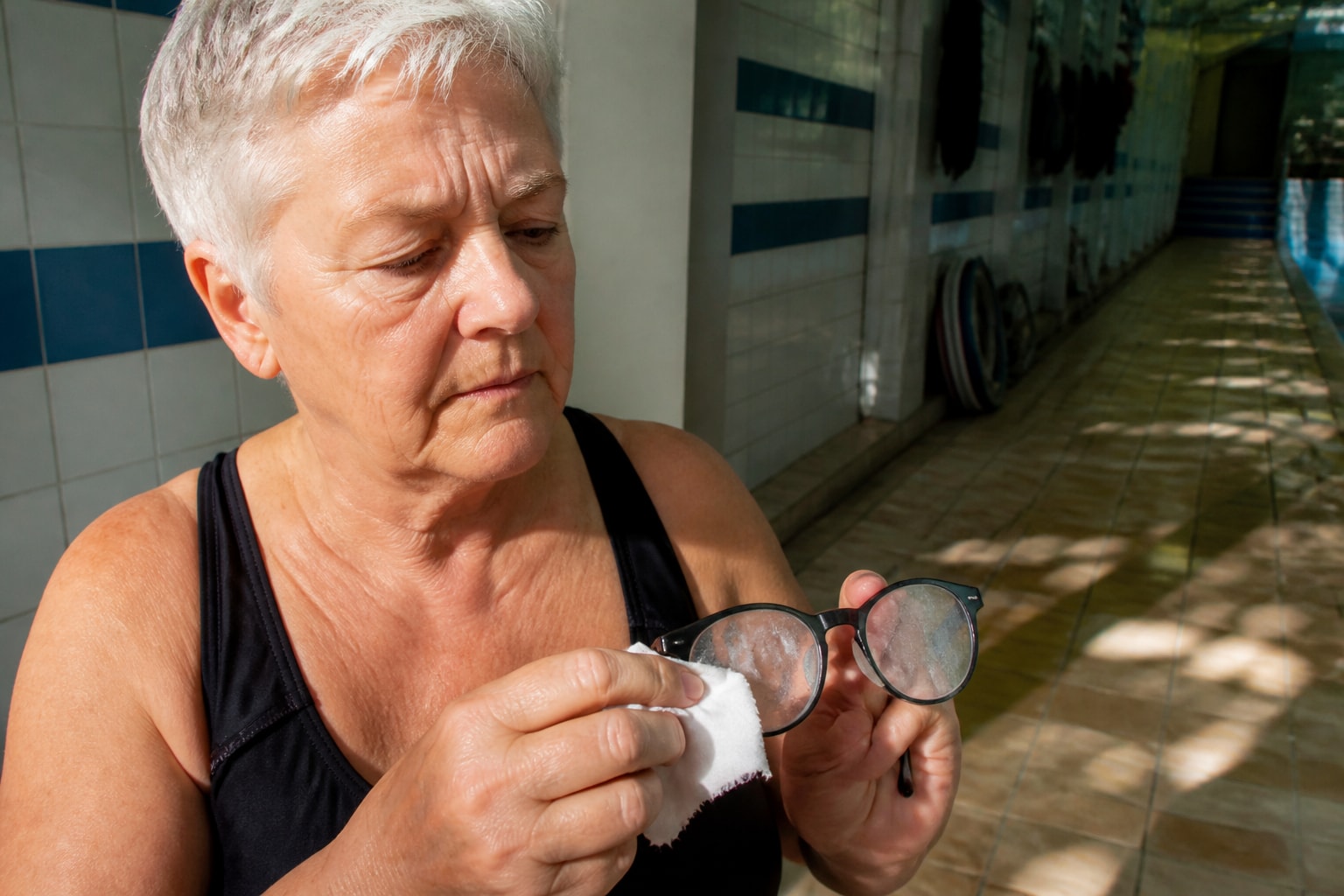
Cleaning removes skin oil, makeup, sunscreen, and residue from contact points, but it won't treat acne by itself. A breakout doesn't mean you have poor hygiene.
Specsavers advises warm, soapy water and a soft cloth for frames. Clean the nose pads, bridge, lower rims, and temple tips, then rinse and dry them. Follow the maker's instructions because lens coatings and frame finishes differ.
Skip household sprays, hand sanitiser, and rubbing alcohol unless the manufacturer says they are safe. Strong cleaners can damage frame materials and lens coatings.
If you wear safety glasses or sweat heavily, clean the contact points after that wear. Otherwise, try a nightly clean while keeping your routine unchanged for two weeks, so you can judge the pattern.
Use one low-risk acne step
For small bumps that look like acne, keep care simple:
- Wash with a gentle cleanser twice daily and after heavy sweating.
- Don't scrub the bridge of your nose or use an astringent there.
- Choose non-comedogenic makeup, moisturiser, and sunscreen around the contact area.
- Remove makeup and sunscreen fully before bed.
- Don't squeeze a spot that will sit under pressure the next morning.
The American Academy of Dermatology says an over-the-counter salicylic acid product can help acne mechanica by unclogging pores. Follow the label, start slowly, and stop if you get persistent burning, swelling, or a worsening rash.
Avoid starting several acids, scrubs, or spot treatments together, since irritation can look like more acne and hide which change helped.
Track the result without overreading a selfie
Use a close photo of the nose rather than judging your whole face. Keep the camera, distance, light, and time consistent across every check.
Mark the frame's contact points in your first photo. Compare the bumps weekly, then store images locally or use a service whose photo policy you understand.
The useful signal is a trend, because one harshly lit selfie isn't evidence that your skin is getting worse.
When to get professional help
See a dermatologist if the area develops deep painful lumps, scars, or widespread acne. The American Academy of Dermatology advises getting help when suspected acne mechanica hasn't improved after six to eight weeks of treatment.
Seek an earlier assessment for a firm or ulcerated lesion, repeated bleeding, or a bump that keeps growing. An itchy, scaly rash may need contact-allergy testing rather than acne treatment. An optician should also reassess frames that leave lasting marks or pain.
FAQ
Why do nose pads cause pimples?
Pressure and rubbing can irritate acne-prone skin, while heat and sweat remain trapped beneath the pads. That pattern fits acne mechanica, but no trial proves that every nose-pad breakout has this cause.
Should I clean my glasses every day if I have acne?
A nightly clean is a reasonable test when spots match the contact points. Use warm, soapy water and follow the frame maker's instructions. Cleaning more often won't offset a bridge that presses too hard.
Can metal glasses cause an acne-like rash?
Yes. Metal or plastic frame components can cause contact dermatitis, which may be mistaken for acne. Itch, burning, scaling, and a sharply outlined red patch make dermatitis more likely than clogged pores.
How long does glasses-related acne take to clear?
There is no fixed timeline. Small bumps should gradually improve once friction and pressure fall. See a dermatologist if careful frame changes and acne care haven't helped within six to eight weeks.