Quick answer
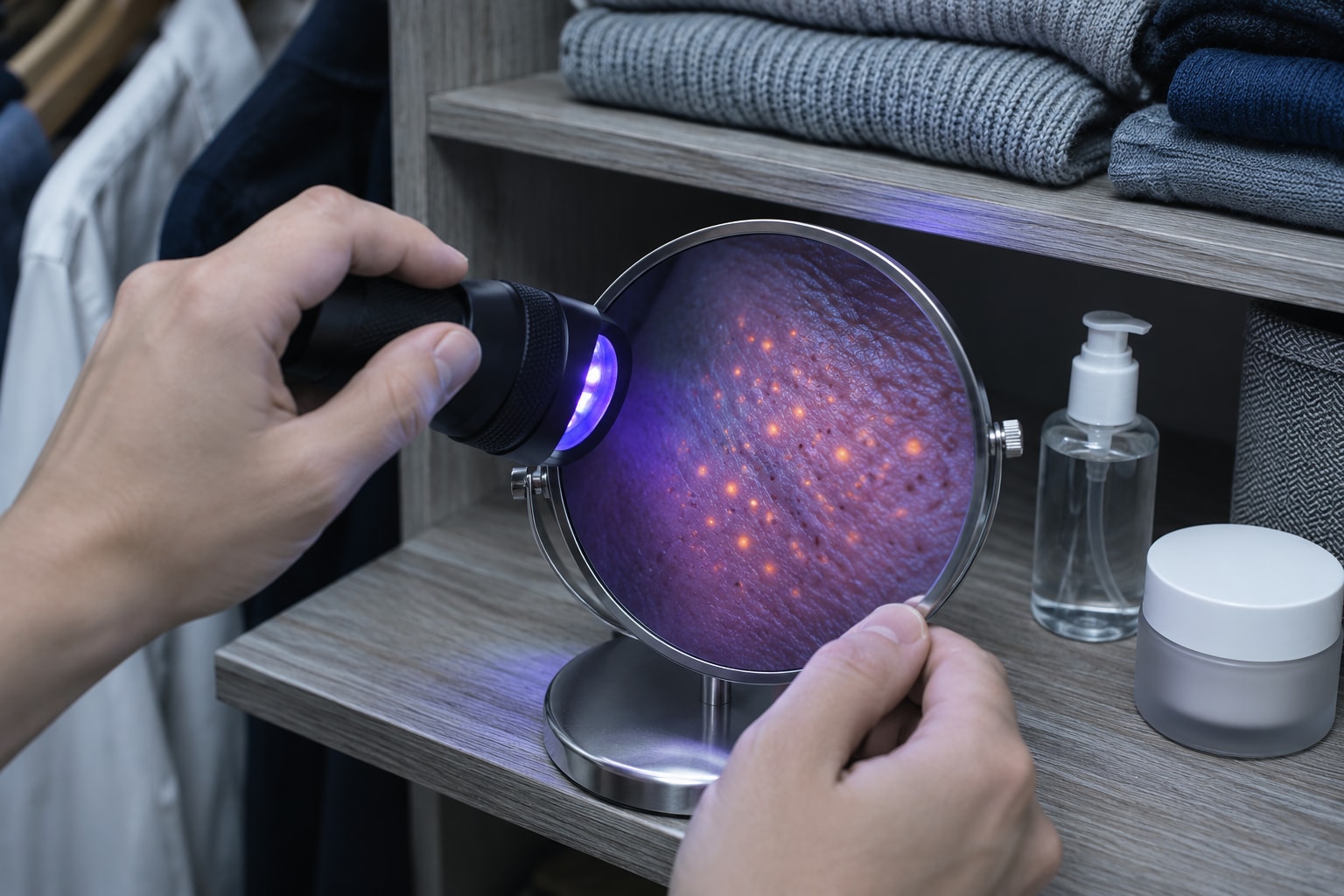
Pores glow orange under UV light because bacteria in hair follicles can make light-sensitive molecules called porphyrins. These molecules give off orange-red light, sometimes outlining pores on your nose even when your skin is clear. A glowing dot alone can't tell you whether that pore is blocked. If your skin feels fine and the dots disappear in daylight, you don't need to treat them.
What makes a single pore glow
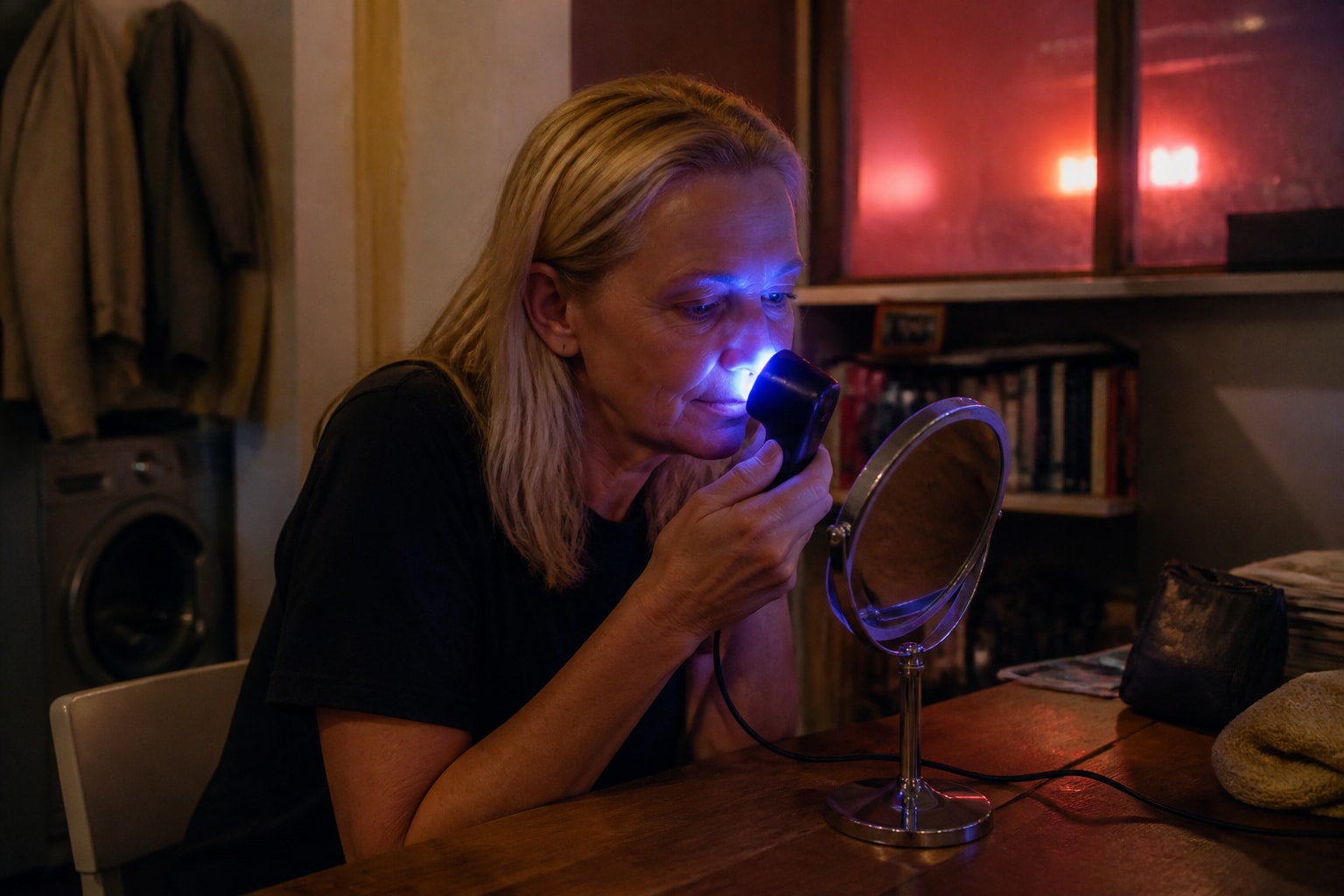
A black light gives off invisible ultraviolet light along with some violet light you can see. A porphyrin absorbs some of the invisible light and releases that energy as visible light of a different color. This is called fluorescence. When those molecules cluster near the opening of a hair follicle, you see a pinpoint against the surrounding skin.
Cutibacterium acnes, a species often linked with acne, makes porphyrins. In a 2024 study, Xing Ren and colleagues also traced orange-red fluorescence to porphyrins from another skin bacterium, Staphylococcus epidermidis. You can't identify either species by looking in a mirror under a black light.
Why your nose lights up after you've washed it
A freshly washed nose can have more glowing dots than the cheek right next to it. In Bangkok, two dermatology researchers measured this in 30 young adults whose skin they classified as normal. Everyone used the same cleanser, then waited 45 to 60 minutes before the researchers took pictures.
The researchers found the most fluorescent spots on the nose, followed by the forehead and then the cheek. They also measured surface oil directly. On average, the nose had nearly three times as much as the cheek.
Yet the number of dots on a particular nose didn't reliably predict how oily it was. Seeing those dots after you rinse doesn't mean your cleanser missed a spot.
What the dots tell you about acne
A team led by C. W. Choi compared UV photos with counts of actual blemishes in 878 people with acne. Across the forehead, nose and chin, the glow tracked the amount of oil on the skin. It didn't track how many blemishes the person had in those areas.
The cheeks gave a different result. There, a larger glowing area tended to go along with more acne as well as more oil. That's a pattern across a group of patients who already had acne. The researchers didn't follow each glowing pore to see whether it became a pimple.
How to read the dots on a skin scan
Check whether you're looking at the original glow or colored markers added by software. In one imaging study, Sachin Patwardhan and colleagues used camera filters to pick up two different porphyrins in the same skin. Then they marked their locations in green and pink on the images. Those colors were the researchers' labels.
One filter picked up 94% of the blackheads the clinicians had identified in the areas they studied, which excluded the nose. The researchers started with known blackheads and checked how many lit up. That figure doesn't tell you what share of glowing dots are blackheads. If a scan labels clear skin as “congested,” ask what the examiner can see there in ordinary light.
What to do when you switch the light off
If the skin on your nose looks and feels as it usually does, leave it alone. There's no need to squeeze a spot you can see only under a black light. A sore bump on your cheek deserves more attention, even if it barely shows up in the scan.
For skin that breaks out, the American Academy of Dermatology recommends washing gently with your fingertips. Scrubbing with a washcloth can irritate the skin, and squeezing pimples increases the chance of dark marks and scars. If you want to judge whether a treatment helps, look for fewer new breakouts over the next several weeks. If you keep getting them despite treatment, a dermatologist can examine the bumps themselves.
FAQ

Are the glowing dots blackheads or sebaceous filaments?
Color alone can't tell you. A blackhead has a dark plug you can see in ordinary light. Orange fluorescence can appear even where you can't see a plug, so it doesn't identify a blackhead or a sebaceous filament.
Could makeup or soap residue glow under a black light?
Yes. DermNet notes that makeup, moisturizer and soap left on the skin can affect a Wood lamp exam, the clinical version of a black-light check. Even a stray fiber from a towel can shine bright white. If you're having an exam, ask the clinic how to prepare before you wash your face or apply anything.
Can a black light tell bacterial acne from fungal acne?
You can't make that call from the color of your pores at home. A dermatologist may use a Wood lamp as one clue when checking a rash for signs of yeast. The location and appearance of the bumps matter, too. If itchy bumps keep coming back, ask a dermatologist to examine them while they're visible.