Quick answer
The answer to "why does my tattoo look cloudy" can be normal surface healing, especially when new ink is peeling. The tattoo can look clearer as that stage passes, but you shouldn't scrub away the haze. Seek medical attention for cloudy discharge, spreading redness or worsening pain, even if the tattoo is new.
Healing skin can temporarily hide the detail
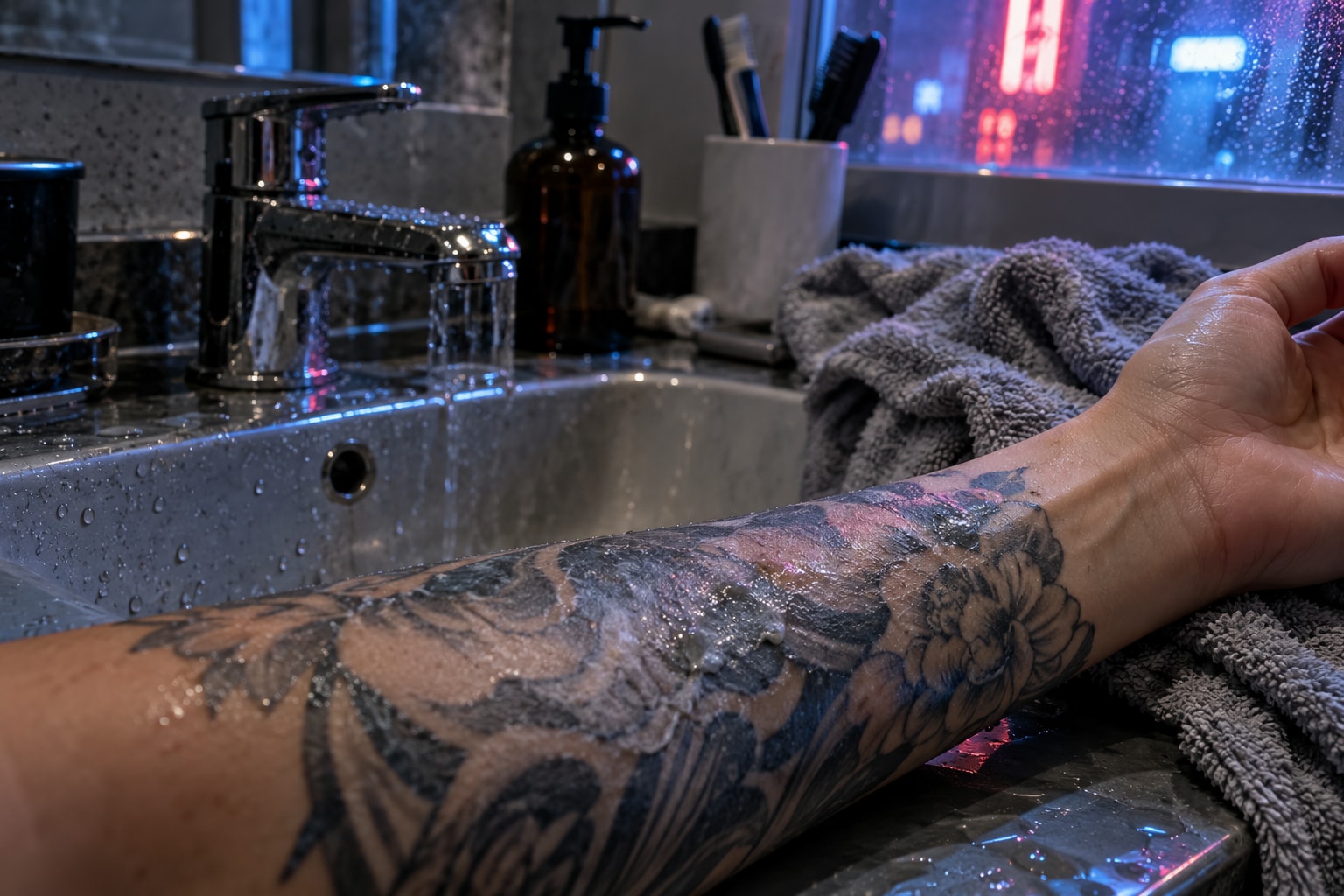
A cloudy tattoo can look as though a pale film sits over the design. That change can be part of normal healing, particularly when the skin over the design feels dry or starts peeling.
THE CENTER for Advanced Dermatology describes dullness or cloudiness during the peeling stage, often around days seven to fourteen. Its advice is to keep following gentle aftercare and avoid scratching.
That timing is a guide, not a deadline. Cleveland Clinic notes that healing depends on the tattoo's size and location, and deeper recovery can take months.
Watch the direction of change. Less soreness, less flaking and improving skin are more reassuring than a particular day on the calendar. Increasing pain or a spreading rash changes the decision, even if the colour looks better.
Separate a cloudy appearance from discharge
Before changing your routine, separate a dull-looking design from cloudy fluid coming out of the skin.
- A dry haze over new ink, with mild peeling and improving comfort, can fit normal healing.
- Thick discharge, pus or a bad smell needs medical assessment.
- Redness that spreads, worsening pain, fever or chills also need prompt care.
The American Academy of Dermatology lists these changes as possible infection symptoms; you don't need all of them to seek help.
Clear or pinkish fluid can occur early in healing, according to the European Academy of Dermatology and Venereology. Increasing leakage or yellow-green discharge needs medical assessment. Don't assume it's the harmless cloudy stage described in tattoo forums.
Contact a clinician if the area seems infected, without trying to identify the cause yourself. Tell your artist too, but don't use an artist's reassurance to delay medical care.
What to do while the surface settles
Keep following the aftercare plan for your tattoo and its dressing, since the European academy says there isn't one gold-standard routine. Different coverings can need different care, so don't swap schedules based on someone else's tattoo.
Once your plan allows washing, use clean hands and the soap-and-water approach Mayo Clinic recommends, then gently pat the area dry. Don't rub it with a towel to see whether the dull layer comes off.
Apply your recommended mild moisturizer as directed, rather than adding new products each time the tattoo looks less sharp. Moisturizer is part of aftercare, not a test of whether the ink has survived.
Let loose skin come away by itself, following Cleveland Clinic's advice against picking scabs, scratching or exfoliating a healing tattoo. Scrubs and peeling products don't belong in a routine meant to clear this haze.
Avoid soaking the area in pools, baths or hot tubs while it heals. Choose clean clothing that won't stick or rub against it.
Don't start disinfectants or antibiotic creams unless a clinician advises them. The European academy says routine healing doesn't require them.
What if it isn't getting clearer?
Ask for a review if the appearance stops improving or the skin continues to feel abnormal. Mayo Clinic recommends contacting a healthcare professional when you're worried that a tattoo isn't healing correctly.
Describe when you got the tattoo, when the haze appeared, and whether pain, itching or swelling is changing. Keep the names of your aftercare products available.
A rash can come from an aftercare product as well as the tattoo itself. The European academy describes product reactions that involve itching, redness, small blisters or watery leakage. Stop a suspected product and seek advice rather than covering the reaction with another cream.
For a tattoo that healed long ago, new cloudiness shouldn't automatically be called a healing phase. The American Academy of Dermatology recommends assessment for changing tattooed skin. Ink reactions and other skin conditions can appear years later.
Once the tattoo has fully healed, ask your artist to assess any remaining uneven colour before discussing a touch-up. Don't tattoo over sore, flaky or inflamed skin.

FAQ
How long does the cloudy stage last?
It can improve over the weeks after peeling starts, but there isn't a reliable deadline for every tattoo. THE CENTER for Advanced Dermatology describes cloudiness during the second week and improvement afterward. Cleveland Clinic gives a longer overall healing timeline, especially for larger tattoos. Get advice if symptoms worsen rather than waiting for a calendar date.
Does cloudiness mean my tattoo needs a touch-up?
Temporary dullness alone doesn't show what the finished design will look like, so it doesn't establish that you need a touch-up. Let the skin recover before asking your artist to assess the colour. Ongoing pain, a rash or raised areas should go to a clinician before any cosmetic correction.
Can I exfoliate the cloudy layer off?
No. Cleveland Clinic advises leaving flakes and scabs alone, so don't exfoliate or pull off peeling skin while the tattoo heals. Keep to gentle washing and your recommended moisturizer instead. If a layer looks unusual or won't settle, get it checked rather than trying stronger products.
Should I put sunscreen on a cloudy tattoo?
Cleveland Clinic advises avoiding sunscreen on unhealed tattooed skin, so protect the area with shade and suitable clothing instead. Once healed, the American Academy of Dermatology recommends broad-spectrum, water-resistant SPF 30 or higher because UV exposure can fade ink. Sunscreen protects the tattoo; it doesn't treat cloudiness.