Quick answer
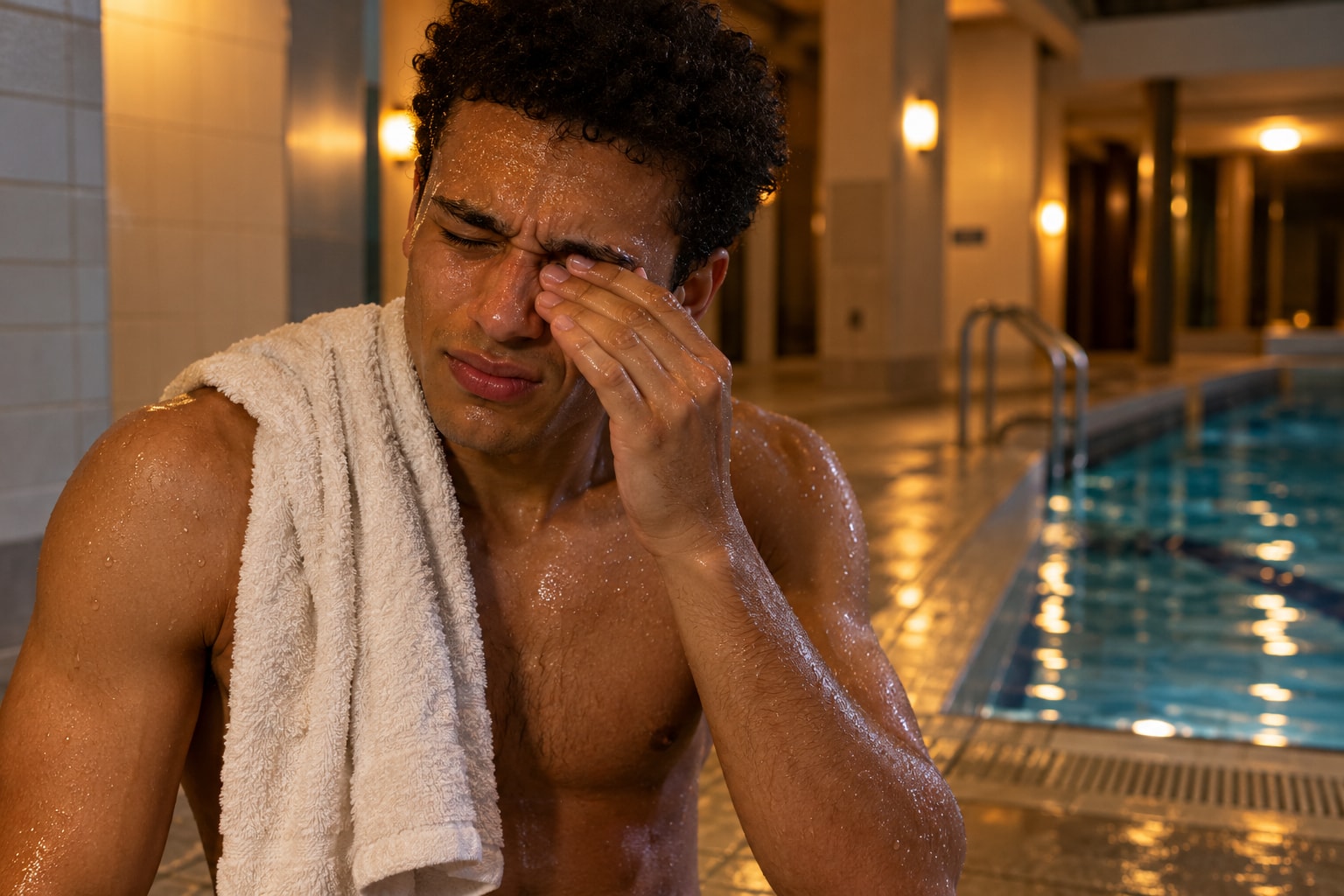
A rash around eyes from swimming goggles can reflect pool-water irritation or contact allergy to the goggles themselves. Brief pressure dents are a separate problem; itching, scaling or swelling deserve a closer look. Stop wearing the suspect pair while the skin settles, and get recurring reactions checked.
Check whether it's a dent or a rash
The useful clues are how the skin feels, when symptoms start and whether they persist after removing the goggles. The outline alone can't identify the cause.
- Pressure marks: indentations appear where the seal presses against your face, without an ongoing itchy or scaly eruption.
- Irritation: the skin stings, burns or becomes inflamed after exposure. DermNet lists chlorine trapped under swimming goggles as one possible trigger.
- Contact allergy: an itchy, scaly reaction can follow contact with goggle materials. It may develop one to several days later.
These are clues, not a home diagnosis. Irritation and allergy can look alike, and a tight seal doesn't rule out a separate skin reaction.
If you're only getting dents, start with fit. Swim England advises against overtightening goggles because this adds pressure around the eyes. An itchy rash needs a different approach.
Your goggles can become a problem after months of use
DermNet explains that allergic eyelid reactions can develop after repeated exposure, even when you've worn the same goggles comfortably for months.
In a 2003 case report, Surender K. Vaswani and colleagues investigated severe eyelid dermatitis linked to swimming goggles. Clinicians patch-tested a piece of the goggles' black foam rubber padding and found a strong reaction.
The case shows that goggle allergy can happen, but it doesn't establish how common it is. It also can't tell you which current brands or materials will suit your skin.
Pool water also remains a possible trigger. Eczema UK's exercise guidance notes that swimming goggles can worsen existing eye-area eczema or cause contact dermatitis through their components.
What to do with an active rash
Put the suspect goggles aside instead of wearing them again to see whether your skin gets used to them.
After swimming, gently rinse pool water from the surrounding skin, then pat dry without rubbing. Eczema UK recommends washing after swimming and applying your usual emollient. An emollient is a moisturiser used to soothe dry skin.
For the eye area, choose a plain product you've already tolerated and keep it out of your eyes. Eczema UK's eyelid guidance advises simple care and avoiding soap and perfumed face creams.
If a moisturiser stings or worsens the rash, stop applying it and ask a pharmacist about an alternative.
Don't add a new eye serum to treat the visible roughness. Keep any suspected cosmetic triggers away from the affected skin while you seek advice.
If you already have prescribed treatment for eyelid eczema, follow that plan. Otherwise, ask a pharmacist or clinician what suits this area before applying medicated creams.
The NHS advises getting help for eyelid symptoms that aren't improving or have lasted a long time. Don't keep covering a recurring rash and repeating the same swim routine.
Choose replacement goggles by the suspected cause
A different pair can change both the fit and the materials touching your skin, so consider each separately.
For pressure alone, check the seal, strap tension and nose-bridge fit. Swim England recommends trying goggles before buying, or checking the return policy when ordering online. Don't compensate for a poor fit by tightening the strap until it hurts.
For a recurring rash, keep the packaging or find the manufacturer's material information before discarding the old pair.
Eczema UK suggests that some people with goggle-related eczema may tolerate Swedish-style goggles better. These have no padded gasket around the eye cups.
A gasket-free design is an option to discuss, but it still has to fit your face comfortably. It won't remove exposure to pool water or products on your skin.
Avoid buying several supposedly safer pairs without understanding the reaction. Ask a clinician whether identifying a contact allergen would help you choose more precisely.
Bring the goggles to the appointment
The actual equipment may be more useful than the brand name. Vaswani's report used material from the patient's goggles during clinical patch testing.
Ask whether you should bring the goggles, packaging and anything used to clean them. Include facial products worn during swimming, since DermNet also lists sunscreen and cosmetics as possible eyelid triggers.
Write down a short exposure history:
- When you first noticed the rash, and whether the goggles were new.
- Whether symptoms started during swimming, that evening or the following day.
- Whether the reaction followed the seal, affected the eyelids or spread beyond them.
- What happened after you stopped wearing that pair.
Keep these notes for your appointment; you don't need to post face photos online. Let the clinician decide whether patch testing is appropriate, and don't tape goggle material to your skin yourself.
When to get urgent help
The NHS advises urgent assessment if you develop eye pain, light sensitivity or changes in vision alongside the rash.
Seek urgent care if your eyelid becomes hot, painful, tender or blistered, or you can't open your eye. Severe eye redness or feeling unwell also warrants prompt advice.
FAQ
Why have my old goggles suddenly started causing a rash?
An allergy can develop after repeated use, even when the goggles previously felt comfortable. The 2003 foam-padding case involved long-term contact. That doesn't prove your goggles caused your rash, so bring your exposure history to a clinician.
Will silicone goggles prevent the reaction?
Not necessarily. The foam-rubber case doesn't establish that silicone goggles will suit everyone, and changing materials won't solve irritation from pool water. Choose a replacement around the suspected cause rather than treating one material label as a guarantee.
Can I use hydrocortisone around my eyes?
Ask a qualified healthcare professional first, since Eczema UK's eyelid guidance describes short courses of mild steroids when appropriate. Excessive use around the eyes can cause harm, including glaucoma or cataracts, so don't reuse a body-rash cream here without advice.
Can I keep swimming while the rash heals?
Pause swimming if it keeps triggering or worsening the rash, and avoid the suspect goggles. Ask your clinician about returning if symptoms persist or recur. Don't rely on cream after every swim while continuing the exposure that may be causing the problem.