Quick answer
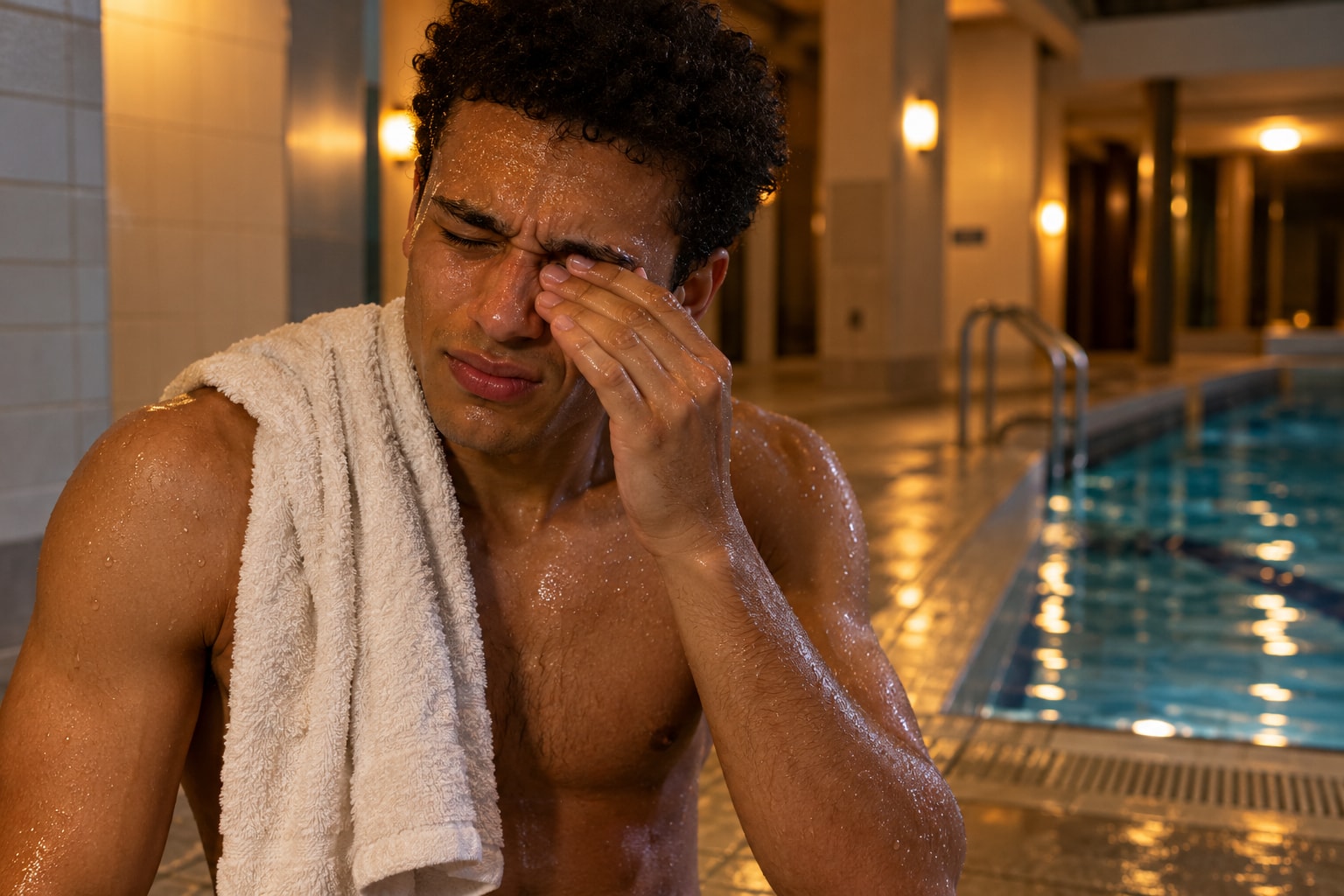
Getting sunscreen in your eyes when sweating can cause stinging as the product runs off your skin. Try a broad-spectrum, water-resistant SPF 30+ stick around the eye area, keeping it out of your eyes. If sunscreen gets inside, start rinsing immediately with plenty of room-temperature water for 15–20 minutes. Seek urgent care for severe or persistent symptoms.
Why the sting starts halfway through exercise
Sunscreen can drip into your eyes after application, even if it felt comfortable on your skin. A delayed sting during a workout fits that pattern, though timing alone doesn't prove the cause.
The American Academy of Dermatology specifically recommends sunscreen sticks around the eyes to help prevent dripping. That advice concerns dripping, without promising that a stick will feel comfortable if it gets inside your eye.
Notice where the discomfort starts. Burning on the eye's surface calls for rinsing. A recurring rash on the surrounding skin needs a different assessment.
DermNet explains that sunscreen can cause contact dermatitis from UV filters, fragrances or preservatives. Don't assume every reaction comes from the active ingredient. Keep the packaging if you need a clinician to review it.
What to do if sunscreen gets into your eyes
Stop exercising and start rinsing, following Poison Control's first-aid steps for an eye exposure:
- Remove contact lenses.
- Rinse with plenty of room-temperature water for at least 15–20 minutes.
- Blink while rinsing so water can reach the eye's surface.
- Get advice from a poison centre or healthcare professional after rinsing.
A shower can make flushing easier, with water flowing gently over the bridge of your nose into the affected eye.
Don't rely on one quick splash.
Poison Control notes that water-resistant sunscreen can be harder to rinse away, so longer flushing may be needed. Water resistance helps sunscreen stay on skin; it doesn't make accidental eye exposure harmless.
Severe pain or marked vision problems need emergency assessment after flushing, without waiting for a routine appointment.
Poison Control also advises urgent examination if irritation, redness, swelling, tearing or vision problems persist one hour after rinsing began. That hour isn't a waiting target when symptoms are severe.
Change the format without leaving gaps in protection
A stick is a useful next option if your usual lotion keeps reaching your eyes. Check for all three features the AAD recommends: SPF 30 or higher, broad-spectrum protection and water resistance.
Follow the product's directions for use around the eyes, keeping sunscreen away from the eye itself and inner eyelid edge.
Coverage still matters. For sticks, the AAD advises four passes back and forth over each area, followed by rubbing for an even layer. A quick, light swipe may leave you short of that guidance.
If you like your existing sunscreen elsewhere, you can reserve a stick for the surrounding eye area. Treat this as a practical trial of a different format, with no promise that it will solve every case.
Don't compensate by using less sunscreen across your whole face. Use shade, a broad-brimmed hat and UV-protective sunglasses alongside sunscreen. These measures help you maintain protection while finding a formula you tolerate.
Read the water-resistance label before your next workout
Water-resistant sunscreen is the appropriate choice for sweating, but the label describes sun protection, not eye comfort.
In the United States, water-resistance labels specify 40 or 80 minutes of swimming or sweating. The FDA says no sunscreen is waterproof, and those numbers don't promise that a product won't move or sting.
Check your own label for reapplication instructions, especially if you bought it outside the US. Apply before exercise rather than waiting until you're already outside. The FDA recommends application 15 minutes before sun exposure.
Reapply at least every two hours outdoors, and more often during swimming or sweating as directed. If you've wiped sunscreen away, don't assume the original application still covers that area.

Check one change at a time
Once your eyes have recovered, switching the eye-area format gives you a specific change to assess.
For your own notes, record the product name, when you applied it and when any discomfort started. Add whether the problem affected the eye itself or the surrounding skin.
Bring these notes to a clinician if the problem keeps happening, without deliberately provoking another reaction to collect evidence.
If a rash keeps returning, stop the suspected product and ask a dermatologist for advice. DermNet says identifying a sunscreen allergen can require patch testing, sometimes alongside testing that includes light exposure.
An ingredient list alone can't make that diagnosis.
FAQ
Will mineral sunscreen stop my eyes stinging?
The AAD recommends fragrance-free sunscreen with zinc oxide or titanium dioxide when sunscreen stings your skin. That recommendation doesn't establish that every mineral formula is comfortable inside the eye, so relief isn't guaranteed. Keep any sunscreen out of your eyes, even if the packaging describes it as suitable for sensitive skin.
Can I spray sunscreen onto my face with my eyes closed?
No: the AAD advises against spraying sunscreen directly around or near the face. Spray it onto your hands first, then apply it carefully, avoiding the eyes and mouth. A lotion or stick gives you another option without spraying near your eyes.
Does eye stinging mean I'm allergic to sunscreen?
Eye stinging doesn't prove an allergy, because sunscreen can irritate the eye's surface simply by getting inside. A recurring skin rash raises a separate question about contact dermatitis. Fragrance, preservatives and UV filters can all be involved, so ask a dermatologist about assessment instead of guessing which ingredient caused it.