Quick answer
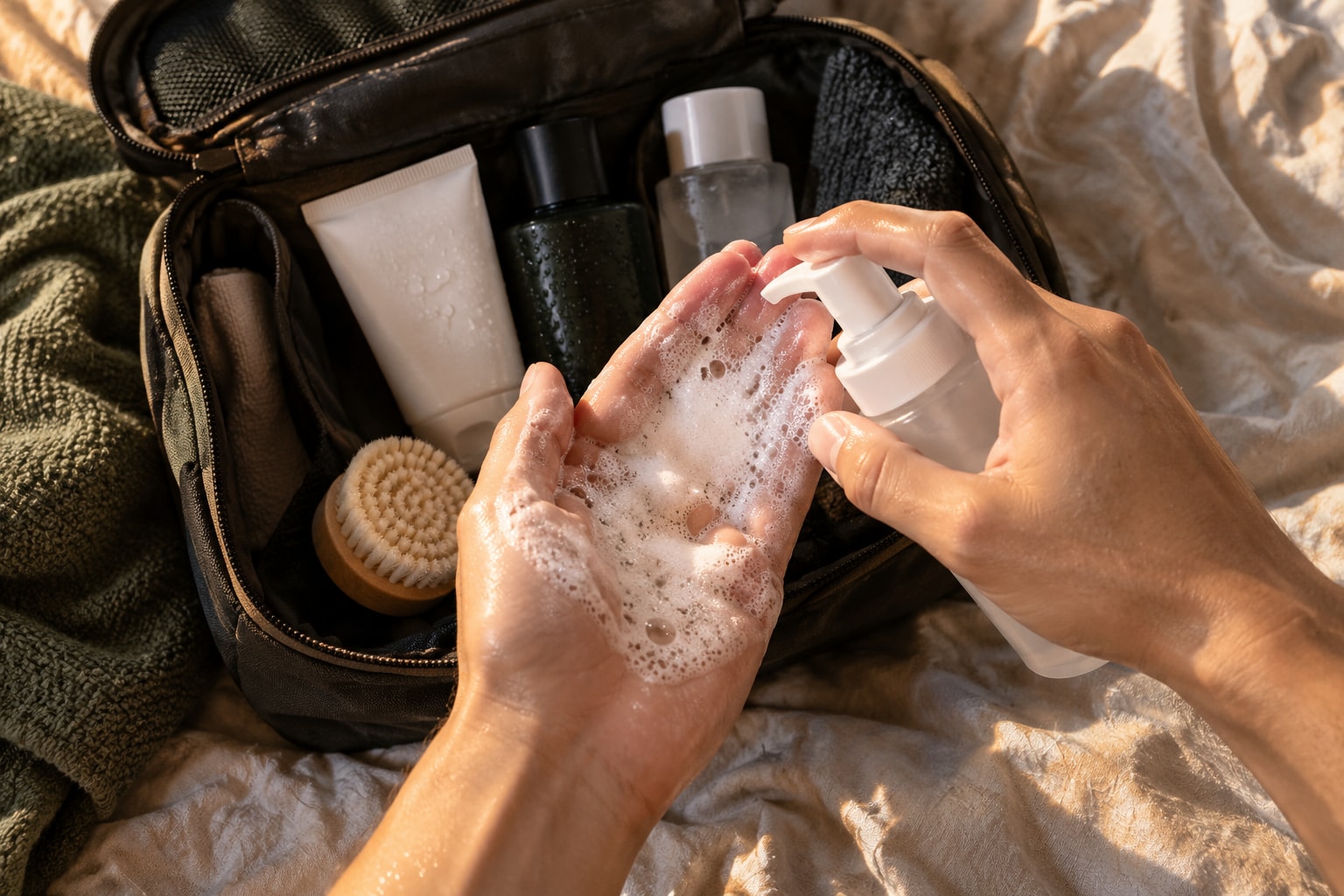
Why does skincare foam on my face? Usually, rubbing makes tiny air bubbles visible in an emulsion, such as some serums, lotions, or creams. Emulsifiers can hold those bubbles, creating white streaks called soaping or microfoaming.
If the foam fades when you stop rubbing and your skin feels normal, it is often a texture issue. Test the product alone on clean, dry skin before blaming another layer. Stop using it if the foam comes with burning, itching, swelling, or lasting redness.
What is actually foaming
Many creams and lotions are emulsions that combine oil and water with ingredients called emulsifiers, which help the mixture stay together.
Emulsifiers are surface-active ingredients that lower surface tension and can support foam, according to the International Federation of Societies of Cosmetic Chemists. Air introduced during mixing can remain trapped in an emulsion.
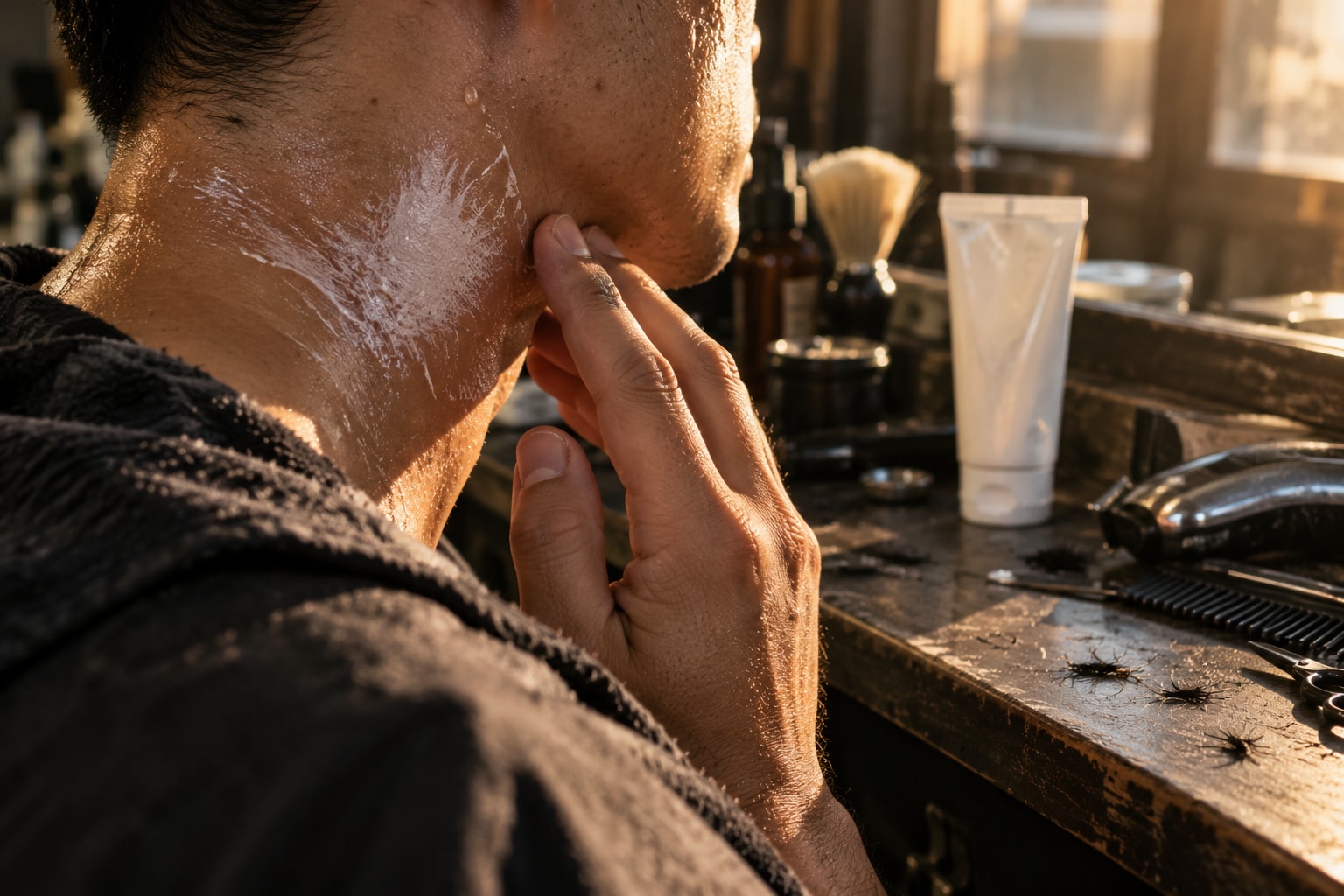
Rubbing may make those tiny bubbles visible as a white, streaky film called the soaping effect, although your moisturizer has not become soap.
RAHN's formulation note explains that extra emulsifier can gather around trapped air bubbles, while polymers and fatty alcohols may help stabilize them. You cannot identify the exact cause by spotting one ingredient on the label, because the full formula matters.
Ordinary soaping is mainly a sensory problem, and RAHN reports that the temporary film rubs away without changing the emulsion's effectiveness or absorption behavior. That narrow finding does not cover irritated skin, a damaged product, or cleanser left on your face.
Foam, pilling, or a skin reaction?
These problems can look similar in a mirror, but the next step differs.
| What you see or feel | More likely explanation | What to do next |
|---|---|---|
| Wet-looking white streaks or fine bubbles that collapse | Soaping or microfoaming | Test the product alone and rub less |
| Dry rolls, crumbs, or flakes that remain | Product pilling | Reduce rubbing and isolate the layer that rolls up |
| Burning, itching, swelling, or lasting redness | Irritation or an allergic reaction | Wash it off and stop using the product |
Pilling is physical material gathering into small rolls, and a 2024 study tested sunscreen and foundation on 528 women aged 20 to 49 in Guangzhou. Circular and back-and-forth rubbing produced the most pilling events.
Every participant had reported pilling before, and Clarins funded the study. All four authors worked for Clarins or the testing company Eurofins.
That study helps with application technique, but it does not explain every serum or every skin type. It studied pilling, not microfoam, so do not treat the effects as the same problem.
Run a one-product test
You can usually narrow the likely trigger without replacing your whole routine. This is a troubleshooting exercise, not a clinically validated test.
- Cleanse as usual, rinse well, and pat your face dry, then wash and dry your hands too.
- Apply the suspect product by itself using the label amount and light passes.
- Stop rubbing and note whether bubbles collapse or solid pieces remain.
- On a later use, add only the product that normally goes underneath it while keeping the amount and method the same.
- Add other layers one at a time, changing one detail per test so the result means something.
Dry skin is useful for this test because it removes surface water as a variable. Return to the label directions after the test if the product is meant for damp skin.
If the product foams by itself, that suggests the formula or rubbing method contributes. If it only foams over one layer, that layer or the application method may contribute, but this does not prove incompatibility or danger.
Match the fix to the result
These are practical troubleshooting trials, not clinically tested fixes for microfoaming.
It foams when used alone
For a plain serum or moisturizer, try slightly less if the label allows, then spread briefly and press instead of rubbing until it vanishes. If the film still bothers you, a different texture is the cleanest fix.
Do not mix water, oil, silicone, or another ingredient into the bottle because anti-foaming methods in formulator guides are manufacturing changes, not home instructions.
Sunscreen is the exception because the American Academy of Dermatology says you need an adequate amount to protect exposed skin. Keep the recommended amount and choose a different formula if foaming prevents an even layer.
Follow the prescribed amount for medicated products and ask your pharmacist or clinician before changing how you use them.
It foams only over another product
Apply the first layer more thinly if its label permits, then let the wet surface settle before adding the next one. Use less friction when you apply the second layer. You can also remove a nonessential step and repeat the test.
If sunscreen is the top layer, keep its full amount and simplify the products underneath or switch one of them instead.
It happens only after cleansing
Repeat the test after a thorough rinse and complete drying. If the foam disappears, the earlier wash or water left on your skin may have affected the result. That finding does not prove that cleanser residue was the cause, but it narrows the search.
It makes crumbs or rolls
Treat this as pilling rather than foam by using fewer rubbing motions and testing each layer alone. The 2024 study found an association with rubbing, but it did not establish one waiting time that works for every routine.
When to stop testing
Foam is not a safety test because comfortable skin with a brief white film differs from skin that burns, itches, swells, or stays red.
The American Academy of Dermatology advises washing off a product and not using it again if a reaction develops. If a reaction is severe or does not settle, contact a dermatologist.
For a new product, the academy recommends a small-area test twice daily for seven to ten days using the normal contact time. This can flag a reaction before you apply it across your face, although it cannot identify the responsible ingredient.
Do not keep testing several products on irritated skin; let the reaction settle and get qualified advice if the cause remains unclear.
Keep the experiment useful
Write down the product, amount, previous layer, whether your skin was wet, and how much you rubbed. A short note is more useful than judging the result from memory.
Judge the routine by comfort, even coverage, and repeatable results because foam is not a score for product quality, cleansing power, or skin health.
FAQ
Does foaming mean I did not rinse off my cleanser?
Not by itself; test the leave-on product alone on dry skin. If it foams only after cleansing and stops after a better rinse, the wash step contributed, but the test cannot prove leftover cleanser was responsible.
Is skincare foam harmful?
Typical soaping without discomfort is usually an application and texture issue, while foam with burning, itching, swelling, or lasting redness is different. Wash the product off, stop using it, and seek medical advice if the reaction is severe or persists.
Can a niacinamide or hydrating serum foam?
Yes, an emulsion serum can microfoam if its formula holds tiny bubbles during rubbing. The named active may not be the cause, so test the serum alone rather than blaming one ingredient.
Should I use less product to stop the foam?
You can test a smaller amount of an ordinary cosmetic when its label permits. Do not underapply sunscreen or alter a prescribed dose. If correct use keeps producing foam, switch the formula instead.