Quick answer
Why does lip balm leave a white film? An immediate layer usually comes from an opaque formula or mineral UV filters. A later inner-edge film likely combines balm, saliva, and loose cells, though no clinical study has tested that exact residue. A painless, wipeable film makes the product a likely cause, but stop using it if burning, itching, swelling, blisters, or ongoing scale also appear.
Start with when the film appears
Timing tells you more than colour, so check once in soft daylight before rubbing the area or adding another coat.
It appears as soon as you apply the balm
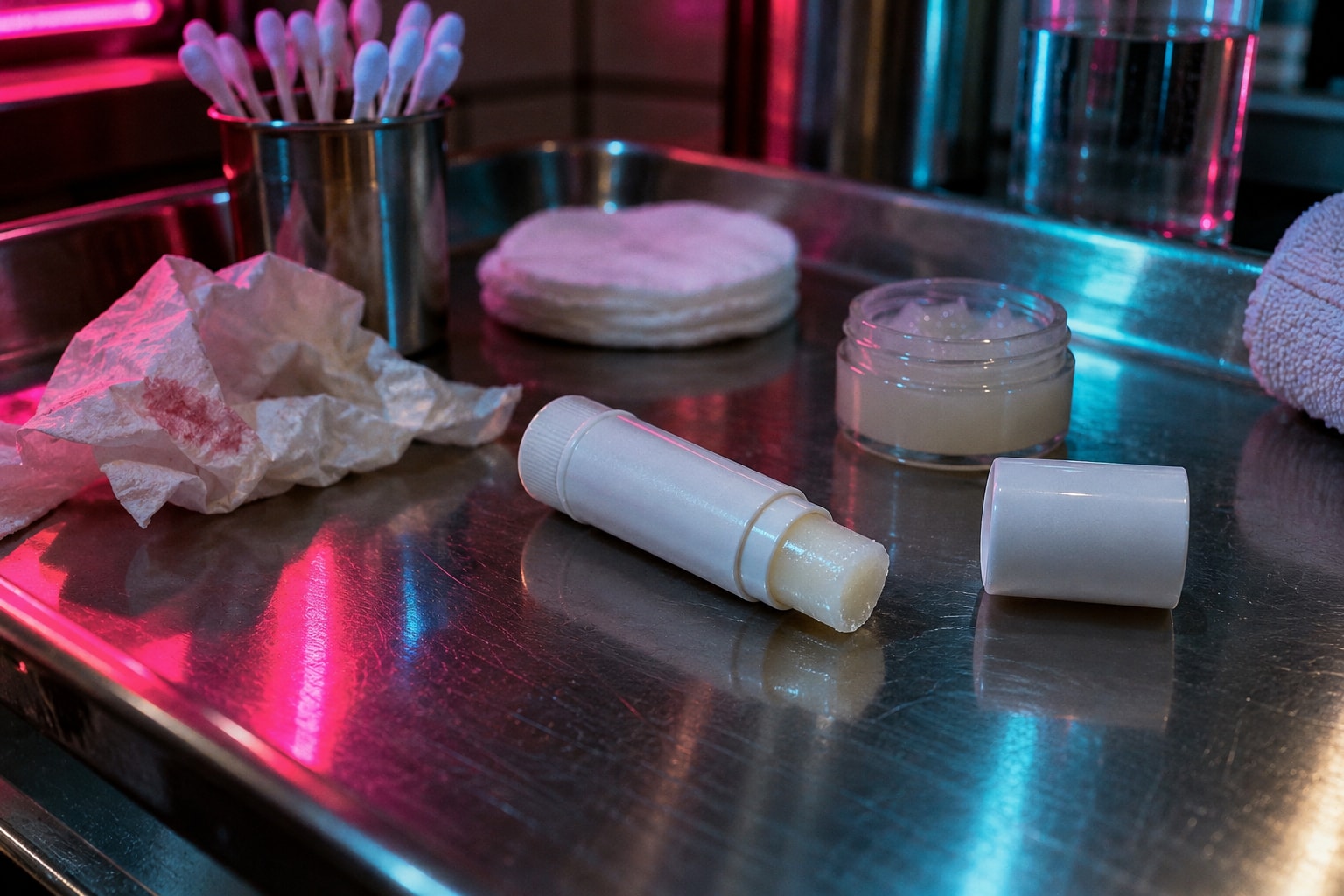
Most stick balms combine waxes with oily ingredients that form a surface film. A formulation review in Cosmetics & Toiletries says zinc oxide and titanium dioxide can leave a white trace. These mineral UV filters are used in some SPF lip balms.
Look at the pattern. An even pale layer across both lips points toward the formula, especially if bare lips return to their usual colour.
It collects later along the inner lip
Saliva is about 99% water, plus proteins, electrolytes, and mucus-forming mucins. Since balm is made to stay as a film, lip movement and moisture can move product toward the inner edge.
Loose cells may join that film when lips are dry, and lip skin has weak water-holding capacity. In a winter study of 303 women, lip water loss was almost three times higher than cheek water loss.
No clinical study has directly tested the familiar white line after lip balm. Product movement, saliva, and loose scale offer a reasonable explanation, but they don't prove every case.
It comes with rough flakes or cracks
The balm may make existing scale easier to see, while licking, biting, and picking can keep chapped lips irritated. A gritty scrub adds friction to skin with a weak water barrier.
It comes with burning, itch, or swelling
Treat symptoms as a separate issue because the American Academy of Dermatology says burning, stinging, or tingling signals irritation.
Lip products can also cause irritant or allergic contact cheilitis. DermNet lists redness, dryness, scale, itch, mild swelling, and small blisters among the possible signs. Fragrance, flavouring, menthol, camphor, and lanolin are common ingredients worth checking.
Run a simple three-day product test
This is a troubleshooting check, not a medical test, and you should stop if a product causes burning, swelling, or blisters.
- Gently remove the film with water and a soft cloth, pat your lips dry, then check them in indirect daylight.
- Apply your usual balm normally, then note whether whiteness appears within a minute, later, or only after eating and drinking.
- The next day, switch to a plain, fragrance-free balm such as petroleum jelly, if you tolerate it, as the AAD and NHS suggest.
- Keep lipstick, gloss, lip oil, and scrubs out of the test, and avoid licking or picking.
- Compare one photo each day in the same place and light, since more photos won't make the result clearer.
Do the comparison indoors, and keep using a lip product with SPF 30 or higher outside, as the AAD advises.
If only the original balm creates an immediate film, its formula is the likely source. If residue forms later with several products, application amount, saliva, and surface scale deserve more attention. If whiteness remains on bare lips, stop treating it as a simple product-cast problem.
Match the fix to the pattern
For an immediate, even cast
Switch formulas and, for daytime sun protection, choose a clear or tinted SPF 30 product you can apply as directed. Don't abandon lip sunscreen just because one formula looks pale.
With a non-SPF cosmetic balm, start with one thin, even coat because repeated swipes leave more material on the surface.
For a later line at the wet edge
Keep balm on the visible lip instead of spreading it across the wet tissue inside your mouth. Use a thin layer, wait before adding more, and gently wipe away any excess that gathers.
Choose a short ingredient list because flavour and fragrance may irritate sensitive lips.
For visible scale
Pause lip scrubs, acids, and picking, then use a bland balm or white petroleum jelly. The AAD says badly chapped lips should improve within two to three weeks of consistent care and protection from wind and sun.
For suspected irritation or allergy
Stop the suspected product, then keep its ingredient list or photograph the label to help a clinician compare exposures.
A dermatologist may use patch testing for suspected allergic contact cheilitis, and DermNet says avoiding the identified allergen is the main treatment.
What not to do
Don't scrub the film with a toothbrush or coarse sugar scrub, because removing residue isn't useful if you leave the lip more irritated.
Don't assume tingling means a balm is working, since the AAD treats burning, stinging, and tingling as signs to stop using it.
Don't diagnose an infection from colour alone. A close photo can't reliably separate a product cast, damp residue, loose scale, or contact cheilitis.
When to get professional help
Ask a doctor, dentist, or dermatologist to check an area that remains without lip product, won't wipe away, or returns in one fixed spot.
The NHS advises medical review when lips are hot, painful, and swollen because infection is possible. Get advice sooner if redness spreads or blisters appear.
Book a dermatologist if a bland routine has not helped after two to three weeks. Bring your products and a short timeline, which beats a folder of differently lit close-ups.
FAQ
Is the white film dead skin?
It may contain loose surface cells when your lips feel rough or flaky, while a smooth, instant film points toward the formula. Colour alone can't separate them.
Can an SPF lip balm leave a white cast?
Yes. A cosmetic formulation review says zinc oxide and titanium dioxide can leave a white trace, so try another SPF 30 formula instead of skipping protection.
Should I exfoliate the white film off?
Skip harsh exfoliation and wipe removable residue gently with water, then use a bland balm if your lips feel dry. Scrubbing, licking, and picking can prolong irritation.
When should I stop using the balm?
Stop if it causes burning, stinging, itching, swelling, blisters, or worsening scale. Seek care for hot, painful, swollen lips or symptoms that persist despite a bland routine.