Quick answer
If you're asking how to stop glasses rubbing off sunscreen, start with the fit of your frames. Apply a full, even layer, let it settle as directed, and reapply sunscreen wherever the bridge or nose pads disturb it. Water resistance helps with sweat or water, but it doesn't make a sunscreen rub-proof.
Don't leave the nose bridge bare. The better fix is less frame movement, a formula that sets well on your skin, and prompt reapplication after rubbing.
Why glasses remove sunscreen
Sunscreen works as a film across exposed skin, while glasses place pressure around the bridge, nose pads, cheeks, and temples. If the frame slides, those contact points pass over the same skin again and again.
A dermatology review states that friction, sweating, and water can reduce a sunscreen's effectiveness by removing product. A later prospective study tested both water and abrasion resistance in one broad-spectrum sunscreen. That study doesn't identify a best formula for glasses, but it supports treating abrasion as separate from water exposure.
A water-resistant claim is not a friction test for eyewear; it tells you how the product performed during regulated water testing. Repeated pressure from a moving nose pad is a different condition.
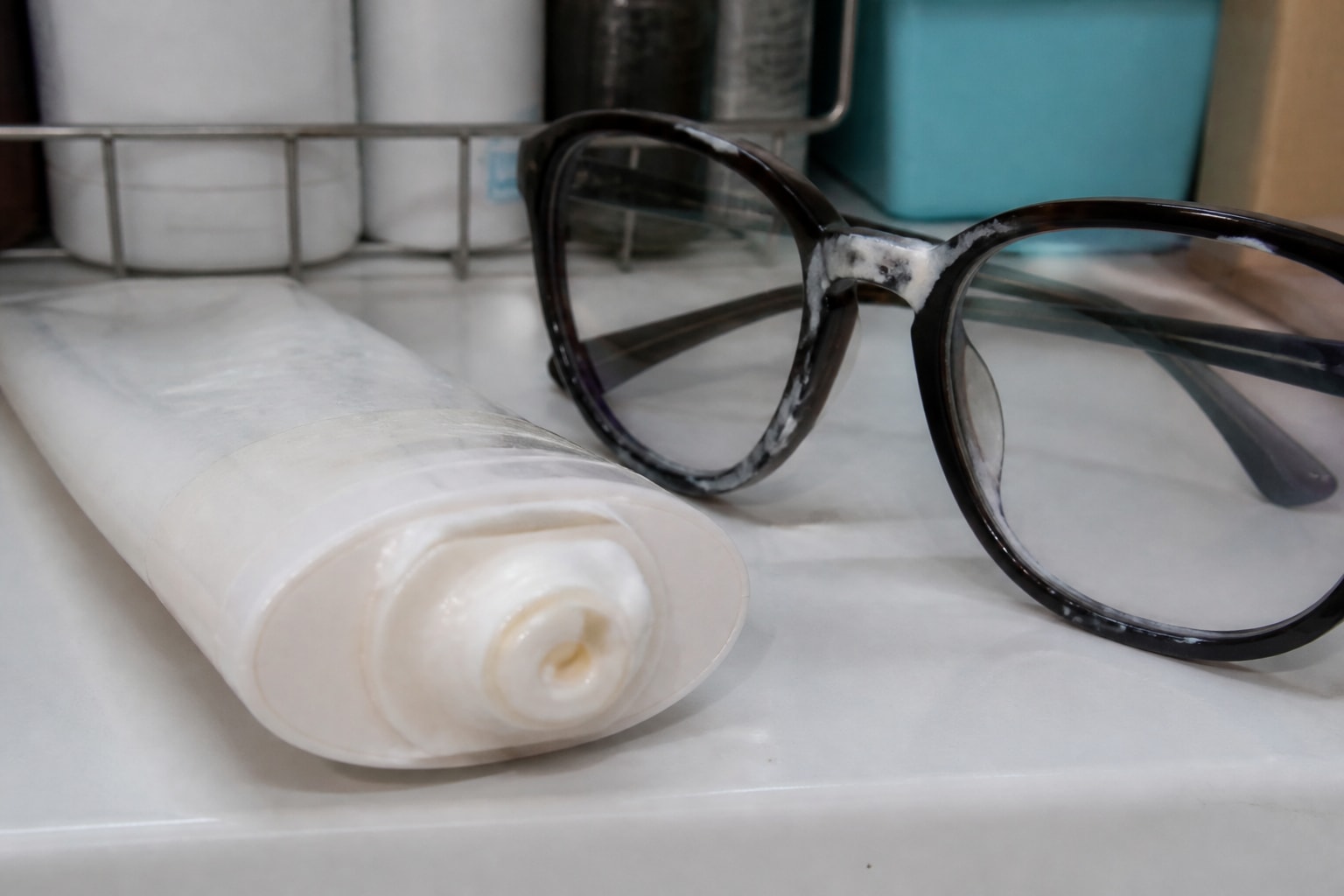
Visible residue on a pad proves that some product moved. A clean pad doesn't prove the film stayed even, since clear sunscreen can transfer without leaving an obvious mark. You cannot estimate the SPF left on one patch by looking at it.
Fix the frame before changing sunscreen
A sliding frame keeps scraping the fresh film, and no sunscreen texture can fully solve a poor bridge or pad fit.
On clean, dry skin, wear your glasses indoors for 30 minutes and note any movement, pinching, or deep marks. If they slide before skincare goes on, fit is the first problem; later slipping may involve both fit and product finish.
Ask a dispensing optician to check the bridge, nose pads, and temple bend. The Association of British Dispensing Opticians advises returning to the optical practice when frames leave red nose marks. An optician can reposition the pads, and larger pads may spread the frame's weight.
Don't bend the bridge tighter until it hurts. More pressure can increase rubbing and skin marks, and it can damage the frame. A professional adjustment is faster than testing more skincare around a poor fit.
A routine that reduces sunscreen transfer
1. Start with clean contact points
Clean your lenses, bridge, and nose pads using the maker's care instructions, then dry every contact point. This gives each formula a fair test and removes old residue from the comparison.
2. Apply a complete sunscreen layer
Use a broad-spectrum, water-resistant sunscreen with SPF 30 or higher across all exposed facial skin, including the nose and temples. Apply the label's directed amount because correct application affects the protection you get.
Do not thin the layer where your glasses sit. That may look neater for an hour, but it starts the day with less product on a high-contact area.
3. Allow the layer to settle
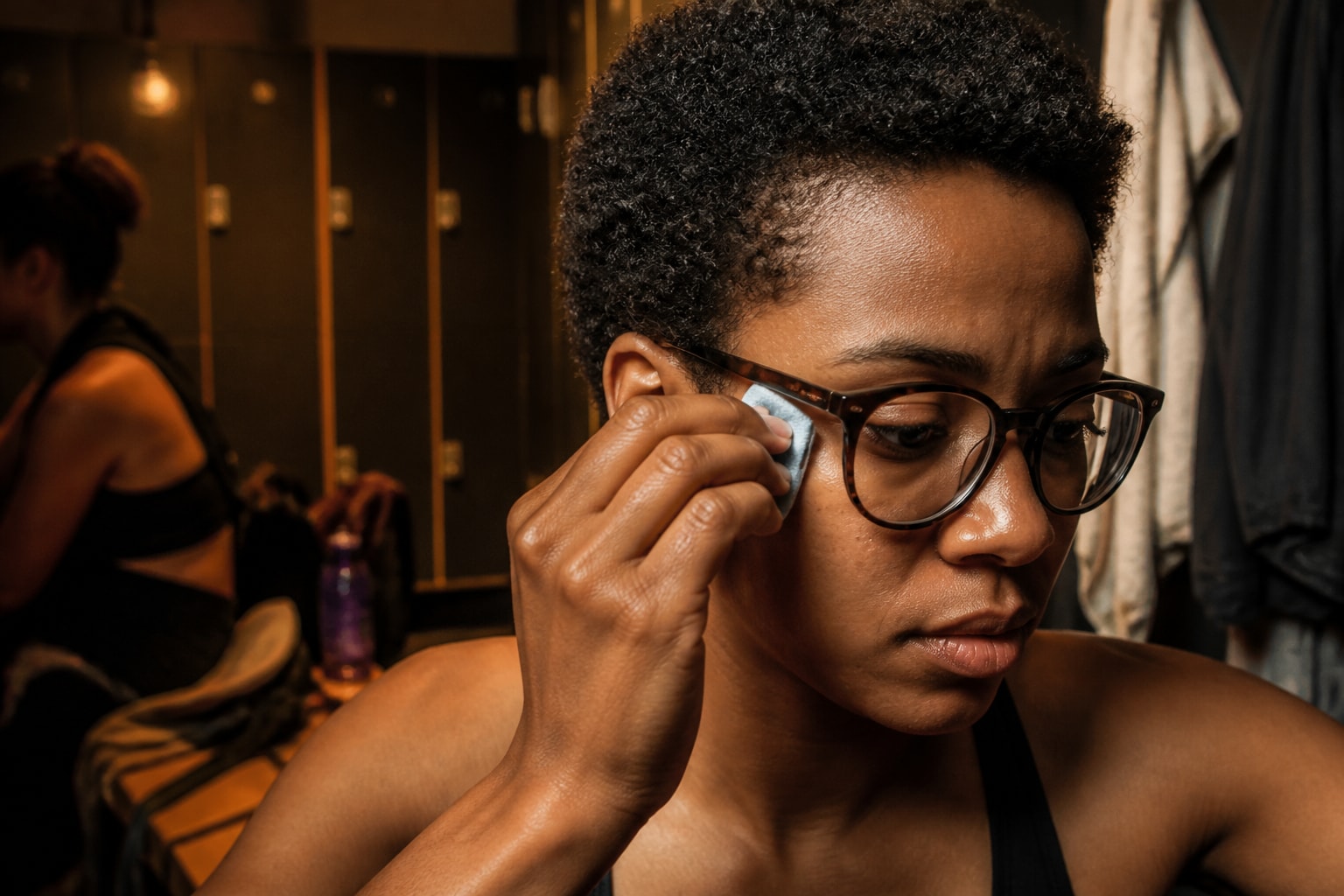
Follow the product label before sun exposure; the American Academy of Dermatology advises applying sunscreen about 15 minutes before going outdoors. If practical, keep your glasses off while the fresh layer settles.
That wait isn't proof that the film can resist rubbing. There is no well-established dry-down time that makes every sunscreen safe from frame transfer. If a formula stays wet or makes your glasses slide after its stated wait, test a different texture.
4. Stop repeated sliding
Put the glasses on once the layer has settled, and book a frame adjustment if you keep pushing them back up. Each slide creates another chance to disturb the sunscreen.
5. Reapply the disturbed patch
The NHS advises reapplying sunscreen whenever it may have rubbed off. Remove your glasses, cover the whole disturbed area, and let the fresh layer settle. Then clean transferred product from the frame using its care instructions.
Keep the usual schedule for the rest of your face, but reapply sooner after sweating, swimming, wiping, or obvious transfer. A two-hour reminder does not repair a patch that rubbed away ten minutes earlier.
Choose a formula with a controlled wear test
Labels do not tell you how sunscreen will behave under your exact frames because skin oil, sweat, pad material, and frame weight vary. Run a small test instead of buying several products from reviews.
Use the same glasses for three mornings, keeping the sunscreen amount, wait time, and activity similar. Change only the formula, then check four things after two hours:
- How far the glasses moved.
- Whether product collected on the pads.
- Whether the bridge shows a visible bare or streaky patch.
- Whether the contact area feels sore or itchy.
Choose the product that you can apply fully and wear consistently. A matte label doesn't guarantee low transfer, and filter type alone doesn't predict wear under frames.
A photo can compare visible streaking under the same light, but it cannot confirm the SPF remaining on your skin. Do not treat a clean-looking result as a protection test.
Common fixes that miss the problem
- Leaving a sunscreen-free strip under the frame trades mess for uneven protection.
- Applying less sunscreen lowers protection before any rubbing starts.
- Setting powder may reduce tack, but no good study shows that it preserves SPF under moving pads.
- A water-resistant label does not remove the need to reapply after friction.
- Tightening frames at home can create pressure marks or bend them out of shape.
The reliable order is fit, full application, settling time, then reapplication. Powder or a different finish can be an optional comfort test, not the foundation of the plan.
When to get the skin or frame checked
Brief, light pressure marks are different from a persistent rash, so ask an optician about pain, deep dents, or repeated redness. ABDO notes that a frame or nose-pad allergy is a rare cause of marks.
See a pharmacist, GP, or dermatologist if the skin stays itchy, swollen, scaly, or sore after the frames come off. Changing sunscreen won't correct a frame allergy or ongoing pressure injury.
FAQ
Does water-resistant sunscreen stop glasses rubbing it off?
No. Water resistance describes performance during water exposure, not repeated friction from a bridge or nose pads. Use it when you sweat, but reapply any area that your glasses disturb.
Should I skip sunscreen under my nose pads?
No. Apply sunscreen to all exposed skin, including the nose. Frames shift, and their edges do not create a dependable UV seal. Reduce movement through a better fit, then replace product that rubs away.
How long should I wait before putting glasses on?
Follow the label, and apply sunscreen before sun exposure. The American Academy of Dermatology uses about 15 minutes as general guidance. No single wait time guarantees zero transfer under every frame.
Can setting powder keep sunscreen under glasses?
Powder may make the surface feel drier, but evidence does not show that it preserves labeled SPF under friction. If the pads move product, reapply sunscreen rather than trusting the powder.