Quick answer
Microneedling for hair loss may help people with androgenetic alopecia, better known as male or female pattern hair loss. The clearest evidence supports it as an add-on to topical minoxidil, not as a replacement or universal cure.
Results vary, and studies haven't found one best device, needle depth, or treatment schedule. The FDA has not cleared any microneedling device for hair loss, so a dermatologist should diagnose the cause and guide treatment.
What does scalp microneedling actually do?
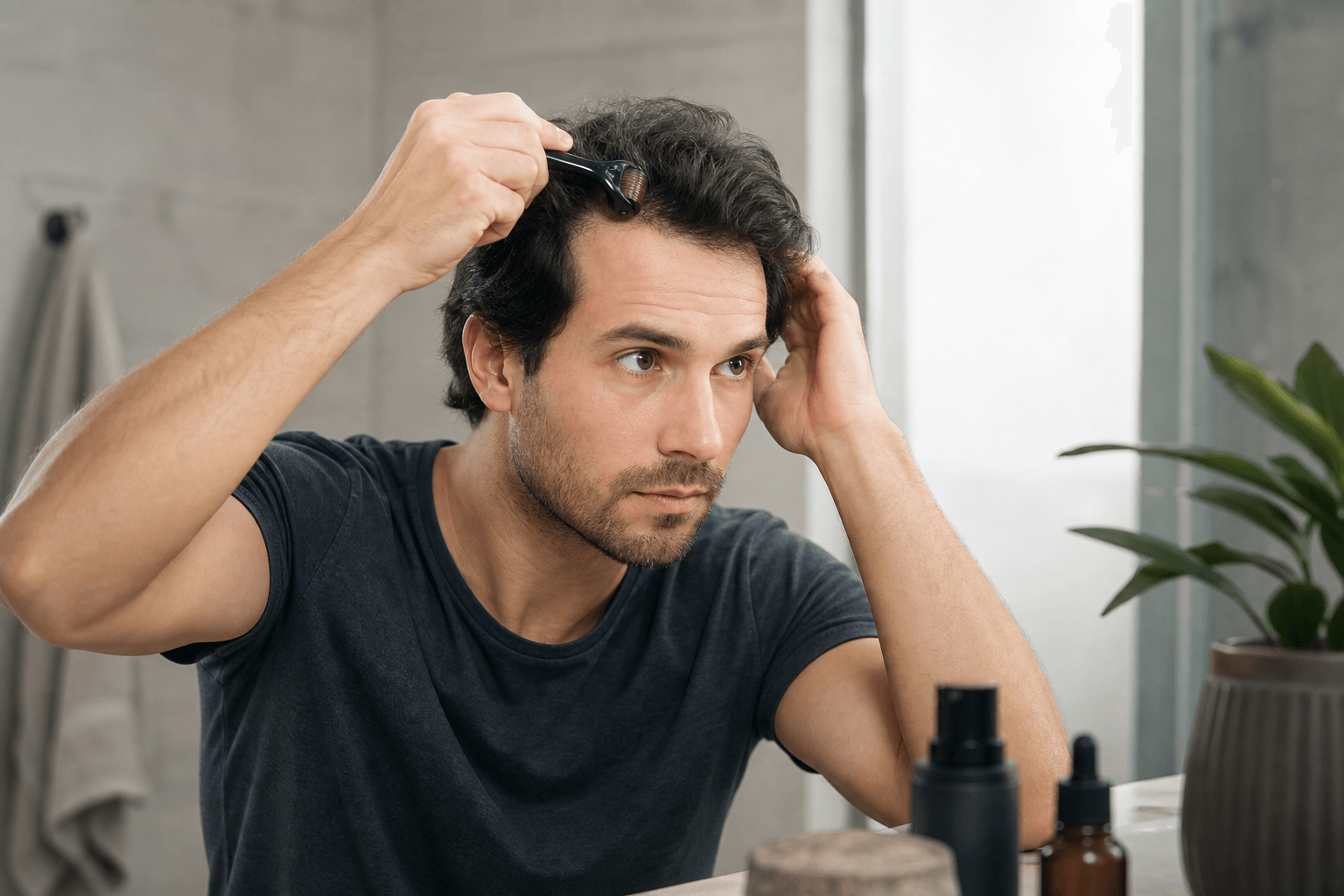
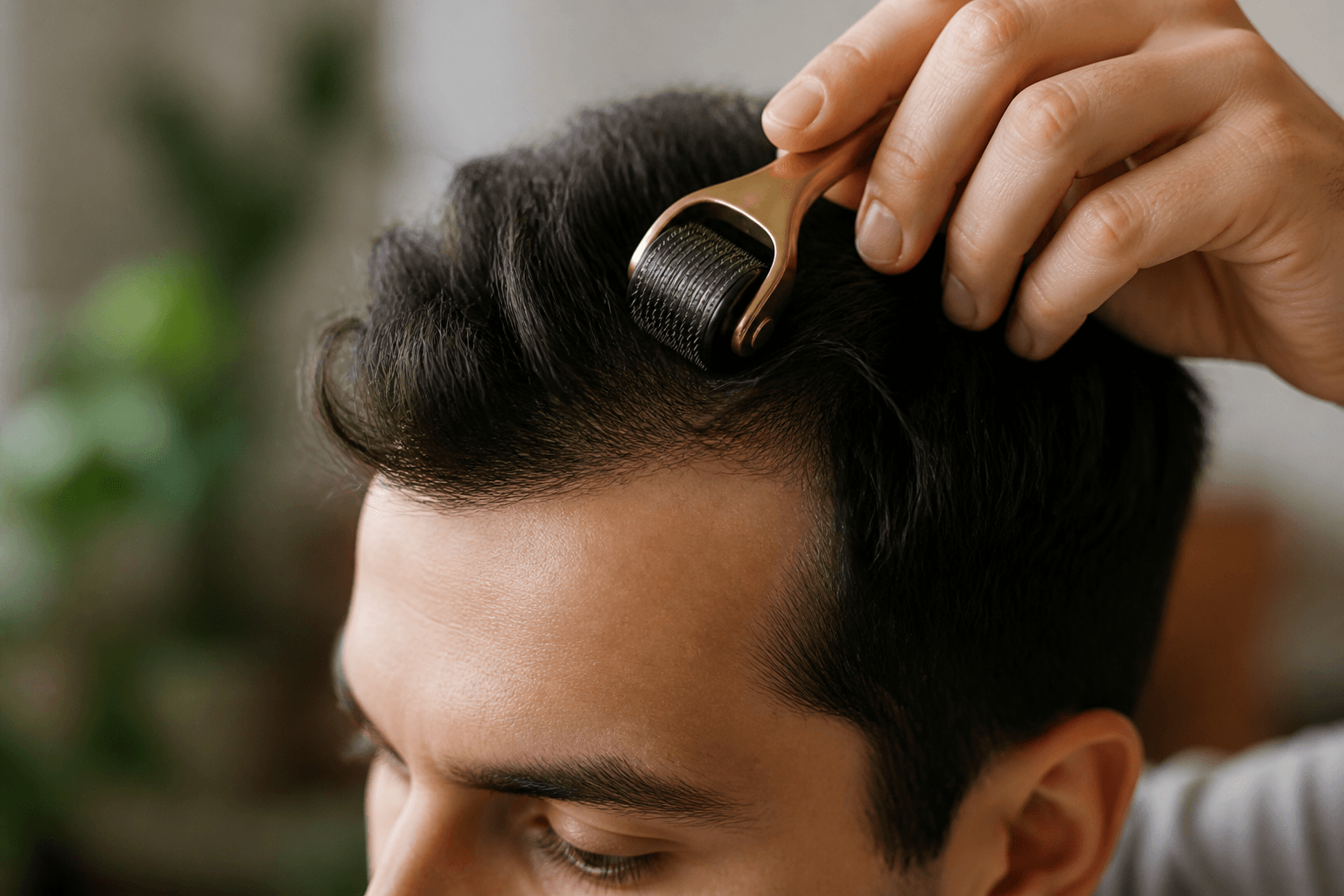
Scalp microneedling uses a roller, stamp, or powered pen fitted with many small needles to make controlled punctures in the scalp.
Researchers propose that the healing response may activate signals around hair follicles. The tiny channels may also change how topical treatments pass through the skin.
Those explanations make biological sense, but a possible mechanism isn't proof of visible regrowth. The useful question is whether controlled human trials show more hair, thicker strands, or better scalp coverage.
Hair-loss type matters because most useful trials concern androgenetic alopecia, which causes gradual patterned thinning. A derma roller for hair growth doesn't diagnose why you're shedding.
Does microneedling for hair loss work in clinical trials?
The short answer is maybe, mainly when clinicians add it to minoxidil for pattern hair loss.
A 2025 meta-analysis by Ahmed and colleagues gathered 12 randomized trials with 631 adults, with 11 contributing to pooled analyses. Combined microneedling and minoxidil improved hair count more than minoxidil alone.
The pooled difference looked encouraging, yet results varied sharply, with an I² value of 88% for hair count. The studies did not produce one consistent estimate.
Six trials, covering 283 people, also measured hair diameter. The combination produced a smaller improvement in strand thickness, and those results were more consistent.
The review found 74 adverse events with combined treatment versus 59 with minoxidil alone, and most were mild or self-limiting. Infection appeared only in the combination groups, though the event numbers were small.
This isn't a clean win because every included trial raised some concern about bias, often from unclear randomization details. Devices, schedules, minoxidil routines, follow-up periods, and patient groups also differed.
What did the best-known early trial find?
A 2013 pilot trial by Dhurat and colleagues helped drive interest in microneedling and minoxidil. It enrolled 100 young men with moderate androgenetic alopecia and followed them for 12 weeks.
One group used 5% minoxidil, while the other received minoxidil plus weekly clinic microneedling. The mean target-area hair-count change was 91.4 in the combination group and 22.2 with minoxidil alone.
That gap sounds dramatic, but keep the design in view.
The trial was short, participants knew which treatment they received, and there was no sham needling group. It tested a combination, so it cannot isolate microneedling's contribution or represent women, older adults, and every stage of hair loss.
Newer pooled evidence points in the same general direction, but it also exposes the variation between studies. A promising pilot should start a larger research program, not settle the question.
Does microneedling work without minoxidil?
Evidence for microneedling alone is much weaker and mixed.
A 2023 randomized study by Kakizaki and colleagues tested isolated scalp microneedling in 30 men across four monthly sessions using two device types. Neither group gained total hair count or scalp coverage.
The study was small, had no untreated control, and lost several participants during follow-up. Still, it did not reproduce the combination trials' strong results, while average procedure pain reached 6.75 out of 10.
An earlier systematic review found favorable results across several hair-loss studies but rated the evidence as low quality and highly varied. Trials used different devices, depths, schedules, add-on products, and outcome measures.
So microneedling alone is not an evidence-based substitute for established pattern-hair-loss treatment. If a clinic sells it as a guaranteed standalone fix, that claim runs ahead of the data.
Can microneedling help a receding hairline or crown?
Trials support a possible gain in hair count across pattern hair loss, but they don't prove reliable temple restoration. Most papers combine results from target scalp areas instead of giving a clear answer for receding corners.
That distinction matters because a denser target area isn't the same as rebuilding a teenage hairline. Crown thinning, diffuse thinning, and a receding hairline can respond differently, yet current studies don't define those differences well.
Earlier treatment tends to offer a better chance of preserving hair in androgenetic alopecia. The American Academy of Dermatology also warns that minoxidil cannot restore a full head of hair. Set the goal around slowing loss or improving density, not changing your genetics.
Why should you get the hair-loss cause checked first?
Hair loss is a symptom, not one diagnosis, though gradual patterned thinning can reflect androgenetic alopecia. Sudden shedding, round bald patches, scalp pain, scaling, broken hairs, or scarring can point elsewhere.
The American Academy of Dermatology recommends finding the cause before choosing treatment. A dermatologist may examine your scalp and hair, review the timeline, and order blood tests or a biopsy when needed.
Microneedling research doesn't show that one protocol treats every cause. Needling an inflamed or infected scalp can also add harm without fixing the trigger.
Book a medical assessment if the loss is sudden, patchy, painful, or paired with visible scalp disease. The same applies if you're losing eyebrows, eyelashes, or body hair, so don't wait for a social-media routine to solve a medical cause.
Is at-home microneedling for hair loss safe?
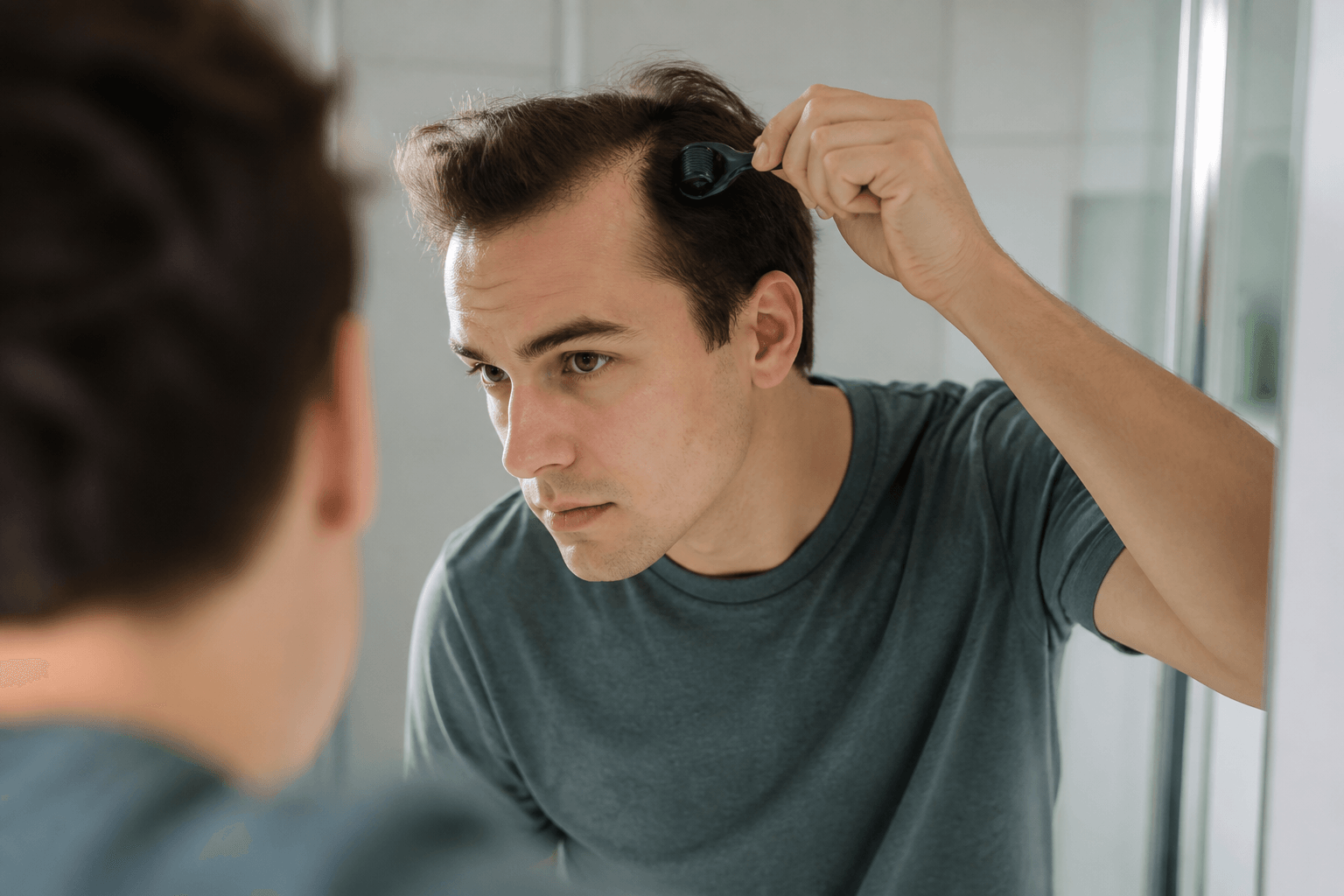
At-home devices remove clinical screening, sterile technique, and control over how the scalp is treated. That makes a copied DIY plan a poor match for uncertain evidence.
The FDA has cleared microneedling devices for certain scars and wrinkles. It has not cleared them for hair loss or authorized medical versions for over-the-counter sale. It also hasn't cleared these devices for use with minoxidil, cosmetics, or platelet-rich plasma.
Common effects include bleeding, bruising, redness, tightness, itching, and peeling. Less common problems include pigment changes, swollen lymph nodes, cold-sore flares, and infection, which shared equipment can spread.
Risk changes with health factors, and the FDA advises medical input for bleeding disorders, blood-thinning medicine, eczema, diabetes, or weakened immunity. An active scalp condition also needs assessment before any procedure.
Deeper isn't proven better because the 2025 meta-analysis found no hair-count advantage above 1 millimetre versus shallower protocols. It also found no winning device type or treatment length.
That finding is not a recipe to choose a depth yourself. It shows why confident online schedules aren't backed by a settled standard.
What should you ask a dermatologist or clinic?
A good consultation starts with diagnosis and a measurable goal. Ask these questions before paying for scalp microneedling:
- What type of hair loss do I have, and what supports that diagnosis?
- Is microneedling likely to add value beyond standard treatment in my case?
- What device is used, who performs the procedure, and how is each cartridge handled?
- How will you manage my medicines, scalp condition, and infection risk?
- Which photos or hair counts will measure progress, and when will we review them?
- What result would make us continue, change course, or stop?
Be cautious if the answer relies on one striking before-and-after image. Hair fibres, a shorter haircut, wetness, camera exposure, and scalp angle can all change the apparent density.
How long do microneedling hair results take?
The early Dhurat trial measured change at 12 weeks, while many pattern-hair-loss treatments take longer to judge. The American Academy of Dermatology says minoxidil can take six to 12 months to show results.
Treat a three-month image as an early checkpoint because hair grows slowly and daily mirror checks magnify noise.
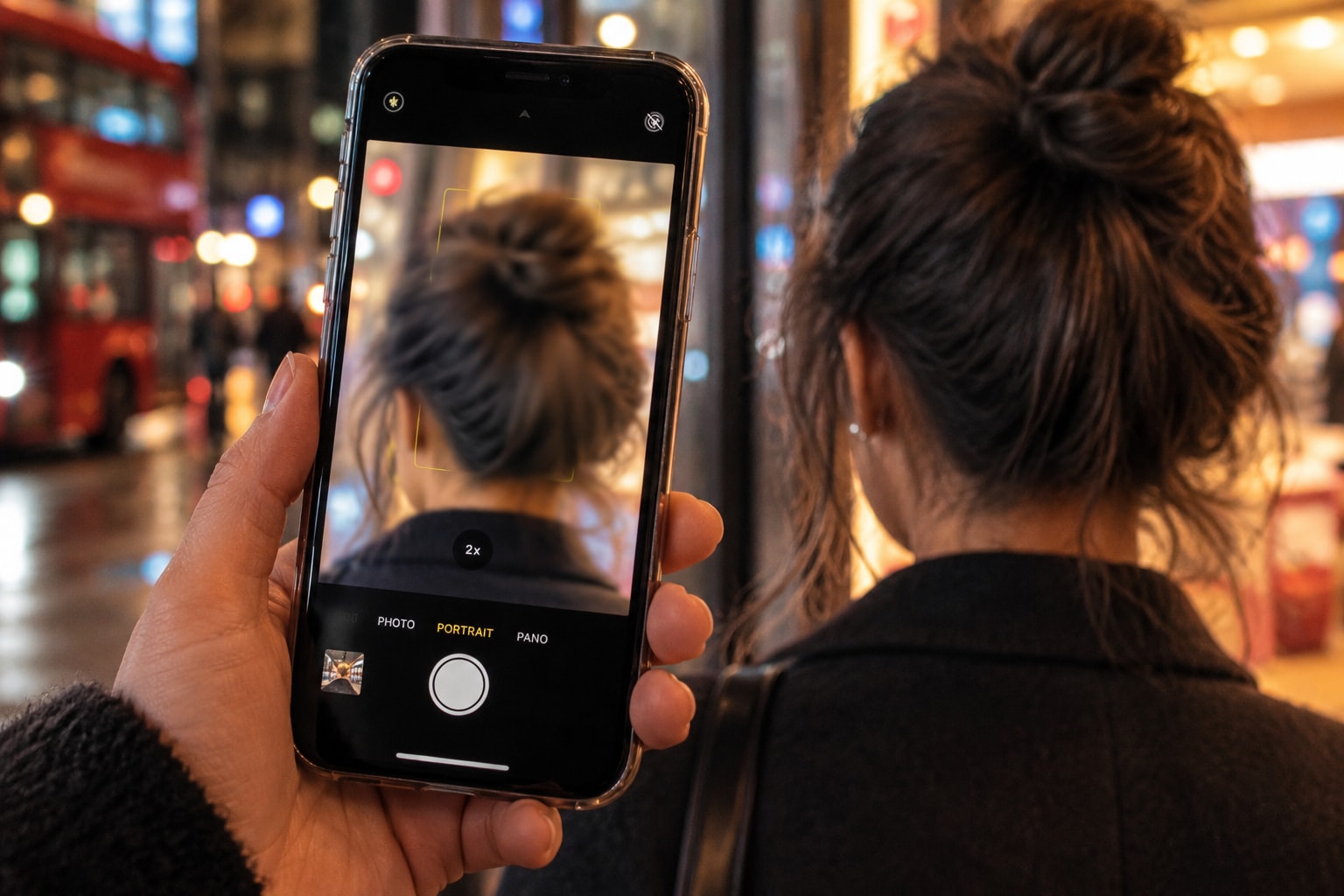
Use consistent monthly progress photos with the same room, light, camera distance, hair length, part, and styling. Photograph dry hair before adding fibres or concealer.
Store images privately and compare dates side by side, using a fixed target area rather than an attractiveness score. If possible, pair photos with a clinician's hair count or dermoscopic measurement.
What is the practical verdict?
Microneedling for hair loss is a reasonable topic to discuss after a diagnosis of androgenetic alopecia. The evidence is strongest when it is added to minoxidil under professional guidance.
It isn't a proven standalone cure or a reason to puncture your scalp deeper or more often for faster results. Current trials cannot name one best protocol, and the FDA hasn't cleared a device for this use.
Start with the cause, then review established options, expected gains, costs, and side effects with a dermatologist. Decide whether a supervised add-on offers enough value for you.
FAQ
Does microneedling regrow hair?
Microneedling may improve hair count and strand thickness in people with androgenetic alopecia, mainly when combined with topical minoxidil. It has not been proven to regrow hair for every cause or restore a full hairline.
Is microneedling better with minoxidil?
Randomized trials and a 2025 meta-analysis found better hair-count results from microneedling plus minoxidil than minoxidil alone. The studies varied widely, so the size of the extra benefit remains uncertain.
How often should you microneedle your scalp?
No research-backed schedule suits everyone because trials used different intervals, durations, devices, and depths. Ask a dermatologist rather than copying a DIY calendar.
Can microneedling make hair loss worse?
Poor technique can cause inflammation, bleeding, infection, and pigment changes, while needling the wrong scalp condition may delay care. Seek medical advice if shedding rises or the scalp becomes painful, swollen, crusted, or persistently red.
Is a derma roller safe to use at home for hair growth?
No medical microneedling device is FDA-authorized for over-the-counter sale or cleared for hair loss. Home use lacks clinical screening and controlled technique, so professional assessment is the safer choice.