Quick answer
Ketoconazole shampoo is an established treatment for dandruff and seborrhoeic dermatitis, not a proven stand-alone treatment for pattern hair loss. A small body of human research suggests it may improve hair-shaft diameter or visible density, but a 2020 systematic review found only five human studies and called for randomized controlled trials. It may be a reasonable scalp-care add-on when flaking or itching is present, but it should not replace a proper hair-loss diagnosis or established treatment.
What is ketoconazole shampoo actually for?
Ketoconazole is an antifungal medicine. In shampoo form, its established job is to control conditions such as dandruff and seborrhoeic dermatitis, which can cause flaking, scale and itching. That is why Nizoral and other ketoconazole shampoos are sold or prescribed as scalp treatments rather than as standard hair-regrowth products.
This distinction matters. A less flaky, more comfortable scalp is a useful outcome, but treating dandruff is not the same as reversing androgenetic alopecia, also called male or female pattern hair loss. The two problems can exist together. Removing scale or reducing itch does not prove that a shampoo has stopped genetically driven follicle miniaturisation.
Searches for Nizoral shampoo for hair loss often blur these separate outcomes. The evidence is strongest for controlling a scalp condition and much weaker for growing back thinning hair.
Does ketoconazole shampoo help hair loss in studies?
There is a real signal, but it is preliminary.
A 2020 systematic review found seven relevant articles: two animal studies and five human studies involving 318 people. The human research reported potentially useful changes including increased hair-shaft diameter, an improved pilary index in one study, and some photographic or subjective improvement. The reviewers described topical ketoconazole as promising, while also stating that randomized controlled trials are needed.
An often-cited 1998 study compared 2% ketoconazole shampoo with an unmedicated shampoo, with a small additional comparison involving 2% minoxidil. Measures including hair density, shaft size and the proportion of hairs in the growing phase improved in the ketoconazole groups. However, the research was small, old and not designed to prove that ketoconazole was equivalent to minoxidil. The authors themselves said the clinical importance needed confirmation in a larger controlled study.
So the fair conclusion is not “ketoconazole regrows hair.” It is that ketoconazole shampoo for hair loss has limited evidence of a possible adjunctive benefit. That is interesting enough to study further, but not strong enough to build an entire hair-loss plan around.
Why can treating dandruff still matter?
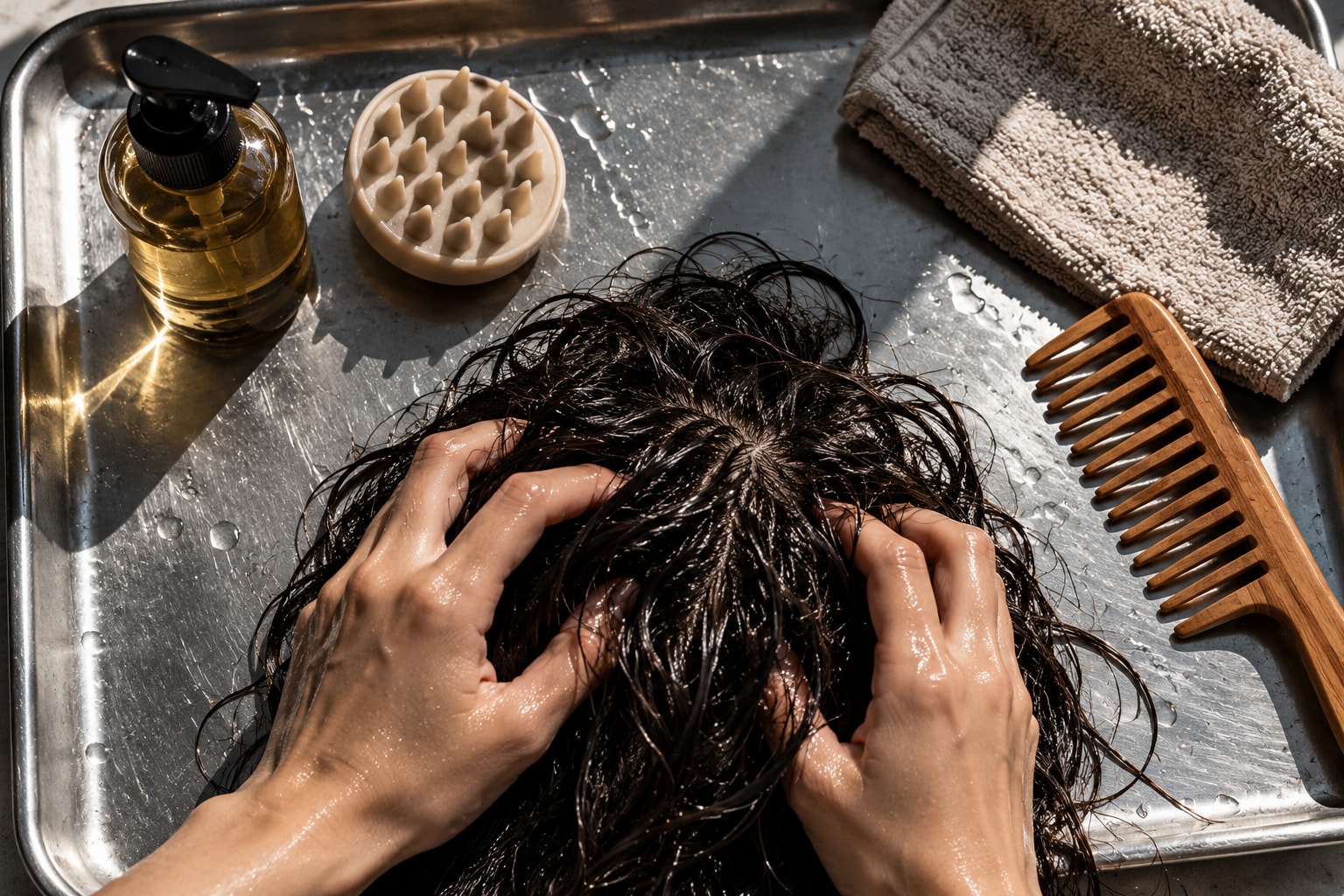
Scalp health and follicle treatment are related but separate goals. If you have greasy scale, flakes or itching, treating those symptoms can make your scalp more comfortable and reduce the urge to scratch. It also gives you a clearer baseline from which to judge whether density is actually changing.
The evidence for this use is much more established than the hair-growth evidence. NHS and US drug information describe ketoconazole shampoo as a treatment for dandruff-related flaking, scaling and itching, as well as seborrhoeic dermatitis in relevant formulations. This supports ketoconazole as a scalp treatment. It does not show that dandruff causes pattern baldness or that clearing it restores a receding hairline.
Think of the shampoo as potentially improving the environment around the hair, not as proven repair for a miniaturising follicle.
Is ketoconazole a DHT blocker?
Not in the clinically established sense implied by viral “DHT-blocking shampoo” claims. Researchers have proposed anti-inflammatory and anti-androgen-related mechanisms, but a plausible mechanism is not the same as a demonstrated treatment effect in people. Human outcome trials have not shown that a rinse-off ketoconazole shampoo blocks follicular DHT like finasteride or reliably prevents male pattern baldness.
This is a common looksmaxxing trap: a laboratory theory becomes a confident product claim before high-quality clinical evidence exists. You do not need to dismiss the early research, but you should keep it in proportion. Ketoconazole may be an add-on. Calling it a finasteride alternative is not supported.
Who is most likely to find it useful?
Ketoconazole shampoo is most rational when you have a labelled scalp problem as well as hair concerns. That may include visible flakes, recurrent scale or an itchy scalp alongside gradual pattern thinning. In that situation, the shampoo can target the scalp symptoms while you separately assess the cause of hair loss.
It may also fit into a dermatologist-designed routine as an adjunct. The American Academy of Dermatology lists minoxidil and finasteride as FDA-approved medicines for male pattern hair loss, not ketoconazole. Each has its own benefits, limits and risks, so this is not a reason to start prescription treatment without a clinician. It is a reason not to substitute an anti-dandruff shampoo for a diagnosis.
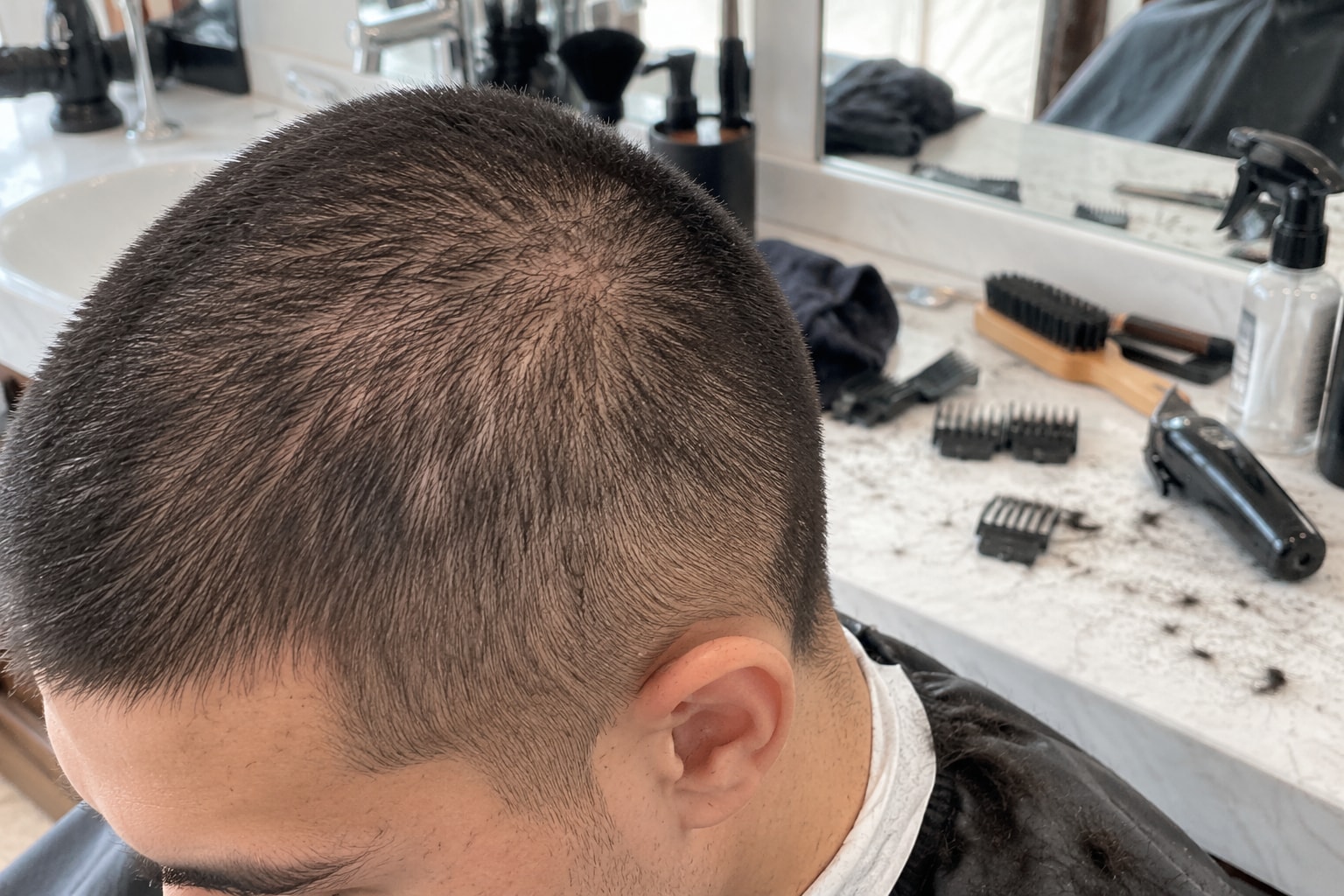
Ketoconazole is a poor self-treatment strategy when hair loss does not resemble gradual pattern thinning or when the diagnosis is uncertain. The American Academy of Dermatology stresses that different types of hair loss require different treatments. A dermatologist can identify the type by examining the pattern and scalp rather than guessing from one mirror check or selfie.

How should you use ketoconazole shampoo safely?
Use it for its labelled indication and follow the directions on your own product. Strength, availability and instructions differ by country. There is no validated dosing schedule for ketoconazole shampoo for androgenetic alopecia, so using it more often in pursuit of faster regrowth is not evidence-based.
For dandruff or scalp seborrhoeic dermatitis, NHS guidance says to use ketoconazole shampoo twice weekly for two to four weeks, then once every one to two weeks to help prevent recurrence. It instructs users to massage the shampoo into the scalp, leave it for three to five minutes and rinse. US drug information gives a different schedule, which is exactly why your local package directions or clinician’s advice should take priority.
Practical guardrails are simple:
- Apply the shampoo to the scalp rather than treating it like a leave-in hair serum.
- Keep it out of the eyes and mouth, and do not use it on broken or severely inflamed skin unless a clinician advises you to.
- Do not increase the amount, contact time or frequency because social media says more will block more DHT.
- Stop and ask a pharmacist or clinician if you develop a rash, persistent burning, marked redness or clearly worse shedding.
- Do not use it if you are allergic to ketoconazole or another ingredient in the product. Hives or difficulty breathing or swallowing need urgent medical help.
Dryness, irritation, itching and changes in hair texture can occur. None of the cited evidence establishes an expected temporary shedding phase, so do not assume worsening shedding is a normal “purge.” If noticeable shedding starts after the shampoo and repeats with use, pause and get advice rather than pushing through it as proof that the product is working.
Is 1% or 2% ketoconazole better for hair growth?
There is no good androgenetic alopecia trial proving that 2% produces more regrowth than 1%. Much of the frequently quoted hair-loss research used 2%, but that does not establish a dose-response or make the stronger product automatically better. Higher strength may also require different access or instructions depending on where you live.
Choose a strength based on the labelled scalp condition, local guidance and professional advice, not a forum’s hairline promise. If your main goal is pattern-hair-loss treatment, the more important question is whether you have the correct diagnosis and an evidence-based plan.
Can you use ketoconazole shampoo with minoxidil or finasteride?
These products do different jobs, so a clinician may include them in the same overall plan. Ketoconazole can address dandruff or seborrhoeic dermatitis, while minoxidil or clinician-supervised finasteride may address pattern hair loss. That does not mean everyone needs all three.
Follow each product’s directions and avoid layering treatments onto an irritated scalp. If minoxidil already causes irritation or itching, adding a medicated shampoo can make it harder to tell which product is responsible. Introduce changes one at a time when practical, document the date, and ask a pharmacist or dermatologist how to schedule them for your scalp and formulation.
How do you track whether it is working?
Separate scalp control from hair growth. For the first goal, note flaking, itching and visible scale once a week. For density, a practical tracking option is regular photographs at consistent intervals rather than daily inspection.
Take frontal, both-temple and crown photos under consistent lighting and in the same location. A 2025 dermatology study highlighted standardized views and image quality for monitoring hair loss. Keep the original files private and compare them side by side rather than reacting to one image taken under different conditions.
Record other changes such as starting minoxidil, switching shampoos or changing hairstyle. If several variables change at once, you cannot honestly attribute a better-looking photo to ketoconazole. The useful outcome is a repeatable trend, not a one-number attractiveness score.
What is the evidence-based decision?
If you have dandruff or seborrhoeic dermatitis, ketoconazole shampoo is a legitimate treatment option when used according to the label. If you also have gradual pattern thinning, it may be a reasonable adjunct, but the direct regrowth evidence remains limited. If you have hair loss without scalp symptoms, buying it purely as a DHT blocker is a weak bet compared with getting the cause identified.
Start with the problem you can actually observe: scalp symptoms, recession, crown thinning, widening part or unusual shedding. Treat the scalp condition appropriately, discuss proven hair-loss options with a qualified professional, and track changes under consistent conditions. That is slower and less dramatic than a viral “anti-balding shampoo” claim, but it gives you a much better chance of knowing what is helping.

FAQ
Does ketoconazole shampoo regrow hair?
Ketoconazole shampoo is not proven to regrow hair. Five human studies involving 318 participants, reviewed in 2020, suggested possible improvements in hair-shaft diameter or visible density, but stronger randomized controlled trials are still needed. Its best-supported role is treating dandruff and seborrhoeic dermatitis.
How often should I use ketoconazole shampoo for hair loss?
There is no validated hair-loss schedule. Follow your product label or clinician’s directions for dandruff or seborrhoeic dermatitis. Using it more frequently has not been shown to accelerate regrowth and can irritate the scalp.
Is ketoconazole shampoo a DHT blocker like finasteride?
No clinically reliable evidence shows that rinse-off ketoconazole shampoo blocks DHT like finasteride. Proposed anti-androgen-related mechanisms remain hypotheses, so it should not be presented as a substitute for an approved pattern-hair-loss treatment.
Can ketoconazole shampoo cause hair shedding?
None of the cited evidence establishes an expected temporary shedding phase, so do not assume worsening shedding is a normal purge. Pause and seek advice if shedding clearly worsens after starting ketoconazole shampoo, especially if it comes with burning, redness, rash or scalp pain.
How long does ketoconazole shampoo take to work?
For dandruff or seborrhoeic dermatitis, official guidance evaluates symptom improvement over roughly two to four weeks. There is no dependable timeline for hair regrowth because the evidence is too limited, so do not interpret a few washes as proof that density has changed.