Quick answer
If you're asking how to reduce shine on a bald head, first find out what creates the gloss. Sebum, sweat, moisturizer, sunscreen, and direct light can produce similar highlights. Use a gentle cleanser, lighter skincare, a matte sunscreen, and blotting paper instead of scrubbing or skipping sun protection.
Some natural shine will remain on smooth, curved skin; the realistic goal is less glare, not a scalp with no reflection at all.
Why a clean bald scalp can still look shiny
Shaving hair doesn't remove the scalp's oil glands, so they keep releasing sebum. Sweat and skincare film can add another reflective layer, while scalp oil also varies by person and location.
Chanprapaph and colleagues compared 31 men with androgenetic alopecia with 31 controls. The men with hair loss had more surface lipid at the vertex than at the back of their scalps. Their vertex readings were also higher than the control group's, but this small study doesn't mean every bald head is unusually oily.
It does show why scalp shine can't be dismissed as leftover shampoo or poor hygiene.
Light matters too. A smooth, rounded surface sends a concentrated highlight toward the camera under a small or direct light. Hair and short stubble break up that reflection, so a close shave leaves less texture to scatter it.
Ikeda and colleagues created oily-looking facial shine with strong reflections under non-diffused light. They used diffused light for a softer radiance condition. That work used faces, not bald scalps, so applying it to the scalp is a reasonable optical inference.
Find the source with a two-light test
Do this test indoors before changing products, using the same camera, distance, exposure, and head angle for every photo.
- Wash your scalp as usual, then let it dry fully without applying a new product for the test.
- Take one photo near a large, soft light source and another under a small overhead light.
- Gently press oil-blotting paper against the shiniest area for a few seconds; don't rub.
- Repeat both photos with the same settings.
If shine appears mainly under the overhead light, glare is a large part of the effect. If blotting reduces it in both photos, surface oil or product film contributes. If the shine starts only after moisturizer or sunscreen, that product's finish may be the main variable.
Run product comparisons on separate days because changing cleanser, moisturizer, and sunscreen together won't tell you which change helped.
1. Clean gently instead of chasing a squeaky scalp
Wash away oil, sweat, and old product with a mild cleanser, using your fingertips and lukewarm water. A scrub, rough cloth, or repeated wash is more likely to irritate freshly shaved skin than solve glare.
The American Academy of Dermatology advises people with oily facial skin to use a gentle cleanser up to twice daily and after sweating. No trial has set the ideal schedule for a bald scalp. Start with one daily wash and an extra rinse or wash after heavy sweating, then adjust for comfort.
Tightness, burning, or flaking can mean the routine is too aggressive. A harsh wash may leave irritation while direct light still makes the scalp shine.
2. Use less product, not less hydration
Oily skin can still feel dry after cleansing or shaving. Start with a small amount of light, fragrance-free moisturizer, then add more only if your scalp still feels tight.
Look for labels such as oil-free, water-based, and noncomedogenic. These terms don't promise a matte finish, but they are a sensible starting point for exposed, oily skin. Let the product settle before judging its shine, and test only one layer.
Aftershave balm, face oil, moisturizer, and sunscreen can each feel light alone but look glossy together. Keep the product that solves a clear problem and remove the layer that adds no benefit.
3. Choose sunscreen by finish, but keep full protection
A bare or thinning scalp needs sun protection. The American Academy of Dermatology recommends broad-spectrum, water-resistant SPF 30 or higher on exposed scalp. A wide-brimmed hat is another dependable option.
Don't apply less sunscreen to get a more matte look; test a fluid, gel, or lotion labeled oil-free, noncomedogenic, dry-touch, or matte. Finish varies across formulas, so a label narrows the search rather than guaranteeing the result.
Apply the directed amount, give it time to form its film, and check the finish after 15 minutes in the same light. If it remains glossy, test a different sunscreen on another day rather than layering powder over a wet film.
Reapply as the label directs, especially after sweating or getting your scalp wet, because cosmetic shine isn't a reason to trade away UV protection.
4. Blot during the day instead of washing again
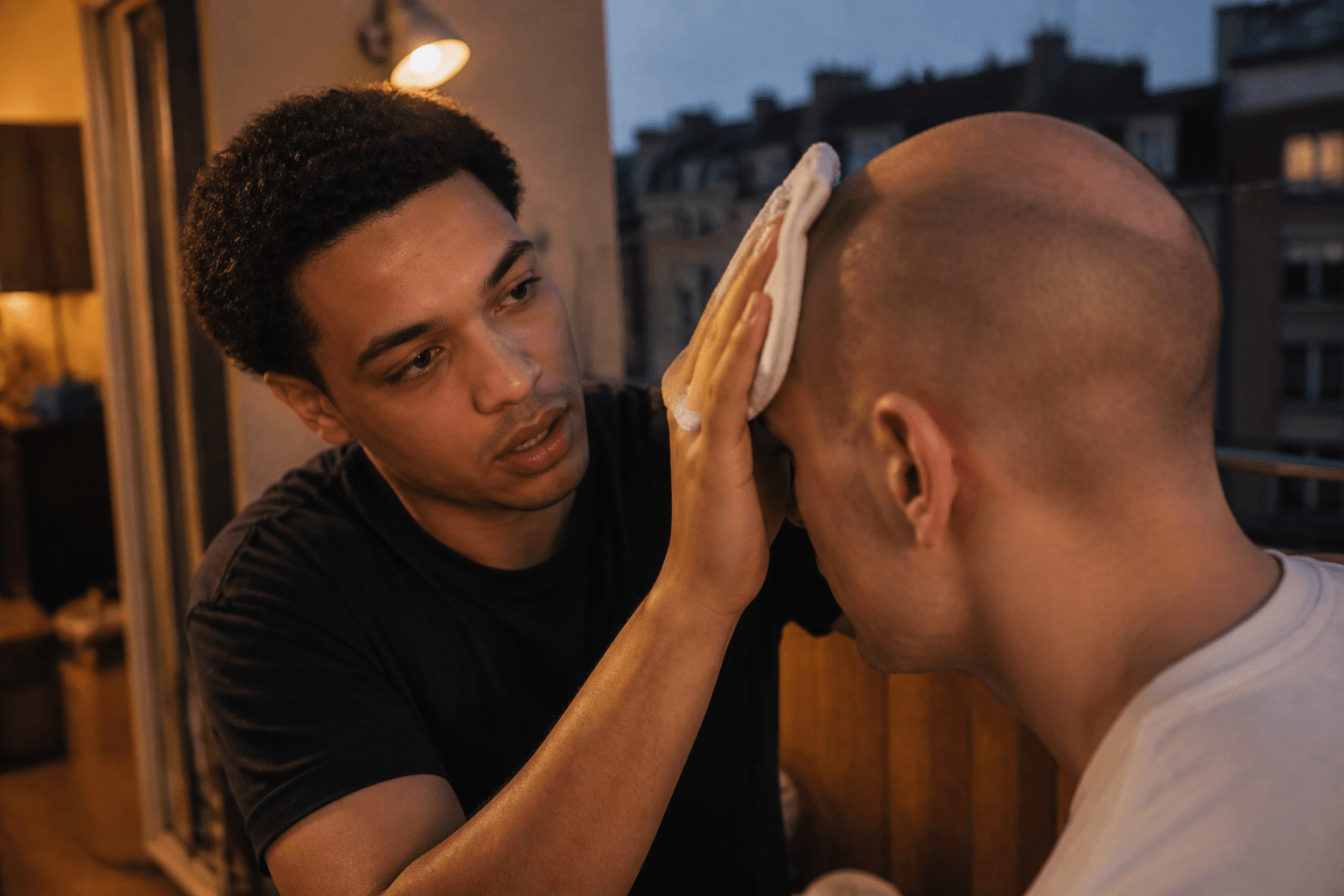
Blotting paper can lift surface oil without another full cleanse. Press it against the scalp for a few seconds, move to a clean section, and repeat. Rubbing spreads the film and may irritate a recent shave.
The evidence comes from oily-face guidance, not a bald-head trial, but blotting is a low-risk option when your skin is calm. A clean tissue can work for sweat, but rough paper may leave lint or cause friction.
Blotting doesn't replace sunscreen. Keep following the label, including reapplying after sweating or getting your scalp wet.
5. Compare a close shave with short stubble
A razor-smooth scalp gives light a more continuous surface. Short stubble can break up the highlight, though the change depends on hair color, density, and lighting. No trial has compared shave lengths for scalp glare, so test both finishes before buying another mattifying product.
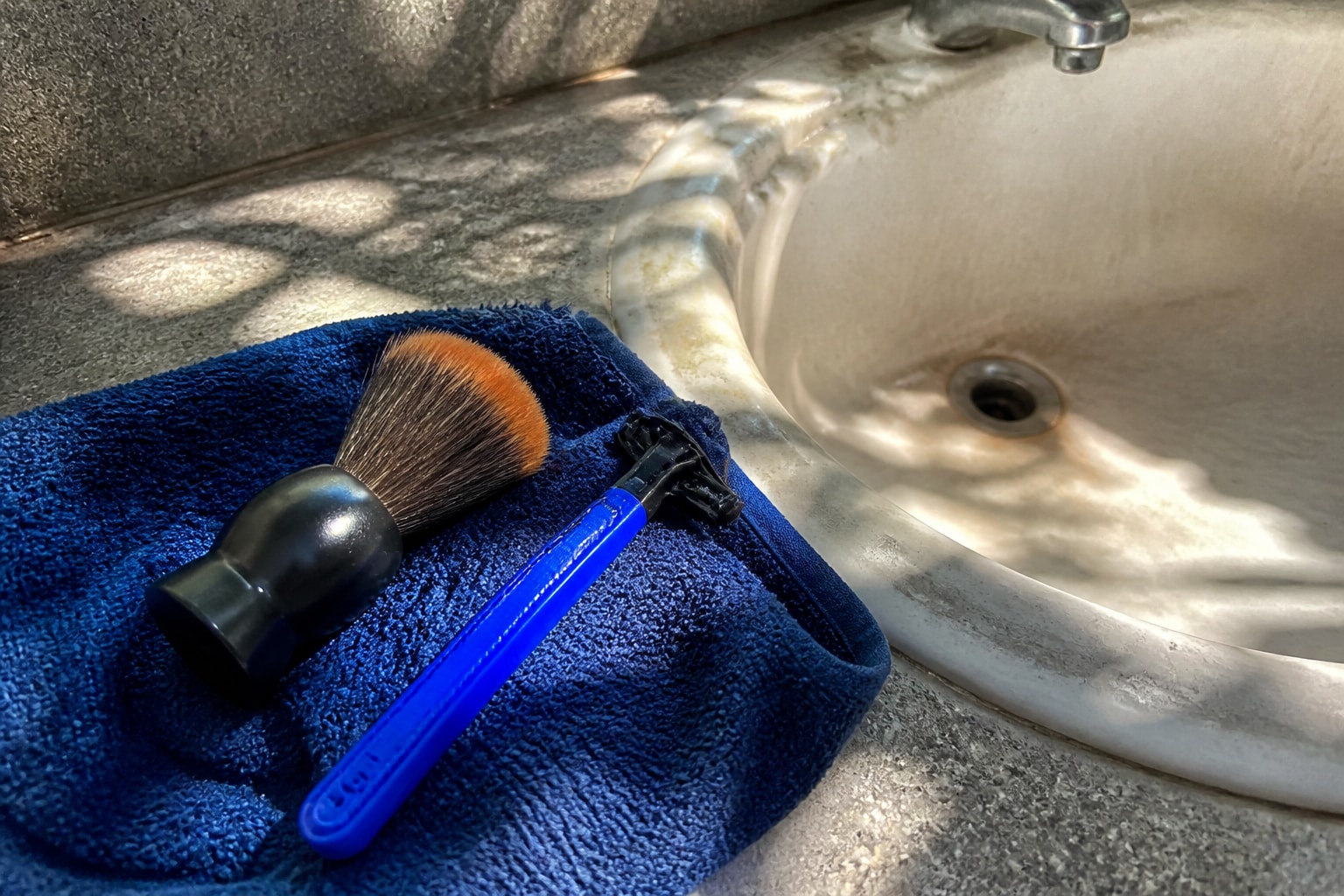
Choose the shave that feels best on your skin, and don't make repeated dry passes to remove the final shadow. The American Academy of Dermatology recommends softening hair first, using shaving cream, and shaving with the grain to reduce irritation.
If blades leave bumps, burning, or cuts, try an electric clipper that leaves slight stubble. The softer finish may reduce glare and lets you avoid repeated close passes.
What not to use for a matte scalp
Alcohol-heavy astringents, abrasive scrubs, and frequent acid peels can irritate freshly shaved skin. Even if they cut oil briefly, irritation isn't a good trade.
Loose cosmetic powder can reduce reflection, but it isn't a sunscreen substitute and may collect around stubble, flakes, or razor bumps. If you use it for a photo or event, apply a small amount over settled skincare and stop if it stings.
See a dermatologist if shine comes with persistent redness, itch, thick scale, painful bumps, crusting, or sores. Those signs need a skin assessment, not a stronger mattifier.
FAQ
Is a shiny bald head always caused by excess oil?
No. Sebum and sweat can increase shine, but direct light also reflects strongly from a smooth, curved scalp. If blotting changes little while moving the light changes a lot, glare is probably doing most of the work.
Can I use face moisturizer on my bald head?
Usually, yes; start with a light, fragrance-free, noncomedogenic product and patch-test it on a small area. Stop if you develop burning, itch, or bumps, and don't use moisturizer as a replacement for sunscreen.
How often should I wash a bald head?
There is no single research-backed schedule, but a gentle daily wash suits many people, with another wash after heavy sweating. Wash less often if your scalp becomes tight, dry, or irritated.
Does sunscreen make a bald head shinier?
Some formulas leave a glossy film, while others dry down more matte. Keep broad-spectrum SPF 30 or higher and test a different texture or finish. Using too little sunscreen is not a safe anti-shine method.