Quick answer
If you're trying to learn how to get rid of beard shadow, first choose between camouflage and lasting hair reduction. A gentle shave plus thin color correction can hide blue-gray shadow for the day, but shaving harder won't remove hair below the skin.
For lasting change, laser can reduce dark, coarse hair, while electrolysis can remove hairs of any color. Both take repeated sessions with a trained provider.
Why beard shadow remains after a close shave
A beard shadow doesn't mean you shaved badly. A razor cuts each shaft near the skin's surface. It doesn't remove the part inside the follicle, so dense, dark hair can remain visible against the surrounding skin.
Beard hair varies across one face. A 2016 review describes it as thick, stiff and mixed in growth angle. That mix makes a close shave difficult. Extra pressure is a poor fix.
The same review notes that harder pressure and repeated strokes raise the chance of shaving irritation. Redness or dark marks from that irritation can then make the beard area look less even.
Check the color in daylight. A diffuse blue or gray cast straight after shaving fits beard shadow. Brown spots, sore bumps, pustules or lasting redness point to a skin issue that needs different care. Phone cameras, cool bathroom lights and strong contrast can exaggerate both.
Get the closest shave your skin tolerates
The aim is an even shave without chasing every last fraction of hair. Use this sequence:
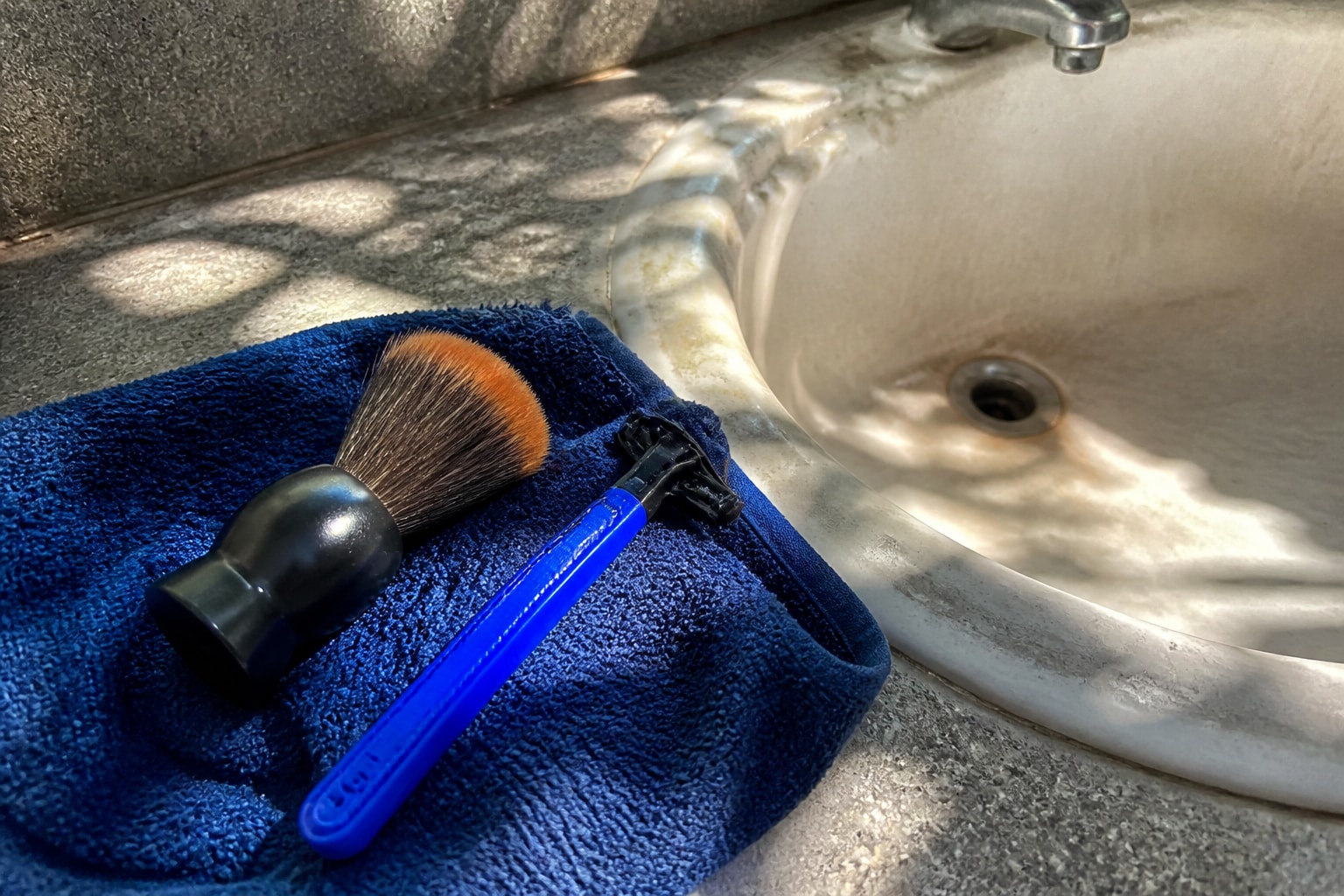
- Wet your face and beard first, since shaving after a shower softens the hair.
- Apply shaving cream or gel, including over the jaw and neck.
- Follow the direction of growth with light pressure, since beard direction often changes between the cheeks, chin and neck.
- Rinse after each pass and replace a disposable blade after five to seven shaves, as the American Academy of Dermatology advises.
- Stop when the remaining passes only add redness, because more scraping won't reach hair inside the follicle.
Against-the-grain shaving may look closer for some people, but it raises the risk of razor burn and ingrown hairs. It is a bad trade if your skin develops bumps or dark marks. An electric foil shaver may be gentler for one person, while a blade suits another. Judge the result after several calm shaves, not one rushed morning.
This routine can reduce surface stubble, but it cannot promise a shadow-free result when hair beneath the surface creates the color.
Hide beard shadow with color correction
Camouflage is the fastest option when shaving alone isn't enough because it reduces cool-toned contrast rather than removing hair.
Start with a tiny amount of peach or orange corrector on the blue-gray area. Peach tends to suit lighter complexions, while deeper orange shades can suit darker complexions. The exact shade depends on both your skin and the shadow, so test it in daylight.
Press on a thin layer instead of painting the whole lower face orange. Add a skin-matched concealer or foundation, then check the jaw and neck in natural light, adding more only where shadow still shows.
Patch-test a new cosmetic before a full-face day if your skin reacts easily. Don't cover cuts, weeping razor bumps or a burning rash. Let the skin settle and ask a pharmacist or dermatologist about persistent irritation.
Laser can reduce a dark beard shadow
Laser hair removal targets pigment in the hair. It reduces hair but cannot promise one-session removal. Dark, coarse beard hair usually gives the laser a clearer target than blond, red, gray or white hair.
The American Academy of Dermatology says most patients need two to six treatments. Regrowth may stay reduced for months or years, but maintenance sessions can be needed. Results depend on hair color, thickness, treatment area, laser type and skin color.
Provider skill matters. Burns, scars, blisters and lasting light or dark marks can occur in inexperienced hands. Modern laser treatment can be used across more skin tones, but the settings and device must suit your skin. Choose a dermatologist or laser clinician who regularly treats your skin tone and facial hair.
Ask for a consultation and test spot before committing to a package. Ask which device will be used, who performs treatment and how pigment changes are handled. Don't use prescription numbing cream or high-strength online numbing products without clinical direction.
Electrolysis works on every hair color
Electrolysis treats one follicle at a time with a fine probe and electrical current. It can work on light, red, gray and white hairs that lasers target poorly. Cleveland Clinic describes it as a permanent hair-removal method, but the time commitment is large.
Appointments may continue every one or two weeks for months because a dense beard contains many follicles. Some people use laser for broad reduction, then electrolysis for hairs that remain.
Choose a trained, licensed or certified electrologist under your local rules. Poor technique or unsterile equipment can cause infection, scarring or pigment changes. Home electrolysis isn't a safe shortcut for dense facial hair.
Skip fixes that create a second problem
Several popular tricks either miss the cause or raise irritation risk:
- Lemon juice, peroxide and household bleaching mixtures don't remove follicle hair, and irritation can leave darker marks.
- Pressing harder or repeating many dry passes damages skin without guaranteeing less shadow.
- Body hair-removal creams don't belong on the face unless their label clearly allows facial use.
- Unsupervised hormones or anti-androgens aren't grooming products, so never use them for beard shadow without medical care.
- A home light device isn't equivalent to a clinician's laser because facial limits and eye safety vary by device.
Track the option you choose under the same conditions. Take one photo after shaving and another later that day, using the same window light, angle and camera settings. Compare weekly, not after every mirror check, because a photo cannot judge laser safety or diagnose razor bumps.
If you use a face-tracking tool, check its photo-retention policy and avoid public rating apps.
FAQ
Can shaving remove beard shadow completely?
Sometimes shaving makes a light shadow hard to notice, but it cannot remove hair inside the follicle. Dense, dark hair may remain visible even after a careful shave. Extra pressure and repeated passes add irritation faster than they improve that limit.
Does laser hair removal permanently remove beard shadow?
Laser can produce long-lasting hair reduction and make the shadow lighter. It doesn't guarantee permanent removal of every hair, and maintenance may be needed. Dark, coarse hair usually responds better than blond, red, gray or white hair.
How can I cover beard shadow without laser?
Use a gentle shave, then apply a thin peach or orange corrector beneath skin-matched concealer or foundation. Match the corrector to the visible blue-gray tone and test the result in daylight. This hides contrast for the day but doesn't change hair growth.
Can lemon juice lighten beard shadow?
No, because lemon juice cannot remove the hair creating a beard shadow beneath the skin. It can irritate facial skin, and inflammation may leave uneven pigment. Use cosmetic camouflage or discuss professional hair removal instead.