Quick answer
Why do my teeth look smaller after braces? A common reason is that swollen or enlarged gums cover more of each tooth's visible crown. Braces move teeth, but that movement doesn't normally shrink the enamel you can see. If the braces just came off, mild gum enlargement may settle over the next few weeks, but persistent swelling needs a dental check.
First, check when the change appeared
"After braces" can mean two different moments. The likely explanation changes with the timing.
If you're still wearing fixed braces, brackets hide part of each tooth. Wires also create a new visual frame across your smile. More importantly, fixed appliances make plaque harder to remove near the gumline.
If your braces have just been removed, the gums may still cover extra tooth surface. You can now see the full shape and spacing of each crown, which may differ from what you expected. Give your eyes time to adjust, but don't ignore gum symptoms.
A change that appears months later isn't explained by bracket removal alone. Arrange a dental check rather than judging it from photos.
Puffy gums can hide the tooth crown
The visible part of a tooth runs from the gumline to its biting edge. When gum tissue swells or grows over that surface, the same tooth looks shorter or smaller.
Dentists call this gingival enlargement or gingival hyperplasia. Cleveland Clinic lists orthodontic treatment and plaque-related inflammation among its causes. Common clues are new puffiness, tenderness, or bleeding during brushing and flossing.
Natural gum colour varies, so don't judge health by how pink your gums look. Focus on a change from your normal shape, comfort, and bleeding pattern.
This isn't always a sign that you failed at cleaning. Brackets, bands, and wires create tight areas that are harder to reach. A 2018 systematic review found moderate evidence that fixed appliances affect periodontal health, though the included studies weren't high quality.
The practical point is simple. Check the gums before assuming the teeth themselves became smaller.
What happens after the brackets come off
Gum volume can drop after fixed braces are removed. A 2025 study tracked 84 lower front teeth from 14 adults. The researchers used repeated photographs for 21 days after removal.
By day 21, the visible incisor crown had increased by an average of 0.16 millimetres, or 2.13%. The gum between the teeth also became progressively smaller. No gum surgery was used to create that change.
That's useful, but the study was tiny. It covered lower front teeth, only 14 people, and three weeks of follow-up. It can't promise that every swollen gumline will settle on the same schedule.
It does support patience before an irreversible cosmetic decision. Let a dentist assess the tissue and control inflammation before anyone removes gum or tooth structure.
Did the braces actually change tooth size?
Orthodontic force changes tooth position. It doesn't normally shave down the visible crown. Two planned procedures can change dimensions, though.

Interproximal reduction changes width
Interproximal reduction, or IPR, removes a small amount of enamel from between teeth. Orthodontists use it to create space or refine tooth shape. Because it works at the sides, it can make a tooth slightly narrower, not shorter from gumline to edge.
Your treatment record should show whether IPR was done. Ask your orthodontist instead of trying to estimate it from a selfie.
Enameloplasty can change an edge
Enameloplasty removes small amounts of enamel to smooth or reshape a tooth. A dentist may combine it with orthodontic treatment. If an edge looks physically shorter or newly even, ask whether contouring was part of your finishing work.
Enamel doesn't grow back once removed. Never file your own teeth to make them match. Cleveland Clinic warns that excess removal can cause cracks, cavities, infection, or lasting sensitivity.
Braces can also reveal the natural shapes that crowding once hid. Once teeth are aligned, a short crown may stand beside a longer one. That contrast can feel new without either tooth changing size.
Make a fair comparison at home
Don't compare one close selfie with an old group photo. Camera tilt changes dental measurements, and smile effort changes how much tooth your lips reveal. Clinical orthodontic photography keeps the camera perpendicular to the teeth for this reason.
Use a repeatable check instead:
- Stand in the same place under the same light.
- Keep your head level and place the camera straight in front of your mouth.
- Use the rear camera with a timer, rather than holding it close.
- Take one relaxed smile and one closer mouth photo.
- Compare the gumline and biting edge, not your whole face.
Check again after two or three weeks. Daily inspection turns tiny changes in light or expression into false alarms.
A photo still can't diagnose gum overgrowth or measure enamel removal. A dentist can examine plaque, gum pockets, tooth surfaces, and your treatment records.
What to do now
Keep wearing your retainer exactly as prescribed unless your orthodontist tells you otherwise. Stopping it won't expose more tooth, and it can allow the alignment to relapse.
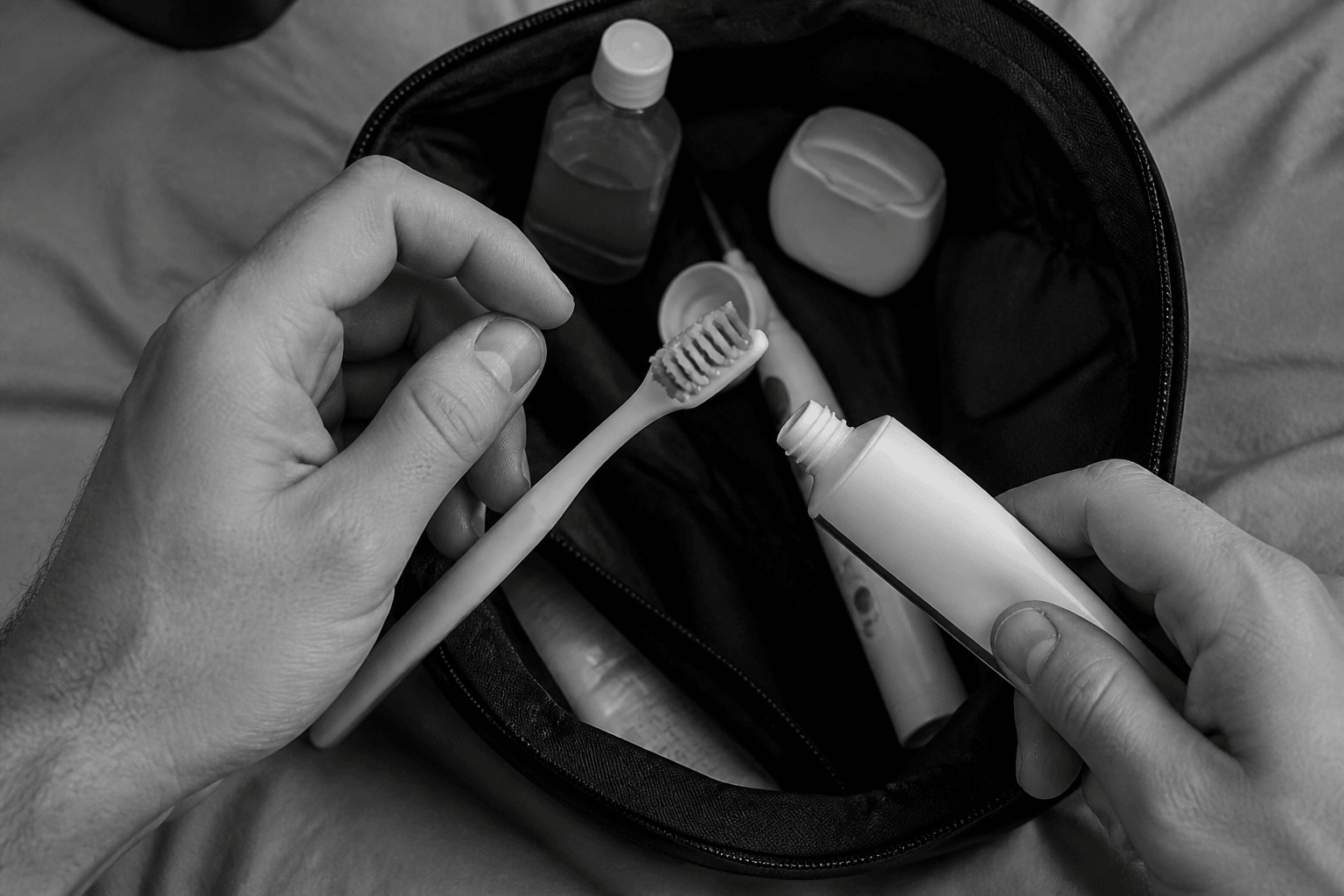
Brush twice daily with fluoride toothpaste and a soft brush. Clean between the teeth every day using the method your dental team showed you. The American Association of Orthodontists also recommends removing plaque around orthodontic hardware and retainers.
Arrange a routine dental cleaning if one wasn't done near removal. Hardened tartar can't be brushed off at home, and cleaning lets the clinician see the true gum margin.
Don't cut, press, or chemically burn the gumline. Don't use a tooth file. If excess tissue remains after inflammation has settled, a dentist or periodontist can explain whether monitoring, cleaning, or professional gum treatment fits your case.
Contact a dentist sooner for strong pain, pus, rapid swelling, a loose tooth, fever, or bleeding that doesn't ease. Those signs need care, not a cosmetic hack.
FAQ
How long do puffy gums take to settle after braces?
There isn't one reliable deadline. A small study found measurable improvement over 21 days, but its 14 participants can't define everyone's recovery. If your gums aren't improving after a few weeks, arrange an examination.
Can braces make teeth permanently shorter?
Moving teeth doesn't normally shorten their visible enamel crowns. Planned enameloplasty can shorten an edge, while IPR can narrow a tooth. Ask your orthodontist which finishing procedures were used.
Should I get a gingivectomy straight after braces?
Usually not before the tissue is assessed and given time to settle. Mild plaque-related enlargement may improve with cleaning and daily care. Persistent excess tissue needs a dentist or periodontist, who can decide whether surgery is justified.
Why do only one or two teeth look small?
Gum swelling can be uneven, and natural crown shapes differ. Alignment may also reveal differences that crowding once concealed. A close dental exam can separate gum coverage from a genuinely shorter edge.