Quick answer
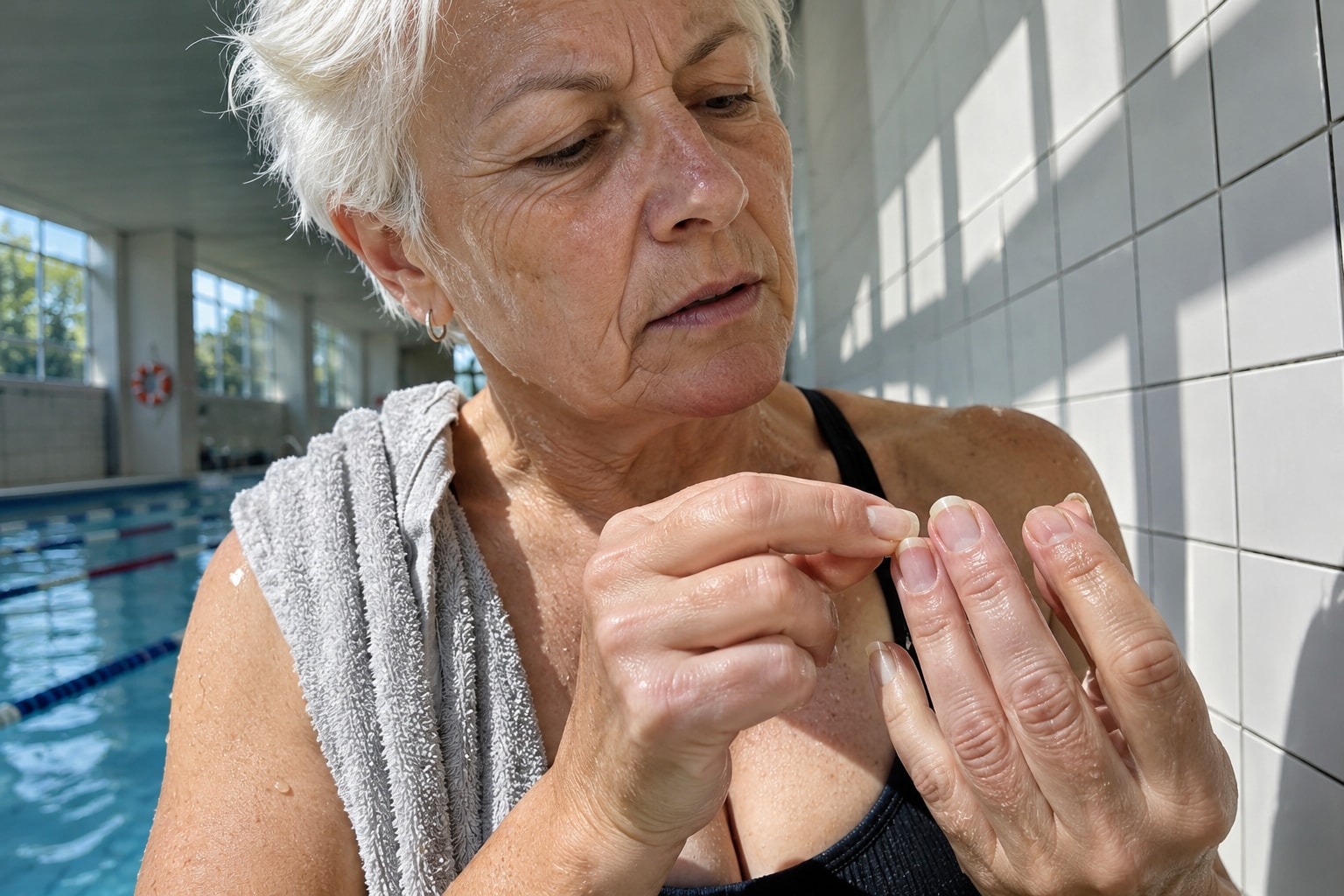
Why do nails bend after showering? The nail plate absorbs water, which changes how its proteins move and makes the plate softer and more flexible. This is usually temporary. If your nails stay soft when dry, split often, change colour or hurt, water alone may not explain it.
What water does to your nails
Your nail plate is made from tightly packed, keratin-rich cells. It resists many outside substances, but it still takes up water.
A laboratory study used Raman spectroscopy to examine normal nails before and after soaking. Water uptake rose during the first minutes and neared its limit after about 10 minutes. The researchers also found small changes in the protein structure within the wet nail. Those changes let parts of the plate move more freely.
That explains the familiar bend. The nail hasn't grown weaker within one shower, and the root hasn't changed. Its existing plate has become more flexible while wet.
The unsupported white edge makes this easy to notice because it can move. Once the water leaves, the plate usually feels firmer again. The study tested nail samples under controlled conditions, so 10 minutes isn't a universal shower limit.
When bendy nails are probably normal
Temporary softening usually follows a simple pattern:
- It starts during a shower, bath, swim or long hand wash.
- Several nails behave in a similar way.
- They feel firmer again after they dry.
- There is no pain, swelling, lifting or new colour change.
Judge your nails when they're fully dry. A wet nail and a dry nail are different test conditions, even if you inspect them under the same light.
Bending after water also doesn't prove that you lack iron, biotin or another nutrient. A clinical review lists hydration changes among many possible causes of nail fragility. The symptom needs context.
Why repeated wet-and-dry cycles can cause damage
One flexible nail after one shower isn't the main concern. Repetition is.
In a laboratory study, researchers repeatedly exposed normal nail clippings to water and then dried them. After 21 days, layers at the free edge began to separate. This pattern is called onychoschizia, or lamellar splitting.
That experiment doesn't tell you how many showers are too many. It does show why constant wet work can differ from an occasional shower. Each cycle makes the plate swell and then shrink again.
Wet work often includes soap, detergent or cleaning chemicals, so water may not be the only stress. Manicure removal, picking and filing can add more mechanical or chemical wear. The result may be peeling, splitting or crumbling rather than simple temporary bending.
What to do after a shower
You don't need a complex nail routine. Reduce avoidable stress while the plate is soft.
- Pat your hands and nails dry. Don't test the free edge by bending it back and forth.
- Apply a plain hand cream or ointment to the nails and cuticles after washing. The American Academy of Dermatology recommends moisturising after water exposure.
- Wear gloves for washing dishes and cleaning. This cuts long contact with water and household products.
- If you need a trim, doing it after a bath or shower can be easier because the nail is softer. The NHS includes this in its nail-care advice.
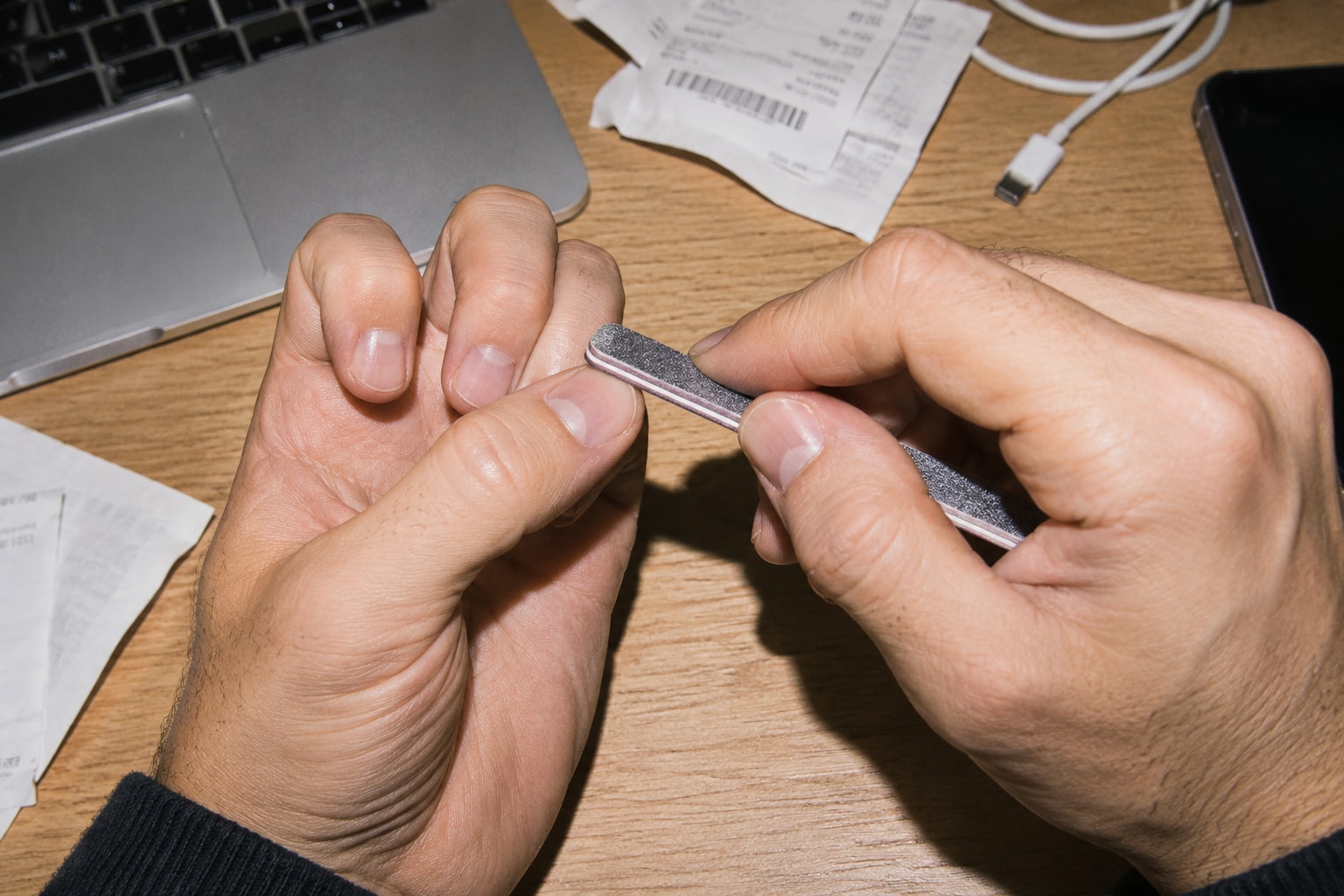
- Keep a nail shorter if its edge repeatedly catches or folds. Shortening the unsupported part removes the lever that keeps bending.
Don't try to set a new nail shape while the plate is wet. A forced bend can become a split, and drying a nail in that position isn't a safe way to remodel how it grows.
Run a simple one-week check
Appearance changes are easier to judge when the conditions stay fixed. Check the same three bare nails each morning, before a shower or hand cream.
Use the same room, light and camera distance. Note whether the dry nails peel, split or stay soft. Also note long dishwashing, cleaning, swimming and manicure removal.
If the nails look stable when dry but flex after water, temporary hydration is the likely explanation. If the dry baseline keeps getting worse, the issue is broader than one shower.
Don't start biotin from this sign alone
A bendy wet nail isn't a diagnosis of biotin deficiency. The American Academy of Dermatology says biotin deficiency is rare, and evidence for beauty supplements is inconsistent.
High-dose biotin can also distort some blood test results, including thyroid-related tests. If your nails remain fragile, ask a clinician about the cause before buying a hair, skin and nails supplement.
When to ask a clinician
Book a GP or dermatology appointment if softness continues when your nails are dry or the problem keeps worsening. Get advice sooner if a nail changes colour or shape, lifts, becomes painful, or develops red, swollen or warm skin around it.
A persistent change in one nail deserves attention too. Infection, inflammation, repeated trauma, medication and some health conditions can affect nails. A clinician can examine the pattern instead of guessing from one symptom.
FAQ
Do fingernails absorb water?
Yes. Laboratory measurements show that nail plates take up water and become more flexible during soaking. The effect is physical and temporary in a healthy nail.
Why do my nails feel hard again after they dry?
Water leaves the nail plate as it dries, so the plate regains stiffness. That rebound is expected. Repeated swelling and drying can still promote peeling over time.
Should I cut my nails after a shower?
You can. Nails are softer after bathing, which can make trimming easier. Use a clean, sharp clipper and avoid cutting into the surrounding skin.
Do soft nails after a shower mean iron deficiency?
No. Water alone can soften normal nails. If softness persists when dry, or comes with peeling, colour change, pain or other symptoms, ask a clinician rather than assuming a deficiency.