Quick answer
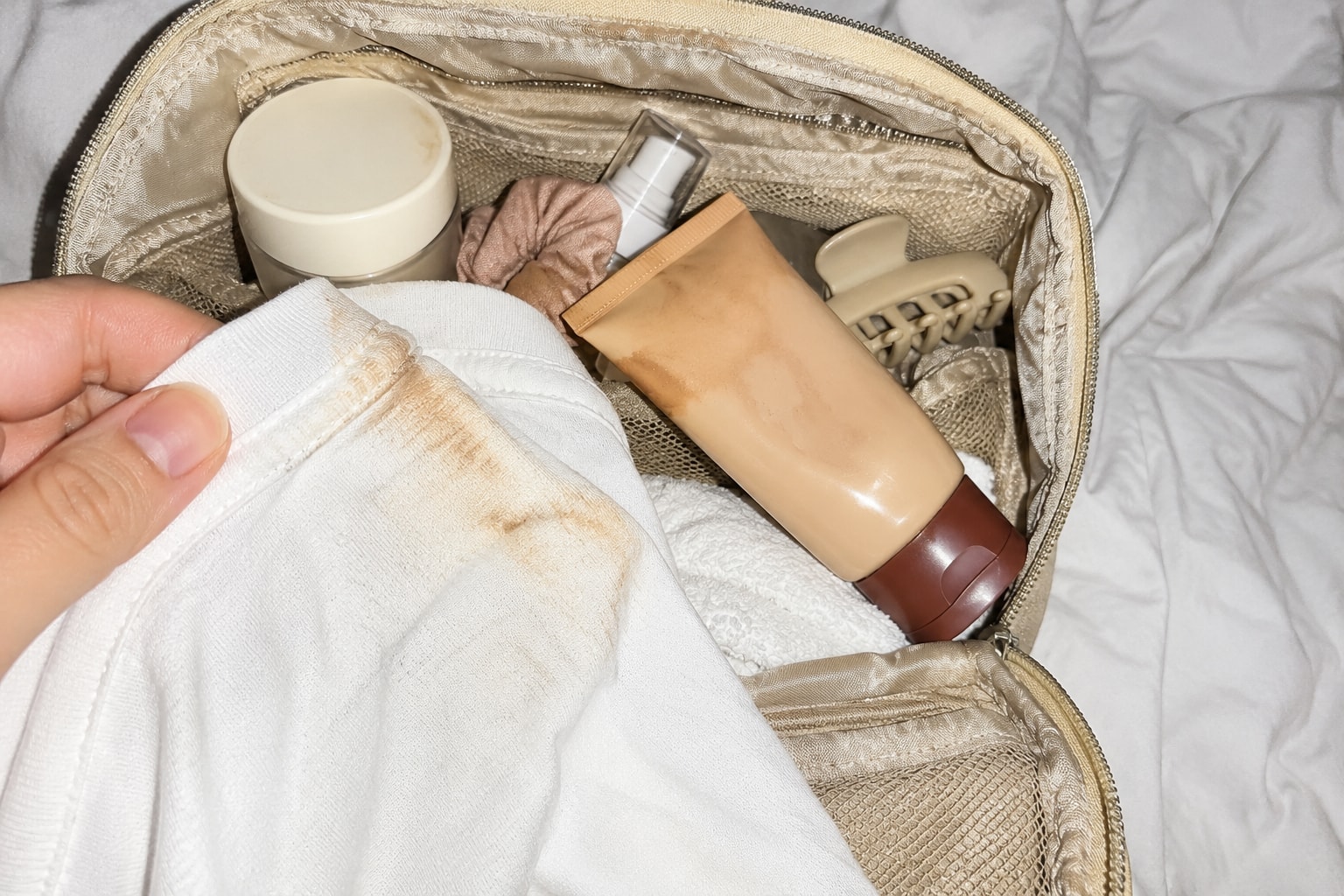
To stop tinted sunscreen transferring to clothes, apply it to dry skin, keep it away from fabric, and allow eight to 15 minutes before dressing. Use a separate untinted sunscreen on your neck or chest if a collar keeps picking up pigment. Don't spread the tinted layer thinner, because under-application lowers protection.
Most fresh beige marks are pigment transfer. Sweat and rubbing make it worse. Yellow or orange stains that appear after washing may involve sunscreen filters and minerals in the wash water instead.
Why tinted sunscreen leaves marks
Tinted sunscreen contains coloured particles, often iron oxides. These particles help reduce exposure to visible light and make a mineral formula look less white on skin. The American Academy of Dermatology recommends tinted, broad-spectrum SPF 30 or higher for visible-light protection, especially when hyperpigmentation is a concern.
The tint sits inside the sunscreen film on your skin. A collar, towel, mask, hand, or phone can lift part of that film. La Roche-Posay lists colour transfer during sweating or contact with clothing as a drawback of tinted formulas.
Sweat adds another problem. A laboratory study found that perspiration can wash off and redistribute sunscreen. The effect varied with the formula and its film-forming ingredients. Water resistance may help, but it doesn't make a product transfer-proof.
Identify the mark before changing products
The colour and timing give you useful clues:
- A beige, brown, or skin-toned mark appearing during wear is usually transferred tint.
- A clear or darker greasy patch points more toward oils and emollients in the base.
- A yellow or orange mark that becomes clearer after washing may involve avobenzone. Eucerin notes that iron and copper in wash water can deepen these stains.
These are clues, not home chemistry tests. A formula can leave more than one type of mark.
Switching to an untinted product removes coloured pigment, but not every sunscreen stain. An untinted formula containing avobenzone can still leave a yellow-orange mark. A tinted mineral formula may avoid that reaction yet still rub beige pigment onto a collar.
A routine that reduces transfer without cutting protection
1. Avoid pulling clothing across fresh sunscreen
If you wear a pullover or tight collar, get dressed before applying sunscreen. Apply carefully around the neckline, then wash your hands before touching the fabric. With a button-up shirt, applying first may be easier because the shirt won't pass over your face.
The goal is simple: no fabric contact while the film is wet.
2. Give the film time to set
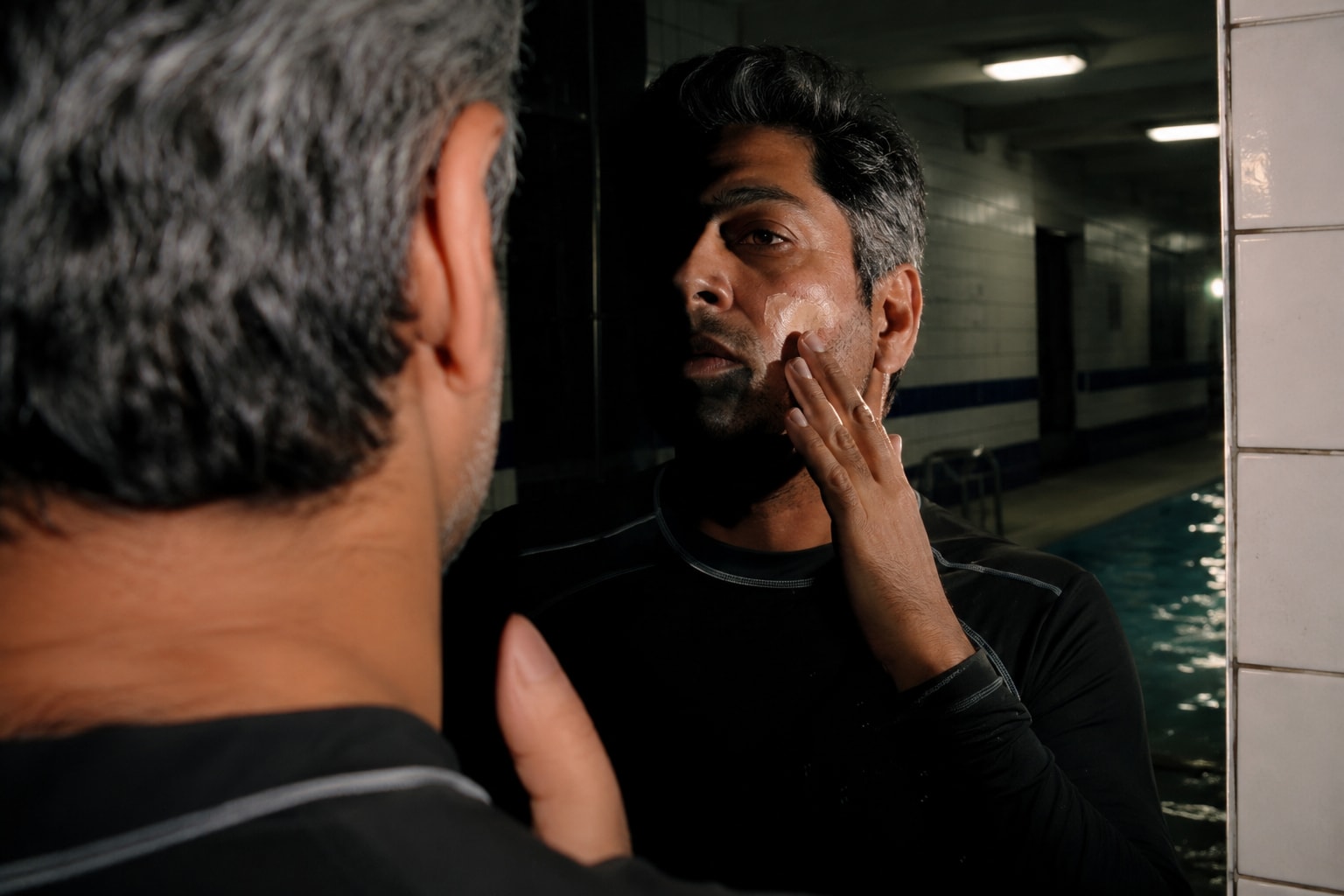
Apply sunscreen to dry skin about 15 minutes before going outdoors, as the FDA and AAD advise. Keep collars, towels, and hands away while it sets.
A small human study tested sunscreen under cotton shirts in 22 adults. At standard test amounts, waiting eight minutes before dressing performed similarly to waiting 20 minutes. The study used one untinted sunscreen, so it can't promise a stain-free result with your formula.
Use eight minutes as a practical minimum. If your product still feels tacky, extend the wait to 15 minutes and test again.
3. Keep the correct sunscreen amount
Using less may leave a cleaner collar, but it also creates a thinner protective film. Follow the amount and reapplication directions on your label. The FDA advises reapplying at least every two hours outdoors, and more often after swimming or sweating.
Don't wipe the neck clean to save a white shirt. Either protect that skin with another sunscreen or cover it with suitable clothing.
4. Split your face and neck routine
Use the tinted sunscreen where you want tint or visible-light protection. Use an untinted, broad-spectrum, water-resistant SPF 30 or higher on the neck and upper chest. This removes coloured pigment from the areas most likely to touch a collar.
If dark patches on your neck are the reason you chose a tint, clothing can reduce contact and sun exposure together. Pick a collar or scarf that covers the area without rubbing across freshly applied product.
5. Compare formulas with a transfer test
Claims such as "dry touch" or "water resistant" don't tell you how a product will behave on your clothes. The FDA says water-resistance labels describe protection during swimming or sweating for a stated time. They aren't no-transfer claims.
Test each formula at its normal amount on separate mornings. Wait 15 minutes, then press a clean white cotton cloth once against the jaw or neck. Don't rub. Compare the pigment left behind.
This test measures visible transfer, not SPF. Keep the sunscreen dose, skincare underneath, wait time, and pressure the same. Otherwise, you won't know which change helped.
6. Treat rubbing as a reason to reapply
If a mask, towel, or shirt picks up colour, some of the sunscreen film has moved. Reapply to exposed skin according to the label, especially after sweating. Don't assume the invisible remainder still gives even coverage.
A four-day test for your current routine
You can find the main cause without buying four new products.
- Day 1: Use your normal routine and note where the tint appears.
- Day 2: Keep everything the same, but wait 15 minutes before fabric contact.
- Day 3: Use untinted sunscreen on the neck while keeping the tinted product on your face.
- Day 4: Test a second formula at the same dose and wait time.
Check the fabric before washing and again afterwards. A fresh beige mark points toward transfer. A yellow-orange mark that develops later points toward a filter and wash-water reaction.
Change one thing per day. That gives you a useful answer instead of a pile of guesses.
If tinted sunscreen is already on your clothes
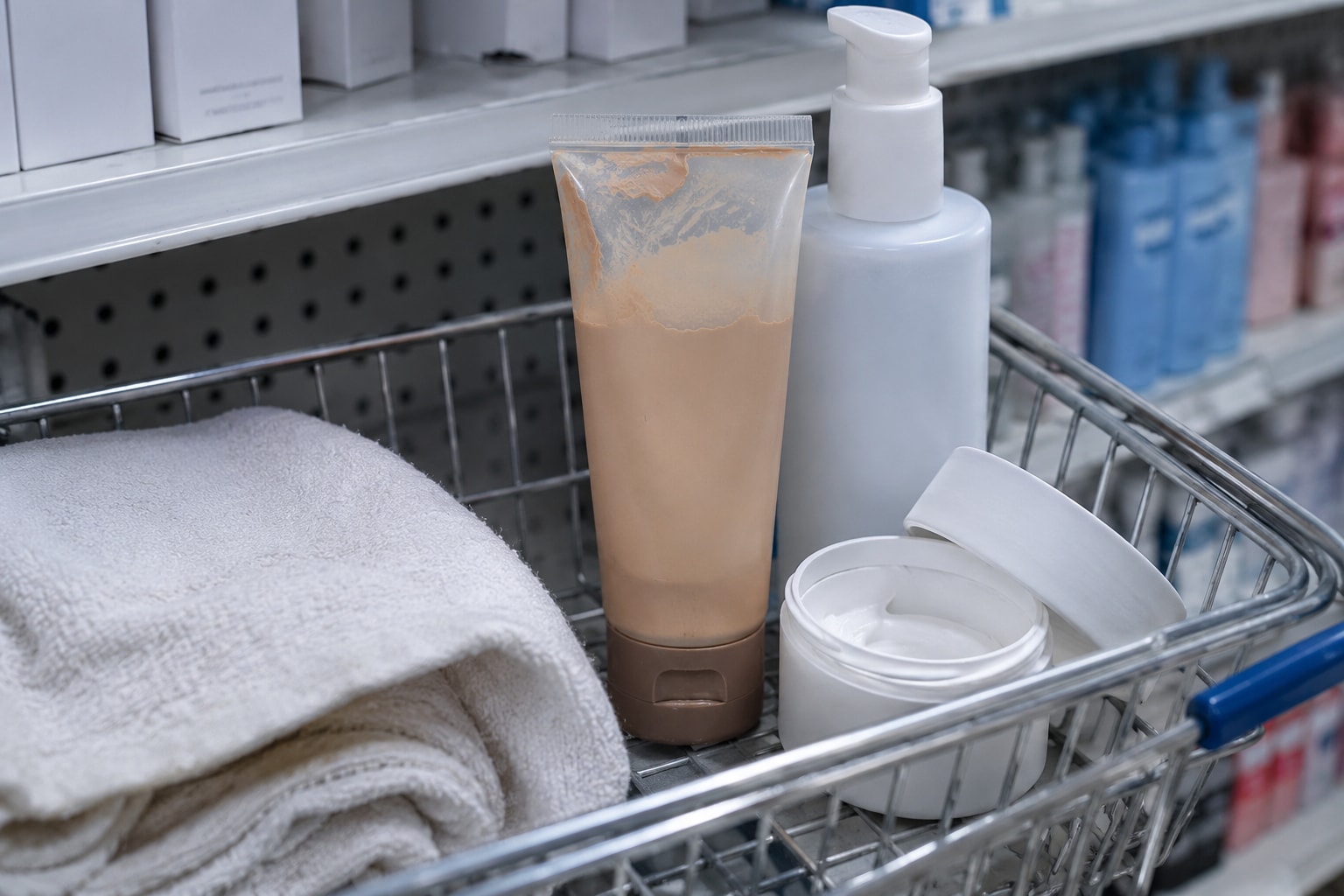
Check the garment care label first. For a washable item, Eucerin advises pretreating the mark with a stain detergent before washing. It also warns that bleach, powder detergent, hot water, and hard water can deepen some sunscreen stains.
Don't scrub a delicate fabric with a strong home mixture. Take silk, linen, or a colour-sensitive garment to a cleaner if the care label is restrictive.
FAQ
Does setting powder stop tinted sunscreen from transferring?
It may reduce surface tack, but it doesn't make sunscreen transfer-proof. No source reviewed here shows that powder preserves the labelled protection after rubbing. Let sunscreen set first, use little pressure, and don't treat powder as a substitute for reapplication.
Is tinted mineral sunscreen less likely to stain clothes?
Not always. An avobenzone-free mineral formula may avoid one cause of yellow-orange stains, but its iron-oxide tint can still rub onto fabric. The whole formula and its dry-down matter more than the word "mineral."
How long should tinted sunscreen dry before dressing?
Allow at least eight minutes, and use 15 minutes when the product stays tacky. The eight-minute result came from one small study using an untinted formula, so test your own product.
Should I use untinted sunscreen on my neck?
Yes, if tint keeps marking your collars. Choose broad-spectrum, water-resistant SPF 30 or higher, apply the proper amount, and reapply as directed. Keep the tinted formula on facial areas where you want its colour or visible-light benefit.