Quick answer
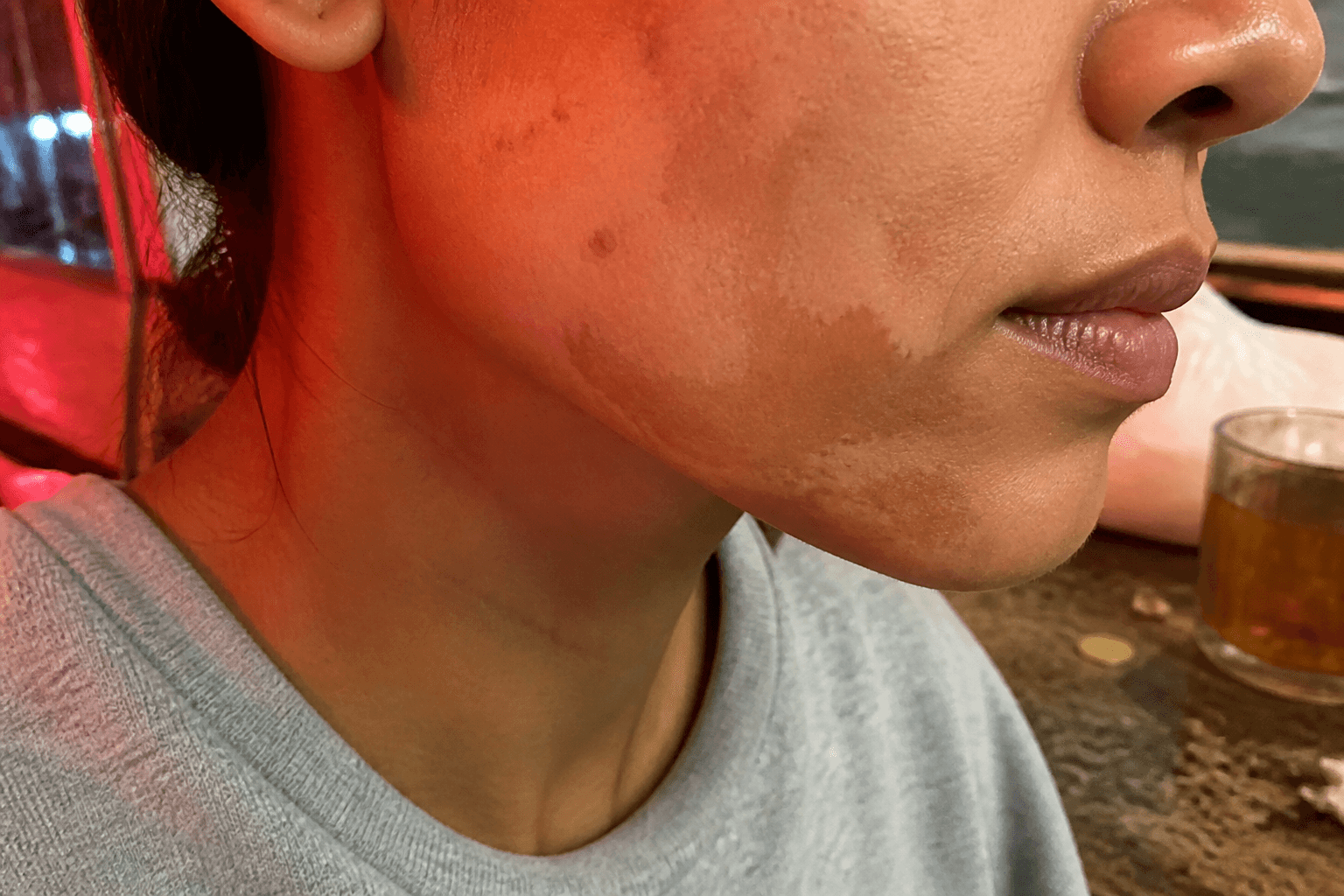
Why does self-tanner look patchy on my face? Likely causes include dry or flaky areas, uneven spreading, skincare left on the surface, or moisture moving the product as it develops. Timing helps narrow it down: blotches visible at once point to the tinted guide or uneven application.
Patches that appear hours later involve the developing tan, while uneven fading follows differences in how the outer skin cells shed.
Don't scrub hard or cover a dark patch with more tanner straight away; let the color develop, then make the smallest correction needed.
First, check when the patches appeared
Most self-tanners use dihydroxyacetone, or DHA, which the FDA says reacts with amino acids at the skin's surface. This creates color without making your skin produce melanin.
DermNet says DHA color often starts appearing after about one hour and is usually strongest after 8 to 24 hours. That gap explains why the first look and the final result may not match.
It looked uneven straight away
If a tinted mousse looks streaky within minutes, you are mainly seeing where the product and its guide color landed. DHA has not finished developing yet.
Resist the urge to add layers because extra product can turn a light-looking edge into a dark patch later. Gently blend a wet edge with clean fingers or the tool named on the label, then stop.
It developed unevenly several hours later
This pattern points to uneven contact with the outer skin layer. A dry patch, healing blemish, missed spot, or thicker swipe can take on a different depth of color.
Judge the result only after the label's full development time, then check it in neutral daylight rather than warm bathroom lighting.
It faded in patches after a few days
DHA colors the outermost skin layer, so the effect is temporary. DermNet gives a typical duration of three to ten days, with timing varying by product and body area.
Your face does not shed every surface cell at once. Cleansing, rubbing, flaky spots, and normal skin turnover can cause uneven fading without permanently changing your pigment.
Why facial self-tanner goes patchy
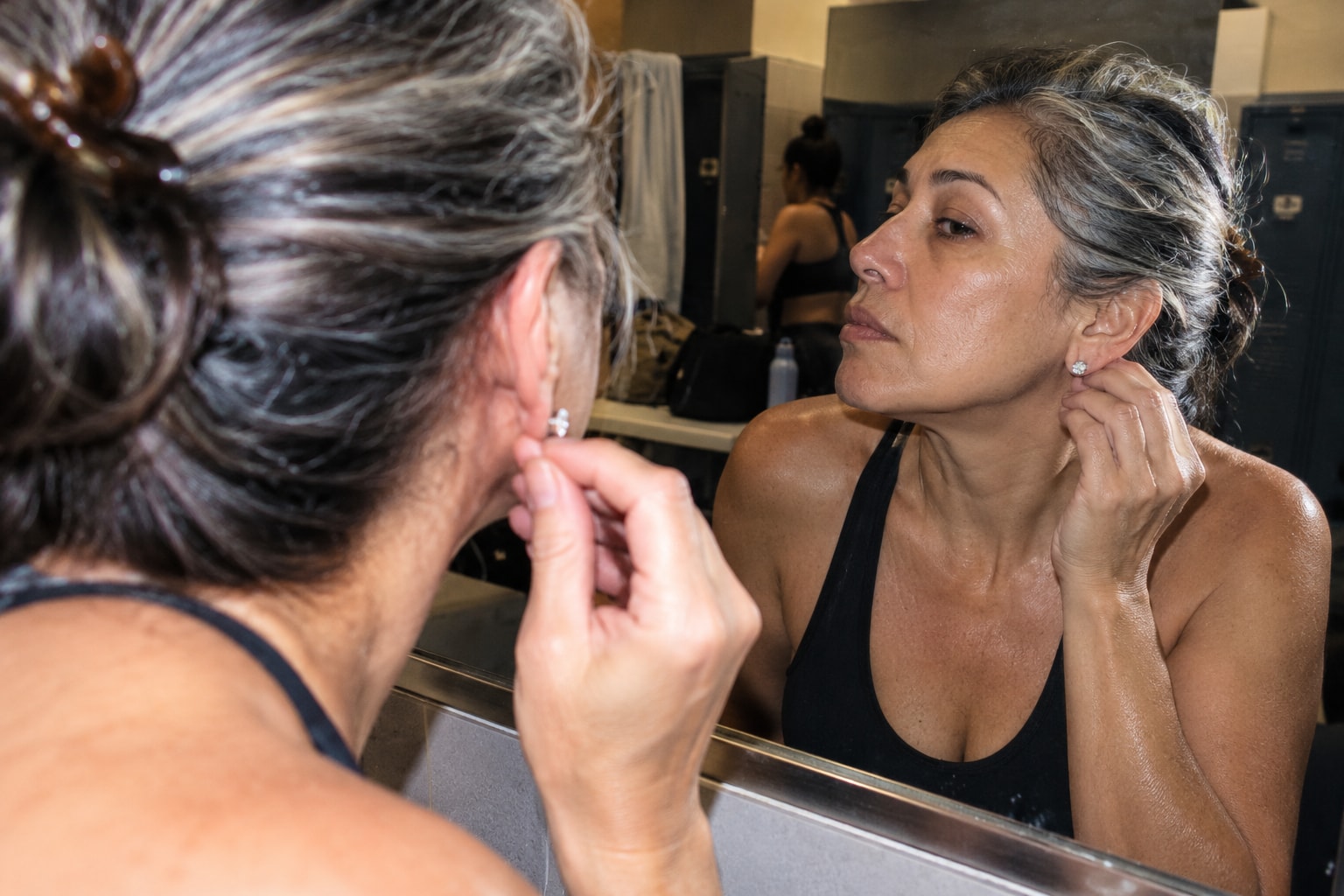
Dry or flaky areas take color differently
The Skin Cancer Foundation notes that dry skin binds more tanning product, so small facial flakes can create visible contrast.
Look closely around healing spots, the sides of the nose, and any area that feels rough, then postpone the tan if skin is peeling. More exfoliation on already irritated skin can make the surface less even.
The base was not clean and dry
The American Academy of Dermatology recommends applying self-tanner to dry skin for more even coverage. Several layers of serum, oil, or cream can make a tanning formula harder to spread consistently.
You do not need to strip your face; wash gently, rinse well, and let the surface dry. If your skin needs moisturizer, use a small, even amount and let it settle before following the tanner's directions.
Product gathered at edges and creases
The hairline, jaw, nostril edges, and facial-hair boundary easily form hard lines, so use a thin, measured layer. More product does not make application more even.
Keep DHA away from restricted areas because, in the United States, FDA approval does not cover the lips, mucous membranes, or eye area. Its definition includes the eyelids, lashes, and eyebrows, so follow your product label wherever you live.
Water or sweat moved it while it developed
The American Academy of Dermatology advises at least ten minutes of drying time and avoiding sweat for the next three hours. Your product may set a different window, so its label comes first.
Steam, exercise, tears, or early washing can leave trails, so apply when your face can stay dry and untouched.
How to fix a patchy face tan safely
Match the fix to the stage of the tan:
- If it is still wet, blend the edge once. Lift obvious excess with a damp, soft cloth instead of rubbing the whole face.
- If it is developing, wait because correcting too soon makes the final depth harder to predict.
- If one area is light after development, add a tiny amount to that spot, feather the edge, and reassess after full development.
- If one area is dark, let normal cleansing soften it and skip lemon juice, baking soda, harsh scrubs, or strong acid combinations.
A darker patch may bother you for a few days, but irritation can last longer, so choose moisturizer and patience over repeated stripping.
A steadier routine for next time
Start with calm skin, not a deadline before an event.
- Test a new product on a small area as the American Academy of Dermatology directs before using it across your face.
- Gently remove loose flakes, but do not exfoliate skin that is burning, raw, or actively peeling.
- Cleanse and let your face dry fully, keeping the routine simple so the tanner spreads across one consistent surface.
- Apply a thin layer in sections, using the same amount on each cheek before covering the forehead, nose, chin, and jaw.
- Feather the hairline and jaw with what remains on your fingers or applicator instead of using a fresh pump.
- Respect the label's drying and development times, keeping water, sweat, and rubbing away during that window.
- Compare the result only after full development, using the same room, angle, and daylight each time.
Change one variable per attempt because switching the formula, exfoliant, moisturizer, and application tool together hides which change helped.
When to stop using the product
Patchiness is a finish problem; burning, strong itching, swelling, or a rash signals a skin reaction.
Wash the product off and stop using it if those symptoms appear. DermNet notes that additives in some formulas can aggravate rosacea, atopic dermatitis, or allergic contact dermatitis. A dermatologist can help if the reaction is severe, spreads, or does not settle.
A home patch test can flag some reactions, but it cannot guarantee that your whole face will tolerate a product.
FAQ
Can I use self-tanner over acne?
You can tan near calm blemishes, but wait if acne treatments cause peeling, scabs, soreness, or dry patches. Self-tanner does not treat acne, and a patchy result does not show that acne is getting worse.
Should I moisturize before facial self-tanner?
Moisturizer can help a flaky surface, but the tanner still needs an even, dry base, so apply a consistent layer and let it settle. Follow the product directions, especially if tanning drops are designed to be mixed with moisturizer.
Why is self-tanner darker around my nose or hairline?
Product often gathers where skin meets hair, so use less at edges and feather with what remains on the applicator. Keep it out of the nostrils and the FDA-defined eye area.
Does facial self-tanner protect me from the sun?
No, unless the product is separately labeled with an SPF; the FDA and American Academy of Dermatology both advise continued sun protection. Use broad-spectrum, water-resistant SPF 30 or higher when outdoors.