Quick answer
A “mature hairline” usually means a hairline that has moved slightly from its younger position and then appears stable. A receding hairline keeps changing: the temples deepen, the frontal edge loses density, finer hairs appear, or thinning develops on the top or crown. Shape alone cannot settle the question, so compare consistent photos over time and ask a dermatologist or GP if the change is progressive, sudden or accompanied by scalp symptoms.
What do “mature hairline” and “receding hairline” actually mean?
“Mature hairline” is useful internet shorthand, but medical sources usually describe the underlying condition—male pattern hair loss, also called androgenetic alopecia—rather than define a separate mature-hairline diagnosis. That distinction matters. A higher or M-shaped hairline is not automatically a disease, and a low, straight hairline is not a health requirement.
Male pattern hair loss is a gradual, patterned process. In genetically susceptible follicles, the effects of dihydrotestosterone, or DHT, shorten the growth phase and contribute to miniaturisation. The affected hairs become progressively finer, shorter and less visible. The common distribution includes recession at the temples and frontal hairline, often with thinning over the top or crown, while the sides and back are relatively spared.
The practical question is therefore not “Does my hairline look perfectly straight?” It is “Is there objective evidence that hair density and hair calibre are progressively decreasing in a recognisable pattern?”
Mature hairline vs receding hairline: which signs matter most?
No home test can diagnose the cause of hair loss from one selfie. These clues are more useful when considered together.
1. Change over time
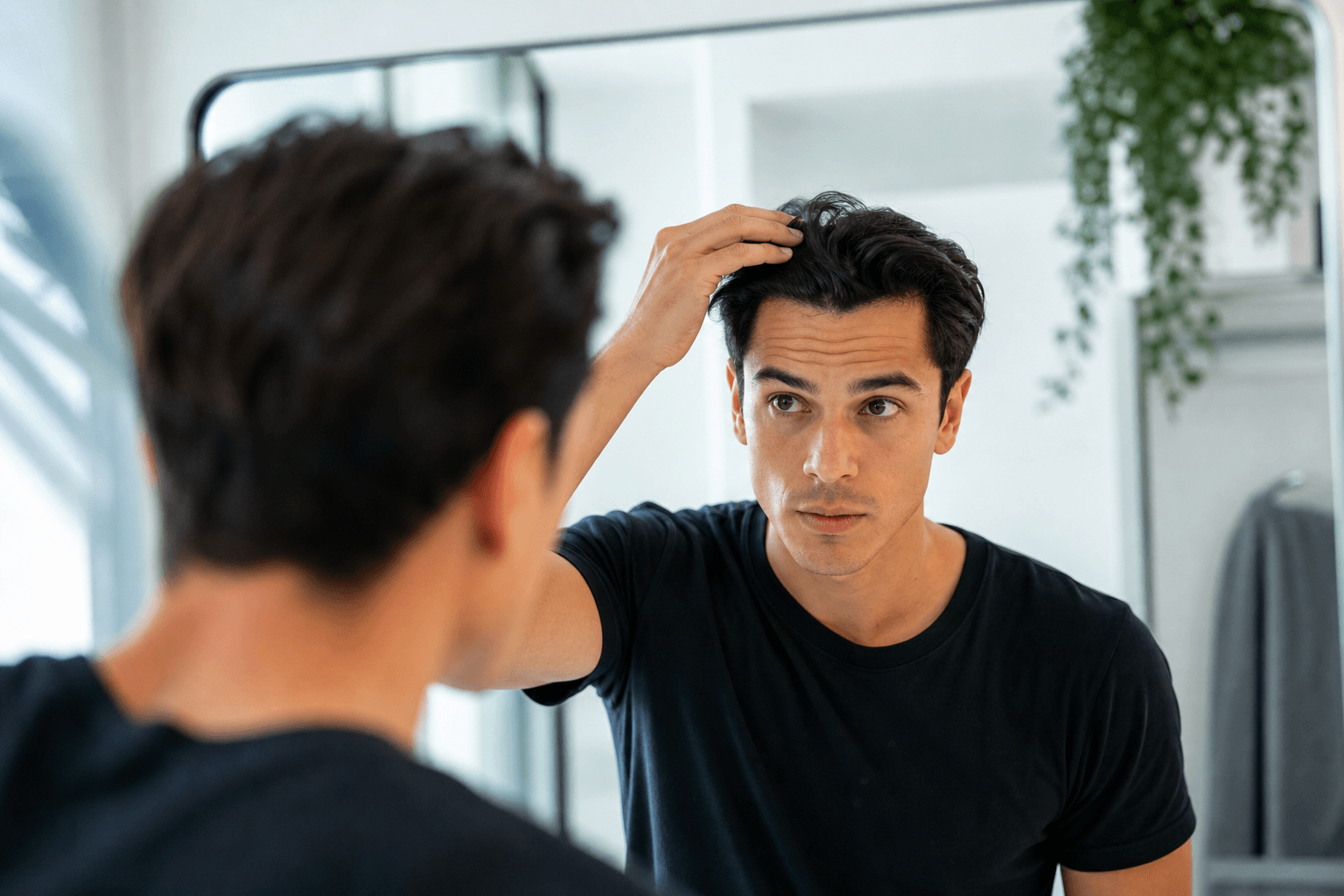
Progression is the strongest everyday clue. The American Academy of Dermatology describes a receding hairline that becomes more visible with passing years as an early sign of hair loss. Male pattern hair loss often advances slowly over years, which is why memory and daily mirror checks are unreliable.
A hairline that looks similar across well-matched photos may simply be your stable adult shape. A front edge that continues moving back, especially alongside declining density, deserves more attention. There is no universal distance or number of months that separates “mature” from “receding,” so ignore online rules based on finger widths or a precise number of centimetres.
2. Density behind the front edge
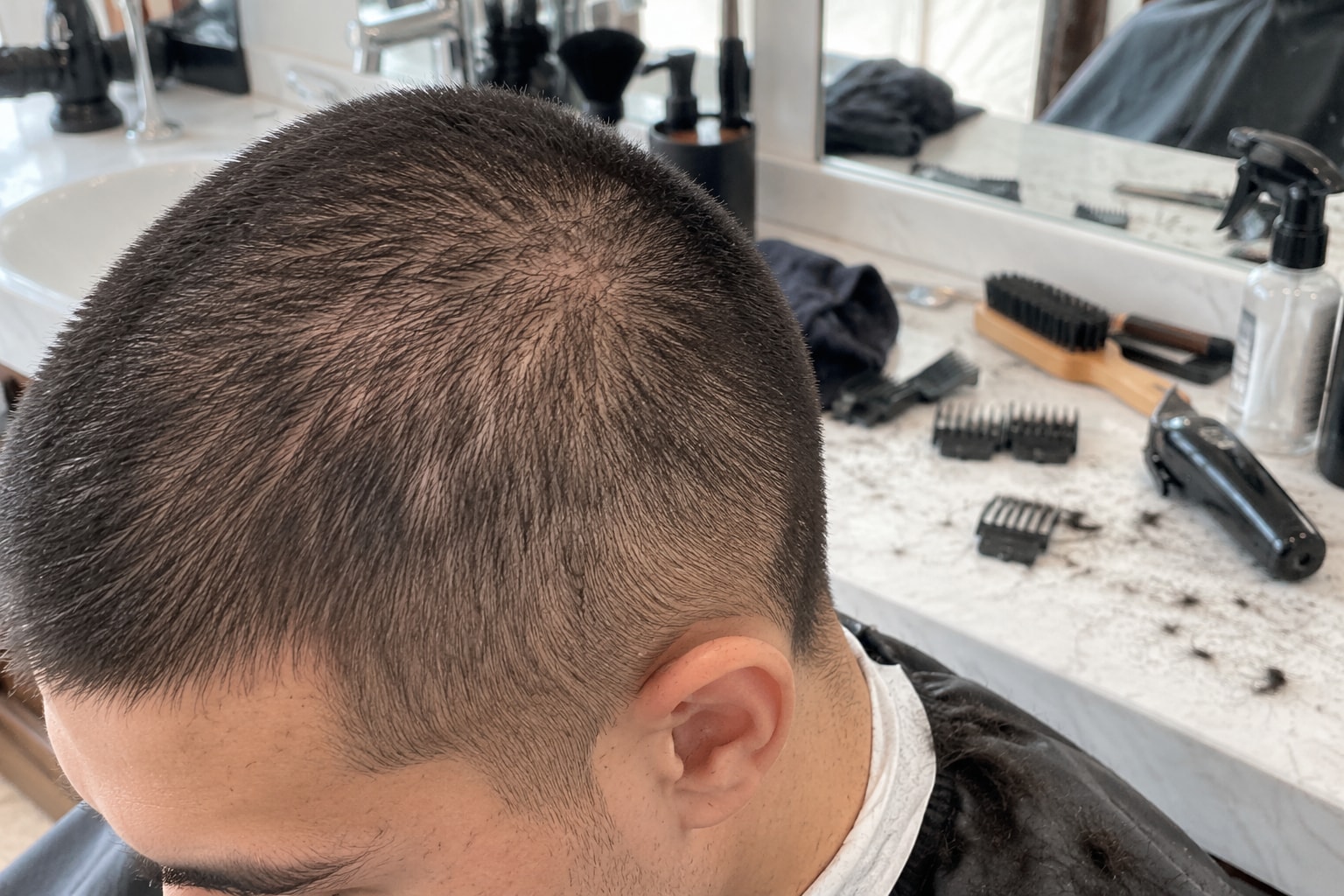
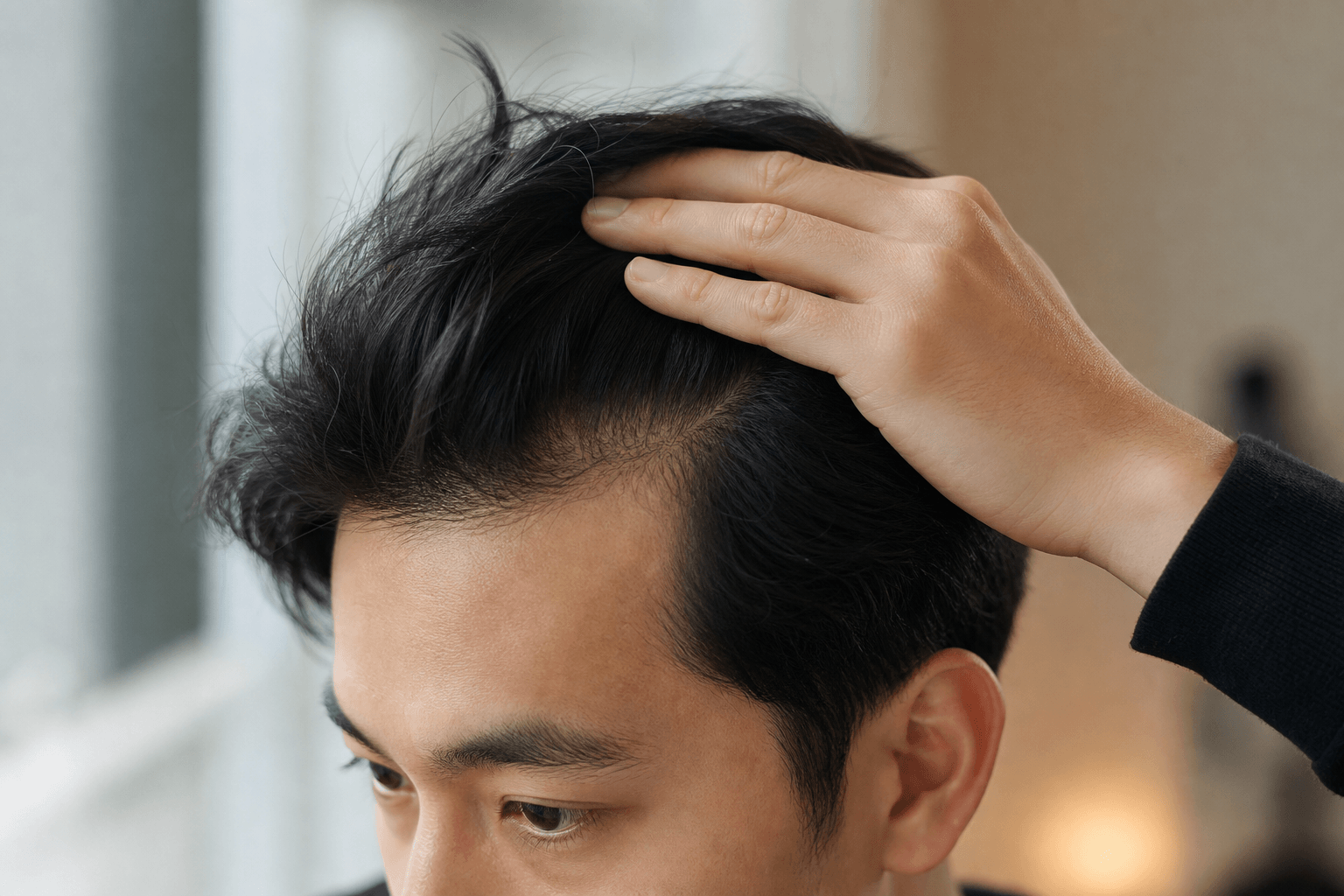
Look beyond the outline. Pattern hair loss involves miniaturisation, not just a geometric shift in the border. You may notice that the first few rows contain more fine, short hairs, that the scalp shows through more under the same lighting, or that the frontal and temple areas look less dense than before.
Hair specialists can examine this more reliably with magnification. A systematic review of trichoscopy studies found that variation in hair-shaft diameter and increased vellus-like hairs were among the most common diagnostic features of androgenetic alopecia. A phone macro image cannot reproduce a clinical scalp examination, and repeatedly zooming in on normal variation can create more anxiety than clarity.
3. The pattern across the whole scalp
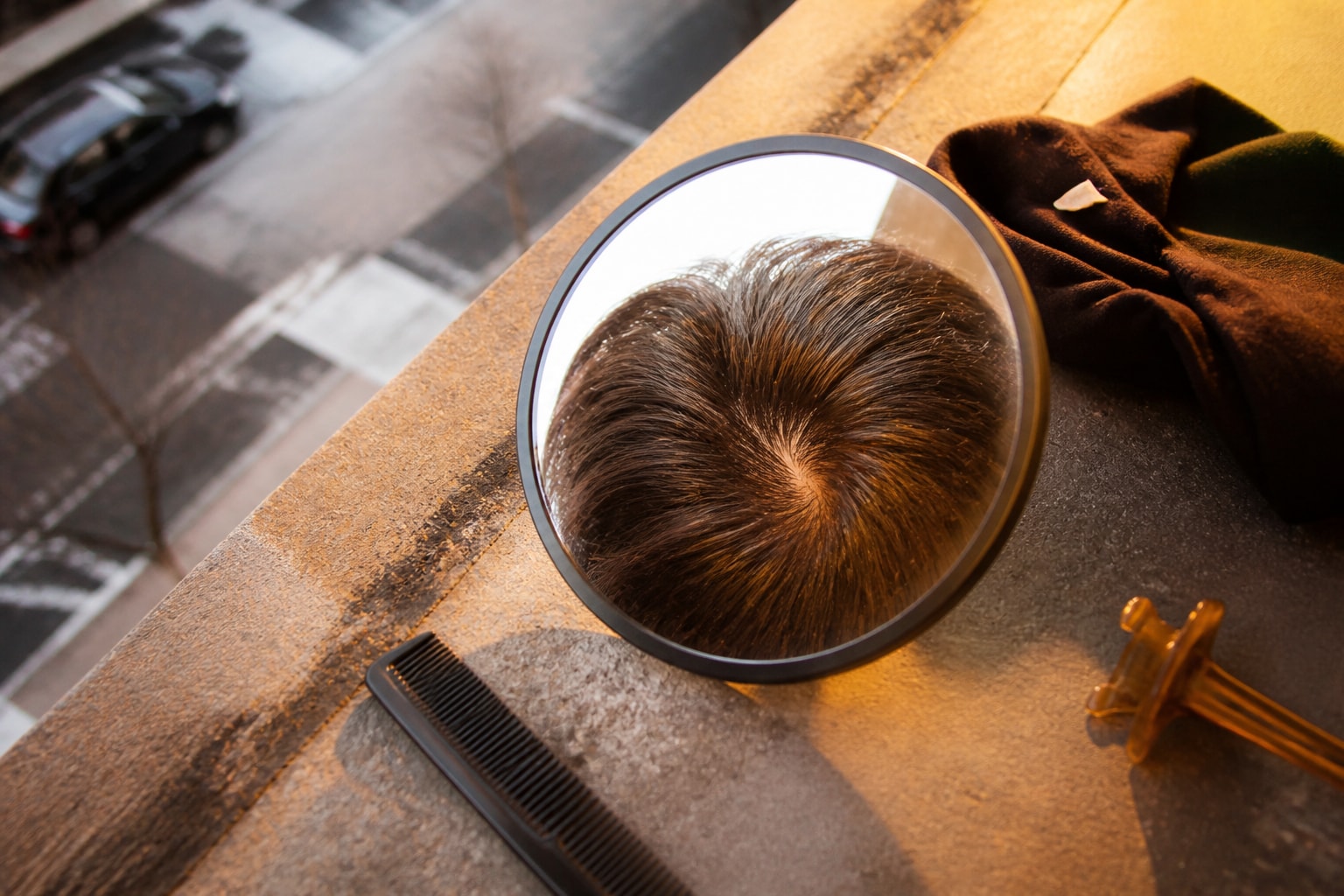
Do not inspect only one temple. Male pattern hair loss commonly affects the front, temples and top of the scalp. Crown thinning can occur with or without obvious frontal recession. Photographing the front while never checking the crown can therefore miss part of the pattern.
An M shape by itself is not proof of balding. Natural hairline shapes vary, and the centre can stay relatively forward while the corners sit farther back. What makes the pattern more concerning is continuing temple recession, reduced density, finer hairs or simultaneous thinning on top.
4. How the change started
Androgenetic alopecia is usually gradual. Sudden clumps of shedding, a smooth round bald patch, rapid diffuse thinning or hair loss outside the scalp can point to a different process. The AAD notes that some types of hair loss can appear abruptly and may also affect eyebrows, eyelashes or beard hair.
Do not assume every hair in the shower proves a receding hairline. Hair normally cycles through growth and rest, and a drain count varies with washing frequency, hair length and brushing. The visible distribution and trend are more informative than one unusually heavy wash day.
5. Scalp symptoms
The scalp in typical male pattern hair loss generally looks normal. Strong itching, burning, tenderness, redness, scale, sores or pus are not details to solve with a looksmaxxing routine. They can accompany infection or inflammatory scalp disease and are reasons to seek a qualified assessment.
Why hairline selfies are easy to misread
Hairline photos are unusually sensitive to presentation. A phone held close to the forehead exaggerates perspective. Overhead bathroom light makes scalp contrast harsher. Wet, oily or separated hair exposes more skin than clean, dry hair. A fresh fade, longer fringe, different part, hair fibres or styling product can all change the apparent border without changing the follicles.
Even expression matters: raising the eyebrows creases the forehead and changes the visual space between brows and hair. Pulling the hair back with different tension can expose different small hairs at the temples. This is why two dramatic “before and after” images may show photography and styling differences rather than biological change.
A Norwood-style diagram can help a clinician describe a general pattern, but matching yourself to a social-media chart is not a diagnosis. Nor can one parent’s hairline predict your future with certainty. Pattern hair loss involves genetic susceptibility inherited from either side of the family, and relatives can differ in onset, severity and progression.
How to track your hairline without obsessing
Use a small, repeatable photo set instead of checking from every angle each day.
- Photograph the front, both temples, the top and the crown.
- Use the same room, diffuse lighting, camera, distance and head position.
- Keep hair dry, clean and free of fibres or heavy styling product.
- Part or hold the hair in the same way, without pulling it unusually tight.
- Save dated originals privately; avoid public rating forums if you do not want permanent face and health-related data online.
- Compare scheduled sets side by side rather than repeatedly studying the latest image.
Monthly photos are frequent enough for a personal record, but meaningful pattern hair loss is usually gradual. If nothing urgent is happening, judge the series over several months, not several days. Do not measure single-pixel movements: camera distance and head angle can easily create a false shift.
A private appearance tool can help organise consistent photos, but it cannot diagnose androgenetic alopecia from a standard face image. Hair-loss diagnosis uses history, distribution, scalp examination and, when needed, magnified examination or other tests. Treat software as a tracking aid, not a prescription generator.
When should you see a dermatologist or GP?
Book a non-urgent assessment if matched photos show continued recession, the crown is thinning, the frontal hairs are becoming visibly finer, or you are worried enough that uncertainty is affecting your wellbeing. Earlier diagnosis can be useful because treatments for confirmed male pattern hair loss tend to work better when started before extensive loss, although no treatment guarantees regrowth.
Seek medical advice sooner for sudden or patchy loss, intense shedding, scalp pain, burning, marked itch, redness, scale, sores, eyebrow loss or other body-hair loss. These features do not fit a simple “mature hairline versus receding hairline” comparison and may need a different diagnosis.
A clinician may ask when the change began, how it has progressed, whether relatives have similar hair loss, which medicines you take and whether you have had illness or other symptoms. They can examine the pattern and scalp. Trichoscopy can reveal hair-calibre variation and miniaturised hairs that are difficult to judge in ordinary photos. The goal is not to receive an attractiveness verdict; it is to identify the cause before spending money or starting long-term treatment.
What actually helps if it is male pattern hair loss?
First, treatment is optional. A receding hairline does not make you unhealthy or less worthy, and a shorter haircut, different part or closely cropped style may be all the appearance management you want.
If you do want medical treatment, get the diagnosis right first. The NHS lists minoxidil and finasteride as the main treatments for male pattern baldness. Neither works for everyone, and benefits generally last only while treatment continues.
Topical minoxidil is available without prescription in some countries and can reduce loss or stimulate some growth, but results take time and scalp irritation can occur. Follow the product information and ask a pharmacist or clinician whether it is suitable for you rather than combining formulations based on forum advice.
Finasteride is prescription medication. It can slow further hair loss for many men, but it is not a casual supplement: possible sexual, breast and mood-related adverse effects need an informed discussion with a qualified prescriber. Do not buy unverified tablets or use someone else’s prescription. Women who are or could become pregnant require specific medical precautions and should not self-treat with finasteride.
Avoid reacting to one bad photo by building an extreme stack of unregulated “DHT blockers,” aggressive DIY needling or mail-order prescription drugs. More interventions do not automatically produce more hair, and irritation can make assessment harder. A calm sequence—document, diagnose, then choose an evidence-based option—gives you cleaner information and lower risk.
A simple decision guide
- Stable outline, stable density, no symptoms: keep a low-frequency photo record and carry on with normal grooming.
- Slow, repeatable recession or crown thinning: arrange a GP or dermatology assessment before committing to treatment.
- Sudden patches, heavy rapid shedding or an inflamed scalp: seek medical advice rather than assuming male pattern hair loss.
- Compulsive checking or major distress: pause the close-up comparisons and talk to someone you trust or a healthcare professional. Hair tracking should support a decision, not consume your day.
FAQ
How can I tell whether my hairline is maturing or receding?
Compare consistent photos for progression, density and hair calibre. A stable adult shape with unchanged density is less suggestive of active loss; continuing temple recession, finer frontal hairs or crown thinning is more consistent with pattern hair loss. A clinician can assess the pattern and scalp if the change remains unclear.
Does an M-shaped hairline mean I am going bald?
No. An M shape alone does not diagnose balding because natural hairline geometry varies. Ongoing change matters more: deeper temples over time, reduced density, miniaturised hairs and thinning on the top or crown make male pattern hair loss more likely.
At what age does a mature hairline develop?
There is no medically fixed age or stopping point for a “mature hairline.” Male pattern hair loss can begin after puberty, including in the late teens or early twenties, but it often appears later. Age cannot distinguish a stable hairline from active recession; progression and examination are more useful.
Can a receding hairline grow back?
Sometimes treatment produces some regrowth, especially when confirmed pattern hair loss is addressed early, but full restoration is unlikely and no treatment works for everyone. Minoxidil and prescription finasteride can help some people maintain or regrow hair, and their benefits generally require continued use.
How long should I track my hairline before seeing a dermatologist?
You do not need to wait if loss is sudden, patchy, symptomatic or distressing. For a subtle, symptom-free question, matched monthly photos over several months can reveal whether a trend exists, but visible progression is enough reason to book a non-urgent assessment at any point.